Table of Contents >> Show >> Hide
- What the Italian yarn bombers actually made (in plain English)
- Why Guernica still hits hard in 2026
- Yarn bombing 101: “graffiti,” but make it cozy
- What changes when Guernica becomes yarn
- How they pulled it off (and what creators can learn)
- Why this matters beyond art people (yes, even if you “don’t get Picasso”)
- If you want to try “micro-Guernica” (a practical, non-chaotic guide)
- FAQ: Quick answers people actually ask
- Experience Add-On: What it feels like to encounter Guernica in yarn (and why it stays with you)
If you told Pablo Picasso that one day a group of Italian fiber artists would “tag” his most terrifying anti-war image with yarn, he might’ve raised an eyebrow…
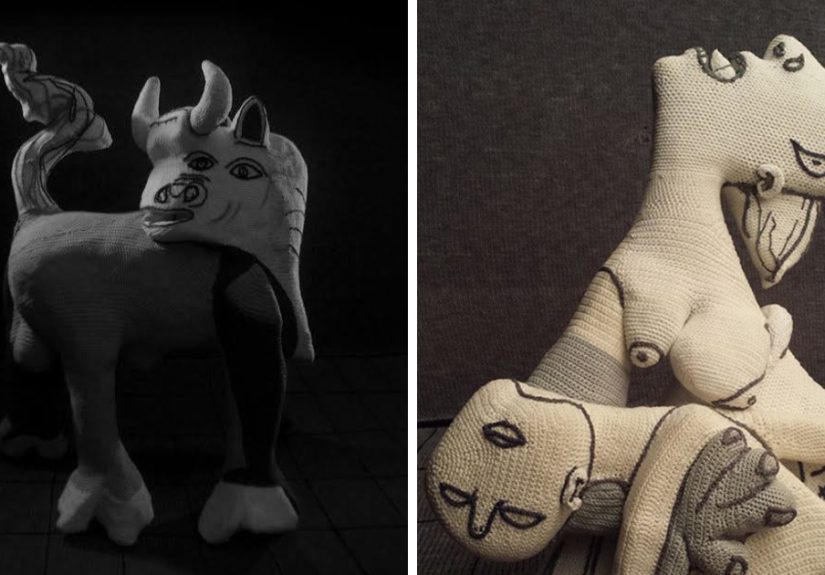
and then asked for a bigger needle. Because that’s exactly what happened: an Italian urban knitting collective transformed the emotional earthquake of
Guernica into a three-dimensional crochet-and-knit installationturning a flat scream into something you can almost feel in your fingertips.
The result is both unexpected and oddly perfect. Guernica is famous for being harshblack, white, jagged, relentless. Yarn, on the other hand, is soft,
warm, and suspiciously good at making you feel safe. Put them together and you get a contradiction that actually clarifies the message:
war doesn’t just break buildings; it breaks homes, routines, families, and the “normal life” we associate with blankets and handmade things.
What the Italian yarn bombers actually made (in plain English)
The Italian collective Sul filo dell’arte (an urban knitting and crochet street art group) created a 3D fiber tribute to Picasso’s
Guernica. Instead of copying the painting brushstroke-for-brushstroke, they re-built key figures and symbols as standalone sculptural elementscrocheted,
knitted, embroidered, and assembled into a dimensional scene.
- Scale & ambition: Over 20 fiber artists contributed over more than a year.
- Structure: Art students helped build frameworks that the textile pieces were stretched and shaped over.
- Where it went: The installation was exhibited in Milan as part of a Picasso-themed show at the Royal Palace.
- Why it mattered: It marked the 80th anniversary of the 1937 bombing that inspired Picasso’s original.
Why Guernica still hits hard in 2026
Guernica (1937) isn’t just “a famous painting.” It’s a visual protest poster the size of a wall, painted in response to the bombing of the Basque town of
Guernica during the Spanish Civil War. Picasso’s scene is packed with fractured bodies, a gored horse, a bull, a mother holding a dead child, flames, and a
harsh light that looks like an unblinking eye.
The original story: a mural born from a bombing
In April 1937, news of the attack on Guernica spread internationally. Picassoliving in Parisscrapped his earlier ideas for a commission and redirected his
energy into an anti-war mural for the Spanish Pavilion at the 1937 Paris World’s Fair. He chose a stark, newspaper-like palette of grays and blacks, which
many viewers interpret as a reference to documentary photography and the cold clarity of reportage.
Its afterlife: the painting that kept traveling (and kept speaking)
Guernica didn’t stay quietly in one place. It toured, argued, provoked, and eventually became a global symbol of civilian suffering in wartime.
For decades it was associated with New York and the Museum of Modern Art, and it returned to Spain in 1981 after a long, politically charged history of
custody and display.
It even shows up in modern political theater: a tapestry reproduction of Guernica displayed near the UN Security Council famously got covered during a
high-profile 2003 presentation about waran accidental (or not-so-accidental) reminder that art can make a room tell the truth when people won’t.
Yarn bombing 101: “graffiti,” but make it cozy
Yarn bombing (also called guerrilla knitting, yarn storming, or knit graffiti) is street art made with knitted and crocheted fiber instead of paint.
It can be playfulthink trees in sweatersbut it can also be political, commemorative, or quietly rebellious in a “I brought snacks and a manifesto” kind of way.
How it started (and why it spread)
A commonly cited spark for modern yarn bombing is artist Magda Sayeg, who began wrapping street objects with knitted pieces in the mid-2000s.
What made it contagious wasn’t just the visual novelty. It was the emotional effect: softness in public space changes how people move, notice, and talk to each
other. A stop sign pole covered in yarn isn’t only decoratedit’s transformed into something oddly human.
Why fiber works as activism
Fiber is historically domestic and communal. It’s “kitchen table” laboroften undervalued, often gendered, often dismissed as merely decorative.
When you haul it into public space (or turn it into a monumental anti-war statement), you’re saying:
this kind of work deserves the same scale, seriousness, and public visibility as any mural.
What changes when Guernica becomes yarn
Here’s the twist: yarn doesn’t dilute the horrorit reframes it. Picasso’s original feels sharp and metallic. The crocheted version feels intimate,
like the tragedy has entered your living room. And that’s the point.
Texture makes the suffering feel close
In a painting, you “read” symbols. In a fiber installation, your brain adds an extra layer: weight, thickness, touch, and the time embedded in every stitch.
You can’t look at a crocheted figure the same way you look at a brushstroke. You start thinking about handsmany handsworking for months. That labor becomes
part of the meaning.
3D forces you to move through the story
A mural confronts you head-on. A sculptural scene changes as you walk around it. You notice different relationships: the angle of the horse’s head, the distance
between figures, the way light falls on yarn that mimics ash and smoke. Even without color, fiber has “temperature,” and that emotional temperature matters.
How they pulled it off (and what creators can learn)
Recreating Guernica in yarn isn’t a “weekend craft.” It’s a logistics project disguised as art. Even if you never plan to crochet a political masterpiece
the size of a small boat, the process offers a blueprint for big collaborative creativity.
Lesson 1: Break the giant into bite-size symbols
One reason Guernica translates well is that its elements are iconic: bull, horse, mother and child, fallen figure, lamp/light.
A team can assign components, develop them separately, and then assemble them into one coherent emotional sentence.
Lesson 2: Structure matters as much as stitch
Fiber needs support to behave like sculpture. Frames, armatures, and underlying forms are what allow crochet and knit pieces to hold shape, sit in space,
and keep their silhouettes readable from a distance. Bringing in art students and builders isn’t a side detailit’s the backbone of making yarn act like stone.
Lesson 3: “Soft” materials can carry “hard” messages
The project works because it doesn’t treat yarn as a joke. It treats yarn as a medium with its own authority: patient, communal, stubborn, and physically
present. A protest doesn’t have to be loud to be relentless.
Why this matters beyond art people (yes, even if you “don’t get Picasso”)
The Italian yarn bombers didn’t just remake a painting. They remade the experience of a cultural symbol. In a world where attention is scattered and
conflict imagery is often consumed through quick scrolling, a handmade installation slows you down. You can’t speed-run grief when it’s built from thousands of
deliberate loops.
And there’s something quietly radical about a group of peopleoften women, often undervalued in traditional art hierarchiestaking one of the most famous
anti-war images ever made and saying: “We’ll carry this story too. With our own tools.”
If you want to try “micro-Guernica” (a practical, non-chaotic guide)
No, you don’t need to recreate a museum-scale masterpiece to borrow the idea. If the heart of yarn bombing is “softness + public space + meaning,” you can
scale it down responsibly.
- Choose a message: remembrance, peace, community care, anti-violencepick one sentence you want your work to say.
- Get permission when possible: legal collaborations with libraries, community centers, and local arts councils often get more visibility anyway.
- Use removable methods: avoid glues; use ties that won’t damage bark, paint, or public infrastructure.
- Document thoughtfully: share the “why,” not just the “wow.” Context turns decoration into craftivism.
- Invite others in: the community is the medium.
FAQ: Quick answers people actually ask
Where is Picasso’s original Guernica now?
The original painting is in Madrid at the Museo Reina Sofía (though its history includes years displayed in New York and a long path back to Spain).
Is yarn bombing legal?
Sometimes. It depends on permission and local rules. Many artists work with institutions or city programs; others operate guerrilla-style (which can bring
removal, fines, or worse). If your goal is public impact, permission often helps your work stay up longer.
Why is Guernica black-and-white?
Scholars and viewers often connect its palette to the look of newsprint photography and the starkness of documentation. The absence of color also removes
distractionlike turning the volume down so you can hear the scream more clearly.
What’s the point of recreating a masterpiece in another medium?
Translation creates new meaning. A remake isn’t a replacement; it’s a new lens. Yarn adds labor, touch, warmth, and communal authorshipqualities that change
how a viewer receives the same symbols.
Experience Add-On: What it feels like to encounter Guernica in yarn (and why it stays with you)
Imagine walking into a gallery space expecting the usual museum rhythm: a few polite steps, a few polite nods, maybe a quiet “huh” if something surprises you.
Then you spot itGuernica, but not as a painting. It’s a scene made of fiber, standing out in the room like a memory you can’t quite push back into the
past.
The first sensation is confusion, the good kind. Your brain recognizes the shapesthe horse, the bull, the anguished facesyet your instincts tell you the
material belongs somewhere else. Yarn is supposed to be comforting. Yarn is scarves. Yarn is the kind of thing you wrap around yourself when the world is ugly.
So when those familiar loops and stitches form a cry of terror, it creates an emotional short circuit: comfort and horror occupying the same space.
And then you get closer, because you can’t help it. A painting keeps a polite distance. Fiber invites a different kind of attention. You notice the density of
stitches like you’d notice brushwork, but it’s more physicaleach section has thickness, tension, and a visible investment of time. You start mentally
calculating hours. Not in a spreadsheet waymore like a realization: “Someone sat with this sadness long enough to turn it into form.”
The room feels different too. Viewers tend to talk more around fiber art, even when the subject is heavy. Maybe it’s because yarn is familiar, and familiarity
lowers the barrier to conversation. People point out details: the angle of a mouth, the curve of a limb, the way a crocheted edge creates a shadow that looks
like smoke. Someone will inevitably whisper something like, “It’s beautiful,” and then immediately feel weird about calling anything related to war “beautiful.”
That’s not a mistakethat tension is the message doing its job.
Now imagine the making side of the experience: a long table, a scatter of hooks and needles, and a group of people working in parallel. Some are experts;
others are beginners who were told, “Make ten squares” and showed up anyway. Someone brings espresso. Someone brings snacks. The conversation starts with yarn
weight and stitch counts, and slowlyalmost inevitablydrifts toward why Guernica exists in the first place. You don’t have to force a “deep talk.”
The imagery does it for you. The making becomes a kind of shared witnessing.
The wild part is what happens afterward. You leave the space and notice the world’s surfaces differentlypoles, fences, trees, blank walls. You realize how
much public space is designed to be ignored. Yarn bombing flips that script. It makes the ordinary noticeable, and when the subject is Guernica,
it adds a second layer: it makes the ignored human cost of violence harder to look away from. Soft material, sharp truth. And somehow, that combination sticks
to your memory like a thread you can’t quite trim.