Table of Contents >> Show >> Hide
- What Makes Bobby Flay’s Pumpkin Pie Recipe Different?
- How I Made the Pie
- The Taste Test: Was It Actually Better?
- What I Loved Most About Bobby Flay’s Pumpkin Pie
- What I’d Change Next Time
- How This Recipe Compares to Classic Pumpkin Pie
- Is Bobby Flay’s Pumpkin Pie Recipe Worth Making?
- My Personal Experience Trying Bobby Flay’s Pumpkin Pie Recipe
- Conclusion
There are two kinds of people at Thanksgiving: the ones who politely eat pumpkin pie because tradition demands it, and the ones who guard the dessert table like it contains state secrets. I fall somewhere in the middle. I like pumpkin pie, but I do not usually dream about pumpkin pie. Then along came Bobby Flay’s version, a recipe with enough swagger to make me wonder whether I’d been settling for perfectly pleasant, deeply forgettable pie all these years.
Flay’s pumpkin pie has a reputation for being a little different from the classic back-of-the-can version. Instead of a standard pastry crust, he goes with a graham cracker crust. Instead of leaning on evaporated milk, he uses heavy cream. Instead of keeping things ultra-basic, he layers in brown sugar, molasses, extra egg yolks, and an optional bourbon-maple whipped cream that sounds like it arrived dressed for a holiday party. In other words, this is not the pumpkin pie that whispers. This one enters the room wearing cologne.
So I tried Bobby Flay’s pumpkin pie recipe to see whether it was truly worth the praise. The short version? Yes, with a few caveats. The long version is below, complete with what worked, what surprised me, what I’d tweak, and why this pie feels less like a sleepy holiday obligation and more like the dessert equivalent of someone saying, “Trust me, I know a guy.”
What Makes Bobby Flay’s Pumpkin Pie Recipe Different?
The first thing that stands out is the crust. Bobby Flay swaps the usual flaky pie dough for a graham cracker crust, which is already a bold move in the pumpkin pie universe. Traditionalists may clutch their rolling pins, but this choice makes a lot of sense. Graham crackers bring sweetness, warmth, and a toasty flavor that plays extremely well with pumpkin. More importantly, the crust is approachable. There’s no wrestling with chilled dough, no praying it doesn’t shrink, and no dramatic flour storm on the counter.
Then there’s the filling. This is where the recipe starts acting like it has a publicist. Along with pumpkin purée, cinnamon, ginger, nutmeg, cloves, and salt, Bobby’s version uses both granulated sugar and dark brown sugar, plus molasses. That combination gives the pie deeper caramel notes than many classic pumpkin pie recipes. It tastes more layered and less one-note sweet.
Heavy cream replaces evaporated milk, and extra egg yolks join the party. That matters because the filling bakes up with a richer, silkier texture. Instead of tasting dense or pasty, it comes out smooth and lush, like a proper custard wearing a pumpkin costume. The optional bourbon-maple whipped cream and cinnamon crunch topping push it even further into “special occasion” territory.
How I Made the Pie
The Crust: Easy, Fast, and Refreshingly Low-Drama
I started with the graham cracker crust, and I’ll say this upfront: this part felt wonderfully forgiving. Melted butter, graham cracker crumbs, a little cinnamon, and some pressing into a pie dish. That’s it. No blind panic. No dough tears. No mysterious cracks that make you question your life choices.
Once baked, the crust smelled like the coziest candle on Earth, except edible. It set up nicely and looked golden and sturdy enough to hold the filling without turning soggy. For anyone who wants a holiday dessert that doesn’t begin with pie dough anxiety, this is a huge win.
The Filling: Where the Recipe Gets Fancy
Mixing the filling felt like making a classic pumpkin pie with a little extra confidence. The spices were familiar, but the combination of brown sugar, molasses, heavy cream, and extra yolks signaled that this pie was aiming for depth, not just nostalgia. I strained the filling before pouring it into the crust, which is one of those restaurant-style moves that sounds fussy but pays off with a smoother texture.
As it baked, I noticed something important: this pie asks for patience. Pumpkin custard is not the place for reckless oven energy. You want the center to be just about set, with a slight wobble. Overbake it, and you risk cracks. Rush the cooling process, and the custard may throw a small tantrum. Bobby’s pie rewards calm behavior, which is ironic considering the average holiday kitchen.
The Taste Test: Was It Actually Better?
Yes. But not in a loud, gimmicky way.
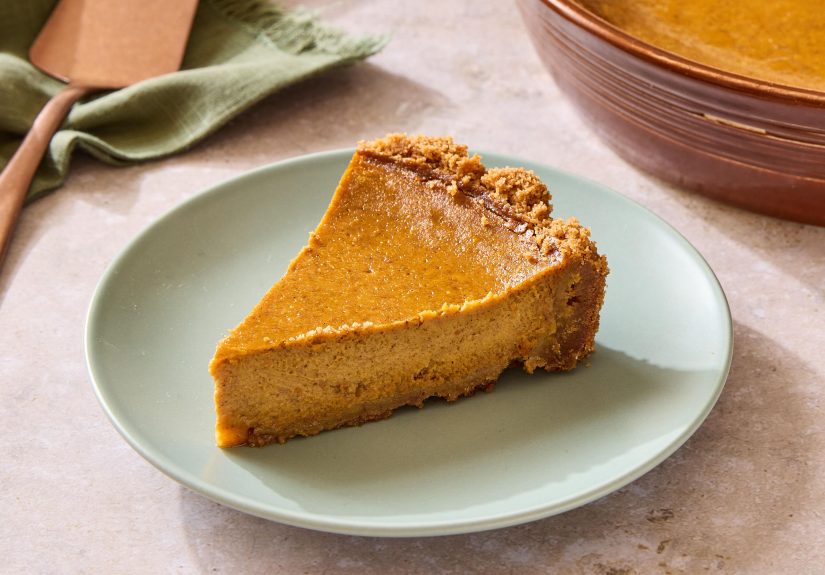
The first bite made it clear why so many people love this recipe. The filling is creamy and velvety, almost like a pumpkin custard tart crossed with a classic Thanksgiving pie. The brown sugar and molasses don’t make it taste overly sweet; they make it taste more complete. There’s a roundness to the flavor that standard pumpkin pies sometimes miss.
The graham cracker crust is a smart match. It brings texture and a gentle honeyed sweetness that contrasts beautifully with the silky filling. If classic pie dough can sometimes fade into the background, this crust actually contributes to the overall experience. It has a voice. A buttery, cinnamon-scented voice.
The bourbon-maple whipped cream is optional, but I highly recommend it if you want the pie to feel company-ready. It adds lift, coolness, and a soft boozy edge that makes each slice taste a little more grown-up. The cinnamon crunch topping adds another layer of texture, though the pie is still excellent without it. With it, the dessert feels just a little more dressed up, like pumpkin pie put on a blazer.
What I Loved Most About Bobby Flay’s Pumpkin Pie
1. The Texture Is the Star
If you’ve ever had pumpkin pie that felt grainy, heavy, or oddly baby-food-adjacent, this recipe is the opposite. The heavy cream, egg yolks, and strained filling create a silky consistency that feels polished and intentional. It slices cleanly, but still melts nicely on the tongue.
2. The Flavor Has More Depth Than Standard Pumpkin Pie
This isn’t a wildly experimental dessert, which is part of its charm. It still tastes like pumpkin pie. It just tastes like pumpkin pie with a better résumé. The dark sweetness from the brown sugar and molasses gives it more personality, while the spice mix stays warm and balanced rather than loud.
3. The Crust Is Foolproof Enough for Busy Bakers
I understand the emotional pull of a homemade pastry crust. I also understand that some of us are trying to cook eleven other things while relatives wander into the kitchen asking when dinner is. A graham cracker crust is practical, flavorful, and dramatically easier to manage. Bobby knew what he was doing here.
What I’d Change Next Time
Very little, honestly, but I do have a few notes.
First, I’d watch the sweetness of the toppings. The pie filling itself is beautifully balanced, but between the graham cracker crust, cinnamon crunch, and maple whipped cream, the full package can tip toward rich pretty quickly. If you’re serving a crowd that likes desserts less sweet, you could skip the crunch topping or go lighter on the whipped cream.
Second, I’d make the pie a full day ahead. Pumpkin pie almost always benefits from time, and this one is no exception. Once chilled and settled, the flavors taste more cohesive, and the filling slices even better. Holiday lesson number one: make tomorrow’s self proud.
Third, I’d keep an eye on the bake rather than relying blindly on the clock. Every oven has a personality. Some are reliable. Some are tiny chaos goblins. The pie is ready when the edges are set and the center still has a slight jiggle. Pull it too late, and the silky custard turns into a cautionary tale.
How This Recipe Compares to Classic Pumpkin Pie
If your benchmark is a traditional pumpkin pie made with evaporated milk in a pastry shell, Bobby Flay’s version feels richer, smoother, and more layered. It is a little less old-school and a little more dinner-party polished. The classic version is comforting and familiar. Bobby’s version tastes like the classic version got a promotion.
That said, the graham cracker crust does shift the identity of the dessert. If you are deeply loyal to flaky pastry, you may miss that classic contrast. But if your real goal is a consistently delicious pumpkin pie with minimal stress, Bobby’s recipe makes a convincing argument. It’s easier in some ways, more indulgent in others, and memorable enough that people will ask for the recipe before they’ve finished chewing.
Is Bobby Flay’s Pumpkin Pie Recipe Worth Making?
Absolutely. This is one of those recipes that feels chef-y without being annoying about it. It offers smart upgrades rather than unnecessary complications. The graham cracker crust makes it approachable. The custard filling feels luxurious. The bourbon-maple whipped cream is the kind of extra flourish that makes guests think you definitely have your life together, even if you absolutely do not.
If you love pumpkin pie but wish it had a little more texture, a little more richness, and a little more “wow,” this recipe delivers. If you don’t usually love pumpkin pie, this might be the version that changes your mind. And if you already make a family recipe every year, Bobby Flay’s pie is still worth trying at least once, if only to stir up a little harmless dessert debate at the table.
My final verdict: Bobby Flay’s pumpkin pie recipe is not just good for a celebrity chef recipe. It’s just plain good. It’s smart, flavorful, easier than it looks, and elegant without feeling fussy. I’d happily make it again, and next time, I might not even pretend I’m baking it “for the group.”
My Personal Experience Trying Bobby Flay’s Pumpkin Pie Recipe
Making this pie felt a bit like inviting a famous chef into my very ordinary kitchen and hoping he wouldn’t judge the fact that my measuring spoons live in three different drawers. I started the recipe with mild confidence and a strong cup of coffee, which is usually how I approach all seasonal baking: optimistic, underprepared, and one dropped utensil away from a monologue.
The graham cracker crust was the first sign that this pie and I might actually become friends. I pressed it into the pan with the bottom of a glass and had one of those rare baking moments where everything behaved exactly as promised. No sticky dough. No emergency patchwork. No dramatic sighing. Just a buttery crust that smelled like cinnamon and childhood and very good decisions.
Then I moved on to the filling, and that was when the recipe started to feel special. The brown sugar and molasses gave it a darker, toastier smell than the pumpkin pies I grew up with. It felt warmer, richer, and more serious. Like standard pumpkin pie goes to bed at 9:30, but this one orders an after-dinner drink.
I strained the filling, which made me feel wildly professional for about thirty seconds. It poured into the crust like silk. I remember staring at the pie before it went into the oven and thinking, “Well, if this fails, at least it failed beautifully.” Fortunately, it didn’t fail. It baked slowly, and I hovered nearby with the intensity of someone waiting for exam results. Every five minutes I peeked through the oven door like the pie might send me a text update.
When it finally came out, it had that slight wobble in the center that bakers always describe and nervous people always mistrust. I resisted the urge to bake it longer, which may be my greatest personal achievement. After cooling, the pie settled into a smooth, creamy slice with none of the graininess that sometimes sneaks into pumpkin desserts.
The first bite was the real surprise. I expected “good.” I did not expect “wait, why is this so much better than most pumpkin pie?” The filling was lush and custardy, with enough spice to taste like fall but not so much that it felt like someone had emptied a candle into the mixing bowl. The graham cracker crust added sweetness and crunch, which made each forkful more interesting. Even the whipped cream, which I initially viewed as a bonus flourish for overachievers, turned out to be a perfect finishing touch.
What I appreciated most was that the recipe didn’t taste flashy for the sake of it. Every change had a purpose. The heavy cream made the filling smoother. The extra yolks made it richer. The molasses and brown sugar gave it depth. The crust simplified the process while adding flavor. Nothing felt random. It was pumpkin pie with a strategy.
By the end of the experiment, I understood why this recipe has such a loyal following. It respects the classic idea of pumpkin pie, but it nudges it in a more flavorful, more polished direction. It still belongs at Thanksgiving. It just feels a little less sleepy when it gets there. I started this bake curious. I finished it protective of the leftovers. That, in my kitchen, is the highest compliment possible.
Conclusion
I tried Bobby Flay’s pumpkin pie recipe expecting a solid celebrity-chef twist on a holiday classic. What I got was a genuinely better pumpkin pie: smoother, richer, and more memorable than the standard version I usually meet at Thanksgiving. The graham cracker crust makes life easier, the custard filling tastes luxurious, and the optional toppings turn it into something that feels festive without becoming fussy. For bakers who want a pumpkin pie recipe that balances comfort and upgrade energy, this one absolutely earns a spot on the table.