Table of Contents >> Show >> Hide
- Why Unusual Ear Cuffs Are So Addictive to Make
- What Makes an Ear Cuff “Unusual”?
- Materials Matter More Than People Think
- The Comfort Test: Where Beauty Meets Reality
- How I Approach an Unusual Ear Cuff Design
- Unusual Ear Cuff Ideas Worth Trying
- How to Style Unusual Ear Cuffs
- Care Tips for Handmade Ear Cuffs
- Why Handmade Ear Cuffs Make Great Gifts
- Common Mistakes to Avoid
- My Experience Making Unusual Ear Cuffs
- Conclusion
- SEO Tags
Some people collect sneakers. Some people collect vintage teacups. I, apparently, collect tiny metal daydreams that wrap around ears and make strangers say, “Wait, is that a dragon wing?” Yes. Yes, it might be. That is the entire joy of making unusual ear cuffs: they are small enough to fit in a jewelry box, bold enough to start conversations, and dramatic enough to make a plain black T-shirt feel like it has hired a stylist.
Ear cuffs are one of the most playful accessories in modern jewelry because they do not have to behave like traditional earrings. Many designs can be worn without a piercing, which opens the door for people who want the look of a curated ear without needles, healing time, or lifelong commitment. Better yet, handmade ear cuffs can be delicate, sculptural, gothic, botanical, futuristic, whimsical, or so wonderfully odd that even your mirror pauses for a second.
In this guide, we will explore why unusual ear cuffs are so satisfying to create, what makes a cuff comfortable, which materials are worth considering, and how small design choices can turn a simple strip of metal or wire into wearable art. Think of this as part jewelry-making guide, part creative pep talk, and part love letter to the little accessory that refuses to sit quietly.
Why Unusual Ear Cuffs Are So Addictive to Make
The magic of an ear cuff is its scale. You are working with a tiny canvas, usually only a few centimeters wide, but the creative possibilities are enormous. A single curve can suggest a vine. A hammered texture can look ancient. A dangling chain can add movement. A cluster of beads can become a constellation. It is miniature sculpture with a job: sit comfortably on the ear and look fabulous while doing it.
Unlike many jewelry pieces, ear cuffs reward experimentation. A ring has to fit a finger. A necklace has to hang correctly. A bracelet has to survive wrists doing mysterious wrist things. An ear cuff has its own challenges, of course, but it also gives the maker permission to be theatrical. You can design one bold statement cuff for a single ear, create a mismatched pair, or build a full fantasy look that climbs along the cartilage like jewelry decided to become architecture.
What Makes an Ear Cuff “Unusual”?
An unusual ear cuff is not unusual simply because it is big, sparkly, or shaped like something that escaped from a Renaissance fair. The best unusual cuffs have intention. They feel surprising, but not random. They catch attention while still being wearable.
1. Shape With Personality
Classic cuffs are often smooth hoops or simple bands. Unusual ear cuffs stretch the silhouette. They might curve upward like a flame, branch outward like coral, wrap in a spiral, or create the illusion of multiple hoops. The shape should follow the natural line of the ear, not fight it. A dramatic cuff that pinches is not jewelry; it is a tiny metal argument.
2. Texture That Tells a Story
Texture can transform a basic cuff into something memorable. Hammered metal feels handmade and ancient. Twisted wire adds movement. Brushed finishes look modern and understated. Patina can make a piece feel mysterious, like it was discovered in a forgotten treasure chest instead of made at a very normal craft table next to a half-finished cup of coffee.
3. Movement and Dangles
Chains, charms, briolettes, beads, and tiny metal drops can add motion. A cuff with movement feels alive when the wearer turns their head. The trick is balance. Too much weight can make the cuff slip or feel uncomfortable. A little drama is lovely. An earlobe being dragged into next Tuesday is less lovely.
4. Asymmetry
One of the easiest ways to make ear cuffs feel artistic is to stop forcing them to match perfectly. A single statement cuff on one ear can look intentional, modern, and confident. A delicate stud or small hoop on the other ear balances the look without stealing the spotlight. Asymmetry says, “I planned this,” even when the plan began with “What if I add one more chain?”
Materials Matter More Than People Think
When making handmade ear cuffs, the material affects comfort, appearance, durability, and skin sensitivity. Wire and sheet metal are common starting points because they are easy to shape, cut, hammer, and polish. Popular options include sterling silver, gold-filled wire, stainless steel, brass, copper, and plated craft wire.
For pieces that may touch sensitive skin, choose materials carefully. Nickel can cause allergic reactions for many people, and jewelry is a common source of exposure. If you are making cuffs to sell or gift, it is smart to be transparent about materials. Terms like “hypoallergenic,” “sterling silver,” “gold-filled,” and “nickel-free” should be used accurately, not as decorative marketing glitter. In jewelry, trust is part of the product.
Good Beginner-Friendly Materials
Soft craft wire is excellent for practice because it bends easily and lets you test shapes without crying into your toolbox. Copper is also useful for prototypes, though it can darken over time and may leave marks on some skin. Sterling silver and gold-filled wire are more polished choices for finished pieces, especially when you want a design to feel elevated. Stainless steel can be durable, but it is harder to shape, so beginners may want to make friends with easier metals first.
The Comfort Test: Where Beauty Meets Reality
An ear cuff can be gorgeous, dramatic, and technically impressive, but if it hurts, it will live forever in a drawer. Comfort is not optional. The best ear cuffs slide onto the thinnest part of the ear, then move gently into position along the cartilage. They should feel secure without biting the skin.
When designing a cuff, pay attention to three comfort factors: smooth edges, proper gap size, and balanced weight. Every edge should be filed or sanded until it feels soft. The opening should be wide enough to slide on but narrow enough to stay put. If the cuff includes chains or charms, the weight should be light and centered. A good cuff feels like an accessory. A bad cuff feels like your ear is being held hostage by a paper clip with ambition.
How I Approach an Unusual Ear Cuff Design
My favorite process begins with a messy sketch. I do not try to make the first drawing perfect. I draw flames, leaves, wings, moons, spirals, and shapes that look like they were invented by a caffeinated beetle. Then I choose one idea and simplify it. Ear cuffs are small, so too many details can turn into visual noise.
Step 1: Start With the Wearing Point
Before adding decoration, I decide where the cuff will sit. Will it hug the middle cartilage? Rest higher on the ear? Create the illusion of a climber? Once the wearing point is clear, the rest of the design becomes easier. The structure must come first because decoration cannot rescue a cuff that refuses to stay on.
Step 2: Build a Prototype
I often test new ideas with inexpensive wire. This helps me check the curve, spacing, and comfort before using nicer material. A prototype may look awkward, but that is its noble purpose. It is the rough draft that says, “Please do not judge me; I am becoming jewelry.”
Step 3: Shape Slowly
Round-nose pliers, flat-nose pliers, nylon-jaw pliers, a mandrel, and a small hammer can do a surprising amount. I shape the cuff gradually, checking symmetry only when symmetry matters. For organic designs, slight irregularity can be charming. For geometric cuffs, accuracy matters more because one crooked angle can make the whole piece look like it had a rough morning.
Step 4: Smooth Everything
This is the step beginners sometimes rush, and it shows. Filing, sanding, and polishing are what make handmade jewelry feel finished. Any corner that touches skin should be rounded. Any wire end should be tucked, capped, or smoothed. The wearer should notice the design, not wonder whether their ear signed up for a survival challenge.
Unusual Ear Cuff Ideas Worth Trying
Constellation Ear Cuff
Use tiny beads, crystals, or metal dots to create a star map effect. A curved wire frame can follow the ear while small accents form a constellation. This design works beautifully in silver, but gold gives it a warm celestial glow.
Dragon Wing Ear Cuff
A dragon wing cuff can be made with layered wire ribs and a sweeping upper curve. Keep it lightweight and avoid sharp points near the skin. The goal is “mythical elegance,” not “accidental costume injury.”
Botanical Vine Cuff
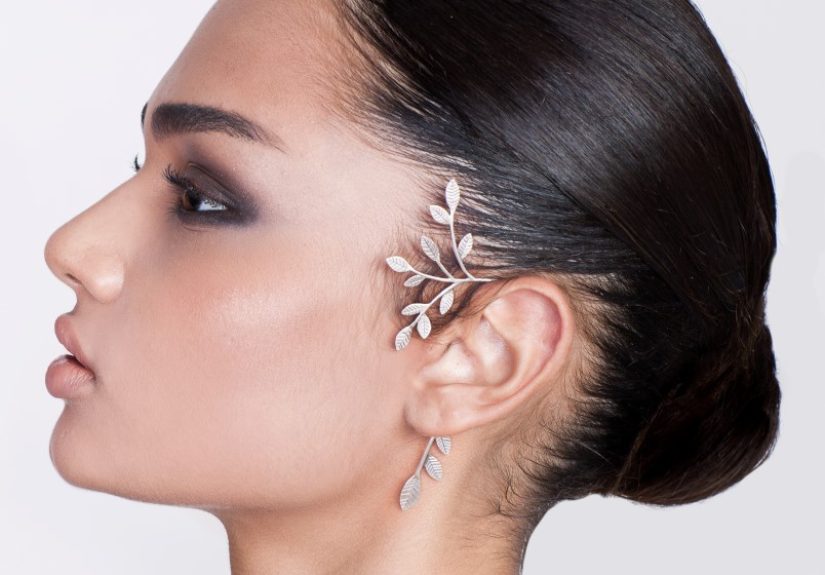
Twisted wire makes excellent vines. Add tiny leaf shapes, green beads, or pearl accents for a garden-inspired look. This style is romantic without being too sweet, especially if the metal has an antique finish.
Minimalist Architecture Cuff
For a modern look, use clean lines, open spaces, and bold angles. Think tiny wearable sculpture. These cuffs pair well with sleek outfits, short hair, or pulled-back styles that let the shape stand out.
Chain-Draped Ear Cuff
Chains can connect a cuff to a stud, clip, or another cuff. This creates a layered effect without requiring multiple piercings. Use fine chain for comfort and test movement before finishing the piece.
Mixed-Metal Cuff
Combining silver and gold tones can make an ear cuff feel modern and flexible. Mixed metals also make styling easier because the wearer does not have to choose one jewelry color for the day. Jewelry peace treaty achieved.
How to Style Unusual Ear Cuffs
The easiest way to style a bold ear cuff is to let it be the main event. If the cuff is large, sculptural, or heavily detailed, pair it with simple studs, small hoops, or no other earrings at all. Pulling hair back can show off the design, while loose waves can create a peekaboo effect that feels softer and more casual.
For everyday wear, smaller cuffs can be stacked. A thin band, a textured cuff, and a tiny chain piece can create a curated ear without looking overdone. For special occasions, one dramatic cuff can replace a necklace and keep the focus near the face. This is especially useful when an outfit has a high neckline, detailed collar, or enough sparkle already happening below the chin.
Care Tips for Handmade Ear Cuffs
Handmade ear cuffs deserve gentle care. Store them separately so chains do not tangle and finishes do not scratch. Wipe them after wearing to remove oils or moisture. Avoid bending the same spot repeatedly because metal can weaken over time. Remove cuffs before swimming, sleeping, exercising, or entering any situation where jewelry may get pulled. Yes, this includes wrestling a hoodie over your head with reckless optimism.
If a cuff starts to feel loose, adjust it gently and slowly. If it is made from a harder metal, do not force it. For plated pieces, avoid abrasive polishing because it can wear down the finish. A soft cloth is often enough for regular cleaning.
Why Handmade Ear Cuffs Make Great Gifts
Unusual ear cuffs feel personal. They are small, wearable, and expressive, but they do not require knowing someone’s ring size or necklace length. A handmade cuff can reflect a friend’s personality: celestial for the dreamer, leafy for the nature lover, spiky for the person who owns more black clothing than technically necessary, and sleek silver for the minimalist who says “I like simple things” while choosing the most interesting simple thing available.
They also make wonderful gifts because many styles do not require piercings. That means more people can enjoy them. A well-made ear cuff can feel like a tiny custom artwork, especially when it includes a favorite color, birthstone-inspired bead, symbolic charm, or design connected to a shared memory.
Common Mistakes to Avoid
The first mistake is making the cuff too tight. A secure fit should not hurt. The second is leaving edges rough. Even a tiny scratchy spot can ruin the wearing experience. The third is adding too much weight. Charms and chains are fun, but gravity remains undefeated.
Another mistake is copying trends too closely. Inspiration is useful, but the best handmade pieces have a voice of their own. If you love a popular celestial cuff, do not simply recreate it. Change the line, alter the texture, use unexpected beads, or build a new story around it. Originality often begins with a small twist.
My Experience Making Unusual Ear Cuffs
I love making unusual ear cuffs because they let me be both practical and ridiculous at the same time. One minute I am measuring wire, smoothing edges, and checking fit like a responsible craftsperson. The next minute I am asking myself whether a tiny moon needs three dangling stars or five. This is the kind of problem I enjoy having.
My earliest cuffs were not masterpieces. They were enthusiastic little loops of wire with more confidence than polish. Some were too loose and slid down the ear like they were trying to leave the conversation. Others were too tight and had to be retired immediately because jewelry should not feel like a tiny crab. But each mistake taught me something useful. I learned that the curve matters more than the decoration. I learned that a smooth edge can make the difference between “I love this” and “Why is my ear annoyed?” I learned that lightweight designs almost always win.
One of my favorite experiments was a vine-inspired cuff made from twisted wire and tiny green beads. At first, it looked too busy, like a houseplant had gotten tangled in a jewelry drawer. I removed half the beads, reshaped the upper curve, and suddenly it worked. That piece taught me the power of editing. In small jewelry, empty space is not empty at all; it gives the design room to breathe.
I also enjoy making dramatic cuffs that look more complicated than they are. A few carefully placed curves can create the illusion of movement. A short chain can make a simple cuff feel elegant. A hammered texture can make plain metal look handcrafted in the best possible way. The secret is not always adding more. Sometimes the secret is knowing when to stop before the cuff starts looking like it packed for a vacation.
The most rewarding part is seeing someone try on a cuff and immediately tilt their head in the mirror. Ear cuffs change posture. People turn slightly, tuck their hair back, and smile when the piece feels right. That little reaction is why I keep making them. They are not just accessories; they are tiny invitations to play with identity for the day.
Making unusual ear cuffs has also made me more observant. I notice the curve of leaves, the shape of old gates, the pattern of stars, the swirl of shells, and the clean lines of modern buildings. Almost anything can become an ear cuff idea if you stare at it long enough and have pliers nearby. That is the real charm of this craft: it turns the world into a sketchbook.
Conclusion
Unusual ear cuffs are proof that jewelry does not need to be large to be expressive. With the right shape, comfortable fit, thoughtful materials, and a little creative courage, a handmade cuff can become a miniature work of wearable art. Whether you love delicate wire vines, bold architectural bands, celestial chains, or fantasy-inspired statement pieces, making ear cuffs is a joyful way to explore personal style on a small but powerful canvas.
The best designs balance imagination with comfort. Smooth the edges, test the fit, respect the materials, and let each piece have a reason for existing. When an ear cuff feels good, looks original, and tells a story, it becomes more than an accessory. It becomes a tiny sculpture with excellent social skills.