Table of Contents >> Show >> Hide
- What Is a Bridge in a Song?
- How to Write a Bridge for a Song in 10 Steps
- 1. Decide Whether Your Song Actually Needs a Bridge
- 2. Give the Bridge One Clear Job
- 3. Place It Where It Creates the Most Impact
- 4. Change the Lyrical Perspective
- 5. Write a Melody That Does Not Sound Like the Verse or Chorus
- 6. Shift the Chords or Harmonic Center
- 7. Change the Rhythm, Groove, or Dynamics
- 8. Keep It Short Enough to Stay Powerful
- 9. Make the Return to the Chorus Feel Inevitable
- 10. Edit Until the Bridge Earns Its Spot
- Common Mistakes to Avoid When Writing a Song Bridge
- A Quick Example of How to Write a Bridge in Music
- Real-World Songwriting Experiences: What Writing a Bridge Actually Feels Like
- Final Thoughts
- SEO Tags
Every songwriter knows the feeling: verse, chorus, verse, chorus… and then the song starts pacing around the room like it forgot why it came in. That is usually where the bridge shows up, wearing sunglasses and acting like it owns the place. A great bridge can lift a song, deepen the message, surprise the listener, and make the final chorus hit like it suddenly remembered leg day.
If you have ever wondered how to write a bridge for a song without making it sound glued on at the last second, you are in the right place. The best bridges are not random detours. They are purposeful turns. They change the emotional weather, refresh the melody, and give the listener one more reason to care before the song comes home.
In this guide, you will learn exactly how to write a song bridge in 10 practical steps. We will cover song structure, lyrical perspective, chord movement, melody changes, and the sneaky little details that make a bridge feel necessary instead of awkward. In other words, we are building a musical bridge, not a lyrical traffic cone.
What Is a Bridge in a Song?
A bridge is a contrasting section that breaks away from the verse and chorus before leading the listener back to familiar territory. In many popular songs, the bridge appears after the second chorus and before the final chorus. It often shows up only once, which is part of its charm. It is the section that says, “Hang on, we are not done yet.”
The purpose of a song bridge is simple: create contrast and make the ending stronger. That contrast might come from a new melody, a different chord progression, a change in dynamics, a different rhythm, a fresh lyrical angle, or all of the above if you are feeling ambitious and slightly dramatic.
A strong bridge does not exist just to fill space. It should either reveal something new, heighten the emotion, shift the point of view, or set up the final chorus in a way that gives it more impact. If your bridge sounds like Verse 3 wearing a fake mustache, it probably needs more work.
How to Write a Bridge for a Song in 10 Steps
1. Decide Whether Your Song Actually Needs a Bridge
Before you write a bridge, ask the most important question: does the song need one? Not every song does. Some songs say exactly what they need to say with verses and choruses alone. In fact, forcing a bridge into a song that already feels complete can make the whole track feel bloated.
Try this quick test. After your second chorus, listen back and ask yourself:
- Is the song starting to feel repetitive?
- Is there one more emotional layer I have not explored yet?
- Would a fresh section make the final chorus stronger?
If the answer is yes, congratulations, your song may be asking for a bridge. If the answer is no, do not build one just because songwriting tradition is standing in the corner judging you.
2. Give the Bridge One Clear Job
The easiest way to write a weak bridge is to let it do nothing in particular. A strong bridge needs a purpose. Choose one clear job before you write a single line.
Your bridge might:
- Reveal a new thought
- Zoom out to a bigger meaning
- Introduce doubt, regret, hope, or irony
- Add musical lift before the final chorus
- Shift the emotional energy from quiet to explosive
For example, if your song is about a breakup, the verse may tell the story and the chorus may repeat the heartbreak. The bridge could change the angle by saying, “Maybe I miss who I was with you more than I miss you.” That is fresh information. That is a bridge doing actual work.
3. Place It Where It Creates the Most Impact
In modern song structure, the bridge usually lands after the second chorus. That placement works because by then the listener already understands the song. They know the groove, they know the hook, and they are ready for a twist.
A common structure looks like this:
Verse – Chorus – Verse – Chorus – Bridge – Final Chorus
That said, songwriting is not a tax form. There is room for variation. Some writers use a breakdown, a solo, or a hybrid section that behaves like a bridge. The key is not to place it randomly. Put the bridge at the point where the song needs a fresh breath and the final section needs a launchpad.
4. Change the Lyrical Perspective
One of the best ways to write a bridge is to say something the rest of the song has not said yet. The verse often provides details. The chorus usually delivers the central idea. The bridge can bring a twist, a summary, a confession, or a deeper truth.
Here are a few lyrical bridge strategies:
- Move from details to a big-picture statement
- Switch from present tense to memory or future tense
- Reveal the hidden reason behind the emotion
- Say the quiet part out loud
Suppose your chorus says, “I still see your shadow in this town.” Your bridge could shift to: “Maybe I never left that night behind.” That changes the emotional meaning. It tells the listener the ghost is not the town. It is the narrator. Much better. Much messier. Much more interesting.
5. Write a Melody That Does Not Sound Like the Verse or Chorus
If your bridge melody feels too similar to the rest of the song, the listener may not even realize they arrived somewhere new. The bridge should sound distinct. It can climb higher, drop lower, stretch longer notes, use a different rhythmic pattern, or create a more conversational flow.
A practical trick is to do the opposite of what the chorus does. If the chorus is wide, loud, and soaring, make the bridge tighter and more intimate before it opens back up. If the chorus is rhythmically busy, simplify the bridge melody so the lyrics land harder.
Try humming three melodic options before writing lyrics. Nonsense syllables are welcome here. “Da-da-oh-wow-yeah” may not win a poetry award, but it can lead you to a bridge melody that actually works.
6. Shift the Chords or Harmonic Center
A bridge often feels fresh because the harmony changes. That does not mean you need a music theory PhD or a dramatic key change that sounds like the song drank six espressos. Even a small chord shift can create contrast.
You can try:
- A new chord progression
- Borrowed chords from the parallel minor or major
- A move to relative major or relative minor
- A chord that has not appeared elsewhere in the song
For example, if your verse and chorus live comfortably in a bright major world, the bridge can introduce a darker minor color. That one move often makes the final chorus feel bigger and more earned when the song returns home.
If theory is not your thing, use your ears. Play the chorus, then intentionally try chords that feel less expected. The bridge is allowed to be the interesting cousin at the family reunion.
7. Change the Rhythm, Groove, or Dynamics
Not every bridge needs a giant harmonic plot twist. Sometimes the magic comes from changing the feel. You can shift into half-time, strip out the drums, add a syncopated vocal rhythm, or pull the arrangement back so the bridge creates tension through space instead of volume.
Dynamic contrast matters. If everything in your song is already at full blast, the bridge might work better as a quiet drop. If the track has been restrained, the bridge may be the perfect place to add lift, extra percussion, stacked harmonies, or a melodic push.
Think of the bridge as the section that resets the listener’s ears. Sometimes the smartest move is not to get bigger. It is to get smaller first so the final chorus can explode naturally.
8. Keep It Short Enough to Stay Powerful
Many effective bridges are short. Four or eight bars is common because the section is meant to refresh the song, not move in and change the locks. If your bridge drags on too long, the song can lose momentum.
As a rule, stop the bridge while the listener still wants more. That is usually better than overstaying your welcome. A concise bridge often feels more intentional, more memorable, and more emotionally potent.
If you are not sure about length, write the whole section, then cut 20 percent. Songwriters hate this advice because it works.
9. Make the Return to the Chorus Feel Inevitable
A great bridge does not only sound different. It also points back to the final chorus. That return should feel satisfying, not abrupt. The bridge should hand the listener back to the chorus with a sense of tension and release.
You can create that setup by:
- Ending the bridge on a chord that pulls toward the chorus
- Raising the melodic intensity near the end
- Repeating a key phrase that leads naturally into the hook
- Dropping instruments out for one beat before the chorus slams back in
Imagine the bridge as the part of the roller coaster that pauses at the top. The final chorus is the drop. If the bridge does not build that anticipation, the last chorus may feel like it just wandered back into the room by accident.
10. Edit Until the Bridge Earns Its Spot
Once the bridge is written, test it brutally. Sing the song top to bottom and pay attention to the moment the bridge arrives. Does the energy shift in a satisfying way? Do the lyrics add something new? Does the final chorus hit harder because of what just happened?
If not, revise. Maybe the melody needs more lift. Maybe the lyrics are repeating the same idea. Maybe the bridge should be instrumental. Maybe it should disappear entirely. Songwriting is not about protecting every line you wrote at 1:17 a.m. while feeling very profound. It is about serving the song.
A bridge earns its place when the listener would miss it if it disappeared.
Common Mistakes to Avoid When Writing a Song Bridge
- Repeating the verse idea: If the bridge says nothing new, it is not doing enough.
- Changing everything at once: Too many twists can make the section feel disconnected instead of fresh.
- Overwriting the lyrics: A bridge is not a parking lot for leftover thoughts.
- Ignoring melody: New lyrics alone will not save a bridge if the melody feels recycled.
- Forcing a bridge into every song: Some songs are stronger without one.
The best bridge writing tips are surprisingly simple: be intentional, be concise, and make the section matter. Fancy theory helps, but clarity helps more.
A Quick Example of How to Write a Bridge in Music
Let us say your song is built around this idea:
Verse: You describe seeing familiar places after a breakup.
Chorus: “Every street still sounds like your name.”
A weak bridge might keep describing the same streets, same pain, same memory. A stronger bridge would shift the angle:
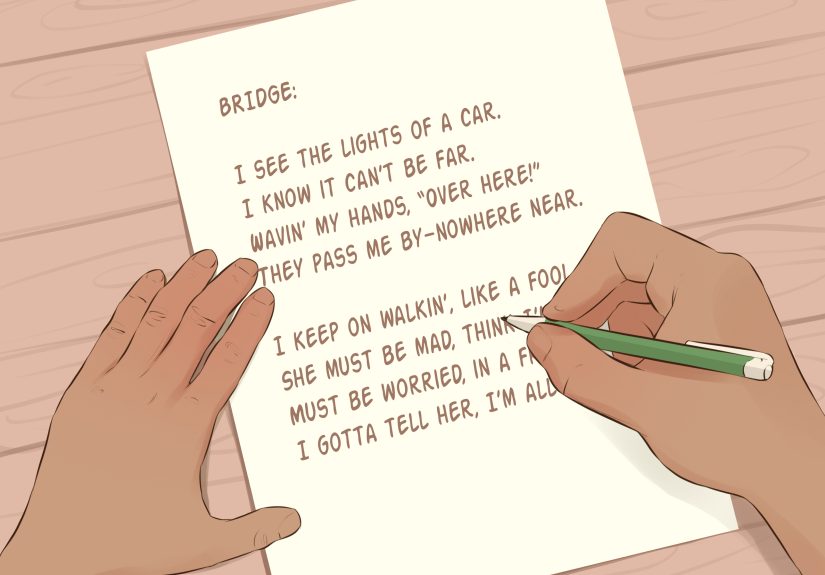
Bridge example:
“Maybe it was never this town I could not leave behind,
Maybe I kept your echo alive in my own mind.”
Now the song turns inward. The emotional meaning deepens. The final chorus lands differently because the listener understands the problem in a new way. That is what a good bridge does.
Real-World Songwriting Experiences: What Writing a Bridge Actually Feels Like
For many writers, the bridge is the part of the song that causes the most staring into the middle distance. The verse arrives with details. The chorus arrives with emotion and repetition. But the bridge? The bridge shows up like a creative pop quiz and asks whether the song really has anything deeper to say. That is why writing a bridge can feel both frustrating and exciting at the same time.
A common experience is reaching the second chorus and realizing the song suddenly sounds smaller instead of bigger. On paper, the structure looks fine. In the room, though, the track starts circling the same emotional block. That is usually the moment a songwriter either writes a bridge or pretends not to notice and goes straight to another chorus. Sometimes that works. Sometimes it sounds like the song ran out of road.
Another familiar experience is discovering that the bridge was hidden in the song all along. Many writers spend an hour trying to invent something brand-new, only to realize the best bridge comes from a single unused line in Verse 1 or a melodic fragment they hummed by accident during playback. Bridges often reward attention more than force. The solution is not always bigger effort. Sometimes it is better listening.
Co-writing adds another layer to the experience. One writer may want the bridge to lift emotionally, while another wants it to get quieter and more reflective. That tension can actually be useful. Some of the strongest bridges come from asking, “What has not been said yet?” instead of “What would sound impressive here?” That question usually leads to better lyrics, fewer dramatic cartwheels, and a bridge that feels earned.
There is also the experience of writing a bridge that seems brilliant at midnight and deeply suspicious by morning. This is normal. The bridge is often the section most likely to sound clever in isolation but strange inside the full song. That is why singing the entire arrangement matters. A bridge should not just win a small contest against silence. It should improve the song before and after it.
Many writers also notice that the best bridges create a physical reaction when sung out loud. Maybe the melody rises into a stronger part of the vocal range. Maybe the lyric suddenly lands with more honesty. Maybe the arrangement drops and creates a hush that makes the room feel different for a second. When a bridge is working, it often feels less like decoration and more like a turn in the story.
Perhaps the most valuable experience songwriters gain over time is learning that not every bridge needs to be flashy. Some bridges are powerful because they are subtle. A small chord shift, a single revealing line, or a quieter vocal delivery can change the emotional context of the final chorus. That kind of bridge may not wave for attention, but it does the hard job of making the whole song feel more complete.
In the end, writing bridges gets easier when you stop treating them like mysterious bonus sections. They are simply tools for contrast, development, and payoff. The more songs you finish, the better you get at hearing whether the song needs one, what the bridge should do, and when to leave well enough alone. Experience teaches that the bridge is not there to impress the writer. It is there to serve the song.
Final Thoughts
If you want to learn how to write a bridge for a song, remember this: the bridge is not just a different section. It is a strategic section. It should provide contrast, deepen the message, and make the final chorus feel more powerful than it would without it.
Start by deciding whether your song needs a bridge at all. Then give it a purpose, change the perspective, refresh the melody, shift the harmony or groove, and edit until it truly earns its place. The best song bridge does not feel pasted in. It feels inevitable, like the song was always heading there.
And if your first few bridges sound awkward, welcome to songwriting. That is not failure. That is training. Keep writing, keep listening, and keep asking what your song still needs to say. Sometimes the answer is a bridge. Sometimes the answer is another chorus. Sometimes the answer is coffee.