Table of Contents >> Show >> Hide
- Step 1: Start with the phrase “Om Swastiastu”
- Step 2: Pair the words with respectful body language
- Step 3: Know when Balinese, Indonesian, or English makes the most sense
- Step 4: Learn the time-of-day greetings
- Step 5: Add one or two follow-up phrases
- Step 6: Match your greeting to the setting
- Step 7: Practice until you sound natural, not mechanical
- Common mistakes to avoid
- A quick cheat sheet
- What the experience often feels like in real life
- Conclusion
If you are heading to Bali and want to make a good first impression, learning how to say hello in Balinese is a smart move. It is also a lot more charming than barging in with the international classic of “Hey, uh, where’s the beach?” Balinese culture places real value on respectful greetings, calm manners, and showing warmth without acting like you are auditioning for a one-person travel documentary.
The good news is that you do not need to master the entire Balinese language to sound thoughtful. In fact, the best approach is simple: learn one core greeting, use it politely, understand when to switch to Indonesian or English, and avoid turning yourself into an overconfident phrasebook robot. Bali is multilingual, many people speak Indonesian, and plenty of people in tourist areas also speak English. Still, using even a little Balinese can make interactions feel more human, more respectful, and a lot less generic.
This guide breaks the process into seven practical steps. You will learn the most common greeting, when to use it, how to sound natural, which body language matters, and what little mistakes can make a big difference. Think of it as your shortcut to saying hello in Bali without sounding like you swallowed a souvenir dictionary.
Step 1: Start with the phrase “Om Swastiastu”
The most recognizable Balinese greeting is Om Swastiastu. This is the phrase most travelers learn first, and for good reason. It is respectful, widely recognized in Balinese Hindu culture, and works as a greeting in formal or courteous situations. It is more than a plain “hi.” It carries a blessing-like feeling, which is why it sounds warmer and more meaningful than a casual tourist hello.
If you want a simple English-friendly pronunciation, try something close to ohm swah-stee-AHS-too. Do not panic about perfect accent. A calm, sincere delivery matters more than dramatic theater-level pronunciation. Nobody needs you to sound like you were born in a Balinese temple courtyard. They just need you to sound respectful.
This greeting is especially useful when you are meeting someone for the first time, entering a place with cultural or spiritual importance, greeting an older person, or starting a polite interaction. In everyday tourist-heavy settings, some locals may also greet you in Indonesian or English, so do not be surprised if your carefully prepared Balinese greeting is answered with “Hello, my friend.” That is not failure. That is Bali being practical.
Step 2: Pair the words with respectful body language
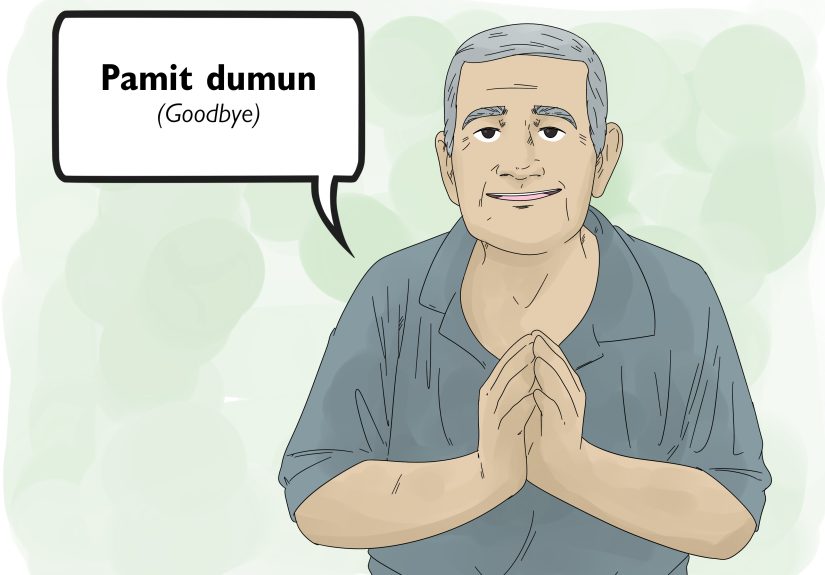
In Bali, words are only part of the greeting. The way you carry yourself matters too. A soft smile, a gentle tone, and relaxed posture go a long way. Many respectful greetings may be paired with hands together in front of the chest, similar to a prayer-like gesture. You do not need to overdo it or act overly ceremonial. A natural, modest version is enough.
Think of the greeting as calm rather than loud. Balinese etiquette tends to value restraint, politeness, and harmony. So this is not the right moment for a huge booming “OM SWASTIASTU!” like you are opening a rock concert. Keep your voice friendly and measured.
It also helps to remember a few simple etiquette habits. Use your right hand, or both hands, when offering or receiving something. Avoid pointing with your index finger at people. Do not touch people’s heads. Keep your gestures relaxed and respectful. In other words, greet like a considerate guest, not like someone trying to direct airport traffic.
Step 3: Know when Balinese, Indonesian, or English makes the most sense
Here is the practical truth travelers should know: Bali is not linguistically simple. Balinese is an important local language, but Indonesian is the national language and is widely used across the country. Many people in Bali move comfortably between Balinese and Indonesian, and workers in tourism may also use English every day. That means the “best” greeting depends on the setting.
If you are speaking with local families, elders, cultural guides, or people in traditional settings, Om Swastiastu can feel especially appropriate and respectful. If you are in a hotel, restaurant, shop, or ride service, you may hear Indonesian greetings like Selamat pagi or Halo. In those cases, replying warmly in Indonesian or English is also perfectly normal.
The smartest traveler is not the one who insists on forcing Balinese into every interaction. The smartest traveler is the one who reads the room. A respectful “Om Swastiastu” can open a door. A flexible switch to Indonesian or English can keep the conversation smooth. That balance makes you sound thoughtful instead of performative.
There is one more reason to keep things simple: Balinese has speech levels and politeness distinctions. That means the language can shift depending on social relationships and formality. For a visitor, this is a good reason to learn a few clean, respectful phrases instead of trying to freestyle your way into advanced vocabulary. Improvisation is fun in jazz. It is less reliable in sociolinguistics.
Step 4: Learn the time-of-day greetings
Once you know the main greeting, the next level is learning a few time-specific phrases. These are not mandatory, but they are useful and memorable. They also make your effort feel more personal.
Useful Balinese greetings
- Om Swastiastu hello; a respectful Balinese greeting
- Rahajeng semeng good morning
- Rahajeng siang good day or early afternoon
- Rahajeng sore good late afternoon
- Rahajeng wengi good evening or good night
You do not need to memorize every version on day one. Start with Rahajeng semeng for morning and Rahajeng wengi for evening, and you already sound far more prepared than the average visitor whose full vocabulary consists of “Bintang” and “spa.”
If pronunciation feels intimidating, practice slowly. Break the phrase into chunks. Listen. Repeat. Smile. Nobody is grading you with a red pen. Locals usually appreciate the effort when it is genuine.
Step 5: Add one or two follow-up phrases
Saying hello is great. Saying hello and then immediately freezing like your brain just lost Wi-Fi is less ideal. That is why it helps to learn one or two follow-up phrases. You do not need a full conversation script. Just enough to keep the moment alive.
Helpful follow-up phrases
- Suksma thank you
- Matur suksma thank you very much
- Suksma mewali you are welcome
- Punapi gatra? how are you?
- Becik-becik I am fine
A simple interaction could look like this: “Om Swastiastu.” Then a smile. Then “Suksma” when someone helps you. That alone can completely change the tone of an exchange. It signals that you are paying attention to the place you are in, not just consuming it like a scenic backdrop.
You can also combine Balinese and Indonesian naturally. For example, greet in Balinese, then continue in Indonesian or English if needed. That is a very realistic way real conversations unfold in Bali.
Step 6: Match your greeting to the setting
Not every hello belongs everywhere. A casual beach café, a village compound, a temple entrance, and a driver pick-up spot do not all have the same vibe. The trick is to let context guide your greeting.
In a cultural or spiritual setting, a respectful Om Swastiastu with calm body language makes sense. In a casual setting, a softer “halo” or a smile plus greeting may feel more natural. In busy tourist areas, many locals adapt to visitors and may greet you in English first. That is fine. The goal is not to force authenticity like it is a costume. The goal is to show respect in a way that fits the moment.
Also remember that greeting etiquette in Bali is connected to broader manners. Dress modestly when visiting temples. Watch where you step because small daily offerings may be placed on sidewalks or entrances. Stay patient if a religious procession interrupts traffic. Keep your temper in check. Bali responds well to calm energy and poorly to loud entitlement.
In other words, the best hello in Balinese is not just a phrase. It is a phrase supported by good manners. Language opens the door. Etiquette keeps it open.
Step 7: Practice until you sound natural, not mechanical
The last step is the one people skip: practice. Not obsessive, eight-hours-a-day, move-into-a-language-lab practice. Just enough repetition so the greeting comes out smoothly when you need it. Say the phrases aloud. Try them while walking, while making coffee, or while staring heroically at your suitcase two hours before a flight.
Focus on rhythm and confidence rather than perfection. Most travelers sound awkward because they either mumble the phrase like a secret password or over-enunciate every syllable like they are reading a legal disclaimer. Aim for the middle. Calm. Clear. Friendly.
It also helps to practice with situations in mind:
- Meeting your villa host: Om Swastiastu
- Greeting a shopkeeper in the morning: Rahajeng semeng
- Thanking a server: Suksma
- Saying good evening politely: Rahajeng wengi
Once you attach phrases to real situations, they stop feeling like vocabulary homework and start feeling usable. That is the goal. Language should help you connect, not just decorate your travel diary.
Common mistakes to avoid
Before you go, here are a few mistakes worth skipping:
- Using one phrase like a magic key for everything. Even a good greeting can sound odd if the situation is casual and the tone is too formal.
- Speaking too loudly. Polite and calm beats dramatic and booming.
- Ignoring body language. A warm smile matters.
- Insisting on Balinese when the other person switches to Indonesian or English. Follow the conversation instead of fighting it.
- Treating the greeting like a gimmick. Respect beats performance every time.
A quick cheat sheet
If you remember nothing else, remember this:
- Best all-purpose respectful greeting: Om Swastiastu
- Best morning greeting: Rahajeng semeng
- Best evening greeting: Rahajeng wengi
- Best thank you: Suksma
- Best strategy overall: be respectful, smile, and keep it simple
What the experience often feels like in real life
Learning how to say hello in Balinese sounds like a tiny thing on paper, but the experience of using it in Bali can feel surprisingly big. Imagine arriving after a long flight, slightly disoriented, wearing the universal expression of someone who has not yet located their luggage, their charger, or their emotional stability. Then your driver smiles, and instead of defaulting to a generic “hi,” you say, “Om Swastiastu.” The response is immediate. The smile widens. The interaction changes. It becomes less transactional and more human.
That is often what travelers remember. Not that the phrase was difficult or exotic, but that it softened the distance between visitor and local. In a small café, using Rahajeng semeng in the morning can turn a routine coffee order into a warmer exchange. At a family-run guesthouse, saying Suksma after someone brings tea or helps with directions can make your appreciation feel more grounded in the place you are visiting. You are no longer just passing through Bali. For a brief moment, you are participating in it.
There is also a humbling side to the experience. The first few times, many people feel nervous. They wonder if they are pronouncing the phrase correctly. They worry about sounding silly. Then they discover something helpful: sincerity covers a lot. Locals usually do not expect perfection. What they notice is effort, tone, and respect. That realization can be freeing. It encourages travelers to pay more attention, speak more gently, and become more curious about the culture around them.
Another memorable part of the experience is how quickly language teaches you etiquette. Once you start learning greetings, you also start noticing how people move through social space. You notice the calm tone in conversations. You notice the smiles. You notice offerings on the ground and become more careful where you step. You notice that politeness is not just a collection of rules; it is part of the atmosphere. A greeting becomes a doorway into understanding how Bali values harmony, respect, and presence.
Of course, real life is never as neat as a phrase list. Sometimes you greet someone in Balinese and they answer in English. Sometimes you try a morning greeting at what turns out to be almost noon. Sometimes you confidently pronounce a word and realize halfway through that confidence and correctness are two entirely different hobbies. That is part of the charm. These little imperfect moments are often what make travel memorable. They remind you that language is not a performance. It is an attempt to meet someone halfway.
In the end, the experience of saying hello in Balinese is not really about collecting a phrase for social media bragging rights. It is about changing your posture as a traveler. Instead of arriving as a consumer, you arrive as a guest. Instead of assuming English should do all the work, you offer a small piece of effort. And that effort, small as it seems, can create better conversations, kinder interactions, and a deeper sense of connection. Not bad for one greeting, really.
Conclusion
If you want to say hello in Balinese the right way, the best place to start is with Om Swastiastu. From there, add a smile, calm body language, and a little awareness of the setting. Learn a couple of time-of-day greetings like Rahajeng semeng and Rahajeng wengi. Toss in Suksma for thank you, and suddenly you are no longer just another traveler clutching sunscreen and confusion.
The most important lesson is this: respectful communication in Bali is not about showing off vocabulary. It is about showing care. A thoughtful greeting, used naturally and politely, can make your interactions smoother, warmer, and more memorable. That is a pretty good return on a few minutes of practice.