Table of Contents >> Show >> Hide
- First Rule: Avoid Walking on a Tile Roof Unless You Truly Need To
- Understand What Makes Tile Roofs Easy to Damage
- Before You Climb: Check Weather, Slope, and Your Own Common Sense
- Use the Right Shoes: Soft, Clean, and Non-Slip
- Ladder Safety Comes Before Roof Safety
- Where to Step on a Tile Roof
- Use Walking Boards or Foam Pads When Possible
- Move Like a Professional: Slow, Balanced, and Boring
- How to Walk on Barrel Tile Without Breaking It
- Protect the Roof Underlayment
- Common Mistakes That Break Roof Tiles
- When to Call a Professional Roofer
- Practical Example: Cleaning Debris From a Tile Roof Valley
- Practical Example: Checking a Broken Tile After a Storm
- Safety Checklist Before Walking on a Tile Roof
- Extra Experience Section: Lessons From Real Tile Roof Situations
- Conclusion: Walk Less, Step Smarter, Protect More
- SEO Tags
Tile roofs are gorgeous. They make a home look elegant, durable, and slightly Mediterranean, even if the only “coastal villa” nearby is your neighbor’s barbecue grill. But there is one thing every homeowner should know before stepping onto one: a tile roof is not a sidewalk in the sky.
Clay and concrete roof tiles are strong against weather, sun, fire, and time, but they can crack under the wrong kind of foot pressure. A single misplaced step can break a tile, expose the underlayment, invite leaks, and turn a quick gutter check into a repair bill with a personality. The good news? You can reduce the risk by knowing where to step, what gear to use, and when to call a professional instead of testing your balance like a circus goat.
This guide explains how to safely walk on a tile roof without breaking it, including preparation, foot placement, ladder safety, weight distribution, common mistakes, and real-world homeowner experiences.
First Rule: Avoid Walking on a Tile Roof Unless You Truly Need To
The safest way to avoid breaking roof tiles is simple: do not walk on them unless it is necessary. Many tile-roof tasks can be done from a ladder, from the ground with binoculars, or by hiring a licensed roofing contractor. If you only need to check for broken tiles, clogged valleys, debris, moss, or a slipped tile, you may be able to inspect most of the roof visually without stepping onto it.
Tile roofing systems are designed to shed water, resist weather, and protect the roof deck. They are not designed for casual foot traffic. Even when tiles are installed correctly, the curved or overlapping shape can create weak points. A tile may look solid but crack under sudden pressure, especially if it is old, weathered, thin, unsupported, or already hairline-cracked.
Understand What Makes Tile Roofs Easy to Damage
To walk on a tile roof safely, you need to understand how the roof is built. Most clay and concrete tile roofs are made of overlapping pieces. The tiles sit on battens or roof decking, and the underlayment beneath them acts as the main water barrier. The tiles protect that underlayment from sun, impact, and direct weather exposure.
When you step in the wrong place, the tile may flex. Tile does not like flexing. It prefers to sit there looking attractive and expensive. The unsupported center of a tile is often more vulnerable than the lower portion where tiles overlap. That is why professionals usually step on the lower third of the tile, where the tile is better supported by the tile beneath it.
Clay Tile vs. Concrete Tile
Clay tile is beautiful and long-lasting, but it can be brittle. Concrete tile is also durable, but it can still crack under concentrated weight. Lightweight concrete tiles, older tiles, high-barrel tiles, and decorative profiles may be especially sensitive to foot traffic. Synthetic tile products may have different walking instructions, so manufacturer guidance matters.
Flat Tile vs. Barrel Tile
Flat tile roofs are usually easier to walk on than high-profile barrel tile roofs. Barrel tiles have curved shapes that make foot placement trickier. If you step on the crown of a barrel tile or between unsupported curves, you can crack the tile quickly. On high-profile tile, walking boards, foam pads, roof ladders, or professional access methods are much safer than direct foot traffic.
Before You Climb: Check Weather, Slope, and Your Own Common Sense
Never walk on a tile roof when it is wet, icy, windy, dusty, or covered with loose debris. Tile can be slippery even when dry, and wet tile can feel like it has been polished by a mischievous raccoon. If there is algae, moss, leaves, pine needles, or roof dust, your footing becomes less predictable.
You should also consider roof pitch. A low-slope tile roof may be manageable for trained professionals with the right equipment. A steep tile roof is a different story. If the roof feels intimidating from the ground, it will feel much worse when you are halfway up and suddenly remembering every poor life decision that led to this moment.
Do Not Walk on a Tile Roof If:
- The roof is wet, slick, icy, or covered in debris.
- The roof pitch is steep or difficult to navigate.
- You do not have proper footwear.
- You do not have safe ladder access.
- You need to carry heavy tools or equipment.
- You see many cracked, loose, or displaced tiles.
- You are uncomfortable with heights.
Use the Right Shoes: Soft, Clean, and Non-Slip
Footwear matters. Wear soft-soled, rubber-bottom shoes or boots with good grip. Avoid heavy work boots with hard, aggressive lugs that can concentrate pressure on small areas of tile. Also avoid slick sneakers, sandals, dress shoes, and anything that makes you look like you are going to brunch instead of onto a roof.
Clean your soles before climbing. Mud, gravel, and tiny stones stuck in your shoes can scratch tile coatings or create pressure points that increase the chance of cracking. A soft sole helps distribute your weight more gently and improves traction.
Ladder Safety Comes Before Roof Safety
Many roof accidents happen before a person even gets onto the roof. Use a sturdy extension ladder set on firm, level ground. The ladder should be tall enough to extend at least 3 feet above the roof edge when used for roof access. Set it at a safe angle, usually close to the 4-to-1 rule: for every 4 feet of height, the ladder base should sit about 1 foot away from the wall or roof edge.
Secure the ladder if possible, keep it away from doors and traffic areas, and maintain three points of contact while climbing. Do not carry tools in your hands while climbing. Use a tool belt or raise tools separately with a rope. If this already sounds like a lot, that is the roof politely telling you to hire a professional.
Where to Step on a Tile Roof
The key to walking on a tile roof without breaking it is to step where the tile is supported. In general, the lower third of the tile is the safest walking zone because it overlaps the tile below. This area transfers weight more effectively than the center or upper unsupported portion.
Best Foot Placement
- Step on the lower third of each tile.
- Place your foot parallel with the roof ridge when possible.
- Keep your weight evenly distributed between both feet.
- Move slowly and deliberately.
- Avoid sudden pivots, stomps, jumps, or twisting motions.
Think of each step as a polite handshake, not a wrestling move. Lower your foot gently, shift your weight slowly, and avoid bouncing. The goal is to reduce point pressure and impact.
Where Not to Step
- Do not step on the middle of unsupported tiles.
- Do not step on the raised crown of high barrel tiles.
- Do not step on ridges, hips, valleys, or rake edges unless designed for access.
- Do not step on cracked, loose, or visibly lifted tiles.
- Do not step near skylights, vents, or fragile flashing areas.
Roof valleys and hips often collect debris and include cut tiles, flashing, and complex transitions. These areas are more likely to shift, crack, or leak if handled carelessly. Treat them like the “do not touch” section of a museum.
Use Walking Boards or Foam Pads When Possible
Professional roofers often use equipment to spread weight across a larger area. Walking boards, roof ladders, foam pads, or padded crawl boards can reduce direct pressure on individual tiles. The idea is simple: your body weight is less likely to break tile when it is distributed across multiple tiles or structural support points.
However, equipment must be used correctly. A board placed carelessly can slide, crush a tile edge, or damage the roof surface. Do not drag boards across tile. Lift and place them gently. If you do not know how to set roof-access equipment safely, call someone who does.
Move Like a Professional: Slow, Balanced, and Boring
On a tile roof, boring is good. Exciting is expensive. Keep your body low, your steps short, and your movement controlled. Avoid long strides. Do not rush because the clouds are coming in or because someone yelled that lunch is ready.
If you must move across the roof, plan your route before stepping. Choose a path that avoids valleys, broken tiles, steep transitions, and unnecessary travel. The less you walk, the lower the risk of damage.
A Safe Movement Pattern
- Step gently onto the lower third of the first tile.
- Keep your foot flat and aligned with the tile pattern.
- Shift weight gradually instead of dropping your full weight at once.
- Place the next foot on another supported lower-third area.
- Pause before changing direction to avoid twisting pressure.
When turning, take several small steps instead of pivoting on one foot. Twisting can crack tiles because it adds sideways pressure, not just downward weight.
How to Walk on Barrel Tile Without Breaking It
Barrel tile roofs are among the trickiest. Their curved shape creates attractive shadow lines, but those curves are not meant to be stomped on. On many barrel tile roofs, the strongest area is still near the lower third where tiles overlap, but foot placement depends on the exact profile.
Instead of stepping on the highest part of the curve, professionals often place weight where the tile is best supported and keep the foot aligned with the tile direction. When in doubt, do not guess. Barrel tile damage can be costly because cracks may not be obvious from the ground, and water can sneak underneath before anyone notices.
Protect the Roof Underlayment
A broken tile is not just a cosmetic problem. The underlayment beneath the tile is what helps keep water out of the home. When a tile cracks, the underlayment may be exposed to sunlight, moisture, and debris. Over time, that exposure can shorten its life and increase the risk of leaks.
If you break a tile, do not ignore it. Mark the location, take a photo if safe, and arrange repair quickly. Small chips may sometimes be repairable depending on the tile and location, but cracked or displaced tiles often need replacement. Matching older tiles can be difficult, so keeping spare tiles from the original installation is a smart move.
Common Mistakes That Break Roof Tiles
Most tile damage comes from a few predictable errors. The first is stepping in the center of a tile. The second is moving too fast. The third is wearing the wrong shoes. The fourth is allowing untrained workers, painters, satellite installers, solar technicians, or chimney cleaners to walk wherever they like.
If anyone needs roof access, tell them it is a tile roof and ask how they plan to protect it. A good contractor will understand the concern. A questionable one will say, “It’ll be fine,” while already placing a boot directly on the most fragile part of your roof.
Watch Out for These Tile-Cracking Habits
- Carrying heavy tools across the roof.
- Dragging hoses, pressure-washer lines, or equipment.
- Standing in one spot too long on unsupported tile.
- Stepping backward without looking.
- Walking during or after rain.
- Using high-pressure washing too close to tiles.
When to Call a Professional Roofer
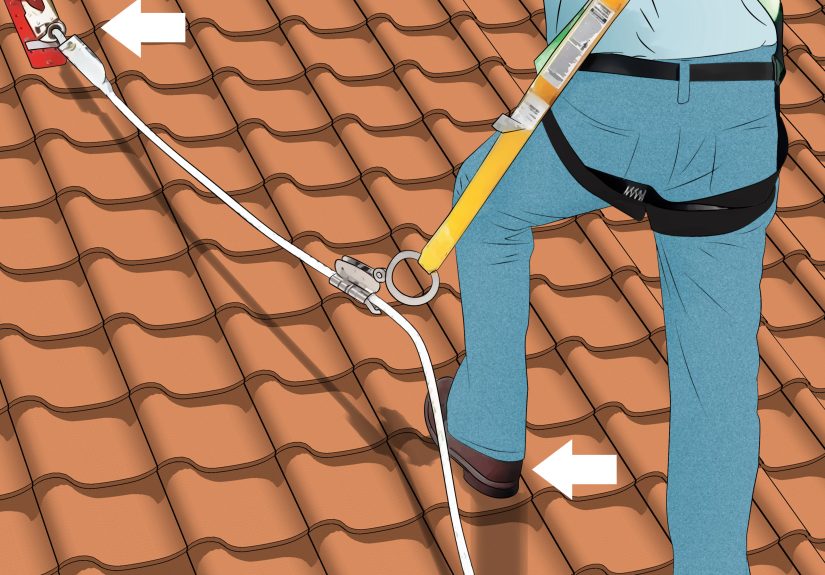
Call a professional if the roof is steep, high, wet, old, fragile, or difficult to access. Also call a professional if the job involves repairing tile, replacing underlayment, cleaning heavy moss, working near electrical lines, or inspecting storm damage. Licensed roofing contractors have training, fall-protection equipment, and experience with tile profiles.
Professional help is especially wise for clay tile roofs, historic roofs, multi-story homes, and roofs with solar panels. The cost of a roof inspection is often much lower than the cost of repairing broken tiles, damaged flashing, or a ceiling stain shaped like Florida.
Practical Example: Cleaning Debris From a Tile Roof Valley
Suppose leaves and pine needles have piled up in a valley. It might look like a quick five-minute job. But valleys are sensitive areas because they manage concentrated water flow. Stepping directly into the valley can damage cut tiles or flashing. A safer approach is to inspect from a ladder first. If debris can be removed from the ladder using a safe tool, avoid stepping onto the roof. If roof access is necessary, use proper fall protection, step only on supported tile areas near the path, and avoid placing weight directly in the valley.
Practical Example: Checking a Broken Tile After a Storm
After a storm, you may notice one cracked tile from the ground. Do not rush up with a tube of sealant and heroic confidence. First, inspect from below with binoculars or a zoom camera. Look for surrounding cracked tiles, slipped tiles, exposed underlayment, and damaged flashing. If the damage is isolated and accessible from a ladder, a professional may be able to replace it without walking across the roof. If the damage is widespread, direct roof traffic may make things worse.
Safety Checklist Before Walking on a Tile Roof
- Confirm the roof is dry and free of loose debris.
- Wear soft-soled, non-slip shoes.
- Use a properly placed extension ladder.
- Keep three points of contact while climbing.
- Plan the shortest safe route.
- Step on the lower third of supported tiles.
- Move slowly and avoid twisting.
- Use walking boards or pads when appropriate.
- Stay away from ridges, hips, valleys, and broken tiles.
- Stop immediately if tiles shift, crack, or feel unstable.
Extra Experience Section: Lessons From Real Tile Roof Situations
Experience teaches roofing lessons quickly, usually right after a crunchy sound underfoot. One of the most common homeowner experiences is discovering that a tile roof can feel solid from the ground but delicate once you are on it. The roof may look like a stone surface, but each tile is an individual piece. When someone steps on the wrong part, the tile may crack quietly. Sometimes the person does not even notice until a roof inspection months later finds several broken pieces near a vent, chimney, or satellite mount.
A useful lesson is to think in terms of “access zones.” Homeowners often assume the fastest route is the best route. On a tile roof, the best route is the one with the least risk. For example, if a dryer vent is only 12 feet away across the roof, it may still be safer to reach it from another ladder location or hire a contractor with pads and fall protection. Saving three minutes is not impressive if it costs three tiles.
Another experience many homeowners share involves service providers. A cable installer, pest-control technician, solar worker, or chimney cleaner may need roof access. Some are excellent and know how to move on tile. Others treat every roof like asphalt shingles. Before anyone climbs, ask what protection they use for tile. Ask whether they step on supported overlap areas. Ask whether they carry pads. This is not being difficult; it is protecting a major part of your home. A careful contractor will respect the question.
Cleaning is another situation where experience matters. People often think pressure washing is the fastest way to make a tile roof look new. Unfortunately, aggressive pressure washing can damage tiles, force water under laps, disturb coatings, and expose weak spots. Low-pressure cleaning methods, careful debris removal, and professional roof cleaning are usually better choices. The roof does not need to be blasted like a driveway. It needs to be cleaned like something that keeps rain out of your living room.
Homeowners in warm, sunny states such as Florida, California, Arizona, Nevada, and Texas often deal with tile roofs because they perform well in heat and match regional architecture. But those same climates can create algae, dust, UV exposure, and thermal movement. Over years, tiles may become more brittle, and underlayment can age. That means a walking technique that seemed fine on a newer roof may not be safe on a 25-year-old roof. Age changes the rules.
The best practical habit is documentation. Take photos of your tile roof after installation, after major storms, and after any contractor has worked on it. If someone breaks tiles, photos help you identify when and where the damage happened. Also keep spare tiles if you have them. Matching color and profile can be challenging years later, especially with discontinued styles.
Finally, respect the quiet warning signs. If a tile rocks underfoot, stop. If you hear cracking, stop. If your shoes slip once, stop. If you feel nervous, stop. Roof work rewards patience, not bravery. There is no trophy for personally walking across a tile roof to clear one handful of leaves. The smartest homeowner is not the one who climbs fastest; it is the one whose roof remains watertight afterward.
Conclusion: Walk Less, Step Smarter, Protect More
Learning how to safely walk on a tile roof without breaking it is mostly about restraint. Avoid roof traffic whenever possible. When access is necessary, use the right shoes, ladder setup, fall-safety practices, and foot placement. Step gently on the lower third of supported tiles, avoid fragile roof areas, distribute your weight, and move slowly.
Tile roofs can last a long time when properly installed and maintained, but careless walking can shorten that life in seconds. If the job feels risky, complicated, or uncomfortable, call a professional roofer. Your roof will appreciate it, your insurance company will appreciate it, and your future self will appreciate not explaining why there is a bucket in the hallway every time it rains.