Table of Contents >> Show >> Hide
- Why succulents go downhill in the first place
- Step 1: Figure out what kind of trouble your succulent is in
- How to revive an overwatered succulent
- How to revive an underwatered succulent
- How to revive a leggy succulent
- How to revive a sunburned succulent
- How to handle pests on a struggling succulent
- The best soil and pot for succulent recovery
- What not to do when reviving a succulent
- How long does succulent revival take?
- Experience-based lessons from reviving succulents
- Final thoughts
Succulents have a funny reputation. People talk about them like they are indestructible little green superheroes that survive on neglect, bad lighting, and the occasional kind thought. Then one day your succulent looks sad, squishy, wrinkled, stretched, or suspiciously beige, and suddenly everyone is an amateur botanist. The good news is that many struggling succulents can bounce back if you diagnose the problem correctly and act fast.
If your plant is looking rough, do not panic and definitely do not water it “just in case.” That move solves fewer problems than people think. A succulent revival starts with detective work: Is it overwatered, underwatered, starving for light, scorched by too much sun, or dealing with pests? Once you know what went wrong, you can give your plant the exact kind of rescue it needs instead of guessing and making it even grumpier.
Why succulents go downhill in the first place
Succulents store water in their leaves, stems, or roots, which makes them drought-tolerant, not immortal. Indoors, the biggest problems usually come from too much water, poor drainage, not enough light, or soil that stays wet for too long. Some also decline after sudden sun exposure, pest attacks, or being crammed into a decorative pot with no drainage hole. Cute pot, tragic ending.
Most dying succulents are not actually dying from “lack of attention.” They are dying from the wrong kind of attention. Too much watering, too little light, and a soggy soil mix are the classic trio of succulent heartbreak.
Step 1: Figure out what kind of trouble your succulent is in
Signs of an overwatered succulent
An overwatered succulent often has soft, mushy, translucent, yellowing, or dropping leaves. The stem may feel squishy. The plant can look swollen and weak at the same time, which feels unfair, but plants contain multitudes. If rot has started, the roots may be brown or black and mushy instead of firm and pale.
Signs of an underwatered succulent
An underwatered succulent usually looks wrinkled, puckered, shriveled, or deflated. The leaves may feel thin rather than plump. Lower leaves might dry up and fall off. The plant often looks tired, not soggy. Think raisins, not pudding.
Signs it needs more light
If your succulent is stretching upward, leaning hard toward a window, or growing pale with large gaps between leaves, it is probably not getting enough light. This is called etiolation. Once a succulent stretches, that stretched growth will not become compact again. You can improve future growth, but the old stretch is staying in the scrapbook.
Signs of sun stress or sunburn
If you moved a succulent from dim indoor light straight into harsh sun, it may bleach, scorch, or develop dry brown patches. Succulents like bright conditions, but many need gradual adjustment. They are tough, but they still prefer not to be tossed into summer like a tourist without sunscreen.
Signs of pests
Check for mealybugs, sticky residue, cottony white clusters, or distorted growth. Pest damage can weaken a succulent and make it look generally miserable. If you spot pests, isolate the plant from your other houseplants right away.
How to revive an overwatered succulent
If your succulent is mushy, yellow, and dropping leaves, overwatering is the likely villain. Here is the rescue plan:
1. Take it out of the pot
Gently remove the succulent and inspect the roots and lower stem. Healthy roots are firm. Rotten roots are dark, slimy, mushy, or dry and collapsing after staying wet too long.
2. Cut away all rot
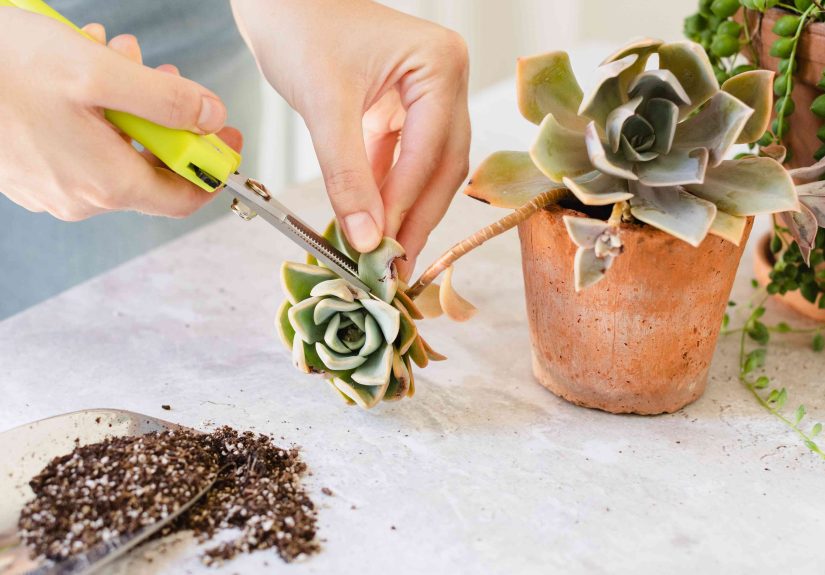
Trim off mushy roots, soft stem sections, and any leaves that have turned to goo. Use clean scissors or pruners. Be thorough. Leaving rot behind is like trying to fix a leaky roof by complimenting it.
3. Let the plant dry and callus
Set the trimmed plant in a dry spot out of direct harsh sun for a day or several days, depending on how much you cut. If you had to remove a rotted stem section, let the fresh cut callus before replanting. This helps reduce the chance of more rot.
4. Repot in fresh, fast-draining soil
Use a cactus or succulent mix, or amend potting soil with coarse sand, pumice, or perlite so it drains quickly. Put the plant in a pot with a drainage hole. Skip the decorative “sealed bowl of doom.” Also skip adding pebbles to the bottom as a fake drainage solution. That trick sounds helpful, but it does not solve the real problem.
5. Wait before watering
After repotting, do not rush in with water. Give the plant a little time so any trimmed roots or cuts can settle. After that, water deeply, then let the soil dry out completely before watering again.
If the base of the plant is too damaged to save, cut off a healthy section above the rot, let it callus, and propagate it as a new plant. This is not giving up. This is strategic reinvention.
How to revive an underwatered succulent
If your succulent is wrinkled, limp, and bone-dry, underwatering may be the issue. This rescue is simpler, but you still want to be smart about it.
1. Check the soil
If the soil is dry all the way through and pulling away from the sides of the pot, your plant is probably thirsty. In very dry mixes, water can run straight through without rehydrating the root ball, so pay attention to how the soil behaves.
2. Water thoroughly
Water at the base of the plant until water runs through the drainage hole. Then let the excess drain away completely. Do not let the pot sit in a puddle. Bottom watering can also help if the mix has become hydrophobic and resists moisture from above.
3. Be patient
A dehydrated succulent may need a little time to plump back up. Do not water again the next day just because it still looks dramatic. Succulents recover on plant time, not panic time.
4. Adjust your routine
Going forward, water based on soil dryness, not the date on your calendar. The right schedule depends on light, temperature, air flow, season, pot size, and soil type. A bright windowsill in summer is not the same world as a dim room in winter.
How to revive a leggy succulent
Leggy succulents are usually asking for more light. The fix is partly cosmetic and partly cultural.
1. Move it to brighter light
Most succulents do best in bright light, and many indoor types appreciate several hours of sun. Move the plant gradually so you do not trade legginess for sunburn. A brighter windowsill or a grow light can make a big difference.
2. Rotate the pot
If the plant leans toward the light source, rotate it every week or two. This helps new growth develop more evenly.
3. Prune and propagate
You cannot shrink stretched growth back into a tight rosette, but you can cut the healthy top, let it callus, and root it in fresh succulent mix. Many succulents root well from stem cuttings, offsets, or leaves, depending on the species. This is often the best way to turn one awkward plant into a second chance.
How to revive a sunburned succulent
Sunburn damage usually shows up as bleached, tan, or crispy patches after sudden exposure to intense light. The fix is mostly about preventing more damage.
1. Move it out of intense direct sun
Place the plant in bright, indirect light or gentler morning sun while it recovers.
2. Leave damaged tissue alone unless it is rotting
Scorched spots usually will not turn green again, but they do not always need to be removed. Focus on keeping the rest of the plant healthy.
3. Reintroduce stronger light gradually
If you want the plant in a sunnier location later, transition it slowly over several days or weeks. Succulents like light, but not every plant wants to go from cave mode to desert audition in one afternoon.
How to handle pests on a struggling succulent
If you see mealybugs or other sap-sucking pests, isolate the plant first. Inspect leaf joints, roots, and the base of the stem. Remove obvious pests, clean up dead leaves, and keep the plant away from your other houseplants while you monitor it. If an infestation is severe and the plant is badly weakened, saving healthy cuttings may be more practical than trying to preserve the entire original plant.
The best soil and pot for succulent recovery
When reviving a succulent, your container and soil matter almost as much as your watering habits. Use a pot with at least one drainage hole. Terracotta can be helpful because it dries faster than glazed ceramic or plastic, though any pot with drainage can work. Choose a fast-draining succulent or cactus mix, or make one with potting soil plus gritty amendments like perlite, pumice, or coarse sand.
Avoid oversized pots. Too much extra soil stays wet longer, which increases the risk of rot. Succulents generally like being a little snug rather than swimming in a wet bathtub of compost.
What not to do when reviving a succulent
- Do not water on a strict schedule without checking the soil first.
- Do not mist succulents instead of watering the soil.
- Do not keep them in pots without drainage.
- Do not assume every sad-looking succulent needs more water.
- Do not move a low-light plant straight into blazing sun.
- Do not use regular heavy garden soil for indoor succulents.
- Do not expect old stretched growth to become compact again.
How long does succulent revival take?
That depends on the problem and the plant. Mild dehydration may improve within days. Recovery from overwatering, repotting, or root damage can take several weeks. Propagating and restarting from a healthy cutting can take longer, but it is often the surest route when the original plant is badly compromised.
New growth is the best sign that your succulent is on the mend. Firm leaves, stable color, stronger roots, and a plant that stops dropping leaves like confetti are all encouraging clues.
Experience-based lessons from reviving succulents
If you have ever tried to rescue a succulent, you already know the experience is half gardening, half emotional negotiation. The first lesson most people learn is that succulents rarely appreciate heroic overreaction. A droopy pothos may want a quick drink, but a distressed succulent often wants you to slow down, inspect it, and stop doing whatever you were doing every Sunday at 9 a.m. with that watering can.
One of the most common real-world experiences is discovering that a plant marketed as “easy care” was actually planted in terrible conditions from the start. Maybe it came in a tiny plastic nursery pot hidden inside a decorative cachepot full of trapped water. Maybe the soil was dense and peaty. Maybe it spent months on a dark office shelf being admired to death. When people finally unpot these plants, they realize the problem was not their lack of talent. The plant was basically living in a swamp while pretending to be a desert species.
Another big lesson is how often light gets underestimated. Many people think a bright room is enough, but succulents are picky in that charmingly unreasonable way some houseplants have. A room can feel sunny to a human and still be too dim for a compact, colorful succulent. The result is a plant that stretches, leans, and slowly turns into a green spaghetti sculpture. Moving it closer to a window or adding a grow light often changes everything.
There is also the oddly satisfying experience of successful propagation. A top cutting from a leggy echeveria or a healthy stem from a rotting jade can feel like a tiny miracle. You let it callus, place it in gritty soil, wait longer than feels emotionally fair, and then one day there are roots. That moment tends to convert people from anxious plant owners into patient ones. Succulents are excellent teachers of delayed gratification.
Experienced growers also learn that recovery is rarely instant and almost never dramatic in the first week. The plant may look worse before it looks better. Lower leaves may still dry up. Old scars may remain. But steady improvement matters more than perfection. A revived succulent often tells its whole story on its body: a healed stem, a compact new rosette, a section of old stretch below fresh growth. It is a before-and-after photo in living form.
Perhaps the most practical lesson of all is this: revive the environment, not just the plant. Better soil, better drainage, better light, and smarter watering solve more problems than any “secret trick.” Once those basics are right, succulents become much easier to grow. They stop feeling mysterious and start acting like what they are: resilient plants with clear preferences, not magical ornaments powered by optimism.
Final thoughts
If your succulent looks rough, do not write it off too quickly. Many can recover from dehydration, bad soil, insufficient light, or even early root rot if you respond with the right fix. Start by identifying the problem, then correct the basics: fast drainage, proper watering, brighter light, and clean propagation when needed. Treat the cause, not just the symptoms, and your little desert diva has a solid chance of making a comeback.