Table of Contents >> Show >> Hide
- Why Reborn Owners Use Fake Formula Instead of the Real Stuff
- What You Need Before You Start
- How to Seal the Bottle First
- Easy Method #1: White School Glue Formula
- Easy Method #2: Lotion-and-Water Formula
- Easy Method #3: Quick Flour Formula
- How to Make the Fake Formula Look More Realistic
- Mistakes to Avoid
- How to Protect Your Reborn Doll During Bottle Play
- How Long Does Fake Formula Last?
- FAQ: Fake Formula for Reborn Dolls
- Final Thoughts
- Collector Experiences: What People Learn After Making Fake Formula Bottles
- SEO Tags
Note: This guide is for reborn baby doll props only. The fake formula ideas below are not for real babies, children, or pets. Think of this as a tiny kitchen project for doll collectors and pretend parents, not a snack plan for actual humans. If your reborn has a cloth body, rooted hair, delicate paint, or artist-finished details, always be extra careful around moisture.
If you own a reborn baby doll, you already know the magic is in the details. The tiny fingers. The squishy cheeks. The bottle that somehow makes you say, “I’ll just set this down for one second,” and then 20 minutes later you’re tucking your doll in like a real infant with a busy social calendar. One of the most popular accessories in the reborn world is a realistic bottle of fake formula. It looks adorable in photos, adds to role-play, and saves you from using real baby formula that can spoil, smell weird, and turn your bottle into a science fair project.
The good news is that learning how to prepare fake formula for your reborn baby doll is easy. You do not need a chemistry degree, a lab coat, or a moon landing budget. In most cases, you only need a clean baby bottle, a simple filler, and a way to seal the nipple so your pretty little prop does not leak all over your doll, blanket, stroller, couch, soul, and reputation.
In this guide, you’ll learn the easiest fake formula methods, how to seal the bottle, how to avoid leaks, and which mistakes to skip. I’ll also cover real-life collector experiences so you can make a bottle that looks sweet in photos and does not betray you at the worst possible moment.
Why Reborn Owners Use Fake Formula Instead of the Real Stuff
Using real formula for a reborn doll sounds realistic at first, but it usually becomes a terrible idea by Day Two. Real formula can spoil, separate, smell sour, and leave residue inside the bottle. If a bottle leaks, that mess can reach clothing, soft bodies, weighted filling, or painted vinyl. That is the exact kind of realism nobody asked for.
That is why most reborn collectors prefer pretend milk or fake baby formula. A good fake formula bottle can:
- Look realistic in photos and nursery displays
- Work for role-play without the smell of spoiled dairy
- Last longer than real formula
- Reduce the chance of mess when properly sealed
- Save money over constantly buying disposable props
In other words, fake formula gives you the cute without the chaos. That is the kind of parenting support we love to see.
What You Need Before You Start
Before making your reborn doll bottle, gather a few basics. You probably already have most of them at home.
Basic supplies
- A clean baby bottle or doll bottle
- A bottle nipple and ring
- Your fake formula ingredients
- A spoon, craft stick, or small funnel
- Paper towels
- Clear silicone sealant or strong craft glue for sealing
- Cotton swabs for neat application
Helpful extras
- A drop or two of yellow tint if you want a warmer formula color
- Filtered or distilled water for a cleaner look
- A label that says “prop only” if children may be around
If your bottle is going near a valuable reborn, use a fully sealed bottle. An unsealed “I’ll be careful” bottle is basically a leak with a motivational speech.
How to Seal the Bottle First
Before you even think about mixing fake formula, seal the bottle. This is the step that separates a charming nursery prop from a tiny indoor flood.
Where to seal
- The nipple hole or opening
- The underside where the nipple fits into the ring
- The bottle threads if they seem loose
How to do it
- Wash and dry the bottle completely.
- Apply a small amount of clear silicone sealant or glue to the nipple opening.
- Let it cure fully according to the product directions.
- Attach the nipple and ring, then seal any gaps where liquid could escape.
- Test the bottle with plain water before adding your fake formula mixture.
Do not rush the curing time. “It seems dry enough” has started many hobby disasters. Let the seal set fully, then test it over a sink or towel like the cautious genius you are becoming.
Easy Method #1: White School Glue Formula
This is one of the most popular methods for making a fake milk bottle for a reborn baby doll. It is easy, cheap, and gives a soft milky look that photographs well.
What you need
- 2 to 4 tablespoons white school glue
- Water
- Optional: 1 tiny drop of yellow tint
How to make it
- Fill your bottle about halfway to three-quarters with water.
- Add a small amount of white school glue.
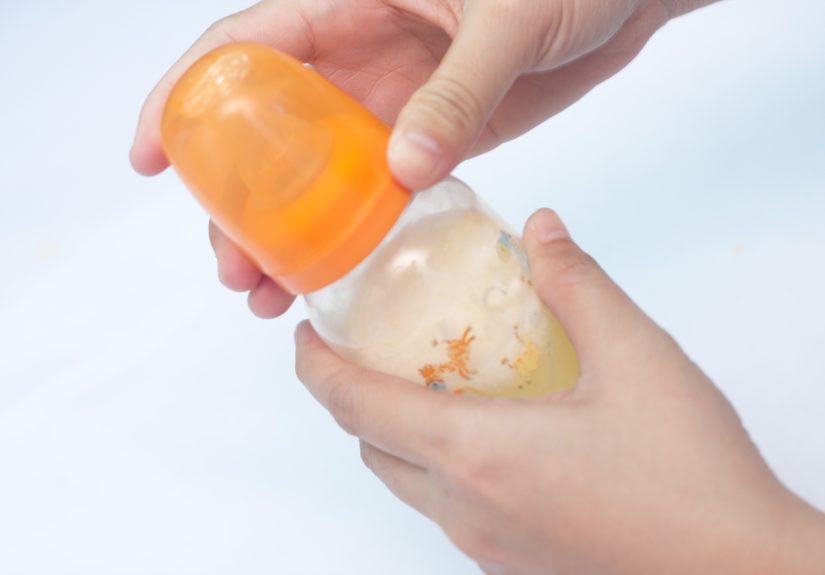
- Shake gently until the liquid turns milky.
- If it looks too white, add more water.
- If it looks too clear, add a bit more glue.
- Add the tiniest hint of yellow only if you want a warmer formula color.
Why people like it
The glue method is simple and gives a believable formula look without being too thick. It is especially good for display bottles because the color is easy to control. Many collectors prefer this option when they want something that looks realistic but still feels lightweight and affordable.
Best tip
Go easy on the yellow tint. Baby formula is usually creamy, not mustard. You want “fresh bottle,” not “this bottle contains melted traffic paint.”
Easy Method #2: Lotion-and-Water Formula
If you want a softer, creamier look, a lotion-and-water mix is another easy option. This method is popular because it creates a smooth fake formula color and is easy to adjust.
What you need
- 3 to 4 teaspoons of white or cream-colored lotion
- Water
- Optional: a tiny touch of yellow food-safe coloring for color only
How to make it
- Pour water into the bottle.
- Add a few teaspoons of lotion.
- Shake well until the mixture looks smooth and creamy.
- Adjust the ratio until it looks like prepared infant formula.
When to use this method
This is a nice choice for people who want a warmer, more natural-looking bottle. It can look especially pretty in nursery photos and shelf displays. The downside is that some lotions can separate over time, so this method may need occasional remixing or replacing if the bottle sits for months.
Easy Method #3: Quick Flour Formula
If you want a super budget-friendly bottle for display or short-term use, flour and water can work. This method is often used when collectors want something fast and simple.
What you need
- Warm water
- 1 to 2 tablespoons all-purpose flour
How to make it
- Add warm water to the bottle.
- Spoon in a small amount of flour.
- Shake thoroughly until the clumps break up.
- Use only enough flour to make the bottle look cloudy and milk-like.
The catch
This method is cheap and easy, but it is not the best for long-term use. Flour mixtures can clump, settle, and generally behave like they have personal issues. If you want a bottle that sits in a display for a long time, glue or lotion usually works better.
How to Make the Fake Formula Look More Realistic
The difference between an okay bottle and a really convincing one is usually in the details. Fortunately, these details are easy.
Use the right color
Prepared baby formula is not bright white. It usually has a soft cream or pale beige tone. A tiny hint of yellow can help, but barely. You are aiming for “gentle dairy vibe,” not “banana smoothie crisis.”
Do not overfill the bottle
Most fake bottles look more realistic when they are filled partway, not to the absolute top. A little air space can make the bottle feel more natural, especially in photos.
Wipe the outside
After sealing and filling, wipe the bottle threads and outside surface so there is no sticky residue. Nothing ruins a cute prop faster than a ring of dried goo around the lid.
Match the bottle to the doll
A tiny preemie reborn looks best with a smaller bottle. A larger newborn-style reborn can carry a fuller nursery bottle. Scale matters. Your doll should look ready for feeding, not like it borrowed a protein shake from a linebacker.
Mistakes to Avoid
1. Using real formula
It spoils. It smells. It can leave residue. It is also completely unnecessary for a doll prop.
2. Forgetting to seal the nipple
This is the classic mistake. People spend time making the bottle look realistic, then skip the part that prevents an indoor tragedy.
3. Using too much color
If your fake formula turns yellow enough to qualify as lemon custard, start over.
4. Putting liquid near an unprotected doll
Even with a sealed bottle, do not press or squeeze it over the doll’s face, cloth body, or clothing. Reborn dolls and moisture are not best friends.
5. Ignoring cure time
Silicone and glue need time to set. A rushed bottle is often a leaky bottle.
How to Protect Your Reborn Doll During Bottle Play
Reborns are art pieces as much as they are play dolls, so bottle props should be handled with care.
- Keep the bottle sealed at all times.
- Never let liquid touch painted vinyl or cloth bodies if you can help it.
- Use a bib or blanket during photo sessions if you want extra protection.
- Store the doll away from heat, damp spaces, and direct sunlight.
- Clean the doll with a soft cloth only, not a full bath.
If your reborn is a collector piece, treat the fake formula bottle as a prop for display and gentle posing, not a toy that gets tossed into the diaper bag like a soccer snack.
How Long Does Fake Formula Last?
That depends on the method and how well the bottle is sealed. A well-made glue bottle can last quite a while for display. Lotion mixes may separate sooner. Flour bottles are better for short-term use or quick photos. If the bottle changes color, separates badly, leaks, or starts looking suspiciously haunted, replace it.
A good habit is to check your bottle every so often. If it still looks smooth and the seal is strong, you are probably fine. If it looks like it has entered a new life stage without telling you, make a fresh one.
FAQ: Fake Formula for Reborn Dolls
Can I use food coloring?
Yes, but use very little. The goal is a creamy formula shade, not neon art class.
Can I use baby powder?
Some collectors do, but powders can settle or clump. Glue and lotion methods are usually easier to control.
Can I actually feed the doll with the bottle?
You can pose the bottle for pretend feeding, but you should not let liquid flow into the doll. Even dolls with open mouths are safer with sealed props.
What is the safest bottle option?
A fully sealed display bottle or a disappearing-style magic bottle is the lowest-drama option for most collectors.
Final Thoughts
Learning how to prepare fake formula for your reborn baby doll does not need to be complicated. The easiest path is to choose a simple mixture, seal the bottle properly, keep moisture away from the doll, and aim for a realistic creamy color. That is really it. No advanced equipment. No mystical reborn wizardry. Just a little patience and a decent sense of proportion.
If you want the most beginner-friendly method, start with white school glue and water. If you want a softer creamy look, try lotion and water. If you need a quick prop on a tight budget, flour and water can do the job for short-term display. Whatever you choose, remember that the best fake formula bottle is the one that looks cute, stays sealed, and does not create a mess worthy of its own apology letter.
Collector Experiences: What People Learn After Making Fake Formula Bottles
One of the most common experiences reborn collectors talk about is how easy the first bottle seems until the details show up to humble you. At first, many people think, “It’s just fake milk in a bottle. What could possibly go wrong?” Then the answer arrives quickly: the mixture is too white, too yellow, too thick, too thin, or leaking from a nipple hole so small it appears to be powered by sarcasm. The good news is that almost everyone gets better fast.
A typical beginner experience goes something like this: the first bottle is made in five cheerful minutes, admired for ten seconds, and then inspected under good lighting where it suddenly looks like wallpaper paste. That is when people learn the first big lesson of reborn bottle making: tiny adjustments matter. A little more water can make the mixture look natural. A little less tint can save it from looking strange. A better seal can turn a risky prop into a dependable one.
Another common experience is discovering that realism is less about fancy ingredients and more about balance. Collectors often start by trying to make the bottle look very milky, only to realize that real prepared formula usually looks softer and more muted than expected. Once they tone down the color and leave a little air space in the bottle, everything looks better. The bottle suddenly feels more believable in photos, nursery shelves, and feeding setups.
Many reborn owners also learn to respect the bottle seal after one memorable close call. Maybe the bottle does not fully leak, but a tiny bead of liquid appears near the ring and sends the collector into immediate panic mode. That moment usually changes how future bottles are made. After that, people test over a sink, let silicone cure fully, and keep paper towels nearby like seasoned professionals. It is not glamorous, but it is very effective.
Some collectors say the most fun part is not even the formula itself, but the whole little ritual around it. Mixing the bottle, choosing the right size, matching it to the reborn’s outfit, and setting up a nursery scene can be oddly relaxing. It feels creative, cozy, and a little funny in the best way. You are basically art-directing a one-baby production, and your lead actor is extremely talented at lying still.
There is also a practical side to these experiences. People learn which mixtures hold up best in their climate, how sunlight changes the look of a bottle, and why some props are better for display than heavy handling. Over time, collectors figure out their own preferences. Some swear by the glue method because it stays nicely cloudy. Others like lotion because the tone looks softer. Some give up on liquid props entirely and move to sealed disappearing bottles. That is part of the hobby too: testing, tweaking, and finding what works for your dolls, your setup, and your comfort level.
In the end, the experience most people share is simple: the project is easy, but the little improvements make it satisfying. Your first bottle may not be perfect, and that is fine. The second one will look better. The third one may look so realistic that you proudly hold it up, admire your work, and briefly feel like the head of a very tiny infant nutrition department. Honestly, that is part of the charm.