Table of Contents >> Show >> Hide
- Start With the Right Beef
- How to Form Burger Patties That Actually Cook Well
- Prepare the Grill the Right Way
- How to Grill Burgers Without Ruining Them
- Do Not Forget the Bun
- Common Mistakes That Make Burgers Worse
- A Simple Formula for the Best Homemade Burgers on the Grill
- Final Thoughts
- 500 Extra Words of Experience: What Grilling Homemade Burgers Teaches You
There are two kinds of grilled burgers in this world: the juicy, smoky, “wow, who made these?” kind, and the dry hockey pucks that make everyone suddenly very interested in the potato salad. This article is about avoiding the second kind with confidence, dignity, and minimal burger-related heartbreak.
If you want the best homemade burgers on the grill, you do not need a secret handshake, a culinary degree, or a backyard smoker the size of a small submarine. You need the right beef, a hot grill, a little restraint, and the courage to stop poking the patties every 14 seconds. Great grilled burgers are less about fancy tricks and more about doing the simple things really well.
Below is the full playbook for making juicy grilled burgers at home, from choosing the meat and shaping the patties to grilling, topping, and serving them like the neighborhood cookout hero you were clearly meant to be.
Start With the Right Beef
Choose 80/20 ground beef for the best flavor
If you remember one thing from this article, make it this: 80/20 ground beef is the sweet spot for homemade burgers. That ratio means 80 percent lean meat and 20 percent fat, which is exactly what gives burgers their rich flavor and juicy texture on the grill.
Go too lean and your burgers can turn dry, crumbly, and vaguely apologetic. Go too fatty and you invite flare-ups that can leave the outside charred before the inside is properly cooked. For most backyard cooks, 80/20 is the goldilocks zone. It is rich enough to stay tender and flavorful, but still easy to handle and grill.
Keep it simple with the seasoning
When the beef is good, you do not need to turn it into a spice cabinet science project. Salt and freshly ground black pepper are usually enough. A little garlic powder or Worcestershire sauce can work, but the best burger recipe often wins by not trying so hard.
The key is not just what you use, but when you use it. Salt can change the texture of ground beef if it sits too long, so it is smart to season the patties close to cooking time. That gives you better flavor without tightening up the meat.
How to Form Burger Patties That Actually Cook Well
Do not overwork the meat
Ground beef is not bread dough. It does not need a workout. Handle it gently and only as much as needed to shape the patties. Overmixing or compacting the beef too much can make burgers dense and chewy instead of tender and juicy.
A good rule is to divide the meat into equal portions, loosely form each into a patty, and then stop. If you keep squishing and reshaping, you are building yourself a burger brick.
Make the patties slightly larger than the bun
Burgers shrink on the grill. That is just burger physics. Shape each patty a little wider than the bun and about 1/2 to 3/4 inch thick. This helps the finished burger fit the bun instead of sitting on it like a sad little meat coaster.
Press a dimple into the center
One of the smartest burger tricks is also the easiest: use your thumb to press a shallow indentation in the center of each patty. That little dimple helps the burger cook more evenly and keeps it from puffing into a meatball-shaped dome on the grill.
If you have ever grilled burgers that looked perfect until they inflated like they were auditioning to be meat cupcakes, the center dimple is your new best friend.
Keep patties cold before grilling
Cold patties hold their shape better and keep the fat where it belongs until it hits the heat. That matters because the fat is what melts into the burger and keeps it moist. Shape the patties, place them on a tray, and refrigerate them while the grill heats up. Warm patties are more likely to soften, stick, and lose juices too early.
Prepare the Grill the Right Way
Preheat first, always
A properly preheated grill is the difference between a burger with a flavorful crust and a burger that sticks, tears, and makes you question your life choices. For grilled burgers, medium-high direct heat is usually ideal. You want enough heat to sear the outside quickly while the inside cooks through without drying out.
Whether you use gas or charcoal, give the grill enough time to get hot. Then clean the grates well and oil them lightly. Clean, hot, lightly oiled grates make it much easier to release the burgers cleanly and get those beautiful grill marks.
Gas grill or charcoal grill?
Both can make excellent homemade burgers. A gas grill is convenient and easier to control. A charcoal grill can add deeper smoky flavor. The better choice is the one you know how to use confidently. Perfect burger technique beats grill snobbery every time.
How to Grill Burgers Without Ruining Them
Put the patties on and leave them alone
Once the patties hit the grill, resist the urge to fuss with them. Let them sear undisturbed so they can develop a flavorful crust. If you try to move them too early, they may stick. When they release naturally, they are ready to flip.
For patties around 1/2 to 3/4 inch thick, many burgers will need roughly 4 to 5 minutes on the first side and another 3 to 5 minutes on the second, depending on thickness and grill heat. But time is only a guideline. A thermometer is your real best friend.
Flip once if possible
You do not need to flip burgers every 30 seconds like you are conducting an orchestra. One good flip is usually enough. It helps the burger cook evenly and keeps the outside from getting battered by unnecessary handling.
Do not press the burgers down
This is one of the biggest burger mistakes. Pressing the patties with a spatula does not make them juicier, faster, or more impressive. It squeezes out flavorful fat and juices, often causing flare-ups and leaving you with a drier burger. If you hear an aggressive sizzle after pressing, congratulations, you have just launched your burger’s moisture into the fire.
Use a thermometer, not wishful thinking
For ground beef burgers, the safe move is to cook them to an internal temperature of 160°F. Color alone is not a reliable doneness test. A burger can look browned and still be undercooked, or look a little pink and still be safe, depending on several factors. An instant-read thermometer removes the guesswork.
Insert the thermometer into the side of the patty toward the center for the most accurate reading. It is a small step that dramatically improves consistency, and it keeps food safety from becoming the surprise guest at your cookout.
Add cheese at the end
If you are making cheeseburgers, add the cheese during the last 30 to 60 seconds of cooking. Close the lid briefly to help it melt. This gives you gooey, properly melted cheese instead of a lonely half-soft square sitting on top like it arrived late to the party.
Rest the burgers briefly
Once the burgers come off the grill, let them rest for a few minutes. This gives the juices time to redistribute so more of them stay in the burger instead of running onto the plate. You do not need a long steak-style rest here, but 3 to 5 minutes helps.
Do Not Forget the Bun
Toast the buns
A great burger on a weak bun is like a blockbuster movie with bad audio. Technically it still works, but nobody is thrilled. Toasting the buns adds flavor, texture, and structure. It helps prevent the bun from turning soggy under burger juices, sauces, and toppings.
Brush the cut sides lightly with butter or oil, then toast them cut-side down on the grill for a few seconds until golden. Not burnt. Not blackened. Just warm, crisp, and ready for business.
Choose toppings that help instead of distract
The best burger toppings add contrast. Crisp lettuce, good tomato slices, pickles, grilled onions, bacon, and a balanced sauce all bring something useful to the bite. The trick is proportion. If your burger stack is so tall it needs zoning approval, you have gone too far.
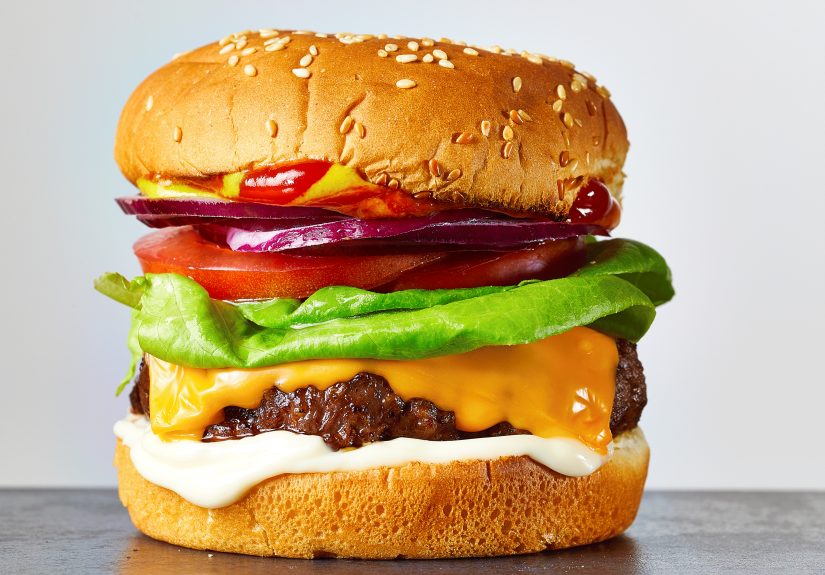
A classic order for structure is bun, sauce, lettuce, patty, cheese, onion, pickle, tomato, more sauce, top bun. The lettuce can help protect the bottom bun, and the toppings stay more stable when layered with a little intention.
Common Mistakes That Make Burgers Worse
- Using beef that is too lean: You lose flavor and moisture.
- Overworking the meat: Tough, dense burgers are the result.
- Skipping the dimple: Say hello to puffy burger domes.
- Starting with a cool grill: Less sear, more sticking.
- Pressing the patties: Juices go into the fire instead of your mouth.
- Relying on color instead of temperature: Inconsistent and risky.
- Ignoring the bun: A soggy burger experience is rarely memorable in a good way.
A Simple Formula for the Best Homemade Burgers on the Grill
- Buy 80/20 ground beef.
- Form loose patties slightly larger than the buns.
- Press a shallow dimple into the center.
- Keep the patties cold while the grill preheats.
- Clean and lightly oil the hot grates.
- Grill over medium-high direct heat.
- Flip once and never press down.
- Cook to 160°F for food safety.
- Add cheese at the very end.
- Rest briefly and serve on toasted buns.
Final Thoughts
Making the best homemade burgers on the grill is not about complicated ingredients or flashy techniques. It is about respecting the basics: good beef, gentle handling, hot grates, smart timing, and a thermometer that tells the truth. Do those things well, and your burgers will come off the grill juicy, flavorful, and wildly better than the dry discs that have traumatized summer cookouts for generations.
The beauty of a great grilled burger is that it feels casual but eats like a reward. It is simple enough for a weeknight and impressive enough for a backyard gathering. And once you lock in your burger method, people will start hovering around the grill with suspicious levels of interest. That is when you know you have done it right.
500 Extra Words of Experience: What Grilling Homemade Burgers Teaches You
There is something oddly satisfying about making burgers on the grill that goes beyond dinner. It is part cooking, part timing, part weather report, and part emotional support for people who wander outside asking, “How much longer?” every six minutes. Over time, grilling burgers teaches you things that recipes do not always spell out.
First, you learn that confidence matters. The first few times people grill burgers, they tend to hover. They poke. They flip too early. They doubt the fire. They act like the burgers might suddenly file a complaint. But after a few rounds, you start to trust the process. The grill needs time to heat. The meat needs time to sear. The burger will tell you when it is ready to move. Cooking gets better the moment panic leaves the patio.
Second, you learn that small details pull enormous weight. Using cold patties seems minor until you compare them with warm, soft ones that stick or slump. Toasting the bun seems optional until you bite into a burger that holds together from first bite to last. A center dimple looks silly until you realize your burgers are no longer inflating into meat balloons. Great burger-making is a game of tiny decisions that add up fast.
Another lesson is that simpler is usually better. Most people start out imagining the “perfect burger” needs twelve toppings, three sauces, candied bacon, onion jam, and perhaps a spiritual blessing. Then they make one truly good burger with well-seasoned beef, melted cheese, pickles, onion, and a toasted bun, and suddenly the whole thing makes sense. A burger does not need chaos. It needs balance.
Grilling also teaches humility. Some days the fire runs hotter than expected. Some days the wind decides to join the meal. Sometimes one burger is ready before the others, and sometimes a flare-up appears at exactly the wrong moment like a dramatic relative arriving uninvited. The grill has a way of reminding you that cooking outdoors is not perfectly controlled, and that is part of the charm. You get better not by demanding perfection, but by learning how to respond calmly.
One of the best experiences connected to homemade burgers is how social they are. Burgers invite opinions. Someone wants American cheese. Someone wants cheddar. Someone thinks ketchup belongs on everything. Someone else behaves as if ketchup is a personal insult. Burgers make room for all of it. They are customizable without being fussy, which is one reason they work so well for family dinners, cookouts, and casual parties.
And then there is the smell. No article about grilled burgers should ignore the smell. The moment beef hits hot grates, smoke and fat and heat combine into one of the most recognizable signals in the world: something delicious is happening outside. It is practically an announcement system for hunger.
In the end, making homemade burgers on the grill becomes more than a recipe. It becomes a rhythm. Heat the grill. Shape the patties. Season. Sear. Flip. Melt. Toast. Rest. Serve. Once that rhythm clicks, the whole process feels natural, and the burgers get better every time. That is what makes grilled burgers so rewarding. They are simple enough to learn quickly, but satisfying enough to keep improving forever.