Table of Contents >> Show >> Hide
- Start with the Smoothie Formula (So You Don’t Have to Guess)
- Choose Fresh Ingredients That Actually Blend Well
- Food Safety: Wash Fresh Produce Like You Mean It
- Blender Technique: The 90-Second Method for Better Texture
- 10 Smoothie Combinations Using Fresh Ingredients (With Real Measurements)
- 1) The Classic Strawberry-Banana
- 2) Tropical Green “Vacation in a Cup”
- 3) Blueberry-Oat Breakfast Smoothie
- 4) Peanut Butter Chocolate (But Make It Reasonable)
- 5) Creamy Citrus-Carrot
- 6) Apple Pie Smoothie
- 7) Cucumber-Mint Refresher
- 8) Berry-Avocado “Milkshake”
- 9) Coffee-Protein Smoothie for Busy Mornings
- 10) “Use-What-You-Have” Farmers’ Market Smoothie
- How to Keep Smoothies Balanced (Not a Sugar Bomb)
- Troubleshooting: Fix Any Smoothie in 30 Seconds
- Meal Prep Magic: Freezer Packs and Make-Ahead Tips
- Conclusion: Make Smoothies That Taste Like You (Not Like a Trend)
- Real-World Smoothie Experiences ( of “Yep, That Happens”)
Smoothies are basically the cheat code of home cooking: you toss in fresh ingredients you already like, press a button, and suddenly you’re the kind of person who “starts the day with produce.” They’re fast, flexible, and forgivinguntil they’re not. (We’ve all made the “accidentally 48-ounce fruit milkshake” at least once. If you haven’t, congratulations on your self-control and/or smaller blender.)
This guide teaches you how to build smoothies from your favorite fresh ingredientsfruits, veggies, herbs, yogurt, seeds, even that lonely mango you swear you’ll cut “tomorrow.” You’ll learn the simple ratios that make smoothies taste good on purpose, how to keep them balanced (so they don’t feel like dessert in a cup), and how to tweak texture, flavor, and nutrition without needing a spreadsheet.
Start with the Smoothie Formula (So You Don’t Have to Guess)
The easiest way to make smoothies consistently is to follow a flexible template. Think of it like a great outfit: base layer, main character, supporting cast, accessories. Here’s a reliable “build-your-own” formula for one large smoothie (or two smaller servings).
The Everyday Smoothie Ratio
- 1 cup liquid (milk, unsweetened plant milk, kefir, water, coconut water)
- 1 to 2 cups produce (mostly fruit, or a fruit/veg combo)
- 1/2 cup thickener (Greek yogurt, banana, avocado, silken tofu, oats)
- 1 to 2 “boosters” (chia, flax, nut butter, protein powder, spices)
- Ice or frozen fruit as needed for texture
Want it sweeter? Add ripe fruit, vanilla, cinnamon, or a date. Want it less sweet? Swap some fruit for mild veggies (spinach, cauliflower, cucumber) and add protein/fat for balance. Want it thicker? Use frozen fruit or less liquid. Want it thinner? Add liquid a splash at a time and blend again.
Choose Fresh Ingredients That Actually Blend Well
“Fresh ingredients” doesn’t mean “everything in your crisper drawer at once.” The best smoothies are built from ingredients that blend smoothly, taste harmonious, and support the texture you want (sip-able vs. spoon-thick).
1) Fruits: Flavor + Natural Sweetness
Fresh fruit brings sweetness, body, and personality. If your smoothie tastes flat, fruit is usually the missing “main character.”
- Creamy fruits: banana, mango, peach, ripe pear
- Bright fruits: pineapple, orange segments, kiwi, berries
- Melons: hydrating but waterypair with thicker ingredients
- Apples: great flavor, but can be gritty unless blended well (or grated first)
2) Vegetables: Nutrition Without the Sugar Spike
Veggies can make your smoothie more satisfying and less sugar-forwardwithout tasting like lawn clippings (promise).
- Mild greens: baby spinach (nearly invisible), romaine
- Stronger greens: kale (use a small handful; remove stems)
- Sweet veggies: cooked carrot, cooked beet (start smallbeets can take over)
- Neutral add-ins: cucumber, zucchini, steamed cauliflower (excellent for creaminess)
3) Liquids: Pick a Base That Matches Your Goal
Your liquid determines the smoothie’s vibe. For everyday smoothies, go with unsweetened options to keep added sugars in check.
- Protein-friendly: dairy milk, soy milk, kefir
- Light and fresh: water, coconut water, iced green tea
- Creamy dairy-free: unsweetened almond, oat, or coconut milk
4) Protein + Healthy Fat: The “Stay Full” Team
If you want a smoothie that feels like a meal (not a sweet drink that disappears in 12 seconds), add protein and healthy fat. They help slow digestion and make the smoothie more satisfying.
- Easy proteins: Greek yogurt, cottage cheese, kefir, silken tofu, protein powder
- Healthy fats: nut butter, chia seeds, flax meal, avocado, hemp hearts
5) Flavor Boosters: Make It Taste “Done”
A smoothie tastes restaurant-level when it has a clear flavor direction. Try one or two boosters, not twelve.
- Warm + cozy: cinnamon, vanilla, nutmeg, cocoa powder
- Bright + fresh: lemon/lime juice, fresh mint, fresh ginger
- Grown-up: espresso powder, matcha, pinch of salt (yes, really)
Food Safety: Wash Fresh Produce Like You Mean It
Smoothies use raw ingredients, so basic food safety matters. Wash hands, rinse produce under running water, and keep cutting boards and knives cleanespecially when you’re peeling or slicing, since anything on the outside can transfer inward when you cut.
- Rinse fruits and vegetables under running water before blending.
- Scrub firm produce (like apples or cucumbers) with a clean produce brush.
- Dry with a clean towel or paper towel when appropriate.
- Keep pre-cut produce refrigerated and use it promptly.
What about frozen fruit? It’s typically washed before freezing, and it’s fantastic for texture. Follow package directionsespecially for frozen vegetables, which are often recommended to be cooked before eating depending on the product.
Blender Technique: The 90-Second Method for Better Texture
Great smoothies are about order as much as ingredients. The right layering prevents air pockets, protects your blades, and gives you that creamy, uniform blend.
Layer Like This
- Liquid first (alwaysthis helps everything circulate)
- Soft fresh items (fresh fruit, leafy greens, yogurt)
- Powders + small boosters (protein, cocoa, spices, seeds)
- Frozen items and ice last (frozen fruit, ice cubes)
Blend Like This
- Start low, then go high: 10 seconds low to pull ingredients down, then 30–60 seconds high to smooth it out.
- Pause and scrape: If it’s spinning but not blending, stop and scrape the sides. (Your blender isn’t lazy; it’s just trapped.)
- Adjust last: Add liquid to thin, add frozen fruit/oats to thicken, then blend again.
10 Smoothie Combinations Using Fresh Ingredients (With Real Measurements)
Use these as templates. Swap fruits, switch liquids, change add-insjust keep the ratio steady.
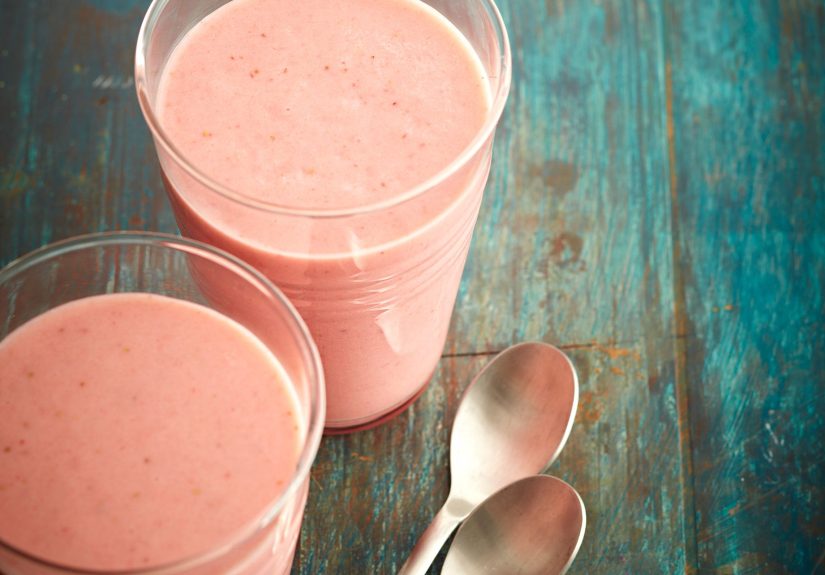
1) The Classic Strawberry-Banana
- 1 cup milk (or unsweetened almond milk)
- 1 cup strawberries (fresh or frozen)
- 1/2 to 1 banana
- 1/2 cup plain Greek yogurt
- Optional: 1 tsp vanilla, pinch of salt
2) Tropical Green “Vacation in a Cup”
- 1 cup coconut water or water
- 1 cup mango chunks
- 1/2 cup pineapple
- 1 packed cup baby spinach
- 1 tbsp chia seeds
- Optional: squeeze of lime
3) Blueberry-Oat Breakfast Smoothie
- 1 cup milk or soy milk
- 1 cup blueberries
- 1/3 cup rolled oats
- 1/2 cup Greek yogurt
- 1 tbsp ground flax
- Optional: cinnamon
4) Peanut Butter Chocolate (But Make It Reasonable)
- 1 cup unsweetened milk of choice
- 1 banana (preferably frozen for thickness)
- 1 tbsp natural peanut butter
- 1 tbsp cocoa powder
- 1/2 cup plain yogurt or 1 scoop protein powder
5) Creamy Citrus-Carrot
- 3/4 cup orange segments (fresh, peeled)
- 1/2 cup cooked, chilled carrot (or finely grated raw carrot)
- 1 cup yogurt or kefir
- 1/2 banana
- Optional: fresh ginger
6) Apple Pie Smoothie
- 1 cup milk or unsweetened oat milk
- 1 apple (cored; chop small)
- 1/2 banana
- 1/3 cup oats
- 1/2 tsp cinnamon + tiny pinch of salt
- Optional: 1 tbsp almond butter
7) Cucumber-Mint Refresher
- 1 cup water or coconut water
- 1 cup cucumber (chopped)
- 1 cup pineapple or melon
- Handful of mint
- Squeeze of lime
- Optional: 1 tbsp chia (for body)
8) Berry-Avocado “Milkshake”
- 1 cup unsweetened plant milk
- 1 cup mixed berries
- 1/4 to 1/2 avocado
- 1/2 cup Greek yogurt or silken tofu
- Optional: vanilla
9) Coffee-Protein Smoothie for Busy Mornings
- 3/4 cup cold brew or chilled coffee
- 1/2 cup milk of choice
- 1 banana
- 1/2 cup Greek yogurt or protein powder
- 1 tbsp cocoa or cinnamon
- Ice as needed
10) “Use-What-You-Have” Farmers’ Market Smoothie
Follow the template and build from your haul:
- 1 cup liquid
- 1 cup fruit (berries/peach/pear)
- 1 cup “bonus produce” (spinach/cucumber/zucchini)
- 1/2 cup thickener (yogurt/banana/oats)
- 1 booster (chia/flax/nut butter)
How to Keep Smoothies Balanced (Not a Sugar Bomb)
Smoothies can be incredibly nutrient-denseor they can be sneaky desserts wearing athleisure. Balance comes from three choices: keep the liquid unsweetened, don’t rely on juice for flavor, and pair fruit with protein/fiber/fat.
Easy Balance Upgrades
- Use plain yogurt instead of flavored yogurt (less added sugar, more control).
- Limit sweeteners (honey/maple/syrups) unless you truly need them. Try cinnamon or vanilla first.
- Add fiber (chia, flax, oats) so the smoothie “sticks” with you.
- Mind portions if you’re drinking smoothies dailybigger isn’t always better.
If you’re managing blood sugar or simply want steadier energy, build smoothies with more non-starchy produce, adequate protein, and healthy fatthen keep the fruit portion moderate.
Troubleshooting: Fix Any Smoothie in 30 Seconds
| Problem | Why It Happens | Fast Fix |
|---|---|---|
| Too watery | Too much liquid or watery fruit (melon) | Add frozen fruit, yogurt, oats, or chia; blend again |
| Too thick / won’t blend | Not enough liquid; too much frozen | Add liquid 1–2 tbsp at a time; pulse to restart |
| Bitter | Too much kale, citrus pith, or under-ripe fruit | Add banana/mango, cinnamon, or a spoon of yogurt |
| Grainy | Seeds/oats not blended enough | Blend longer; pre-soak chia/oats; use ground flax |
| Foamy | Over-blending airy ingredients | Blend just until smooth; let it rest 1 minute |
Meal Prep Magic: Freezer Packs and Make-Ahead Tips
If weekday mornings are chaotic, prep smoothie “kits” so your blender does the thinking.
Freezer Pack Method
- Portion fruit + veggies into freezer bags (about 2 cups total produce per bag).
- Add extras that freeze well (ginger, spinach, avocado chunks).
- Label the bag with the liquid and thickener you’ll add later.
- When ready: liquid in blender, dump freezer pack, add yogurt/protein, blend.
Can You Store a Smoothie Overnight?
Yes, but it’s best fresh. If you store it, use an airtight container, fill it close to the top (less air = less oxidation), and shake or re-blend before drinking. Some separation is normalyour smoothie isn’t broken, it’s just relaxing.
Conclusion: Make Smoothies That Taste Like You (Not Like a Trend)
The secret to great smoothies isn’t a miracle powder or a hyper-specific recipe with 19 ingredients and “moon water.” It’s using fresh ingredients you genuinely enjoy, sticking to a simple ratio, and balancing sweetness with protein, fiber, and healthy fat.
Start with one favorite combo (strawberry-banana is a classic for a reason), learn how to adjust thickness and flavor, and then experiment seasonally. Soon you’ll be the person confidently turning “random produce” into a smoothie that tastes intentional. And that, honestly, feels fantastic.
Real-World Smoothie Experiences ( of “Yep, That Happens”)
If you start making smoothies from fresh ingredients, you’ll probably have the same mini-journey most people do: week one is optimism, week two is “why does my blender hate me,” and week three is victoryusually in the form of a smoothie that tastes so good you immediately become a little bit smug.
The first common experience is discovering that bananas are basically the duct tape of smoothies. Your first green smoothie might taste “healthy” in the way a cardboard box is “high in fiber,” and then you add half a banana andboomit’s suddenly drinkable. Many people end up freezing ripe bananas in slices because they fix two problems at once: they sweeten naturally and make the texture thick and creamy. The lesson: when in doubt, start with half a banana, blend, then decide if you want more.
Another classic moment is learning the difference between “fresh” and “watery.” Fresh pineapple, oranges, and melon taste amazing, but they can turn your smoothie into a juice situation if you don’t pair them with a thickener. This is where yogurt, oats, or avocado quietly saves the day. People often describe the “aha” as realizing smoothies are not just blended fruitthey’re a balance of liquid + body. Once you feel that click, you stop guessing and start building.
Then there’s the “healthy ingredient overload” phase. It usually goes like this: someone reads that chia is great, flax is great, oats are great, kale is great, ginger is great, and suddenly their smoothie tastes like a garden center in the best possible way (which is still… not great). The experience teaches a useful rule: pick one theme. If you want “berry muffin,” go berries + oats + cinnamon. If you want “tropical,” go mango + pineapple + lime + spinach. If you want “chocolate PB,” go banana + cocoa + peanut butter. When the flavor has a plan, the smoothie tastes finished instead of confused.
Texture struggles are also universal. Many people have made a smoothie that’s too thick to blend, leading to the blender doing that dramatic “I’m spinning but nothing is happening” thing. The fix becomes second nature: stop, scrape, add a splash of liquid, and restart. On the flip side, the too-thin smoothie teaches the opposite move: add frozen fruit, yogurt, oats, or chia, then give it 20 more seconds. These little rescue techniques are what make smoothies feel easy long-term.
Finally, there’s the experience of finding your “signature.” After a few weeks, most people settle into two or three go-to combos that match their real life. Maybe it’s a coffee-protein smoothie for busy mornings, a bright citrus-ginger blend when they feel sluggish, or a berry-avocado one when they want something that feels like a treat but still keeps them full. That’s the best part of fresh-ingredient smoothies: once you learn the basics, you’re not stuck following recipesyou’re just making something you actually want to drink.