Table of Contents >> Show >> Hide
- What Is Kalanchoe Pinnata?
- Best Growing Conditions for Kalanchoe Pinnata
- How to Plant Kalanchoe Pinnata in a Pot
- Watering Kalanchoe Pinnata the Right Way
- Fertilizing, Pruning, and General Maintenance
- How to Propagate Kalanchoe Pinnata
- How to Encourage Blooming
- Common Problems and How to Fix Them
- Outdoor Growing, Spread, and Safety Considerations
- Practical Care Routine (Beginner-Friendly)
- Grower Experiences and Real-World Lessons (Extended Section)
- Final Thoughts
If you want a houseplant that looks like it belongs in a fantasy novel and behaves like it skipped the “high maintenance” memo, Kalanchoe pinnata might be your new favorite. Also called cathedral bells or life plant (and sometimes confused with other “mother of thousands” types), this succulent is famous for its fleshy scalloped leaves, bell-shaped flowers, and its dramatic talent for making baby plantlets along leaf edges.
In plain English: it’s weird, wonderful, and surprisingly easy to grow once you understand the basics. Give it bright light, fast-draining soil, and a watering routine that leans more “forgetful plant parent” than “daily spa treatment,” and it will reward you with vigorous growth and a lot of personality.
This guide covers everything you need to grow and care for Kalanchoe pinnata indoors or outdoors in warm climatesfrom light and watering to propagation, pests, blooming, and safety. If you’ve ever killed a succulent with kindness (read: overwatering), don’t worry. You’re among friends here.
What Is Kalanchoe Pinnata?
Kalanchoe pinnata (synonym: Bryophyllum pinnatum) is a succulent perennial in the Crassulaceae family. It is commonly known as cathedral bells, life plant, and air plant (which is confusing because true air plants are Tillandsia, so let’s not start a family feud in the plant aisle).
It is native to Madagascar and is widely grown in tropical and subtropical regions. In frost-free areas, it can naturalize easily, which is why container growing is often the smartest choice for home gardeners. Mature plants can become fairly tall and leggy over time, especially indoors, but regular pruning and good light keep them looking tidy.
How to identify it
- Fleshy green leaves with rounded, scalloped edges
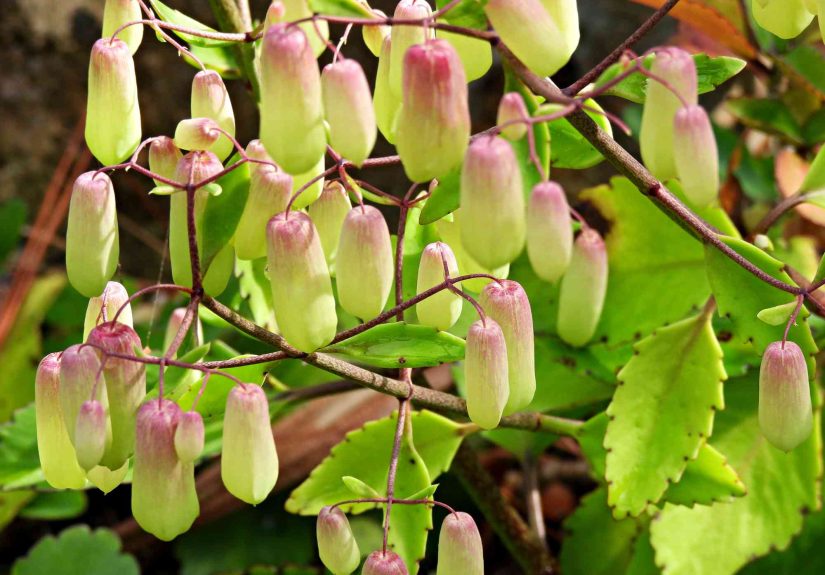
- Bell-like, pendulous flowers (green to red/pink tones)
- Thick succulent stems
- Plantlets forming along leaf margins under the right conditions
It is often mistaken for other kalanchoes such as Kalanchoe daigremontiana (mother of thousands) or Kalanchoe x houghtonii. K. pinnata generally has broader, more rounded leaves.
Best Growing Conditions for Kalanchoe Pinnata
Light: bright, generous, and consistent
Light is the make-or-break factor for this plant. Kalanchoe pinnata grows best in bright light and typically benefits from at least 6 hours of strong light per day. Indoors, a south- or west-facing window is often ideal. If your space is dim, the plant may stretch (become leggy), lean toward the window, and lose that compact, healthy look.
In very hot climates, outdoor plants may appreciate some afternoon shade to prevent leaf scorch. A little sun stress can deepen leaf color, but harsh, prolonged direct sun can burn tender leavesespecially if the plant was raised indoors and suddenly moved outside.
Soil: fast-draining or bust
This plant is a succulent, so it wants oxygen around the roots and hates soggy soil. Use a cactus/succulent mix or make your own well-draining blend.
Simple soil mix options
- Store-bought cactus or succulent potting mix
- Potting soil + coarse sand (about 1:1 for a quick DIY mix)
- A more airy blend with perlite/pumice added for extra drainage
The exact recipe matters less than the result: water should move through the pot quickly, and the mix should dry out reasonably fast.
Temperature and humidity
Kalanchoe pinnata prefers warm temperatures and generally does well in normal indoor conditions. A comfortable household range works fine, and low humidity is usually not a problem. It is not frost tolerant, so bring it indoors before cool weather arrives if you live outside a tropical climate.
As a practical rule, protect it when temperatures approach 50°F (10°C). If your home feels comfortable to you, your kalanchoe is probably fine.
How to Plant Kalanchoe Pinnata in a Pot
Choose the right container
Pick a pot with drainage holes. This is not optional. A decorative cachepot without drainage is basically a root-rot waiting room.
Terracotta is a great choice because it helps moisture evaporate faster. Plastic and glazed ceramic pots also work, but you’ll need to be more cautious with watering because they retain moisture longer.
Potting steps
- Fill the pot about halfway with succulent mix.
- Place the plant so the crown sits just above the soil line.
- Backfill gently and firm the mix lightly (don’t pack it like concrete).
- Wait a day before watering if the plant was recently pruned or repotted.
- Place in bright light and let it settle in.
Repotting tips
Repot every couple of years, or sooner if roots are circling the pot or growing from drainage holes. Move up only one pot size at a time. Oversized pots stay wet too long, and that can lead to root rot.
Watering Kalanchoe Pinnata the Right Way
If you remember only one thing from this guide, make it this: overwatering is the most common problem.
The soak-and-dry method
Water deeply, then allow the soil to dry out before watering again. Don’t do small daily sips. Succulents prefer a full drink followed by a dry period.
How to know when it needs water
- The soil feels dry several inches down
- The pot feels noticeably lighter
- Leaves may look slightly less plump (but not shriveled)
After watering, always empty the saucer or drip tray. Sitting in water is a fast way to invite root rot, crown rot, and a sad conversation with yourself.
Seasonal watering adjustments
Water more often during active growth (usually spring and summer) and less during cooler months or periods of slower growth. In winter, many indoor plants need less water and little to no fertilizer.
Example: a plant in a terracotta pot near a bright window may need water every 7–10 days in summer, but only every 2–3 weeks in winter. Your exact timing depends on light, temperature, pot size, and soil mix.
Fertilizing, Pruning, and General Maintenance
Fertilizer: light feeding is enough
Kalanchoe pinnata is not a heavy feeder. During active growth, use a balanced houseplant fertilizer (or a fertilizer formulated for blooming plants) at a diluted strength. Feeding once a month in the growing season is usually plenty.
Skip fertilizer in fall and winter unless the plant is actively growing under strong light. Too much fertilizer can create weak, overly soft growth.
Pruning: shape it before it gets dramatic
This plant can grow vigorously, so pruning helps keep it compact. Trim leggy stems with clean scissors or pruners. You can also remove spent flower stalks after blooming and any damaged leaves.
Bonus: the cuttings you remove are free plants in disguise.
Cleaning and rotation
Dust the leaves occasionally and rotate the pot every week or two so the plant grows evenly instead of doing a full lean toward the nearest sunny window like it’s posing for a light source.
How to Propagate Kalanchoe Pinnata
Propagation is one of the best parts of growing this plant. It can be propagated by leaf cuttings, stem cuttings, and plantlets. In other words, it’s generous.
1) Propagating from leaf cuttings
- Cut a healthy leaf with a clean tool.
- Let the cut end callus for 1–2 days.
- Place the leaf on lightly moistened succulent mix.
- Keep it in bright, indirect light.
- Mist lightly only as needed (don’t soak).
- Wait for plantlets and roots to develop along the leaf edge.
This method feels a little like plant magic, which is part of the appeal.
2) Propagating from stem cuttings
- Take a healthy stem cutting just below a node.
- Let it callus for a day or so.
- Insert into slightly moistened succulent mix.
- Keep warm with bright, indirect light.
- Water lightly only after the mix dries.
Stem cuttings are usually faster than leaf cuttings and are perfect after pruning.
3) Propagating from plantlets
If your plant is producing baby plantlets along the leaf margins, allow them to develop tiny roots, then gently separate and pot them. Use a small pot and keep the mix lightly moist at first, then transition to a normal soak-and-dry routine once established.
How to Encourage Blooming
The flowers are one of the reasons people fall in love with Kalanchoe pinnata. To encourage blooms, the plant needs strong light, warmth, and in many cases a short-day/long-night cycle.
Blooming tips that actually help
- Provide bright light daily (natural sunlight or grow lights)
- Avoid overwatering and overfeeding
- Give the plant consistent care during active growth
- Use long nights (about 14 hours of darkness) for several weeks if trying to trigger blooming indoors
Many kalanchoes respond to about 6 weeks of long nights to initiate flowering. If your plant never blooms indoors, it may simply need more light or a more consistent day/night routine.
Common Problems and How to Fix Them
Root rot or crown rot
Symptoms: mushy stems, sudden collapse, yellowing, foul smell, persistently wet soil.
Cause: overwatering, poor drainage, or a pot without drainage holes.
Fix: remove the plant from the pot, cut away rotted tissue, let healthy sections callus, and re-root in fresh dry succulent mix. Reduce watering frequency.
Leggy growth
Symptoms: stretched stems, long gaps between leaves, leaning plant.
Cause: insufficient light.
Fix: move to a brighter window, add a grow light, and prune back leggy stems to encourage fuller growth.
Mealybugs, aphids, and scale
These are common pests for kalanchoe and many houseplants. Mealybugs often appear as cottony white masses in leaf axils and along stems. Heavy infestations can weaken plants, cause yellowing, and lead to sticky honeydew and sooty mold.
Pest control steps
- Isolate the plant immediately.
- Remove visible pests with an alcohol-dipped cotton swab.
- Prune badly infested parts.
- Rinse with a strong stream of water (when appropriate).
- Monitor weekly and repeat treatment as needed.
For severe infestations, it may be more practical to discard the plantespecially if you have a large indoor collection and want to avoid a pest migration party.
Powdery mildew or fungal issues
Poor airflow, stress, and wet conditions can lead to disease problems. Improve air circulation, reduce overwatering, and avoid crowding plants.
Outdoor Growing, Spread, and Safety Considerations
Can you grow it outdoors?
Yesif you live in a warm, frost-free climate. In colder regions, it’s better as a container plant that can spend warm months outside and come indoors before temperatures drop.
Is it invasive?
It can spread aggressively in suitable climates, and Kalanchoe pinnata has been assessed as invasive/cautionary in parts of Florida. If you live in a warm region, keep it in containers, remove plantlets before they drop, and check local extension guidance before planting it in the ground.
Is Kalanchoe pinnata toxic?
Yes. Kalanchoe species are toxic to pets if ingested and can cause gastrointestinal symptoms and, in some cases, abnormal heart rhythm due to bufadienolides (cardiac glycosides). Keep the plant out of reach of cats, dogs, children, and curious “I taste everything” household members.
Wear gloves if you are sensitive to plant sap or doing heavy pruning.
Practical Care Routine (Beginner-Friendly)
If you want a simple routine, use this:
- Light: Bright window, 6+ hours of strong light
- Water: Soak, drain, then wait until dry
- Soil: Succulent mix with excellent drainage
- Fertilizer: Light feeding in spring/summer only
- Pruning: Trim leggy growth and save cuttings
- Pest checks: Quick inspection weekly (especially leaf axils)
That’s it. No elaborate misting schedule. No daily fertilizer tea. No emotional support playlist required (though the plant probably wouldn’t mind).
Grower Experiences and Real-World Lessons (Extended Section)
One of the most common experiences gardeners report with Kalanchoe pinnata is how easy it is to underestimate the plant at first. It often starts as a small, modest succulent in a nursery pot, then suddenly puts on vigorous growth once it finds a bright window and a stable watering routine. People who struggle with other houseplants sometimes do surprisingly well with this one because it rewards restraint more than constant intervention.
A typical beginner experience goes something like this: the plant looks great for two weeks, then the owner panics because the soil is dry and waters again too soon. The leaves start yellowing, and they assume the plant is thirsty, so they water more. That’s the classic succulent trap. Once growers switch to checking the soil properly and letting the pot fully drain, the plant often rebounds. In many cases, the “recovery moment” is when the owner realizes the issue was not neglectit was kindness in excess.
Another common lesson comes from light placement. Many growers keep their kalanchoe in a bright room but not actually in bright light. There is a big difference. A plant sitting six feet from a window may survive, but it usually won’t thrive. After moving it directly near a south- or west-facing window (or adding a grow light), growers often notice shorter internodes, stronger stems, and better leaf color within a few weeks. Some even report their first blooms after months of nothing but foliage.
Propagation is where people really start to have fun. Gardeners often describe the first appearance of baby plantlets along the leaf edges as “weirdly exciting,” and that’s accurate. It feels like the plant is cloning itself in plain sight. This has a practical side, too: if a plant gets leggy or damaged, there’s very little panic because it’s so easy to restart from cuttings or plantlets. Many owners end up with multiple pots from one original plant and start sharing them with friends, neighbors, or anyone who made the mistake of saying, “That plant is cool.”
Experienced growers also mention that container choice changes everything. Plants in terracotta tend to be more forgiving because the soil dries faster, while plants in plastic pots can stay wet much longer than expected. The same exact watering schedule can work beautifully in one pot and cause trouble in another. This is why seasoned plant keepers don’t water by calendar alonethey water based on soil dryness, pot weight, and plant appearance.
Pest experiences are another recurring theme. Mealybugs are the usual villain. Growers often discover them late because they hide in leaf axils and along stems. The best outcomes usually come from early action: isolate the plant, wipe pests off with alcohol on a cotton swab, and keep checking weekly. The people who “wait and see” often end up treating three more plants a month later. The people who act immediately usually win.
Outdoor growers in warm climates often learn a different lesson: Kalanchoe pinnata can spread faster than expected. Those charming plantlets are adorable until they begin appearing in nearby pots, cracks, and garden edges. Container growing helps control this, and many gardeners adopt a simple habit of removing extra plantlets before they root where they aren’t wanted.
Overall, the most successful long-term growers treat this plant as a tough but not indestructible succulent: give it bright light, don’t drown it, prune it when needed, and respect its ability to multiply. Do that, and Kalanchoe pinnata becomes one of those plants that makes you look like a better gardener than you feel on most days.
Final Thoughts
Kalanchoe pinnata is a standout succulent for gardeners who want something low-fuss but visually interesting. It offers sculptural leaves, unusual flowers, easy propagation, and a forgiving natureas long as you avoid overwatering and provide enough light.
Whether you grow it as a sunny windowsill houseplant or a container specimen on a warm patio, this plant rewards consistency over complexity. Start simple, observe how it responds, and adjust from there. Your kalanchoe doesn’t need perfection. It just needs decent light, dry roots, and a gardener willing to put the watering can down occasionally.