Table of Contents >> Show >> Hide
- What Bhangra Is (and Why It Feels So Electric)
- Before You Start: Set Yourself Up to Win
- The 11 Steps to Dance Bhangra
- Step 1: Get your bhangra posture (the “proud chest, happy bounce” stance)
- Step 2: Find the groove: the basic bounce
- Step 3: Add the bhangra “frame” with your arms
- Step 4: Master the shoulder pop (small move, huge effect)
- Step 5: Learn a beginner footwork base (your go-to traveling step)
- Step 6: Build “Dhamaal”-style side energy (beginner-friendly version)
- Step 7: Add a hand accent (the “pataka” flick vibe, simplified)
- Step 8: Try a sway-based groove (a “jhumar”-inspired feel)
- Step 9: Put feet + arms together (the “don’t drop the beat” moment)
- Step 10: Practice musicality (hear the drum, not just the melody)
- Step 11: Level up with combos, space, and performance energy
- A Simple Beginner 16-Count Combo (Use This Tonight)
- Common Beginner Mistakes (and Fast Fixes)
- How to Practice (Without Turning It Into Homework)
- A Quick Note on Culture and Respect
- Conclusion
- Experience: What Learning Bhangra Really Feels Like (and Why You’ll Keep Coming Back)
Bhangra is what happens when a drum beat high-fives your nervous system. It’s joyful, athletic, and a little bit dramatic (in the best way). If you’ve ever watched a bhangra performance and thought, “How are they smiling while doing cardio?” good news: you can learn it step by step, without needing superpowers or a sequined vest.
This guide breaks bhangra down into 11 beginner-friendly steps, with simple drills and a ready-to-use combo so you can dance at parties, weddings, cultural events, or just in your kitchen while your toast pops up like it’s applauding you. We’ll keep it real, keep it fun, and keep your shoulders doing that iconic bhangra “YES!” bounce.
What Bhangra Is (and Why It Feels So Electric)
Bhangra is a Punjabi folk dance with roots tied to harvest celebrationsespecially around Vaisakhi/Baisakhiwhere dancing and music were a way to mark community, seasons, and joy. Over time, bhangra spread globally and evolved into both a traditional dance form and a modern performance style (think: college teams, competitions, fusion choreography, and music that makes you want to sprint-smile).
The heartbeat of bhangra is the dhol, a loud, double-sided drum worn with a strap and played with sticks. Even if you’re dancing to a recorded track, the dhol rhythm is what gives bhangra that “I can’t not move” energy.
Before You Start: Set Yourself Up to Win
Pick the right music (beginner mode)
Choose a mid-tempo bhangra track with a clear beatsomething you can count without feeling like the song is racing you. If a track makes you panic, it’s not “too advanced.” It’s just not today’s track. You’re learning, not escaping a drum tornado.
Know the count: most beginner combos live on an 8-count
Many bhangra basics can be practiced in an 8-count (1–8). You don’t need music theory. You just need a steady pulse and the willingness to count out loud like you’re coaching your own hype team: “Five, six, seven, eightLET’S GO.”
Warm up (because bhangra is sneaky exercise)
- 30 seconds: marching in place
- 30 seconds: shoulder rolls + gentle shoulder shrugs
- 30 seconds: light bounce with knees soft
- 30 seconds: arm circles (small to medium)
Quick safety note
Keep your knees soft (not locked), land quietly, and take breaks. If something hurts sharply (not “working” or “tired,” but ouch), stop and reset. Bhangra should feel powerful and upbeat, not like your joints are filing complaints.
The 11 Steps to Dance Bhangra
-
Step 1: Get your bhangra posture (the “proud chest, happy bounce” stance)
Stand tall with your chest open, shoulders relaxed, and knees slightly bent. Think “confident and friendly,” like you’re about to congratulate someone and also out-dance them (politely).
Drill: Bounce gently by bending and straightening your knees a littlekeep it springy, not stompy. Count 1–8. Repeat twice.
-
Step 2: Find the groove: the basic bounce
Bhangra’s signature look comes from a steady buoyant bounce. Your heels can lift slightly, but the main action is in the knees. The bounce is your “engine.” Everything else is the decorations on the cake.
Common mistake: bouncing only with your shoulders. Your shoulders will move, yesbut let the knees drive the motion.
-
Step 3: Add the bhangra “frame” with your arms
Bring your arms up with elbows bent, roughly shoulder height or slightly higher. Hands relaxed. Palms can face forward or slightly inward depending on the move. The vibe is open, celebratory, and energetic.
Drill: Bounce for 8 counts while lifting arms up for 4 counts, then lowering slightly for 4 counts. Repeat.
-
Step 4: Master the shoulder pop (small move, huge effect)
Shoulder movement is iconic in bhangra. Think “up-and-forward” pulses that match the beat. Keep it controlledthis is not a full-body shrug like you just read a confusing group chat.
Drill: On counts 1, 3, 5, 7 do a sharper shoulder pop. On counts 2, 4, 6, 8 keep a lighter bounce.
-
Step 5: Learn a beginner footwork base (your go-to traveling step)
Try this simple pattern: step right, step left, step right, step leftwhile keeping the bounce. Keep your steps small and under your hips at first. Once it’s stable, let it travel side-to-side.
Pro tip: If your feet are doing something weird, shrink the steps. Small steps = clean rhythm.
-
Step 6: Build “Dhamaal”-style side energy (beginner-friendly version)
Many beginner bhangra classes teach a “dhamaal” feel: stepping side-to-side with an emphasized bounce and strong arm shapes. You can do a simplified version: step right (1), together (2), step left (3), together (4), repeat.
Arms idea: on the step, lift arms slightly higher; on the “together,” bring them slightly downlike a pump.
-
Step 7: Add a hand accent (the “pataka” flick vibe, simplified)
Bhangra often uses expressive hand accents. A beginner-friendly version is a controlled “flick” or “snap” of the wrist while keeping fingers relaxed. Don’t turn it into jazz hands on espresso. Keep it crisp.
Drill: Bounce for 8 counts and add a wrist accent on counts 2, 4, 6, 8.
-
Step 8: Try a sway-based groove (a “jhumar”-inspired feel)
Some bhangra styles include smoother, sway-based movement. A beginner version: shift weight right (1–2), shift left (3–4), repeat (5–8), while keeping your chest proud and arms lifted.
This gives you contrast: not everything has to be high-impact. Good dancers use texturelike adding bass and treble to your movement.
-
Step 9: Put feet + arms together (the “don’t drop the beat” moment)
Now combine: bounce + side steps + arm pumps. Keep the bounce consistent and let the arms and feet “decorate” it. If you lose the bounce, pause and rebuildbounce first, then add details.
Rule of thumb: When you get lost, return to bounce + smile. Bhangra forgives a lot if the energy is right.
-
Step 10: Practice musicality (hear the drum, not just the melody)
Bhangra hits hardest when you respond to the rhythmespecially the dhol patterns. Listen for strong beats and repeatable phrases. Many songs have sections where the beat becomes extra clear (like the music is saying, “Okay, your turn.”).
Drill: Pick one 15–20 second section of a song. Loop it. Do your basic bounce and add one move per loop: loop 1 = bounce only, loop 2 = add arms, loop 3 = add side steps, loop 4 = add shoulder pops.
-
Step 11: Level up with combos, space, and performance energy
Once your basics feel stable, start building short combos (8 counts, then 16 counts). Travel a little. Face different directions. Use your eyes and expressionbhangra is a celebration, not a staring contest with the floor.
If you ever watch competitive or stage bhangra, you’ll notice bigger formations, sharper unison, and sometimes props. You don’t need props to startbut you do need consistency.
A Simple Beginner 16-Count Combo (Use This Tonight)
Here’s a clean, party-friendly combo built from what you just learned. Do it slowly first, then speed up when it feels smooth.
Counts 1–8
- 1–2: Basic bounce + arms up (light pump)
- 3–4: Step right, together (keep bounce)
- 5–6: Step left, together (keep bounce)
- 7–8: Shoulder pops (small but sharp) while bouncing
Counts 9–16
- 9–10: Sway right (jhumar-inspired feel), arms lifted
- 11–12: Sway left, arms lifted
- 13–14: Side step right + wrist accent
- 15–16: Side step left + wrist accent
Make it yours: Keep the structure but change the “flavor.” Bigger arms. Smaller steps. More shoulder pops. The goal is confidence, not perfection.
Common Beginner Mistakes (and Fast Fixes)
Mistake: You look stiff
Fix: Soften your knees and let your bounce be continuous. Think spring, not statue.
Mistake: Arms flail like inflatable tube people
Fix: Choose a simple arm shape (elbows bent, hands relaxed) and “pump” within a small range. Bigger comes later.
Mistake: You get out of sync with the beat
Fix: Count 1–8 out loud for a few rounds. Then switch to counting only the strong beats (1, 3, 5, 7).
Mistake: Your shoulders do everything and your legs do nothing
Fix: Rebuild from the bottom: bounce in the knees first, then let the shoulders “ride” that bounce.
How to Practice (Without Turning It Into Homework)
If you practice 10–15 minutes a day for a week, you’ll feel a real difference. Keep it short, consistent, and specific.
A 12-minute practice plan
- 2 minutes: warm-up bounce + shoulder rolls
- 3 minutes: bounce + arms (8-count drills)
- 3 minutes: side steps (right/left) with arm pumps
- 2 minutes: shoulder pops + wrist accents
- 2 minutes: run the 16-count combo
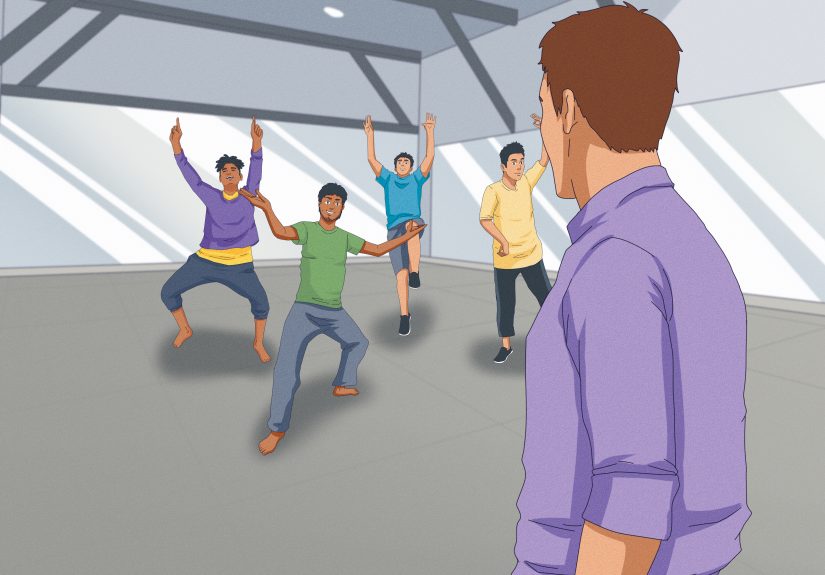
If you want faster progress, take a class or learn from structured beginner lessons. Bhangra is also a community dance: teams, workshops, and cultural events can make learning feel less like “practice” and more like “fun with people.”
A Quick Note on Culture and Respect
Bhangra is joyful and welcoming, and it also comes from real communities, histories, and celebrations. If you’re learning it, it’s worth appreciating where it comes fromPunjabi culture, the harvest context, and the music traditions behind it. Learn the names of instruments, support teachers and performers, and show up with curiosity instead of treating it like a costume. You’ll dance better when you understand what you’re dancing for.
Conclusion
Learning how to dance bhangra isn’t about memorizing 1,000 movesit’s about building a strong bounce, matching the beat, and letting your energy lead the way. Start with the posture and groove, layer in arms and shoulders, and then use small combos to build confidence. The best part? The more you practice, the more bhangra starts to feel like a celebration you can turn on anytime.
Experience: What Learning Bhangra Really Feels Like (and Why You’ll Keep Coming Back)
The first time most beginners try bhangra, there’s a specific kind of confusion that hits around count three. Your legs are bouncing, your arms are up, your shoulders are trying to pop, and your brain is basically running five tabs at once like an overheated laptop. That’s normal. Bhangra asks you to coordinate multiple “simple” things at the same timeso it feels hard before it feels fun. The trick is to let the bounce become automatic. Once your knees find that springy rhythm, everything else starts stacking neatly on top, like building a playlist instead of building a rocket.
After a few sessions, there’s usually a moment where you stop thinking and start reacting. You’ll hear the dhol-heavy section of a song and your body will answer without permission. It’s almost funny: you’ll be walking somewhere, a bhangra track comes on, and suddenly you’re doing a tiny shoulder pop in public like you’re trying to signal a helicopter. This is the good part. Bhangra trains rhythm in a way that feels playful, not strictso your confidence grows fast, even if you’re not “perfect.”
Another real-life experience: bhangra is a sneaky workout. You’ll tell yourself it’s just dancing, and then you’ll notice your heart rate climbing. The bounce works your legs. The arm positions wake up your shoulders and upper back. The repeated 8-count combos build stamina without feeling like a treadmill. People often describe that post-practice feeling as energized instead of drainedlike you got movement, music, and mood-lift all in one. If you’ve ever wanted exercise that doesn’t feel like punishment, beginner bhangra drills are an easy win.
Socially, bhangra tends to make people braver. Because the dance is openly celebratory, it “gives you permission” to be big. That’s a rare gift if you’re used to dancing small. Even practicing alone, you’ll notice your expression changingmore smile, more eye focus, more openness in the chest. And when you finally do it around other people (a party, a wedding, a campus event), you’ll feel that community effect: bhangra is often danced in groups, circles, and formations, so you’re not isolated. If you forget a step, you bounce, rejoin, and keep going. The culture of the dance supports the idea that joy matters more than flawless technique.
Finally, expect your “style” to show up naturally. Some people love sharp shoulder pops and clean angles. Others lean into a smoother sway and expressive hands. As long as you’re on the beat and keeping the bounce alive, you can personalize your bhangra. That’s why learning it sticks: the basics are learnable, the vibe is addictive, and the ceiling is high if you ever decide to join a team or learn more advanced choreography. Start simple, stay consistent, and let the music do what it does bestpull the joy out of you, one 8-count at a time.