Table of Contents >> Show >> Hide
- Why the Closing of a Thank-You Letter Matters
- The Basic Structure of a Thank-You Letter Closing
- Best Ways to Close a Professional Thank-You Letter
- Best Ways to Close a Personal Thank-You Letter
- How to Choose the Right Thank-You Letter Sign-Off
- Thank-You Letter Closing Examples by Situation
- Common Mistakes to Avoid When Closing a Thank-You Letter
- How Long Should the Closing Be?
- Should You Say “Thank You” Again at the End?
- of Real-World Experience: What Actually Works When Closing a Thank-You Letter
- Conclusion
A thank-you letter is already doing polite work: it says, “I noticed what you did, and I appreciate it.” But the closing? That is the final handshake, the last smile at the door, the tiny bow before the curtain drops. Get it right, and your message feels warm, polished, and memorable. Get it wrong, and even a thoughtful note can end with the elegance of a shopping cart with one wobbly wheel.
Learning how to close a thank-you letter matters whether you are writing after a job interview, thanking a teacher, appreciating a client, recognizing a mentor, or sending a personal note after receiving a gift. The ending should do three things: restate your gratitude, match the tone of the relationship, and leave the reader with a clear, pleasant final impression.
This guide explains the best thank-you letter closing phrases, how to choose the right sign-off, what to avoid, and how to end different types of thank-you letters with confidence. No stiff robot language. No “I am writing to express my deepest appreciation pursuant to your kindness” unless you are secretly a Victorian lawyer. Just useful, natural, American English that works.
Why the Closing of a Thank-You Letter Matters
The closing of a thank-you letter may look small, but it carries emotional weight. Readers often remember the beginning and ending of a message most clearly. Your opening gets their attention; your closing decides how they feel when they leave the note.
A strong closing can reinforce sincerity, show professionalism, and make the message feel complete. This is especially important in professional situations, such as after an interview, networking meeting, referral, recommendation, client project, or business favor. In personal situations, the closing helps your note feel human and warm rather than rushed or copied from a greeting card rack at 9:57 p.m.
The best thank-you letter closing is not always the fanciest one. In fact, simple closings often work best. “Thank you again,” “With appreciation,” “Sincerely,” and “Warmly” are popular because they are clear, polite, and flexible. The secret is matching the ending to the relationship and purpose of the letter.
The Basic Structure of a Thank-You Letter Closing
A complete thank-you letter closing usually includes three parts: a final sentence of appreciation, a complimentary close, and your name. For printed letters, you may also include a handwritten signature between the closing phrase and your typed name. For email, your typed name and contact information are usually enough.
1. Final Appreciation Sentence
This is the sentence before your sign-off. It reminds the reader why you are thankful and leaves the message feeling intentional.
Examples:
- Thank you again for your time and support.
- I truly appreciate your guidance and encouragement.
- Thanks again for thinking of me and for your generous help.
- I am grateful for the opportunity to speak with you.
- Your kindness meant a great deal to me.
2. Complimentary Close
The complimentary close is the short phrase above your name. It should fit the tone of the letter.
Professional examples:
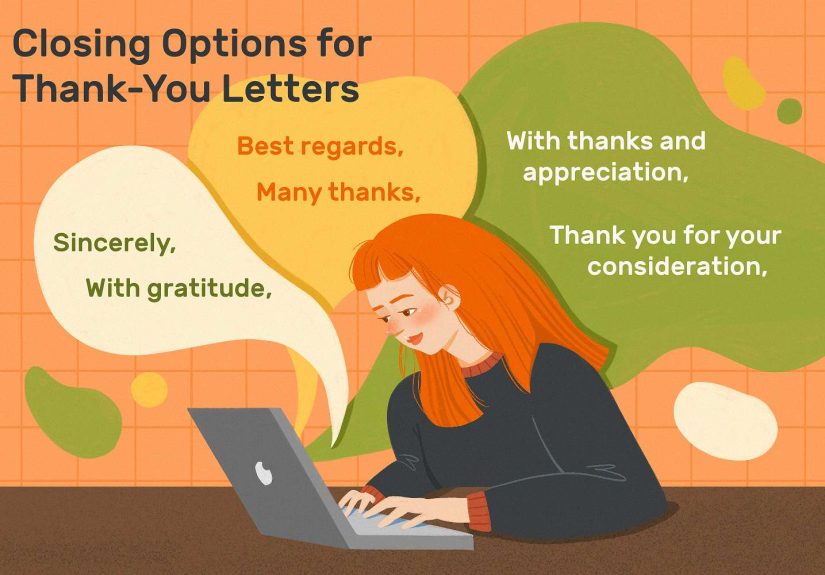
- Sincerely,
- Best regards,
- With appreciation,
- Respectfully,
- Thank you,
Warm or personal examples:
- Warmly,
- With gratitude,
- Many thanks,
- With heartfelt thanks,
- All my best,
3. Your Name
End with your name. In professional thank-you emails, include your full name. If the recipient knows you well, your first name may be enough. In a handwritten note to a close friend or family member, you can use a nickname if that feels natural.
Best Ways to Close a Professional Thank-You Letter
Professional thank-you letters need warmth, but they also need boundaries. You want to sound appreciative, not like you are auditioning for a soap opera. The tone should be polite, specific, and confident.
After a Job Interview
When closing a thank-you letter after an interview, restate your appreciation and your interest in the role. Keep it brief and positive. Hiring managers are busy people, and your closing should not require a snack break to finish reading.
Example closing:
Thank you again for taking the time to speak with me about the marketing coordinator position. I enjoyed learning more about the team’s goals and would be excited to contribute to your upcoming campaigns.
Best regards,
Jordan Lee
This closing works because it thanks the interviewer, mentions the role, shows interest, and ends professionally.
After a Networking Conversation
A networking thank-you letter should close with appreciation and a light invitation to stay connected. Avoid sounding demanding. You are thanking someone, not assigning them homework.
Thank you again for sharing your experience and advice. I appreciate your time and hope we can stay in touch.
With appreciation,
Avery Johnson
After Receiving a Recommendation or Referral
If someone writes a recommendation, introduces you to a contact, or refers you for an opportunity, the closing should feel sincere and specific. A referral is professional generosity, and it deserves more than “thx.”
I truly appreciate your willingness to recommend me. Your support means a great deal, and I will keep you updated on how things progress.
Sincerely,
Morgan Smith
After a Business Meeting or Client Project
For clients, coworkers, vendors, or business partners, close with appreciation and next steps if needed. A good business thank-you letter ending can strengthen the relationship and keep momentum going.
Thank you again for your collaboration on this project. I appreciate your thoughtful feedback and look forward to our next steps.
Best regards,
Casey Miller
Best Ways to Close a Personal Thank-You Letter
Personal thank-you letters allow more warmth and personality. The closing can be emotional, cheerful, or affectionate, depending on the relationship. The key is to sound like yourself. If you never say “With boundless gratitude” in real life, do not suddenly become a greeting card philosopher on paper.
Thanking Someone for a Gift
When thanking someone for a gift, mention the gift again and how you plan to use or enjoy it. Then close with warmth.
Thank you again for the beautiful cookbook. I have already marked three recipes to try, and yes, one of them involves chocolate, because I am only human.
With gratitude,
Emily
Thanking a Friend for Help
If a friend helped you move, listened during a hard week, watched your pet, or saved you from assembling furniture alone, the closing can be more relaxed.
Thanks again for helping me this weekend. I could not have done it without you, and my bookshelf is still standing, which feels like a small miracle.
Warmly,
Chris
Thanking a Teacher, Coach, or Mentor
For teachers, coaches, mentors, or advisors, the closing should recognize their impact. Be specific and respectful.
Thank you again for your patience, encouragement, and honest feedback. Your guidance has helped me grow in ways I will carry forward.
With sincere appreciation,
Taylor
How to Choose the Right Thank-You Letter Sign-Off
Choosing the right sign-off depends on the relationship, setting, and emotional tone. Here is a simple way to decide.
Use Formal Closings for Professional or Serious Situations
Choose a formal closing when writing to an employer, professor, client, executive, donor, hiring manager, or someone you do not know well.
- Sincerely,
- Respectfully,
- Best regards,
- With appreciation,
- Thank you,
Use Warm Closings for Personal or Friendly Notes
Choose a warmer closing when writing to friends, family members, close colleagues, mentors, neighbors, or people who have supported you personally.
- Warmly,
- With gratitude,
- Many thanks,
- With heartfelt thanks,
- All my best,
Use Simple Closings When You Are Unsure
When in doubt, simple wins. “Sincerely,” “Best regards,” and “With appreciation” are safe choices for most thank-you letters. They are polite without sounding overly dramatic. Think of them as the comfortable black shoes of letter closings: not flashy, but they go with almost everything.
Thank-You Letter Closing Examples by Situation
Formal Thank-You Letter Closing
Thank you again for your time, consideration, and support. I sincerely appreciate the opportunity to connect with you.
Respectfully,
Alex Carter
Friendly Thank-You Letter Closing
Thanks again for being so generous with your time. I am lucky to have your support and even luckier that you answer texts faster than most emergency services.
Warmly,
Sam
Short Thank-You Email Closing
Thank you again for your help. I really appreciate it.
Best,
Jamie
Thank-You Letter Closing After an Interview
Thank you again for meeting with me today. I enjoyed our conversation and remain very interested in the opportunity to join your team.
Best regards,
Riley Brown
Thank-You Letter Closing for a Donation or Support
Your generosity will make a meaningful difference, and I am truly grateful for your support.
With sincere appreciation,
Jordan Patel
Thank-You Letter Closing to a Teacher
Thank you again for believing in me and helping me improve. Your encouragement has made a lasting difference.
With gratitude,
Mia Thompson
Common Mistakes to Avoid When Closing a Thank-You Letter
Being Too Generic
“Thanks for everything” is not wrong, but it can feel flat. Try to mention what you are thankful for. Specific appreciation feels more sincere.
Instead of: Thanks for everything.
Try: Thank you again for taking the time to review my application and share your advice.
Sounding Too Casual in a Professional Letter
Closings like “Later,” “Cheers,” “Peace out,” or “You’re the bestest” may be fine for friends, but they can feel too casual in a professional thank-you letter. Save “peace out” for your group chat, where it belongs.
Overdoing the Emotion
Gratitude is good. A closing that sounds like you are accepting an Academy Award for Best Supporting Email may be too much. Keep the tone sincere and balanced.
Forgetting Your Name
This sounds obvious, but people forget. In email, include your full name if the recipient may not immediately recognize you. In formal letters, leave space for a signature if printing.
Using the Wrong Level of Formality
“Respectfully yours” may feel too stiff for a close coworker. “Love” may feel wildly inappropriate after a job interview. Matching the relationship is the whole game.
How Long Should the Closing Be?
The closing of a thank-you letter should usually be short: one or two sentences before the sign-off. You do not need to repeat the entire letter. The goal is to land the plane, not circle the airport three more times.
For professional thank-you emails, the entire message is often three to five short paragraphs. The closing sentence can simply reinforce gratitude and, when appropriate, mention next steps. For personal thank-you notes, the closing may be more expressive, especially if the person gave emotional support or helped during an important moment.
Should You Say “Thank You” Again at the End?
Yes, it is perfectly fine to say “thank you” again at the end of a thank-you letter. In fact, it often strengthens the message. The key is to avoid repeating the exact same wording too many times.
Good: Thank you again for your thoughtful advice.
Also good: I truly appreciate your time and guidance.
Too much: Thank you for your thank-worthy help. I thank you again and remain thankfully thankful.
Gratitude should feel natural, not like it got trapped in a copy machine.
of Real-World Experience: What Actually Works When Closing a Thank-You Letter
In real life, the best thank-you letter closings are rarely the most complicated ones. The closings that work best tend to feel personal, specific, and easy to believe. A hiring manager reading twenty thank-you emails in one afternoon does not need poetry. They need clarity, warmth, and a reminder that you listened. A friend who helped you through a stressful week does not need a formal business ending. They need to feel seen.
One practical experience many people have is writing a thank-you note after an interview and wondering whether the closing should sound eager or calm. The safest balance is appreciation plus confidence. For example, “Thank you again for your time. I enjoyed learning about the role and would be excited to contribute to the team” works better than “I desperately hope you choose me.” Enthusiasm is good. Panic wearing a blazer is not.
Another common experience is thanking someone who gave advice. Maybe a former teacher reviewed your essay, a mentor helped you prepare for an interview, or a colleague explained a process that previously looked like it had been assembled by raccoons. In this situation, the best closing often mentions the result of their help. “Your advice helped me feel more prepared, and I truly appreciate your time” sounds more meaningful than a plain “Thanks again.” It tells the person their effort mattered.
For personal thank-you letters, experience shows that a tiny detail makes the ending stronger. If someone gave you a gift, mention how you used it. If someone hosted you, mention a moment you enjoyed. If someone supported you, mention what their support helped you do. A closing like “Thank you again for the dinner and for making everyone feel so welcome” feels warmer than “Thanks for having me.” The detail is the difference between a note that feels written and a note that feels remembered.
There is also the challenge of not sounding too stiff. Many people freeze when writing thank-you letters because they think politeness requires fancy language. It does not. A sentence like “I really appreciate your kindness and will not forget it” can be more powerful than a paragraph full of formal decorations. If your closing sounds like something you would never say aloud, revise it. Good manners do not need a powdered wig.
Finally, experience teaches that the closing should leave the door open when appropriate. After a networking chat, “I hope we can stay in touch” is friendly and professional. After a client meeting, “I look forward to working together on the next steps” keeps the conversation moving. After a personal favor, “I am grateful for you” may be exactly right. The best closing does not just end the letter. It gently strengthens the relationship.
Conclusion
Knowing how to close a thank-you letter is really about knowing how to leave a good final impression. The right ending should sound sincere, match the relationship, and reinforce the reason you are grateful. For professional letters, choose polished closings such as “Sincerely,” “Best regards,” or “With appreciation.” For personal notes, warmer options like “Warmly,” “With gratitude,” or “Many thanks” often feel more natural.
A strong thank-you letter closing does not need to be long, dramatic, or decorated with verbal confetti. It simply needs to say, clearly and honestly, “I appreciate you.” Do that well, and your message will feel complete, respectful, and memorable.
Note: This article is written in original wording and synthesized from widely accepted U.S. guidance on professional correspondence, career follow-up etiquette, business letter formatting, and thank-you note best practices.