Table of Contents >> Show >> Hide
- Why Cleaning Invisalign Matters
- How to Clean Invisalign Daily
- Best Products for Cleaning Invisalign
- What Not to Use on Invisalign
- How Often Should You Clean Invisalign?
- How to Prevent Invisalign Stains
- How to Clean Invisalign When You Are Away From Home
- Common Invisalign Cleaning Mistakes
- What to Do If Invisalign Smells Bad
- What to Do If Invisalign Turns Yellow or Cloudy
- Invisalign Cleaning and Oral Health: The Bigger Picture
- When to Call Your Orthodontist
- Extra Experience-Based Tips for Cleaning Invisalign in Real Life
- Conclusion
Invisalign aligners are wonderfully sneaky little things. They straighten your teeth without announcing themselves like a marching band of metal brackets, and they let you eat popcorn without negotiating with wires. But there is one catch: clear aligners only stay clear if you treat them like part of your oral hygiene routine, not like a mysterious plastic object that lives in a napkin beside your lunch.
Learning how to clean Invisalign properly is not complicated, but it does require consistency. Your aligners sit snugly over your teeth for most of the day, which means saliva flow is reduced around the covered tooth surfaces. If food particles, plaque, or sugary drinks get trapped underneath, your aligners can become cloudy, smelly, stained, or less pleasant to wear. Worse, your teeth may be exposed to bacteria for hours at a time. That is not exactly the “dream smile” package anyone signed up for.
The good news? A clean Invisalign routine can be simple, quick, and affordable. With cool or lukewarm water, a soft toothbrush, gentle soap or approved cleaning crystals, and a few smart habits, you can keep your trays looking nearly invisible and feeling fresh. Let’s walk through the best Invisalign cleaning tips, what to avoid, how to prevent stains, and how to survive daily life with aligners without turning your case into a tiny science experiment.
Why Cleaning Invisalign Matters
Invisalign aligners are made to fit closely over your teeth, applying gentle pressure to guide them into better alignment. Because the trays hug your teeth so tightly, anything stuck between your enamel and aligner can stay there until you remove the tray. That includes plaque, coffee residue, snack crumbs, and bacteria. In other words, your aligner can become a little greenhouse for the wrong kind of growth if you skip cleaning.
Cleaning Invisalign regularly helps prevent three common problems: odor, discoloration, and plaque buildup. Odor usually comes from bacteria and food debris. Discoloration often comes from drinks like coffee, tea, wine, soda, or brightly colored juices. Plaque buildup can make trays look foggy and may increase your risk of cavities or gum irritation if your teeth are not cleaned before reinserting aligners.
Clean aligners also support better treatment compliance. Invisalign usually needs to be worn for most of the day, commonly around 20 to 22 hours depending on your orthodontist’s instructions. If your trays smell like yesterday’s lunch had unfinished business, wearing them becomes much less appealing. Fresh trays are easier to tolerate, and easier-to-wear trays help you stay on track.
How to Clean Invisalign Daily
A strong daily routine is the foundation of Invisalign care. Think of it as brushing your teeth’s transparent roommates. They live with you all day; they deserve basic manners.
1. Rinse Your Aligners Every Time You Remove Them
Whenever you take out your Invisalign trays, rinse them with cool or lukewarm water. This helps remove saliva and loose debris before it dries on the plastic. Dried saliva can create a cloudy film, and nobody wants aligners that look like they were stored in a forgotten aquarium.
A quick rinse is especially useful before placing the trays in their case. Never toss dry, saliva-coated aligners directly into a container and expect magic. The case is helpful, but it is not a spa.
2. Brush Aligners Gently With a Soft Toothbrush
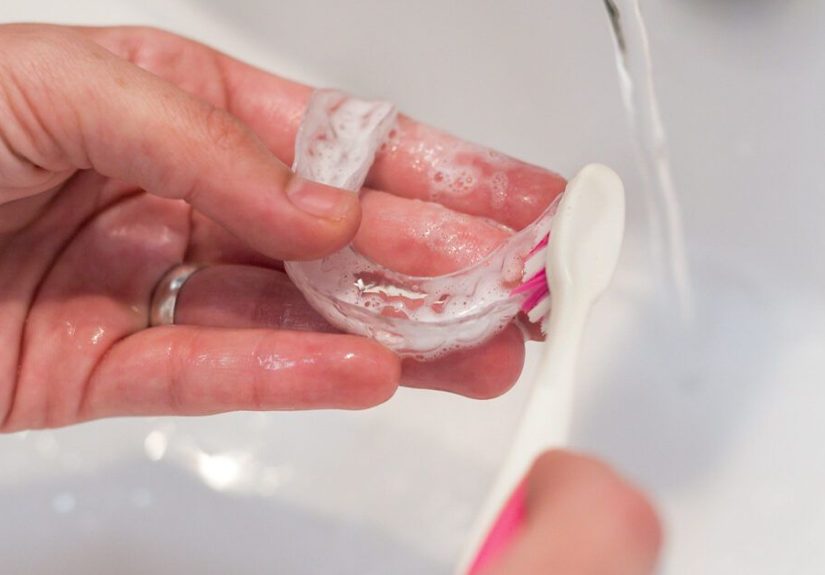
Use a soft-bristled toothbrush to clean your trays at least twice daily, ideally in the morning and evening. Gently brush the inside and outside surfaces to remove buildup. Use light pressure because aggressive scrubbing can scratch the plastic, making it easier for stains and bacteria to cling.
Many orthodontists recommend using clear, mild, unscented liquid soap for daily cleaning. If you use toothpaste, choose carefully and ask your dental provider first, because some toothpastes are abrasive and can make aligners look dull or cloudy over time. Your Invisalign trays are not bathroom tiles; they do not need a gritty polish.
3. Clean Your Teeth Before Reinserting Aligners
This is where many people accidentally sabotage their routine. Cleaning the aligners is only half the job. Before putting Invisalign back in, brush your teeth whenever possible. If you cannot brush immediately, rinse your mouth thoroughly with water and brush as soon as you can.
Food particles trapped under aligners can feed bacteria and contribute to bad breath, plaque, and tooth decay. Flossing once daily is also important, especially before bedtime, because aligners can hold tiny bits of food against the spaces between your teeth. That spinach from dinner does not need an overnight hotel room.
4. Soak Aligners for a Deeper Clean
Daily brushing keeps Invisalign fresh, but soaking can help remove deeper buildup and odors. You can use Invisalign Cleaning Crystals, retainer cleaning tablets, or another orthodontist-approved clear aligner cleaner. Follow the product directions carefully. Many cleaning systems require soaking for only a few minutes, while others take longer.
After soaking, rinse your aligners thoroughly before putting them back in your mouth. Cleaning solution residue is not a flavor experience you need to explore.
Best Products for Cleaning Invisalign
You do not need a luxury cleaning laboratory to care for Invisalign. Most people can maintain clean trays with basic tools and the occasional deep-cleaning product.
Soft Toothbrush
A separate soft toothbrush for your aligners is ideal. Keep one brush for your teeth and another for your trays. This avoids transferring toothpaste residue and helps you remember that aligners require gentle care.
Clear Mild Soap
Clear, fragrance-free liquid soap is a popular daily option because it can clean without staining the trays. Avoid strongly scented soaps, colored soaps, or anything that makes your aligners taste like lavender furniture polish.
Invisalign Cleaning Crystals
Invisalign Cleaning Crystals are made specifically for aligners and retainers. They dissolve in water and help remove plaque and odor. They are convenient for weekly or occasional deeper cleaning, especially if your trays are starting to look cloudy.
Retainer Cleaning Tablets
Some retainer cleaning tablets may be safe for clear aligners, but always check with your orthodontist and read the product label. Choose products designed for dental appliances, not household cleaning. Your aligners should never meet bleach, harsh disinfectants, or anything you would use on a kitchen counter.
Ultrasonic Cleaner
An ultrasonic cleaner uses vibration waves in water to loosen debris from dental appliances. It can be helpful for aligners and retainers, especially if used with an appropriate cleaning solution. However, it should not replace brushing your teeth or rinsing your trays throughout the day.
What Not to Use on Invisalign
Some cleaning shortcuts sound clever until your aligners warp, stain, or start tasting like a swimming pool. Avoid these common mistakes.
Do Not Use Hot Water
Hot water can warp the plastic material. Even a small change in shape may affect how the aligners fit, and fit is the whole point of Invisalign. Use cool or lukewarm water instead. If you accidentally soak your trays in hot water and they feel different, contact your orthodontist before continuing to wear them.
Do Not Use Bleach or Harsh Chemicals
Bleach, household cleaners, and strong disinfectants can damage aligners and leave unsafe residue. Invisalign goes in your mouth, not under the sink next to the tile cleaner.
Do Not Soak Aligners in Colored Mouthwash
Colored mouthwash can tint clear trays. Alcohol-based mouthwash may also be too harsh for some dental appliances. If your aligners turn minty blue, they may become much less invisible.
Be Careful With Abrasive Toothpaste
Some whitening or tartar-control toothpastes can scratch clear plastic. Scratches make trays look cloudy and can create tiny spaces where bacteria and stains cling. Ask your dentist or orthodontist whether your toothpaste is safe for aligner cleaning.
How Often Should You Clean Invisalign?
At minimum, clean your Invisalign trays every morning and every night. Rinse them every time you remove them. Brush and floss your teeth before reinserting aligners whenever possible, especially after meals and snacks.
A practical schedule looks like this:
- Morning: Remove aligners, rinse, brush aligners gently, brush and floss teeth if needed, then reinsert.
- After meals: Brush your teeth before putting aligners back in. Rinse trays before reinserting.
- Evening: Brush and floss teeth, clean aligners thoroughly, and consider soaking them if they look cloudy or smell less than delightful.
- Weekly: Use cleaning crystals, retainer cleaner, or an orthodontist-approved soak for deeper cleaning.
The exact routine may vary depending on your orthodontist’s instructions, your eating schedule, and whether you are wearing Invisalign aligners or retainers. But the basic rule is simple: clean trays plus clean teeth equals a happier mouth.
How to Prevent Invisalign Stains
Stain prevention is easier than stain removal. Clear aligners are transparent, which is great until coffee decides to autograph them.
Remove Aligners Before Eating
You should remove Invisalign before eating meals or snacks. Chewing with aligners can damage them, and food can stain or get trapped inside. Even soft foods can create residue. Aligners are not snack shields.
Drink Only Water While Wearing Aligners
Water is the safest drink with Invisalign in. Coffee, tea, red wine, soda, sports drinks, and juices can stain aligners or trap sugar and acid against your teeth. Hot drinks may also warp trays. If you want coffee, remove your aligners first, enjoy your drink, rinse or brush, then put them back in.
Use Your Case, Not a Napkin
One of the most common Invisalign tragedies begins with the phrase, “I wrapped them in a napkin for just a second.” Then the tray disappears into the trash, and everyone at the restaurant gets an unexpected detective mission. Use your case every time. It protects aligners from germs, damage, and accidental disposal.
Do Not Smoke or Vape With Aligners In
Smoke and vapor residue can discolor aligners and contribute to odor. They can also affect oral health. If you are trying to keep trays clear, this is one more reason to avoid the habit altogether.
How to Clean Invisalign When You Are Away From Home
Life does not always happen beside your bathroom sink. School, work, restaurants, road trips, and long days can make aligner care feel inconvenient. The trick is to build a small Invisalign travel kit.
Include a travel toothbrush, travel-size toothpaste, floss picks, your aligner case, and a small bottle of water if needed. Some people also carry a mini bottle of clear mild soap for cleaning aligners, though rinsing thoroughly is essential. Keep the kit in your bag so you are not forced to choose between skipping hygiene and brushing your teeth with a paper towel like a camping raccoon.
If brushing is truly impossible after a meal, rinse your mouth well with water, rinse your aligners, and brush as soon as you can. This should be a backup plan, not the daily strategy. Invisalign works best when clean habits become automatic.
Common Invisalign Cleaning Mistakes
Even responsible aligner wearers make mistakes. Here are the big ones to avoid.
Putting Aligners Back on Dirty Teeth
This is the fastest way to trap food and bacteria. If you eat, clean your teeth before reinserting aligners. Your trays are designed to move teeth, not preserve lunch.
Forgetting to Clean the Aligner Case
Your case can collect bacteria too. Wash it regularly with mild soap and water, rinse it well, and let it dry. A dirty case can make clean aligners dirty again, which is rude behavior from such a small plastic box.
Using the Same Tray Too Long Without Extra Care
Some Invisalign trays are worn for one week, while others may be worn longer depending on your treatment plan. The longer you wear a set, the more important deep cleaning becomes. If your aligners are cloudy or smelly before it is time to switch, increase your cleaning routine and ask your orthodontist for advice.
Assuming Clear Means Clean
Aligners can look fine and still carry bacteria. Clean them consistently even if they appear spotless. Invisible grime is still grime; it just has better camouflage.
What to Do If Invisalign Smells Bad
If your Invisalign trays smell bad, start by reviewing your routine. Are you rinsing them every time you remove them? Are you brushing your teeth before putting them back in? Are you cleaning the case? Are you drinking anything besides water while wearing them?
For odor, gently brush the trays with a soft toothbrush and clear mild soap, rinse thoroughly, and use an approved soak. Clean your teeth carefully, including your tongue, and floss daily. If odor continues despite good hygiene, contact your dentist or orthodontist. Persistent bad breath can sometimes signal gum inflammation, cavities, dry mouth, or another oral health issue.
What to Do If Invisalign Turns Yellow or Cloudy
Yellowing usually comes from drinks, food residue, tobacco exposure, or insufficient cleaning. Cloudiness may come from mineral buildup, dried saliva, scratches, or plaque. Soaking aligners in Invisalign Cleaning Crystals or an approved retainer cleaner may improve the appearance, but stains are not always fully reversible.
Do not attempt to rescue stained trays with bleach, boiling water, abrasive powders, or random internet chemistry. If your aligners look severely stained or damaged, ask your orthodontist what to do. In many cases, you may be close to switching to the next set anyway. If not, your provider can help you decide whether replacement is necessary.
Invisalign Cleaning and Oral Health: The Bigger Picture
Cleaning Invisalign is not just about keeping trays pretty. It is part of protecting your teeth and gums during orthodontic treatment. Because aligners are removable, they can make brushing and flossing easier than traditional braces. But that advantage only works if you actually remove them, clean your mouth, and put them back in properly.
Brush at least twice daily with fluoride toothpaste, floss once a day, and keep regular dental cleanings. Pay attention to the gumline and areas around any Invisalign attachments. Attachments are small tooth-colored shapes bonded to teeth to help trays grip and move teeth more effectively. They can collect plaque if you rush brushing, so give them the attention they deserve. They are tiny, but they have responsibilities.
When to Call Your Orthodontist
Call your orthodontist if your aligners warp, crack, feel suddenly loose or painfully tight, smell bad despite careful cleaning, or no longer fit correctly. Also reach out if you lose a tray. Do not simply skip ahead or go backward unless your provider tells you to. Invisalign treatment is planned in stages, and improvising can slow progress.
You should also ask before using any new cleaning product. Dental appliances vary, and your orthodontist knows your treatment plan best. Personalized advice is always better than guessing, especially when the object in question is actively moving your teeth.
Extra Experience-Based Tips for Cleaning Invisalign in Real Life
After talking with many Invisalign users and studying common aligner-care routines, one thing becomes clear: success is less about having perfect tools and more about building habits that survive normal life. Anyone can clean aligners beautifully on day one. The real challenge is day 37, when you are late, hungry, holding iced coffee, and your aligner case is somehow at the bottom of your bag beneath three receipts and a pen that may or may not work.
The first practical experience tip is to create “cleaning stations.” Keep your main aligner supplies in the bathroom, but also keep a small backup kit in your backpack, purse, locker, desk, or car if appropriate. The kit does not need to be fancy. A toothbrush, floss, travel toothpaste, and aligner case can save you from awkward choices. Without a kit, people often put aligners in napkins, pockets, or cup holders. That is how trays get lost, stepped on, or introduced to pocket lint, which is not recommended by any orthodontist on planet Earth.
Another helpful habit is rinsing immediately after removal. Do not wait until after eating. When aligners sit with saliva drying on them, they become harder to clean and more likely to smell. A ten-second rinse before placing them in the case makes the later cleaning process easier. It is a small step, but small steps are the secret sauce of Invisalign care.
Timing also matters. Many people find that cleaning trays during their regular toothbrushing routine works best. In the morning, remove the aligners, rinse them, brush them gently, brush your teeth, then reinsert. At night, do the same but add flossing and, if needed, a cleaning soak. This routine pairs Invisalign care with habits you already have, which makes it easier to maintain. Trying to remember a completely separate cleaning ritual is like asking your brain to manage another streaming subscription password.
For meals outside the home, the most realistic approach is the “best available option” system. Best option: brush and floss before putting aligners back in. Good option: brush thoroughly even if you cannot floss. Emergency option: rinse your mouth very well with water, rinse the trays, reinsert, and brush as soon as possible. The emergency option should not become your lifestyle, but it is better than doing nothing. Invisalign care should be consistent, not dramatic.
People who drink coffee often need a strategy. Removing aligners for a long, slow coffee can cut into daily wear time. One solution is to enjoy coffee during a planned meal break, then brush before reinserting aligners. Another is to keep coffee sessions short and rinse afterward. What you should not do is sip hot coffee for two hours with aligners in. That can stain trays, expose teeth to trapped acid or sugar, and possibly affect the plastic if the drink is hot. Your aligners want water. They are boring like that, but they are right.
Finally, do not underestimate the power of the case. The aligner case should be treated like a seatbelt: slightly annoying until the day it saves you. Use it every time. Clean it often. Keep a spare if you tend to misplace things. The case prevents loss, contamination, and accidental damage, and it makes your Invisalign routine feel more organized. A clean case plus clean trays plus clean teeth is the kind of boring routine that quietly creates excellent results.
Conclusion
Cleaning Invisalign does not require complicated equipment or heroic effort. The best routine is simple: remove aligners before eating or drinking anything besides water, rinse them whenever they come out, brush them gently with a soft toothbrush, soak them when needed, and clean your teeth before putting them back in. Avoid hot water, harsh chemicals, colored mouthwash, and abrasive scrubbing. Use your case like it is the VIP lounge for your trays.
Invisalign works best when your aligners are clean, your teeth are clean, and your habits are steady. The reward is not just fresher breath or clearer trays. It is a healthier mouth and a smoother path toward the smile you are working for. And honestly, if you are already disciplined enough to wear clear plastic on your teeth most of the day, you are absolutely capable of giving those trays a proper rinse.
Note: This article is for general educational purposes and should not replace personalized advice from your dentist or orthodontist.