Table of Contents >> Show >> Hide
- The Weird Experiment That Made AI Researchers Do a Double Take
- What Is an Adversarial Example, Exactly?
- Why AI Can Be Brilliant and Brittle at the Same Time
- From Lab Curiosity to Real-World Risk
- How the Researchers Pulled It Off Without Magic
- Can We Defend Against This Kind of Failure?
- Why This Moment Still Matters Today
- Experiences and Lessons From the Front Lines of AI Robustness
- Conclusion
Note: This article is based on real research and reporting synthesized from reputable U.S. academic, government, science, and technology sources for web publication.
At first glance, the phrase sounds like a punchline from a very nerdy comedy show: a turtle walks into a neural network, and the neural network says, “Nice rifle.” But this strange moment in AI history was very real, very important, and a little unsettling. It revealed a truth that computer scientists, product teams, and anyone building machine vision systems had to face: an artificial intelligence model can be astonishingly smart in one moment and hilariously wrong in the next.
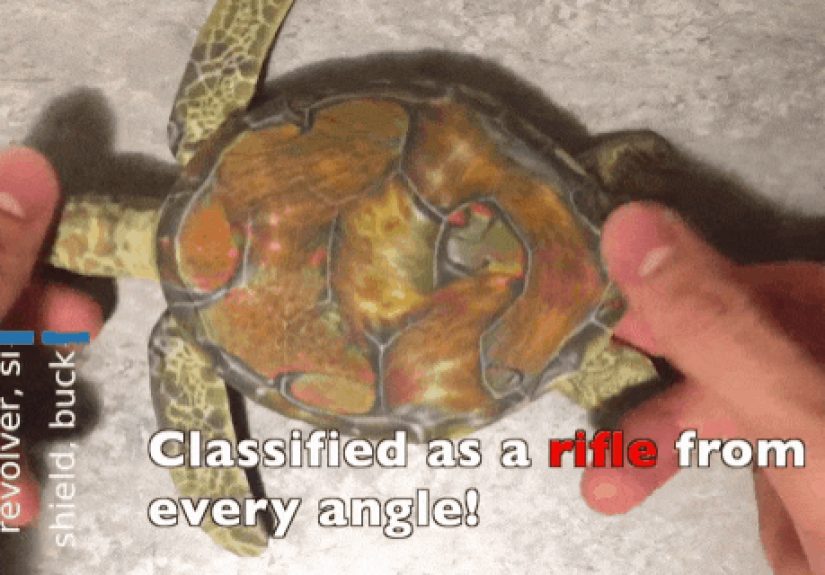
The now-famous “turtle mistaken for a rifle” example became one of the clearest demonstrations of adversarial examples, which are inputs deliberately modified to push an AI system toward the wrong answer. In plain English, researchers showed that by changing the surface pattern of a 3D-printed turtle in a carefully calculated way, they could make an image classifier repeatedly identify it as a rifle from many different angles. The turtle still looked like a turtle to humans. The AI, meanwhile, confidently wandered off into nonsense.
Funny? Yes. Harmless? Not exactly. This weird little turtle helped expose a serious weakness in modern machine learning: pattern recognition is not the same thing as understanding. And when AI systems are used in high-stakes settings like self-driving cars, medical imaging, security screening, and industrial automation, that difference matters a lot.
The Weird Experiment That Made AI Researchers Do a Double Take
The story behind the turtle is part science, part skepticism, and part “well, now we have to test this.” Researchers associated with MIT set out to challenge a growing body of work suggesting that machine vision systems could be tricked by tiny, calculated changes to images. Instead of limiting the idea to flat, digital images on a screen, they pushed it into the physical world.
That mattered because critics could reasonably shrug off early adversarial examples as lab-only curiosities. Sure, maybe you can tweak pixels in a digital file until a model thinks a panda is a gibbon, but what happens when the object exists in real space, under real light, from real camera angles? The turtle experiment answered that question with a deeply inconvenient “yes, it still works.”
The researchers created a 3D-printed turtle with a carefully optimized texture. A standard classifier normally recognized a clean turtle correctly almost all the time. But once the surface was modified using an adversarial method, the model persistently labeled the object as a rifle. Not from one magical angle. Not only in perfect lab lighting. Across many viewpoints. That is what made the result so memorable and so alarming.
In other words, this was not just a digital typo. It was a physical-world illusion aimed at machine perception.
What Is an Adversarial Example, Exactly?
A simple explanation without the math headache
An adversarial example is a modified input designed to make a machine learning model fail. The change can be tiny, weirdly specific, and often invisible or unimportant to people. To a computer vision model, though, that small change can shove the input across a decision boundary and trigger a completely different prediction.
Think of it like this: a human looking at a turtle uses shape, texture, context, common sense, and about a million years of evolutionary experience with “not confusing reptiles and weapons.” A vision model does something very different. It processes pixels, patterns, statistical correlations, and learned feature weights. If the right features are nudged in the right direction, the model can become very sure of something that is clearly absurd to any person with functioning eyeballs.
That is why adversarial machine learning has become such an important field. It studies how models can be fooled, how those failures transfer across systems, and how to design defenses that make AI more robust under attack, noise, or unusual conditions.
Why the turtle was such a big deal
The turtle example became iconic because it translated an abstract research problem into a visual punch to the face. You did not need a Ph.D. to understand the point. If an AI system can look at a turtle and say “rifle,” then maybe confidence scores are not the same as competence.
It also showed that physical adversarial examples could survive real-world messiness. Earlier attacks often broke if you changed brightness, scale, or orientation. The turtle demonstrated a stronger idea: you could optimize an object so the wrong answer remained stable across a range of transformations. That pushed the conversation from “interesting bug” toward “deployment risk.”
Why AI Can Be Brilliant and Brittle at the Same Time
Modern vision systems are powerful because they learn from enormous datasets and discover features that help them separate one class from another. That same strength can also become a weakness. Some of the features models rely on are not the features humans rely on. They may be statistically useful, but they are not always robust, meaningful, or sensible in the human way.
This helps explain why adversarial examples feel so surreal. The model is not hallucinating out of nowhere. It is following the internal logic it learned from data. The trouble is that this logic can include fragile cues that humans barely notice or do not care about at all.
Researchers and commentators have described this problem in different ways. Some emphasize the geometry of high-dimensional spaces. Others point to “non-robust features,” meaning patterns that really do help prediction on average but can be manipulated to produce bizarre errors. Still others argue that these failures reveal the gap between pattern-matching and real-world understanding.
Whichever framing you prefer, the turtle makes the same point: AI systems can be right for reasons that are not sturdy, and wrong in ways that are shockingly confident.
From Lab Curiosity to Real-World Risk
The turtle did not spark concern because anyone feared an epidemic of weaponized reptiles. The concern was broader. If a classifier can be fooled by carefully designed patterns on one object, then similar weaknesses may exist in other settings where vision models matter.
That includes autonomous vehicles trying to identify road signs and obstacles, security systems screening baggage or video feeds, retail systems tracking products, and medical tools assisting with image interpretation. In each case, the issue is not only malicious attack. It is also robustness in the face of odd inputs, unusual environments, and edge cases that humans handle better than machines.
Adversarial failures are especially troubling because they do not always look suspicious to people. A cartoonishly bright patch on an image may raise eyebrows. A slightly altered texture, reflection, sticker, or pattern that still seems ordinary to humans is another story. That is where physical-world attacks become more relevant to real deployment questions.
And yes, that is the mildly terrifying part: the model can fail while appearing completely calm and certain about it.
How the Researchers Pulled It Off Without Magic
The answer is not magic. It is optimization.
Instead of trying to fool the model from one fixed camera angle, the researchers optimized the object so it would remain misleading across many simulated conditions. They accounted for changes in viewpoint and other transformations that happen in the physical world. That general idea helped produce a surface pattern that could “travel” from the digital design process into a printed object that still fooled the classifier when photographed from multiple positions.
This is one of the key reasons the turtle became a landmark example. It moved adversarial research beyond the simplest setting and showed that robust physical attacks were not just theoretical. You did not need one perfect screenshot. You needed a design that stayed deceptive even when reality got involved.
Importantly, the lesson for general readers is not how to recreate the attack. The real takeaway is that AI models can latch onto fragile cues in ways that scale into the physical world. That is why red-teaming, robustness testing, and conservative deployment practices matter so much.
Can We Defend Against This Kind of Failure?
The most common fixes
Researchers have tried many approaches to make models more resistant to adversarial examples. One of the most famous is adversarial training, where models are trained on difficult or intentionally manipulated inputs so they learn to resist them. This can help, sometimes a lot, but it is expensive and often incomplete. A defense that works against known attacks may still fail against new ones.
Other methods include input transformations, randomized smoothing, ensembles, detection systems, and specialized evaluation frameworks. Industry and academic teams have also focused on better robustness benchmarks so developers can measure whether a model survives attacks it was not specifically trained to expect.
The bad news: there is still no perfect, universal shield. The good news: the field is much more mature than it was when the turtle first strutted into AI history.
The smarter long-term lesson
The deepest lesson is not “patch this one flaw and move on.” It is that model quality should not be judged only by clean benchmark accuracy. A system that performs beautifully on standard test data may still be fragile in the wild. Robustness, monitoring, human oversight, and scenario testing are not optional extras anymore. They are part of responsible AI engineering.
In other words, the real defense begins before deployment, not after the turtle has already become a rifle in production.
Why This Moment Still Matters Today
The turtle example still gets referenced because it captures a timeless tension in AI. Models can appear impressively capable while remaining oddly alien in how they “see” the world. As AI spreads into more products and services, that tension becomes practical, not philosophical.
This is also why the conversation has widened from image classifiers to the larger field of adversarial machine learning. The same broad question keeps returning in different forms: what happens when inputs are intentionally or unexpectedly shaped to exploit the quirks of a model?
Today, that question touches computer vision, cybersecurity, multimodal systems, and even language-driven tools. The details differ, but the principle is familiar. AI can be vulnerable where its developers assumed it would be strong. That makes evaluation, auditing, and stress-testing central to trustworthy deployment.
So yes, the turtle is funny. But it is funny the way slipping on a banana peel is funny right before you realize you were carrying fragile glassware.
Experiences and Lessons From the Front Lines of AI Robustness
If you talk to people who build or test AI systems, one theme comes up again and again: the most unsettling failures are rarely the flashy sci-fi ones. They are the quiet failures, the ones that look normal right up until the system makes a ridiculous choice with complete confidence. That is part of why the turtle-rifle example stuck in people’s minds. It compressed years of research frustration into one unforgettable image.
Researchers working on adversarial robustness often describe a cycle that feels almost comically familiar. First, a model performs great on the benchmark and everyone celebrates. Next, a stronger evaluation comes along, and the supposedly sturdy system folds like a lawn chair at a family barbecue. Then comes a new defense, a new paper, a fresh wave of optimism, and eventually another clever attack that breaks the defense in some previously overlooked setting. It is progress, but it is the kind of progress that keeps humility on speed dial.
Engineers in industry face a related experience. In a controlled test environment, a vision model may behave beautifully. Then the real world shows up with glare, motion blur, unusual backgrounds, partial occlusion, cheap cameras, weather, stickers, dust, bent packaging, and people who stubbornly refuse to present objects in the ideal orientation imagined by the training dataset. Suddenly the question is no longer “Can the model classify this?” It becomes “Can the model classify this reliably when reality acts like reality?”
That is where the turtle becomes more than a famous research meme. It reminds teams to ask harder questions early. What assumptions is the model making? Which features is it relying on? What happens when those features shift? What happens when someone actively tries to exploit them? Those questions do not belong only to security specialists. They belong to product managers, QA teams, policymakers, and anyone tempted to treat a high-confidence prediction as the end of the story.
There is also a human lesson here. People tend to overestimate AI when it behaves smoothly and underestimate it when it fails spectacularly. The truth is less dramatic and more useful: machine learning systems are powerful tools with uneven judgment. They are extraordinary pattern detectors, but they are not little digital humans peering into the soul of a turtle and confirming its deep turtle-ness. They are statistical systems operating under learned rules, and those rules can be bent.
For students and newcomers, the turtle story is often the moment AI security and robustness become real. It is visual, absurd, memorable, and easy to explain at dinner without causing everyone to fake a phone call. For experienced researchers, it is a reminder that even mature-looking systems can hide fragile foundations. And for the broader public, it is a useful reality check: smart machines do not always understand what they are looking at, even when they sound very sure.
That may be the most valuable experience tied to this topic. The turtle did not just fool a model. It helped convince the field that reliability cannot be assumed. It has to be tested, challenged, and earned.
Conclusion
How did researchers convince AI that a turtle was a rifle? By exploiting the hidden quirks of machine perception and showing that a carefully optimized physical object could reliably trigger the wrong label. The stunt looked absurd, but its implications were serious. It revealed that strong benchmark performance does not equal durable understanding, and that AI systems can fail in ways humans find obviously wrong.
The turtle remains one of the best symbols of modern AI’s central paradox: astonishing capability paired with surprising fragility. That is exactly why the example still matters. It is funny enough to remember, strange enough to share, and important enough to keep influencing how researchers think about robustness, safety, and trust.
And honestly, any experiment that teaches a field a major lesson while also making everyone say, “Wait, the turtle is what now?” deserves its place in tech history.