Table of Contents >> Show >> Hide
- What Makes House of Grey’s London Apartment So Special?
- Inside the Gasholders: Industrial Heritage Meets Soft Wellness
- Circular Salutogenic Design: A Big Idea With a Human Heart
- The Power of a Quiet Color Palette
- Limewash Walls and Natural Finishes
- Texture: The Unsung Hero of Multi-Sensory Interior Design
- Scent as Architecture
- Light, Shadow, and the Beauty of Slowness
- Designing the “Holiday Life” at Home
- A Smarter Kind of Sustainability
- Why Multi-Sensory Design Matters Now
- Specific Design Lessons From House of Grey’s Apartment
- How This Apartment Reflects Broader Interior Design Trends
- Experience Notes: Living With the Ideas Behind House of Grey’s Multi-Sensory Design
- Conclusion
Some apartments are decorated. Others are staged. And then there are rare interiors that seem to lower your heart rate the moment you step inside. House of Grey’s multi-sensory design in a London apartment belongs firmly in that third category: a home that does not shout for attention, but gently taps you on the shoulder and whispers, “Maybe breathe?”
Designed by Louisa Grey and her London-based studio House of Grey, the King’s Cross residence is a masterclass in calm interior design, natural materials, sensory design, and what the studio calls Circular Salutogenic Design. That phrase may sound like it should arrive with a lab coat and a clipboard, but the idea is beautifully simple: create interiors that support human well-being while respecting the health of the planet.
The apartment, located in London’s Gasholders development, transforms an industrial new-build setting into a soft, cocooning home. Instead of glossy finishes, visual clutter, and “look at me” furniture, House of Grey uses pale tones, limewash walls, wool rugs, linen curtains, crafted wood, scent, texture, and light to create an atmosphere that feels quietly luxurious. It is not minimalism for minimalism’s sake. It is minimalism with a pulse.
What Makes House of Grey’s London Apartment So Special?
The project stands out because it treats interior design as a full-body experience. The apartment is not only about what residents see. It is about what they feel underfoot, what they smell in the bathroom, how light moves across curved walls, how fabric absorbs sound, and how natural materials make a new apartment feel emotionally lived in.
That is the heart of multi-sensory design. In many homes, design begins and ends with the eye: color palette, furniture shape, art placement, and maybe a dramatic lamp that looks like it came from a spaceship with a generous returns policy. House of Grey goes further. The studio considers touch, smell, acoustics, movement, air, and emotional rhythm. The result is a home that feels more like a personal retreat than a city apartment.
Inside the Gasholders: Industrial Heritage Meets Soft Wellness
The Gasholders building in King’s Cross is not an ordinary apartment block. It is part of a historic industrial landscape, with circular cast-iron frames that once belonged to London’s gas infrastructure. The architecture is bold, urban, and highly structured. That gave House of Grey an interesting challenge: how do you make a curved, industrial, contemporary apartment feel warm, grounded, and deeply personal?
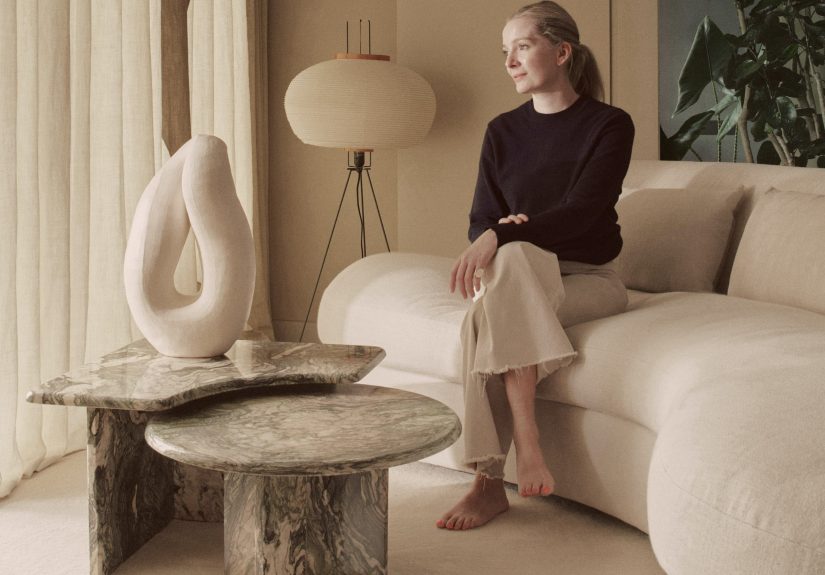
The answer was not to fight the architecture, but to soften it. Curved walls became an opportunity for custom furniture. Pale mineral surfaces created quiet continuity. Tactile fabrics reduced the sharpness often associated with new-build spaces. A curved sofa, designed with London maker Sedilia and upholstered in place, responds directly to the apartment’s unusual geometry. In other words, the furniture did not simply move in; it learned the building’s language.
Circular Salutogenic Design: A Big Idea With a Human Heart
House of Grey’s philosophy combines two important concepts. “Circular” refers to sustainability: choosing materials and objects that last, can be repaired, can be reused, and do not casually march toward landfill after a trend cycle. “Salutogenic” refers to environments that support health and well-being, rather than merely avoiding harm.
In practice, Circular Salutogenic Design means asking better questions. Is this material natural? Is it ethically sourced? Does it improve the quality of daily life? Will it age gracefully? Can it be maintained? Does it calm the nervous system instead of poking it with a tiny design fork? In the London apartment, these questions guide everything from the limewash walls to the wool rugs and linen textiles.
The Power of a Quiet Color Palette
The apartment’s palette is restrained, but not cold. It leans into pale shades, soft whites, chalky neutrals, warm wood, and natural fibers. This is not the kind of white room where you are afraid to drink coffee. It is softer than that. The colors create what House of Grey has called a sense of “visual silence,” allowing the resident to decompress rather than process a dozen competing design statements before breakfast.
Color psychology is often oversimplified, but most of us know the difference between walking into a peaceful room and walking into a room that feels like a browser with 37 tabs open. Here, the palette works like a volume dial. It lowers the noise. It makes texture, shadow, and material quality more noticeable. It gives the eye fewer distractions and the body more permission to relax.
Limewash Walls and Natural Finishes
One of the apartment’s defining choices is limewash. House of Grey worked with Bauwerk on mineral-based finishes that create depth, softness, and movement across the walls. Unlike flat paint that can appear sealed and synthetic, limewash has a living quality. It catches light unevenly, producing a gentle patina that feels more like stone, plaster, or cloud than a standard painted surface.
This matters because walls take up so much sensory real estate. In a compact urban apartment, the wall finish is not background; it is atmosphere. Limewash gives the home a quiet, breathable quality, while also aligning with House of Grey’s preference for natural, lower-impact materials. It is a subtle choice with an outsized emotional effect.
Texture: The Unsung Hero of Multi-Sensory Interior Design
If color sets the mood, texture makes the mood believable. House of Grey layers wool, linen, wood, cedar, silk, and handworked textiles throughout the apartment. The rugs are especially important. They are designed for barefoot living, which sounds indulgent until you remember that feet are also part of the body. Shocking news, apparently, to many interiors.
A wool and silk rug softens the floor. Linen curtains create movement and filter light. A reupholstered headboard gives an existing piece a new life. A modern patchwork quilt made from naturally dyed fabric remnants adds a handmade quality to the bedroom. These details bring warmth without clutter. They also show how sustainability can be elegant rather than preachy.
Scent as Architecture
One of the most memorable elements of the apartment is scent. In the bathroom, a Japanese-style cedar soaking tub releases a natural aroma as it fills with water. This is not a scented candle trying to smell like “Mountain Spa Whisper No. 4.” It is the material itself doing the work.
This is where House of Grey’s multi-sensory design becomes especially sophisticated. Scent is often treated as an accessory, something added after the real design is complete. Here, scent is built into the experience. Cedar connects the bathroom to bathing rituals, woodland memories, and natural calm. The room does not need to announce that it is relaxing. It simply behaves that way.
Light, Shadow, and the Beauty of Slowness
Good lighting in wellness interior design is not only about brightness. It is about rhythm. The apartment uses soft light, filtered daylight, natural surfaces, and sculptural fixtures to create a sense of slowness. Pleated lampshades, linen curtains, and chalky walls help diffuse light rather than bounce it aggressively around the room.
This kind of lighting supports the larger goal of the home: decompression. A city apartment must often work hard. It needs to be a home, a workspace, a gathering place, and a recovery zone. By softening light and reducing glare, House of Grey helps the apartment shift from productivity to rest without needing a neon sign that says “RELAX NOW,” which, ironically, would be stressful.
Designing the “Holiday Life” at Home
Louisa Grey has spoken about the idea of creating a “holiday life” at home. This does not mean turning your living room into a resort lobby or pretending your laundry pile is a decorative installation. It means designing spaces that help people decompress in daily life, not only during a two-week vacation.
In the London apartment, that philosophy shows up in spa-like calm, natural materials, comfortable seating, and spaces that feel intentionally uncluttered. The home is not empty; it is edited. There is a difference. Empty rooms can feel unfinished. Edited rooms feel considered. Every object has a role, and nothing seems to be auditioning for attention.
A Smarter Kind of Sustainability
Sustainability in this apartment is not limited to a checklist of eco-friendly materials. It is also about longevity. House of Grey’s approach favors doing things once and doing them well. Reusing an existing headboard, commissioning durable furniture, selecting natural fibers, and working with craftspeople all support a slower, more responsible design culture.
This is a refreshing alternative to fast interiors, where furniture is bought quickly, photographed immediately, and emotionally expires before the next season. House of Grey’s London apartment suggests that a truly sustainable home should age beautifully. It should welcome repair, patina, and adaptation. It should not panic at the first sign of real life.
Why Multi-Sensory Design Matters Now
Modern life is loud, even when nothing is technically making noise. Screens, alerts, traffic, deadlines, and visual overstimulation all follow us home. That makes interior design more important than many people realize. A home can either add to the chaos or help the body recover from it.
Multi-sensory design matters because people do not experience rooms as flat images. We experience temperature, texture, smell, sound, light, air quality, spatial flow, and emotional association. A beautiful room that echoes harshly, smells synthetic, and feels uncomfortable is not truly successful. It is just photogenic. House of Grey’s work argues for a richer standard: interiors should feel as good as they look.
Specific Design Lessons From House of Grey’s Apartment
1. Edit Before You Decorate
The apartment proves that calm begins with restraint. Before adding more objects, remove what creates visual noise. Keep the pieces that serve a purpose, carry meaning, or improve daily comfort.
2. Choose Materials You Want to Touch
Natural materials such as wool, linen, wood, clay, limewash, and stone bring physical warmth to a home. They also age in a more forgiving way than many synthetic finishes.
3. Let Scent Come From Real Materials
Instead of relying only on artificial fragrance, consider cedar, fresh herbs, beeswax, natural soaps, or dried botanicals. The goal is subtlety, not making your hallway smell like a department-store perfume ambush.
4. Treat Light as a Daily Rhythm
Use layered lighting: daylight, lamps, shaded fixtures, and softer evening illumination. A room should not feel the same at 8 a.m. and 10 p.m. People do not, so why should the lamps?
5. Design for Barefoot Moments
A soft rug, warm timber floor, or tactile mat can change how a room feels immediately. Comfort should not stop at eye level.
How This Apartment Reflects Broader Interior Design Trends
House of Grey’s London apartment fits into a larger movement toward wellness design, biophilic interiors, sustainable materials, and emotionally intelligent homes. But it avoids the clichés. There is no forced jungle wall, no token meditation cushion, no decorative bowl of stones trying very hard to be profound.
Instead, the apartment uses principles that are practical and deeply livable. It connects to nature through material, scent, texture, and light. It supports wellness through calm, air-conscious finishes, acoustic softness, and reduced clutter. It supports sustainability through craft, reuse, and durability. It feels current because it answers a very current need: the desire for home to be a place of restoration, not another source of stimulation.
Experience Notes: Living With the Ideas Behind House of Grey’s Multi-Sensory Design
The most useful way to understand House of Grey’s multi-sensory design is to imagine applying its lessons to everyday life. You do not need a London apartment inside a historic Gasholders building to create a calmer home. You need attention. Start with one room and ask how it feels, not just how it looks. Is the lighting too sharp in the evening? Does the floor feel cold? Are there too many objects competing for attention? Does the room smell neutral, fresh, stale, or suspiciously like yesterday’s takeout?
A practical experience inspired by this project might begin with the bedroom. Remove visual clutter from the bedside area. Replace one synthetic texture with a natural one, such as linen pillowcases, a wool throw, or a wooden tray. Add a lamp with a soft shade rather than relying on overhead lighting. Keep scent gentle: a cedar block in a drawer, dried lavender, or simply better ventilation. The goal is not to create a showroom. The goal is to make the room easier to exhale in.
In the living room, think about sound and touch. A rug can reduce echo and make the space feel more grounded. Curtains can soften both light and acoustics. A single handmade object, such as a ceramic bowl or woven wall piece, can add more soul than a shelf full of trend-driven accessories. House of Grey’s apartment shows that emotional richness does not require visual busyness. In fact, the quieter the room, the more meaningful each detail becomes.
The bathroom is another ideal place to borrow from this design philosophy. You may not install a custom cedar soaking tub, but you can still create a sensory ritual. Use natural soap, add a small wooden stool, choose towels with real texture, and keep surfaces clear. Warm light, clean air, and honest materials can make even a modest bathroom feel restorative. Nobody needs to know the laundry basket is hiding behind the door, living its complicated truth.
The biggest experience-based lesson is that multi-sensory design is not about luxury as much as intention. It asks you to notice how your body responds to your home. If a room makes you tense, there is usually a reason: harsh light, clutter, bad airflow, uncomfortable furniture, scratchy fabric, or too many decorative decisions shouting at once. Change one thing at a time. The House of Grey approach is slow, layered, and human. It reminds us that good design is not just something to look at online. It is something that supports your morning, steadies your evening, and quietly improves the ordinary hours in between.
Conclusion
House of Grey’s multi-sensory design in a London apartment is more than a beautiful interior project. It is a persuasive argument for a calmer, healthier, more sustainable way of living. By combining natural materials, quiet color, soft texture, mindful scent, curved furniture, and a circular design philosophy, Louisa Grey and her studio created a home that feels restorative without becoming sterile.
The apartment succeeds because it understands that real luxury is not always shine, scale, or spectacle. Sometimes luxury is a room that lets your shoulders drop. Sometimes it is a wool rug under bare feet, a cedar-scented bath, a linen curtain moving gently in the light, or a wall finish that makes silence visible. House of Grey has turned those small sensory moments into a complete design language, and the result is a London apartment that feels less like an address and more like a deep breath.