Table of Contents >> Show >> Hide
- What Is a Homebrew Grain Synth?
- Why the Step Sequencer Changes Everything
- The Auduino DNA: Simple, Fast, and Hackable
- Why Eight Steps Still Feel Musical
- Granular Sound Design Without the Software Mansion
- What Makes the Sequencer “Rad”?
- DIY Synth Culture: Beautifully Weird by Design
- How It Could Be Used in Music
- Why Builders Love Projects Like This
- What Beginners Can Learn From This Build
- The Charm of Lo-Fi Digital Sound
- Experience Section: Living With a Rad Little Grain Machine
- Conclusion
Some DIY music projects politely ask for your attention. Others kick down the basement door wearing sunglasses, dragging a breadboard, and shouting, “Behold, I have invented a tiny electronic goblin that makes rhythm.” The homebrew grain synth with a rad step sequencer belongs proudly in the second category.
At first glance, it sounds like a niche gadget for people who own more patch cables than socks. But look closer and this project becomes a perfect example of why DIY electronic music is so addictive. It takes the classic Auduino-style granular synthesizer, a wonderfully strange Arduino-based noise machine, and gives it something many simple homemade synths desperately need: memory, timing, repeatability, and groove.
In plain English, this build turns a hand-tweaked grain synth into a pattern-making instrument. Instead of twisting knobs randomly and hoping the sound gremlins cooperate, the maker adds a step sequencer so individual sound settings can be stored across steps. The result is part synthesizer, part rhythm box, part laboratory accident that somehow passed the vibe check.
What Is a Homebrew Grain Synth?
A homebrew grain synth is a homemade synthesizer that uses ideas from granular synthesis. Granular synthesis works by shaping sound from tiny fragments called grains. In professional software, grains may come from audio samples. In small DIY synths like the Auduino, the concept is simplified into a lightweight sound engine that creates buzzy, glassy, chirping, and sometimes aggressively weird tones from tiny repeated sonic events.
The beauty of this style is that it does not require a giant studio rig. A microcontroller, a handful of potentiometers, basic output circuitry, and a little code can produce tones that feel alive. Turn one knob and the sound becomes a digital insect. Turn another and it starts impersonating a broken arcade cabinet dreaming about techno.
The Auduino design became popular because it was approachable. It uses a small Arduino-compatible board and simple controls to manipulate grain pitch, decay, and timing. For beginners, it is a friendly doorway into synthesis. For experienced tinkerers, it is a blank canvas begging to be modified, extended, abused, and mounted into a questionable cigar box enclosure.
Why the Step Sequencer Changes Everything
Many basic DIY synths are fun but limited. You twist knobs, the sound changes, and that is delightful for about twelve minutes. After that, you begin to want rhythm. You want structure. You want the machine to remember something instead of behaving like a caffeinated raccoon.
That is where the step sequencer comes in. A step sequencer divides time into a fixed number of steps. Each step can hold a value, note, trigger, or parameter setting. When the sequence runs, the machine cycles through those steps in order, creating a repeating musical pattern.
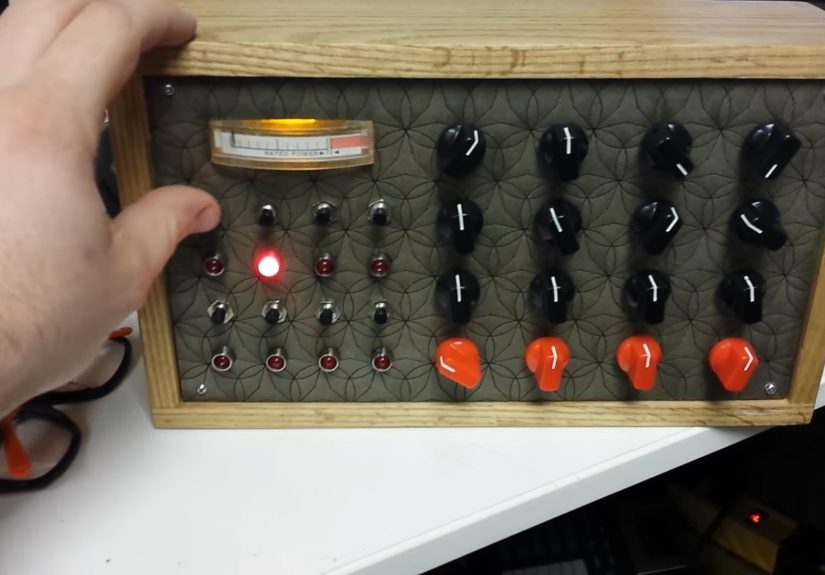
In the featured homebrew grain synth, the sequencer concept is especially clever because it does not merely trigger notes. It lets the user select steps and adjust sound parameters for each step using the existing synth controls. Eight buttons and eight LEDs create a simple but powerful interface: choose a step, tweak the sound, move to the next step, and gradually build a pattern full of bleeps, chirps, pulses, and crunchy digital seasoning.
The Auduino DNA: Simple, Fast, and Hackable
The project’s foundation matters. The original Auduino-style synth is lightweight enough to run on old-school ATmega-based Arduino boards. That matters because microcontrollers have limited processing power. If the sound engine consumed every available clock cycle, adding a sequencer would be like asking a toaster to run a jazz trio.
Instead, the Auduino code is efficient. It leaves enough room for extra features, which is exactly why this kind of modification is possible. The maker can add buttons, LEDs, stored step values, and timing logic without turning the whole thing into a smoking pile of regret.
This is also why Arduino synth projects remain popular. They are not always hi-fi, polished, or studio-perfect. But they are immediate. You can understand the relationship between code, voltage, controls, and sound. When the machine squeals, it is not a mysterious plugin preset hiding behind a glossy interface. It is your squeal. You earned that squeal.
Why Eight Steps Still Feel Musical
Modern music software can provide hundreds of tracks, automation lanes, probability tools, generative sequencing, and enough menus to make a submarine jealous. Yet an eight-step sequencer still feels magical.
Why? Because constraints are creative. Eight steps force decisions. You cannot hide behind endless editing. You create a short pattern, listen, adjust, and react. The loop becomes a conversation. One step might be a low pulsing thump. Another might jump into a sharp digital chirp. A third might decay slowly, leaving a little ghost trail behind the beat.
With a grain synth, those changes become even more dramatic because each parameter shift can alter the texture, pitch, density, or envelope of the sound. Instead of a standard melody, you get a sequence of sonic personalities. It is less “Mary Had a Little Lamb” and more “a robot moth discovered funk.”
Granular Sound Design Without the Software Mansion
Granular synthesis is often associated with advanced music software, experimental ambient production, film scoring, and sound design. Many commercial granular instruments let users stretch samples into clouds, freeze textures, randomize playback positions, and turn ordinary sounds into cinematic fog.
The homebrew grain synth is not trying to compete with those tools feature-for-feature. It is doing something different. It brings the spirit of granular sound design into a tactile, minimal, handmade box. There is no mouse. No subscription. No giant preset browser named “Evolving Cosmic Memory Pad 047.” There are knobs, lights, buttons, and the suspicious feeling that one wrong move might summon an alien fax machine.
That hands-on quality changes how a musician interacts with sound. You do not simply select a patch. You perform the machine. The sequencer becomes a grid of tiny decisions, while the grain engine provides unpredictable texture. Together, they create a balance between control and chaos.
What Makes the Sequencer “Rad”?
Calling the step sequencer “rad” is not just internet seasoning. It earns the label because it solves a real musical problem in a simple way.
1. It Adds Memory
A basic knob-controlled synth forgets the moment. Move the knob and the old sound is gone unless you photographed the panel like a responsible adult. A sequencer stores parameter states per step, allowing patterns to repeat and evolve.
2. It Adds Rhythm
Granular noise is fun, but sequenced granular noise becomes music. Repetition gives the ear something to follow. Even harsh or strange sounds become enjoyable when organized into a groove.
3. It Keeps the Interface Physical
Eight LEDs and eight buttons are not fancy, but they are clear. You can see the pattern moving. You can select a step. You can change it. That directness is why hardware sequencers remain beloved even in a world full of powerful software.
4. It Encourages Happy Accidents
Because each step can carry different settings, small tweaks can create surprising results. The best DIY synth moments often happen when the machine does something you did not fully expect but immediately pretend you intended.
DIY Synth Culture: Beautifully Weird by Design
The DIY synth community has always loved projects that sit between engineering and musical mischief. There are Atari Punk Consoles, logic noise circuits, Arduino drum machines, CMOS noisemakers, handmade modular panels, and instruments that look like they were recovered from a spaceship’s junk drawer.
This grain synth fits that tradition perfectly. It is not just a device; it is a statement. It says music technology does not have to arrive sealed in brushed aluminum with a dramatic product video. Sometimes it arrives as code, components, hot glue, and a panel layout that only its creator truly understands.
That is part of the charm. A homebrew synth reflects its builder. Commercial gear is designed for broad appeal. DIY gear is designed around curiosity. The result might be awkward, brilliant, unstable, inspiring, or all four before lunch.
How It Could Be Used in Music
A sequenced grain synth can fit into more musical contexts than people might expect. It is obvious for experimental electronic music, but it can also add texture to ambient, industrial, techno, chiptune, noise, and even indie productions that need a little homemade electricity around the edges.
For example, a slow eight-step pattern with long decays could become a shimmering background pulse. Increase the tempo and shorten the decay, and it might turn into a percussive glitch rhythm. Push the grain pitch into sharper ranges and the pattern can slice through a mix like a tiny digital mosquito with excellent timing.
Producers could sample the output, chop it into loops, layer it under drums, or resample one-bar phrases into a DAW. Hardware performers could sync it loosely by ear or use it as a standalone noise companion next to drum machines and modular gear. Even when it is not perfectly polished, it can add character that polished tools sometimes lack.
Why Builders Love Projects Like This
There is a special thrill in making an instrument that did not exist yesterday. Buying a synth is fun. Building one is different. You learn what the controls actually do. You experience the limits of the hardware. You discover that enclosure design is harder than expected and that drilling straight holes is apparently a moral test.
More importantly, you develop a personal relationship with the instrument. Its quirks become part of your style. Maybe one button sits slightly crooked. Maybe step four is your favorite because it always produces a rude little chirp. Maybe the LEDs make the whole thing look like a miniature runway for ants. That personality matters.
The rad step sequencer makes this relationship stronger because it turns the synth into a compositional tool. You are no longer only exploring tones. You are arranging them in time.
What Beginners Can Learn From This Build
Even if someone never builds this exact project, the idea teaches several valuable lessons about electronic music design.
First, a simple sound engine can become much more powerful with sequencing. Second, user interface matters. A few buttons and LEDs can make a project dramatically easier to play. Third, old microcontrollers are still capable of creative work when the code is efficient. Fourth, limitations are not automatically weaknesses. Sometimes they are the reason an instrument feels immediate and fun.
Beginners should also notice the importance of starting from a known design. The Auduino is popular because it gives builders a working foundation. Modifying a working project is often less frustrating than inventing everything from scratch. In DIY audio, “standing on the shoulders of giants” sometimes means “using someone else’s proven code so your weekend does not dissolve into debugging fog.”
The Charm of Lo-Fi Digital Sound
High-resolution audio has its place, but lo-fi digital synthesis has a flavor that refuses to go away. Grainy Arduino audio, PWM output, rough edges, aliasing, and limited resolution can all become musical ingredients. What some engineers might call imperfections, musicians may call texture.
The homebrew grain synth lives in that sweet spot. It does not sound like an expensive virtual instrument pretending to be analog. It sounds like a small machine doing its best with limited resources, and that honesty is appealing. The sequencer adds just enough order to make the chaos repeatable.
That combination is powerful: raw tone plus structured pattern. It is the same reason early drum machines, chip music, and primitive samplers still inspire modern producers. Personality beats perfection more often than spec sheets admit.
Experience Section: Living With a Rad Little Grain Machine
Spending time with a project like a homebrew grain synth with a step sequencer teaches you that electronic instruments are not only about sound. They are about behavior. A plugin can sound beautiful, but a handmade box behaves. It has timing quirks, knob ranges, button feel, LED brightness, and that one control that always seems more dramatic than expected.
The first experience is usually confusion. You power it up, twist a knob, and the device emits something halfway between a video game coin pickup and a kitchen appliance having an opinion. Then the sequencer starts moving, the LEDs chase each other, and suddenly the noise has intention. Step one clicks. Step two chirps. Step three growls. Step four vanishes into a tiny puff of digital dust. You are not sure if it is music yet, but your head starts nodding anyway.
The second experience is discovery. Because each step can hold different parameter settings, the sequencer becomes a sketchpad. You learn that small changes matter. A tiny adjustment to decay can turn a dull blip into a plucky percussion hit. A pitch shift can make the pattern feel melodic even when it is barely obeying musical law. A faster tempo can transform a lumpy sequence into a jittery groove that sounds like it belongs under a cyberpunk loading screen.
The third experience is restraint, which is rude but useful. With only eight steps, you cannot build a symphony. You build a loop. That limitation forces you to listen carefully. Is step seven too loud? Is step two doing all the emotional labor? Does the pattern need space, or are you just adding chaos because chaos is fun and cheaper than therapy? The machine encourages editing by making every step visible and touchable.
The fourth experience is recording. Once you capture the output, the synth becomes even more useful. A one-minute jam can become a sample library of clicks, drones, glitches, and rhythmic phrases. You can cut the best bar, layer it under drums, stretch it into ambience, or bury it behind a bassline for texture. The raw sound may be simple, but resampling gives it a second life.
The fifth experience is pride. There is something deeply satisfying about hearing a sound that came from a device someone built, modified, or programmed by hand. It feels less like using a product and more like collaborating with a tiny homemade creature. It may not replace a polished studio synth, but it does not need to. Its job is to surprise you, teach you, and occasionally make a noise so strange you laugh out loud.
That is the real appeal of the homebrew grain synth. The rad step sequencer is not just an add-on. It is the feature that turns random sonic doodling into repeatable musical mischief. It gives the grain engine a clock, a memory, and a reason to dance. For DIY musicians, that is more than enough reason to clear the desk, warm up the soldering iron safely, and prepare for the noble art of making small machines go bleep.
Conclusion
The Homebrew Grain Synth Has A Rad Step Sequencer idea captures everything lovable about DIY electronic music: simple parts, clever code, physical controls, strange sound, and a huge amount of personality. By combining an Auduino-style granular synth with an eight-step sequencer, the project moves beyond random knob-twisting and becomes a real pattern-making instrument.
It is not impressive because it tries to be the most advanced synth in the room. It is impressive because it turns limitations into character. The grain engine provides texture, the sequencer provides structure, and the handmade interface provides the fun. In a world where music tools can feel increasingly polished and predictable, a rad little DIY grain synth reminds us that weirdness still has rhythm.