Table of Contents >> Show >> Hide
- What Are Head Lice, Exactly?
- So, Where Do Head Lice Come From?
- What Head Lice Do Not Come From
- How Do Head Lice Spread?
- Why Are Kids More Likely to Get Head Lice?
- What Are the Signs of Head Lice?
- How Do You Check for Head Lice?
- How to Treat Head Lice Without Losing Your Mind
- Do You Need to Wash Everything You Own?
- Can Kids Stay in School If They Have Lice?
- How to Help Prevent Head Lice
- When Should You Call a Doctor?
- Conclusion: The Real Origin Story of Head Lice
- Experiences Related to “Head Lice: Where Do They Come From?”
Let’s start with the question that makes parents squint at pillows, panic-buy laundry detergent, and suddenly distrust every school backpack in a five-mile radius: where do head lice come from? The short answer is simple. Head lice come from other people who already have head lice. They do not rise mysteriously from dirty hair, float in from the backyard, or arrive as punishment for skipping shampoo day. They are equal-opportunity pests with one goal in life: finding a human scalp and settling in like very tiny, very rude tenants.
Head lice are common, especially among school-aged children. And while they are absolutely annoying, they are not a sign of poor hygiene, they do not spread disease, and they are not the end of civilization as we know it. If your household has ever had a lice scare, you already know the emotional arc: denial, frantic Googling, flashlight inspection, combing, bargaining, more combing, and finally a suspicious silence that feels either victorious or ominous.
This guide explains where head lice come from, how they spread, what myths to ignore, how to treat them effectively, and what real-life experiences around head lice often look like in homes, classrooms, and carpools across America.
What Are Head Lice, Exactly?
Head lice are tiny parasitic insects that live on the scalp and feed on small amounts of human blood. Adult lice are about the size of a sesame seed, and their eggs, called nits, stick tightly to the hair shaft close to the scalp. They are not glamorous. They are not airborne. They are not talented. But they are persistent.
A typical head louse goes through three life stages: egg, nymph, and adult. The eggs hatch in about a week, the nymphs mature into adults in roughly another week, and adult females can lay several eggs per day. In other words, a small problem can become a much itchier problem if it goes unnoticed.
Because lice move quickly and avoid light, people often spot nits before they ever see a live bug. That discovery usually happens in one of three classic moments: during bedtime hair brushing, after a note from school, or when a child says, “My head is itchy,” in the same tone normally reserved for “I think I lost my lunchbox.”
So, Where Do Head Lice Come From?
The real source of head lice is another human head. Head lice spread mainly through direct head-to-head contact. That is the big answer. They crawl from one person’s hair to another person’s hair when people are close together long enough for the transfer to happen.
This is why lice are especially common among children. Kids play close together. They huddle over tablets, whisper during story time, pile into beanbags, lean together for selfies, and basically create a thriving social network for bugs with claws.
Common places lice spread include:
- Elementary schools and preschools
- Day camps and sleepovers
- Sports or dance settings where heads are close together
- Shared family beds, couches, and cuddle-heavy movie nights
- Households where one person unknowingly brings lice home
That means the answer to “Where did my child get lice?” is usually not “from poor hygiene” or “from outside.” It is much more likely “from close contact with another child or family member who had lice and did not know it yet.”
What Head Lice Do Not Come From
This is where head lice collect their greatest hits of bad publicity. Let’s clear the air.
1. Head lice do not come from being dirty
Lice do not care whether hair is freshly washed, curly, straight, long, short, expensive, or currently hosting three glitter clips and half a granola bar. Clean hair is not protection, and dirty hair is not the cause. Lice are looking for blood, not a cleanliness score.
2. Head lice do not jump or fly
They crawl. That is it. No wings. No trampoline skills. No tiny jetpacks. If lice move from one person to another, it happens by crawling during close contact.
3. Head lice do not come from pets
Your dog is innocent. Your cat is innocent too, even if your cat seems emotionally guilty about many other things. Human head lice live on humans, not household pets. You do not need to treat the family dog because your child has lice.
4. Head lice do not mean your house is dirty
Lice do not invade because your baseboards need dusting. In fact, they do not survive very long away from a human scalp. Deep-cleaning your entire home like you are preparing for a royal inspection may make you feel productive, but it is usually not the main solution.
5. Head lice are not caused by bad parenting
Let’s say this loudly for the parents in the back: finding lice on your child does not mean you missed something huge. Lice are common, sneaky, and very good at arriving uninvited. This is a nuisance problem, not a character review.
How Do Head Lice Spread?
The most common route is direct contact between hair and hair. That is the main event. Lice can also spread through objects that recently touched an infested person’s head, but that is considered less common.
Possible but less common routes include sharing:
- Hats and scarves
- Hair brushes and combs
- Hair accessories
- Towels
- Pillows or bedding used very recently
- Costume wigs or helmets
The keyword there is recently. Lice do not thrive for long off the scalp. Once separated from a human host, adult lice usually die fairly quickly, and eggs need the warmth near the scalp to survive. That is why head-to-head contact remains the primary culprit.
Why Are Kids More Likely to Get Head Lice?
Children are the all-stars of accidental lice transmission for one very simple reason: they are wonderfully terrible at personal space. They hug. They lean. They share. They crowd together during games, story circles, and tablet time. They swap hoodies, hairbrushes, and sometimes entire personalities depending on the week.
Schools and child care settings make it easy for lice to circulate because many children are in close contact every day. And once one child brings lice home, siblings and other household members can become part of the sequel nobody asked for.
That said, adults can absolutely get lice too. Parents, caregivers, babysitters, camp counselors, and older siblings are not magically exempt. Lice do not check driver’s licenses before moving in.
What Are the Signs of Head Lice?
The most well-known symptom is itching, but itching does not always happen right away. In fact, some people do not feel itchy at all in the early stages. Others become intensely itchy because of a reaction to louse bites.
Common signs include:
- Persistent scalp itching
- A tickling feeling, as if something is moving in the hair
- Visible nits attached close to the scalp
- Small red bumps or scratch marks on the scalp, neck, or behind the ears
- Trouble sleeping, since lice can be more active in the dark
- Irritability in young children who cannot explain what feels wrong
Nits are often found behind the ears and at the nape of the neck. Unlike dandruff, they do not brush off easily. If it slides away, it is probably not a nit. If it clings like it signed a lease, inspect more closely.
How Do You Check for Head Lice?
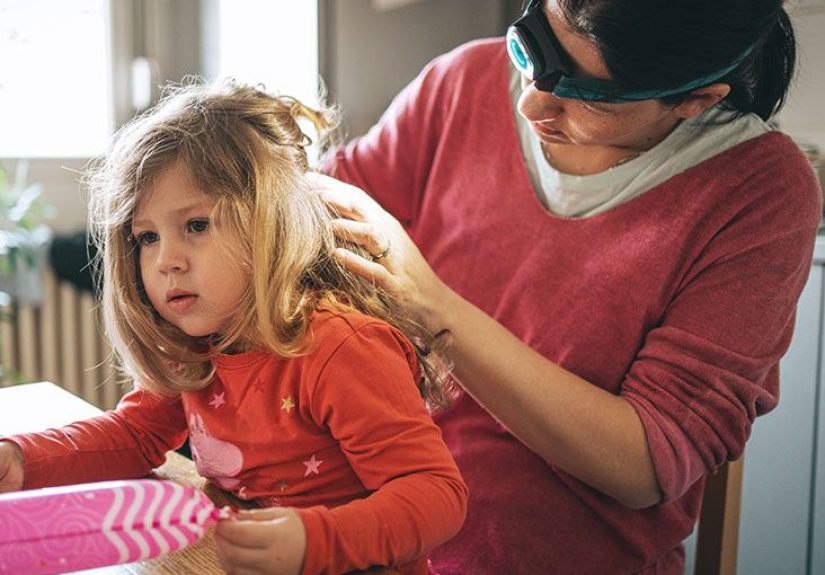
The best way is with good lighting, patience, and a fine-toothed nit comb. Wet hair can make lice easier to spot because they move more slowly. Part the hair in sections and focus on the scalp, especially behind the ears and near the neckline.
Look for:
- Live crawling lice
- Nits within about a quarter inch of the scalp
- Clusters of eggs attached to hair shafts
If you are unsure whether you are seeing lice, dandruff, lint, or a suspiciously committed fleck of dry shampoo, a pediatrician, family doctor, school nurse, or dermatologist can help confirm it.
How to Treat Head Lice Without Losing Your Mind
Head lice are usually treated with over-the-counter or prescription medications, along with careful combing. The biggest mistake people make is assuming one quick wash solves everything. Some products kill live lice but not all eggs, which is why repeat treatment may be needed depending on the product.
Typical treatment basics
- Use a lice treatment exactly as directed on the label or by your healthcare provider.
- Check the age requirements before using any product on a child.
- Use a nit comb to remove lice and nits when recommended.
- Repeat treatment at the correct interval if the product instructions say to do so.
- Check close household contacts and treat only those with evidence of infestation.
Common treatment categories include OTC products with permethrin or pyrethrins, plus prescription options such as benzyl alcohol, ivermectin lotion, malathion, or spinosad. Different treatments work in different ways. Some require a second round. Some may be used once unless live lice are still seen later.
Because resistance can affect how well some treatments work, it is smart to call a healthcare professional if you followed directions carefully and still see live crawling lice after the recommended timeline. That is not always user error. Sometimes the lice are just stubborn little overachievers.
What about home remedies?
Many households have a folklore cabinet of lice advice: mayonnaise, olive oil, vinegar, essential oils, fancy sprays, mysterious aunt-approved tricks, and one cousin who swears by wrapping the head in plastic. The problem is that many home remedies are not supported by strong scientific evidence, and some can irritate the scalp or delay effective treatment.
When in doubt, go with treatments that have clear medical guidance behind them and talk to a healthcare provider for children, pregnant people, or anyone with scalp irritation or repeated treatment failure.
Do You Need to Wash Everything You Own?
Not everything. This is where people often go from “reasonably concerned” to “accidentally reenacting a disaster movie with laundry baskets.” Since lice do not survive long away from the scalp, you generally only need to clean items used in the two days before treatment.
Practical cleaning steps include:
- Wash clothing, bedding, and recently used washable items in hot water and dry on high heat
- Soak combs and brushes in hot water for 5 to 10 minutes
- Seal non-washable items in a plastic bag for two weeks if needed
- Vacuum floors, rugs, couches, and car seats where the person spent time
What you do not need is pesticide foggers or fumigant sprays. Those can be harmful and are not recommended. The goal is sensible cleaning, not chemical warfare.
Can Kids Stay in School If They Have Lice?
In many cases, yes. Current guidance from major pediatric and public health organizations discourages strict “no-nit” policies. A child with head lice generally does not need to be sent home early, and after treatment begins, they can usually return to school.
This matters because lice are a nuisance, not a dangerous infection. Missing school over lingering nits that are not likely to spread lice often creates more stress than actual benefit. In other words, we can stop acting like lice are a felony.
How to Help Prevent Head Lice
You cannot create a magical anti-lice force field, but you can reduce the odds of spread.
Helpful prevention habits
- Avoid direct head-to-head contact during play and sleepovers
- Do not share hats, helmets, brushes, combs, or hair accessories
- Teach children to keep personal items personal
- Do regular scalp checks if there has been an outbreak at school or camp
- Check all family members if one person is diagnosed
Preventive lice shampoos and sprays are widely marketed, but they are not magic. Early detection and prompt treatment remain the most reliable tools.
When Should You Call a Doctor?
Call a healthcare professional if:
- You are not sure whether it is really lice
- Your child is very young
- The scalp is irritated, infected, or heavily scratched
- You used treatment correctly and still see live lice
- The person being treated is pregnant, breastfeeding, or has a medical condition that affects treatment choice
Sometimes the hardest part of lice is not the lice. It is deciding what is evidence-based, what is overkill, and what is a desperate 11:30 p.m. internet suggestion from 2009. A doctor or dermatologist can shorten that journey considerably.
Conclusion: The Real Origin Story of Head Lice
So where do head lice come from? Not from dirt. Not from pets. Not from your child rolling around on the carpet like a tiny raccoon. Head lice come from other people, mostly through close head-to-head contact. That is the answer, plain and simple.
The good news is that lice are treatable, common, and manageable with the right approach. The bad news is that they are annoying enough to make you inspect every loose thread in your house like a detective in a crime drama. Still, once you know how lice actually spread, the whole situation becomes a lot less mysterious and a lot more manageable.
Knowledge helps. A good nit comb helps too. And maybe a strong cup of coffee.
Experiences Related to “Head Lice: Where Do They Come From?”
In real life, the experience of discovering head lice is often less dramatic than people fear and more inconvenient than anyone enjoys. A very common story starts with a child scratching their head for a day or two. At first, a parent assumes it is dry skin, leftover shampoo, a new hair product, or simple fidgeting. Then a school email goes out saying that lice were found in a classroom, and suddenly every itch in the house feels suspicious.
Another frequent experience happens after a sleepover, summer camp, dance recital, or sports event. Kids spend hours close together, leaning in for photos, sharing blankets, trying on hats, or piling into a couch like it is a competitive event. A few days later, one family notices nits during hair brushing. Then they text another family. Then another parent checks a sibling. That is often how people realize where head lice came from: not from nowhere, but from a chain of ordinary, close human contact.
Many parents describe the emotional side of lice as worse than the medical side. There is often embarrassment, even though there should not be. Some worry other people will assume their home is dirty or that they were careless. But once they learn that lice prefer proximity over poor hygiene, the panic usually softens. The most common reaction after that is not shame. It is exhaustion. Lice treatment involves timing, combing, checking, rechecking, laundry, and trying to keep everyone calm while also explaining to a child why their favorite hairbrush is suddenly in hot water like it is being interrogated.
Teachers and school nurses often report another familiar pattern: the child with lice is rarely the one causing the biggest problem. The bigger challenge is the mythology around lice. Some families think every surface in the home must be bleached. Others believe all stuffed animals must be quarantined indefinitely. Some assume pets must be treated. In reality, most of the work should focus on the person’s hair, close contacts, and a few recently used personal items. When families understand that, they often feel immediate relief.
Adults who have dealt with repeated lice cases also talk about how useful routine scalp checks become during outbreak seasons. Instead of waiting for intense itching, they learn to check behind the ears and at the nape of the neck in bright light. That practical habit often catches problems early, before lice have time to stage a full hostile takeover.
Probably the most important shared experience is this: nearly everyone who has dealt with head lice says the mystery was worse than the truth. Before they knew the facts, lice felt like a creepy, random invasion. Afterward, the story became much clearer. Head lice usually come from another person, spread through close contact, and can be handled step by step without panic, blame, or turning the house upside down.