Table of Contents >> Show >> Hide
- The Vagus Nerve 101: Your Body’s Calm Hotline
- Anxiety Isn’t “All in Your Head”It’s in Your Body’s Settings
- What People Mean by “Vagal Tone” (And Why HRV Shows Up in the Conversation)
- Vagus-Friendly Tools That Actually Make Sense
- 1) Slow breathing (especially longer exhales)
- 2) Humming, singing, and “vibration snacks”
- 3) Cold-on-the-face calming (the “diving reflex” shortcut)
- 4) Mindfulness and meditation (training attention = training recovery)
- 5) Movement that tells your body it’s safe
- 6) Sleep: the underrated vagus nerve “maintenance window”
- 7) The gut-brain connection: why your stomach gets a vote
- 8) Social connection: the nervous system’s “safe mode”
- What About “Vagus Nerve Stimulation” Devices?
- A Reality-Based “Stronger Vagus Nerve” Plan (No Crystal Required)
- Myths, Hype, and the Polyvagal Side Quest
- When to Get Extra Help
- Conclusion: Calm Is a Skill (And Your Vagus Nerve Is Part of the Team)
- Experiences: What This Can Look Like in Real Life (Illustrative Examples)
- Experience #1: The “Email Heart Attack” becomes a speed bump
- Experience #2: Humming turns into a “reset button” between classes or meetings
- Experience #3: Sleep stops being a nightly negotiation
- Experience #4: Panic sensations feel less mysterious
- Experience #5: Social connection becomes a strategy, not an afterthought
If anxiety had a theme song, it would be a loud drum solo performed directly on your ribs. One minute you’re fine, the next your heart is auditioning
for a superhero movie and your stomach is doing improv. The good news: your body also has a built-in “calm crew,” and one of its MVPs is the vagus
nerve.
You’ll hear people say “strengthen your vagus nerve” the same way they say “boost your metabolism.” It’s a useful shorthand, but the real idea is
improving vagal toneyour nervous system’s ability to shift out of fight-or-flight and back into rest-and-digest when the alarm isn’t
actually about to be eaten by a lion.
Let’s break down what the vagus nerve does, how it connects to anxiety, what’s real (and what’s hype), and how to build a vagus-friendly routine that
supports calmer dayswithout pretending you can “reset” your brain with one dramatic gargle.
The Vagus Nerve 101: Your Body’s Calm Hotline
The vagus nerve is the longest cranial nerve in your body. It starts in the brainstem and travels through the neck into the chest and abdomen, touching
major systems along the wayheart rate, breathing, digestion, inflammation signals, and more. It’s a key player in the
parasympathetic nervous system, the part that helps you recover after stress.
Anxiety often shows up as “too much gas, not enough brakes.” Your sympathetic nervous system (fight-or-flight) ramps up, and your parasympathetic system
(rest-and-digest) doesn’t get enough traction. The vagus nerve is one of the main “brake pedals.” When it’s working well, you’re generally better at
shifting from revved-up to regulated.
Important reality check: the vagus nerve is not a magical on/off switch for anxiety. It’s part of a much bigger networkyour brain, hormones, sleep,
habits, social support, and life stressors all matter. But the vagus nerve is still a practical place to start because some of the most effective
calming tools (like slow breathing) influence vagal pathways.
Anxiety Isn’t “All in Your Head”It’s in Your Body’s Settings
Anxiety disorders are common and can look like persistent worry, restlessness, trouble concentrating, irritability, sleep problems, and physical symptoms
(tight chest, racing heart, upset stomach). Sometimes anxiety is situational and temporary; sometimes it’s frequent enough to interfere with school,
work, relationships, or health.
Here’s the key: anxiety isn’t only about thoughts. It’s also about physiologyhow your nervous system interprets “safety” vs. “threat.”
When your body keeps getting the “danger” memo, you can feel anxious even if your rational brain is waving a tiny white flag like, “We’re literally just
answering an email.”
Evidence-based treatments like cognitive behavioral therapy (CBT), other forms of therapy, and (sometimes) medication can be life-changing. Vagus-focused
techniques aren’t meant to replace clinical carethey’re often best used as supportive skills you can practice daily.
What People Mean by “Vagal Tone” (And Why HRV Shows Up in the Conversation)
Vagal tone is a term used to describe how strongly the vagus nerve influences certain body functions, especially the heart. One common
proxy measure is heart rate variability (HRV), the natural variation in time between heartbeats. In general (with lots of individual
differences), higher HRV is associated with greater flexibility and resilienceyour body can speed up when needed and settle down when it’s safe.
HRV is helpful because it’s a window into the tug-of-war between your sympathetic and parasympathetic systems. But it’s not a moral scorecard. HRV varies
by age, genetics, sleep, illness, hydration, fitness, and even when you last had caffeine. Use it as a trend to notice, not a number to obsess over.
Quick translation
- High stress + low recovery can push you toward a chronically “on edge” state.
- Practices that increase recovery can help your system return to baseline more smoothly.
- The goal isn’t to never feel anxiousit’s to recover faster and suffer less.
Vagus-Friendly Tools That Actually Make Sense
If you want to support vagal function, think in two categories:
(1) fast-acting regulation (what helps in the moment) and (2) long-game resilience (what changes your baseline over
weeks).
1) Slow breathing (especially longer exhales)
Slow, diaphragmatic (“belly”) breathing can stimulate vagal pathways and encourage parasympathetic activity. The pattern matters less than the principles:
breathe low and slow, and often make the exhale a little longer than the inhale. That longer exhale is like telling
your nervous system, “We’re not sprinting from danger.”
Try this simple version:
inhale through your nose for 4 seconds, exhale slowly for 6 seconds. Repeat for 3–5 minutes. If you feel lightheaded, return to normal breathing and
try again later more gently.
Why it works: breathing is one of the few body functions you can control that also influences the autonomic nervous system. Regular practice can improve
stress response and reduce anxiety symptoms for many people.
2) Humming, singing, and “vibration snacks”
Your vagus nerve has connections around the throat and voice box. Gentle humming, singing, chanting, or even slow “mmm” sounds can create vibrations that
may support parasympathetic activation. The goal isn’t to perform; it’s to vibrate. Think of it as giving your nervous system a small, friendly
nudgelike tapping the brakes instead of slamming them.
Try this: hum for 30–60 seconds, pause, and repeat 3 times. Pair it with slow breathing for bonus points (and a higher chance your body gets the message).
3) Cold-on-the-face calming (the “diving reflex” shortcut)
Cold water on the face can trigger a reflex that slows heart rate and shifts autonomic activity. You don’t need an ice bath or a dramatic movie montage.
A practical option is a cool splash on the face or holding a cool compress to the cheeks/upper face for 10–20 seconds.
Safety first: if you have heart rhythm issues, fainting history, or other medical concerns, skip this or ask a clinician first. The goal is “cool,” not
“polar expedition.”
4) Mindfulness and meditation (training attention = training recovery)
Mindfulness isn’t about having zero thoughts. It’s about noticing what’s happeningthoughts, sensations, feelingswithout instantly turning it into a
five-alarm emergency. Over time, mindfulness-based practices can reduce anxiety severity for some people, and they can be a useful complement to therapy.
Try a low-friction version: set a timer for 3 minutes. Pay attention to breathing. When your mind wanders (it will), gently return to the breath. No
scolding. No “I’m bad at this.” Wandering is part of the workout.
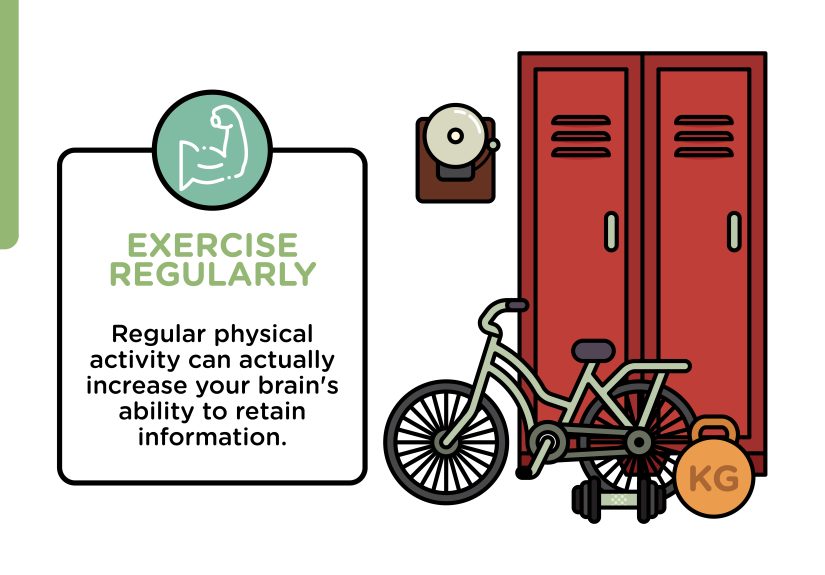
5) Movement that tells your body it’s safe
Exercise supports mental health in several ways: it burns off stress chemicals, improves sleep, builds confidence, and can improve autonomic flexibility.
You don’t need extreme workouts. Consistency wins.
- 10–20 minutes of walking after school or work can reduce nervous energy.
- Strength training builds “I can handle hard things” signals into your body.
- Yoga or mobility work combines breath + movement, which many people find especially calming.
6) Sleep: the underrated vagus nerve “maintenance window”
If anxiety is a fire alarm, sleep is the battery reset. Poor sleep makes anxiety more likely, and anxiety makes sleep harderan annoying little feedback
loop. Keep it simple:
- Keep wake time mostly consistent (even weekends, within reason).
- Dim lights and screens 30–60 minutes before bed when possible.
- If your brain starts debating your entire life at 1 a.m., write the thoughts down and “schedule” them for tomorrow.
7) The gut-brain connection: why your stomach gets a vote
The vagus nerve is a major communication route between the gut and brain. That doesn’t mean “fix your gut = cure anxiety,” but it does mean your digestive
system can influence mood and stress signals. Many people notice anxiety flares with reflux, constipation, IBS symptoms, or after eating patterns that
don’t support steady energy.
Practical steps: regular meals, enough fiber and water, and noticing which foods spike symptoms (without turning eating into a fear-based math problem).
If you have persistent GI issues, it’s worth talking to a healthcare professional.
8) Social connection: the nervous system’s “safe mode”
Humans regulate together. A calm conversation, laughing with a friend, a supportive family member, even a pet can help your body shift toward safety.
This isn’t weaknessit’s biology. If you feel better after talking to someone, that’s not “dependence.” That’s your nervous system doing teamwork.
What About “Vagus Nerve Stimulation” Devices?
You may see “VNS” and assume it’s the same as breathing exercises. It’s not. Vagus nerve stimulation (VNS) can also refer to medical
devices that deliver electrical impulses to the vagus nerve. Implantable VNS has FDA-approved uses for certain conditions (notably epilepsy and treatment-resistant
depression). This is a medical treatment managed by specialistsnot a DIY wellness hack.
Non-invasive stimulation devices exist too, but availability, evidence, and appropriate use vary. If you’re considering any device-based approach, it’s
a “talk to your clinician” situation.
A Reality-Based “Stronger Vagus Nerve” Plan (No Crystal Required)
If you want to build vagal resilience without turning your life into a 47-step morning routine, use a tiny, repeatable plan. The nervous system loves
repetition. Anxiety loves chaos. Let’s pick the former.
The 5-minute daily minimum
- 2 minutes of slow breathing (inhale 4, exhale 6).
- 1 minute of humming (or quiet singing if you’re feeling brave).
- 2 minutes of walking or gentle stretching.
The “panic moment” protocol (when anxiety spikes)
- Name it: “This is anxiety. My body is sounding an alarm.”
- Exhale longer than you inhale for 90 seconds.
- Ground: look around and name 5 things you see. (Your brain needs evidence you’re safe.)
- Optional: cool compress to the face for 10–20 seconds if it feels good and safe for you.
The 2-week upgrade (baseline support)
- Move 3–5 days/week (walks count).
- Sleep with a consistent wake time.
- Reduce stimulants if they worsen anxiety (some people are caffeine superheroes; others are caffeine disaster movies).
- Talk to someone supportive at least twice a weekfriend, family, mentor, therapist.
Myths, Hype, and the Polyvagal Side Quest
You might run into bold claims online: “Activate your vagus nerve and you’ll never be anxious again.” That’s not how biology works. Your nervous system
isn’t a light switch; it’s a thermostat in a house with windows open, a dog barking, and someone cooking spicy chili.
You may also hear about polyvagal theory, a popular framework used in some therapy and trauma-informed spaces. Parts of the broader
messageautonomic states matter, social safety cues mattercan be useful. At the same time, some of the specific biological claims are debated in the
scientific community. Translation: take what helps you practice regulation, but don’t treat any single theory like it’s the entire operating manual for
the human brain.
When to Get Extra Help
Self-regulation tools are powerful, but anxiety can also be stubborn, intense, or linked to other conditions. Consider talking with a qualified healthcare
professional if:
- Anxiety lasts most days for weeks and interferes with school, work, or relationships.
- You’re avoiding normal activities because of fear or panic.
- Sleep, appetite, or concentration are consistently disrupted.
- You have physical symptoms you can’t explain (especially chest pain, fainting, or severe shortness of breath).
Getting support isn’t a sign your vagus nerve “failed.” It’s a sign you’re using all available toolsskills, community, and professional careto feel
better.
Conclusion: Calm Is a Skill (And Your Vagus Nerve Is Part of the Team)
Fighting anxiety doesn’t mean eliminating stress forever. It means improving your recoverybuilding the ability to notice your body’s alarm system,
respond with tools that support regulation, and return to baseline more often.
A “strong vagus nerve” is really shorthand for a flexible nervous system: one that can mobilize when needed and settle when it’s safe.
Start smallslow breathing, gentle movement, humming, sleep support, and connection. Over time, those tiny choices add up to a nervous system that’s
less jumpy, more resilient, and better at remembering: you’re okay.
Experiences: What This Can Look Like in Real Life (Illustrative Examples)
The vagus-nerve approach often sounds abstract until you see how it plays out in everyday moments. Below are common patterns people describe when they
practice vagus-friendly habits consistently. These are illustrative (not medical claims, and not specific real individuals), but they
mirror the kinds of changes many notice when they focus on nervous-system regulation.
Experience #1: The “Email Heart Attack” becomes a speed bump
Someone sits down to send a simple emailthen the thoughts arrive: “What if I sound dumb?” Heart rate rises. Shoulders climb to the ears. Old pattern:
avoid the email for three hours, feel worse, repeat tomorrow.
New pattern after two weeks of breath practice: they feel the surge, but they recognize it faster. They do 90 seconds of long-exhale breathingnothing
dramatic, just steady. The body doesn’t instantly become a zen garden, but the intensity drops from an 8/10 to a 5/10. That difference is huge: now the
email gets written. The win isn’t “no anxiety.” The win is “anxiety didn’t drive the car.”
Experience #2: Humming turns into a “reset button” between classes or meetings
Another common report: people discover that humming is oddly effective when they’re tense but can’t step away for a full meditation session. They hum in
the car before walking into school, work, or a social event. It feels silly at firstlike being your own background soundtrackbut the vibration plus
slow breathing creates a noticeable shift. Their chest feels less tight, jaw unclenches, and their voice sounds steadier when they speak.
The practical payoff: social anxiety becomes more manageable because the body is sending fewer “danger” signals. Again, it’s not magicjust physiology
plus repetition.
Experience #3: Sleep stops being a nightly negotiation
Many people with anxiety describe bedtime as “when my brain clocks in for its night shift.” They lie down and suddenly remember everything they’ve ever
done since 2009. After building a routinedim lights, consistent wake time, and 3 minutes of breathingsleep may not become perfect, but it becomes
less fragile. They fall asleep a little faster. When they wake up at 2 a.m., they recover more quickly instead of spiraling.
A small but meaningful change shows up the next day: fewer caffeine “rescues,” fewer stress cravings, and slightly more patience. That’s the long-game
benefit of nervous system support: it improves the foundation that anxiety likes to attack.
Experience #4: Panic sensations feel less mysterious
Panic symptoms can be scary because they feel like danger without an obvious source. People often describe a turning point when they learn to label the
sensations: “This is my stress response. It’s uncomfortable, not necessarily unsafe.” Pairing that labeling with slow breathing, grounding, and (for
some) a cool compress to the face helps reduce the fear of the symptoms themselves.
Over time, the body learns a new association: sensations don’t automatically mean catastrophe. That learning is a big part of anxiety recoveryyour brain
starts to trust that you can handle the wave without being pulled under.
Experience #5: Social connection becomes a strategy, not an afterthought
People often underestimate how much isolation increases anxiety. One common shift is treating connection like a health habit: short check-ins, walking
with a friend, playing with a pet, or talking to a trusted adult. The nervous system reads safe connection as evidence that the environment isn’t a
threat. That can make other skillsbreathing, movement, sleepwork even better.
The big picture from these experiences is simple: vagus-friendly practices often change how quickly you recover. You may still feel
anxious sometimes, but you spend less time stuck thereand that’s a real, measurable improvement in daily life.