Table of Contents >> Show >> Hide
- What Is Axillary Hyperhidrosis, Exactly?
- How Doctors Figure Out What Kind of Sweating You Have
- First-Line Hyperhidrosis Treatment: Start With Antiperspirants
- Prescription Topicals for Excessive Underarm Sweating
- Botox for Underarm Sweating: Yes, Really
- Device-Based Treatment Options for Underarm Hyperhidrosis
- Oral Medications: Helpful, But Not Usually the First Move
- When Surgery Enters the Conversation
- Daily Habits That Actually Help
- When to See a Doctor About Excessive Underarm Sweating
- The Bottom Line on Hyperhidrosis Treatment
- Real-World Experiences With Underarm Hyperhidrosis Treatment
- Conclusion
Watch a quick WebMD video on excessive underarm sweating, and you will get the fast version. This article is the full director’s cut. If your armpits seem to believe every day is a summer marathon, you are not being dramatic, lazy, or “bad at deodorant.” You may be dealing with axillary hyperhidrosis, the medical term for excessive underarm sweating. And yes, it is a real condition. No, you do not need to apologize to every shirt in your closet.
Underarm hyperhidrosis happens when your body produces more sweat than it needs for cooling. For some people, it is a primary condition, meaning the sweating itself is the main issue. For others, it is secondary, meaning the sweating is triggered by something else such as a medication, thyroid problem, infection, menopause, or another medical condition. That distinction matters because the best hyperhidrosis treatment depends on why the sweating is happening in the first place.
If you have ever changed shirts before lunch, avoided gray clothing like it was cursed, or stood with your elbows glued to your sides during a presentation, welcome. You are in familiar company. The good news is that there are several evidence-based options for excessive underarm sweating treatment, from clinical-strength antiperspirants to prescription wipes, injections, device-based procedures, and in some cases surgery.
What Is Axillary Hyperhidrosis, Exactly?
Axillary hyperhidrosis simply means excessive sweating in the underarms. The sweating is often symmetrical, can happen even when the weather is cool, and may show up when you are sitting still, not sprinting uphill in July. Primary hyperhidrosis usually starts earlier in life and often runs in families. Secondary hyperhidrosis is more likely to start later and may be linked to another health issue or a medicine you take.
That means the first step is not always “buy a stronger deodorant.” In fact, deodorant and antiperspirant are not the same thing. Deodorant helps with odor. Antiperspirant reduces sweat. If your main problem is wet underarms, deodorant alone is basically bringing a kazoo to a thunderstorm.
How Doctors Figure Out What Kind of Sweating You Have
A healthcare professional will usually start with your history: when the sweating began, whether it affects both underarms, whether it happens during sleep, whether other areas are involved, and whether you take medications that could trigger it. If the sweating is sudden, widespread, or happening mostly at night, your clinician may look for an underlying cause instead of assuming it is primary hyperhidrosis.
In some cases, doctors also use sweat-mapping or severity scales to measure how much the sweating interferes with daily life. That may sound fancy, but the point is simple: treatment should match how disruptive the sweating really is. A person who occasionally notices dampness needs a different game plan than someone who soaks through work clothes before their first coffee.
First-Line Hyperhidrosis Treatment: Start With Antiperspirants
For many people, the first stop on the hyperhidrosis treatment ladder is a clinical-strength or prescription antiperspirant, usually one containing aluminum chloride. This is not the glamorous option, but it is often the smartest opening move. These products help block sweat ducts and reduce the amount of sweat that reaches the skin.
The technique matters. Most experts recommend applying antiperspirant to dry skin at night, when sweat glands are calmer and the product has time to work. Once it starts helping, you may be able to cut back to a maintenance schedule instead of using it every night forever. If irritation becomes a problem, tell your clinician. The right product, timing, or frequency can make a big difference.
This step may sound almost too simple, but simple is good. In medicine, “basic” does not mean “useless.” It means you start with the option that is affordable, available, and often effective before bringing in the bigger tools.
Prescription Topicals for Excessive Underarm Sweating
Glycopyrronium Cloths
If prescription antiperspirants are not enough, a doctor may recommend a medicated underarm wipe such as glycopyrronium cloth. This treatment is approved for primary axillary hyperhidrosis and is designed specifically for underarm sweating. It works by reducing the nerve signals that stimulate sweat glands.
These wipes can be very helpful, but they are not magic napkins from a wizard movie. You still need to use them carefully. Wash your hands after application, avoid getting the medicine near your eyes, and follow directions exactly. Common side effects can include dry mouth, blurry vision if accidentally transferred to the eye area, and underarm irritation.
Sofdra Gel
A newer topical option is Sofdra, a prescription gel applied once daily at bedtime for underarm hyperhidrosis. Like glycopyrronium cloths, it targets sweat signaling locally. For patients who want a noninvasive, at-home treatment but need something stronger than aluminum chloride, this can be an appealing option.
The big advantage of modern topical treatments is that they let many patients avoid jumping straight to injections or procedures. The catch is that you need consistency. If you use a prescription topical once, shrug, and expect your sweat glands to send a formal apology letter, you may be disappointed.
Botox for Underarm Sweating: Yes, Really
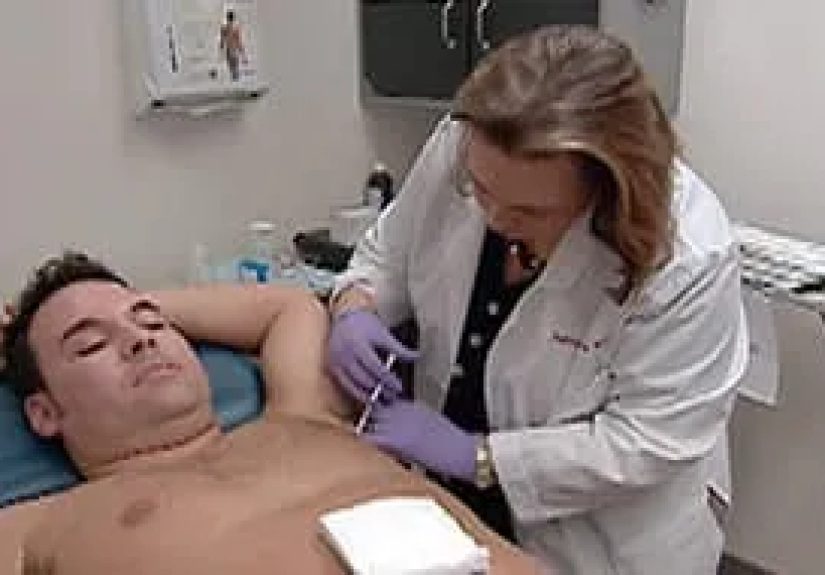
One of the best-known treatments for excessive underarm sweating is Botox for sweating. Yes, the same botulinum toxin that many people associate with wrinkles is also an FDA-approved treatment for severe primary axillary hyperhidrosis in adults when topical treatments do not work well enough.
Here is how it works: Botox temporarily blocks the chemical signals that tell the sweat glands to get busy. The injections are placed just under the skin in the underarm area, and many patients notice less sweating within about a week or two. Results often last for several months, and then the treatment can be repeated.
The obvious downside is the word injections. Nobody throws a parade for needles in their armpits. Still, many patients consider Botox worth it because the improvement can be dramatic. If your shirt stains are running your social life, interviews, or confidence, a treatment that lasts for months may feel like a bargain with destiny.
Device-Based Treatment Options for Underarm Hyperhidrosis
Microwave Thermolysis
For people who want a longer-lasting office treatment, microwave thermolysis may be an option. This procedure uses focused energy to destroy underarm sweat glands. Since only a small percentage of your sweat glands live in the underarms, reducing sweat there does not prevent your body from cooling itself normally.
This option is attractive because it is not a daily product and does not rely on repeated injections in the same way Botox does. On the other hand, it is an in-office procedure, it may involve discomfort or temporary changes in skin sensation, and cost or access can be an issue depending on where you live.
Brella SweatControl Patch
Another newer in-office approach is the Brella SweatControl Patch, a prescription patch used for adult primary axillary hyperhidrosis. It works through a targeted heat-based process and is applied for only a few minutes in a healthcare setting. Reported results can last for a few months, making it an interesting needle-free option for underarm sweating.
That said, availability may vary by clinic. Translation: the treatment exists, but you may need to call around instead of expecting it to be waiting for you at every neighborhood dermatology office like a latte order.
Oral Medications: Helpful, But Not Usually the First Move
When topical treatments, Botox, or procedures are not enough, doctors may consider oral anticholinergic medications such as glycopyrrolate or oxybutynin. These medicines can reduce sweating, but because they work more broadly in the body, side effects are more likely. Dry mouth, constipation, blurry vision, and urinary symptoms are the usual suspects.
That does not mean oral medication is a bad idea. It means it needs to be the right idea for the right person. If your sweating affects more than one body area or if local treatments have failed, oral medication may be part of a practical plan. But it is generally not where most underarm-only cases start.
When Surgery Enters the Conversation
Surgery is typically reserved for more severe cases that have not responded to other treatment. Options may include local sweat gland removal or procedures involving the nerves that trigger sweating, such as sympathectomy. These can reduce sweating significantly, sometimes permanently.
Now for the non-glamorous but important fine print: surgery can have trade-offs, including compensatory sweating, where the body starts sweating more in another area. That does not happen to everyone, but it is a major reason surgery is considered a last-resort strategy rather than the opening act.
Daily Habits That Actually Help
Medical treatment matters, but daily habits still count. Think of them as support staff, not the star quarterback. Helpful strategies may include:
- Wearing breathable fabrics when possible.
- Choosing antiperspirant over deodorant if sweat, not odor, is the main issue.
- Keeping an extra shirt at work, school, or in your bag.
- Tracking triggers such as stress, caffeine, spicy foods, or certain medications.
- Using absorbent underarm shields or sweat-proof undershirts if clothing damage is a major problem.
These habits will not “cure” hyperhidrosis, but they can make daily life less annoying. And when you are dealing with something that follows you into meetings, dates, school, travel, and photos, less annoying is not a small victory.
When to See a Doctor About Excessive Underarm Sweating
Make an appointment if sweating is disrupting your routine, causing embarrassment, damaging clothing constantly, or making you withdraw socially. Also get checked if you suddenly begin sweating more than usual, if you have unexplained night sweats, or if the sweating is widespread rather than limited to the underarms.
Seek urgent care if heavy sweating comes with chest pain, dizziness, a rapid pulse, or cold skin. Those symptoms are not the time for internet detective work. That is the time for real medical attention.
The Bottom Line on Hyperhidrosis Treatment
Excessive underarm sweating treatment has come a long way. The old routine of “try harder deodorant and hope for the best” has officially been replaced by a real treatment ladder. Today, patients may benefit from prescription antiperspirants, medicated cloths, newer topical gels, Botox injections, device-based procedures, oral medication, or surgery in selected cases.
The smartest approach is not to chase the trendiest treatment first. It is to match the treatment to the severity of your symptoms, your tolerance for side effects, your budget, and how much effort you are willing to put into maintenance. Some people do great with an antiperspirant and a routine. Others want something more durable. Both approaches are valid.
If the WebMD video sparked your interest, consider this your next step: underarm hyperhidrosis is treatable, your sweating is not a moral failure, and your wardrobe deserves a better era.
Real-World Experiences With Underarm Hyperhidrosis Treatment
The experience of living with underarm hyperhidrosis is often more emotional than people expect. Many patients describe the sweating itself as only half the problem. The other half is the constant planning. They choose shirts by color, fabric, and how forgiving the underarm area looks under fluorescent lighting. They sit carefully in meetings, avoid raising their hands, and keep jackets on longer than any reasonable human should. One common story is the student or office worker who arrives feeling put together, then spends the rest of the day worrying about visible sweat marks. The physical symptom is moisture, but the lived experience is often anxiety.
Many people first try over-the-counter products and feel discouraged when the results are mediocre. Then they learn the small but important detail that antiperspirant works best when applied to completely dry skin at night, not swiped on in a hurry after a morning shower while running late. That change alone can improve results for some patients. Others realize they need stronger help and move on to prescription antiperspirants or medicated cloths. A common theme is relief mixed with annoyance: relief because something finally helps, annoyance because it took so long to learn that real treatments existed in the first place.
Patients who try Botox often describe a very specific kind of happiness: wearing a light gray shirt without turning it into a science experiment. The treatment is not everyone’s favorite day on the calendar, but many people say the payoff is worth it because they can forget about their underarms for months at a time. People who prefer noninvasive treatments sometimes lean toward device-based options because they like the idea of reducing sweating without having to remember a nightly routine. Their experience is often less about “instant miracle” and more about reclaiming mental space. They stop thinking about sweat every hour, which can feel surprisingly life-changing.
There is also the practical side. Some patients care most about cost. Others care most about convenience. Some want a needle-free option, while others just want the approach with the best odds of strong improvement. That is why the best treatment is so personal. One patient may love a prescription topical because it fits neatly into a bedtime routine. Another may hate daily upkeep and prefer a procedure. The winning treatment is often the one a person can realistically stick with.
Perhaps the most consistent experience is the emotional shift that happens when patients realize hyperhidrosis is a recognized medical condition. They stop framing themselves as unusually sweaty, embarrassing, or high-maintenance and start seeing the issue for what it is: treatable. That change in mindset matters. When people feel validated, they are more likely to seek care, ask better questions, and keep trying until they find the option that works. And that is usually the real turning point, not just drier underarms, but the return of confidence.
Conclusion
If you are dealing with excessive underarm sweating, the main takeaway is simple: you have options, and several of them work well. Start with a proper evaluation, rule out secondary causes if needed, and then work through the treatment ladder logically. Hyperhidrosis may be stubborn, but it is not unbeatable.