Table of Contents >> Show >> Hide
- The Case That Turned Cake Into Courtroom Evidence
- Why This Was More Than An Awkward Office Moment
- Why The $450K Verdict Mattered
- Office Culture Has A Consent Problem
- What Employers Should Learn Before The Next Sheet Cake Arrives
- What Employees Can Take From This Story
- Related Workplace Experiences: When “Fun” At Work Stops Being Fun
- Conclusion
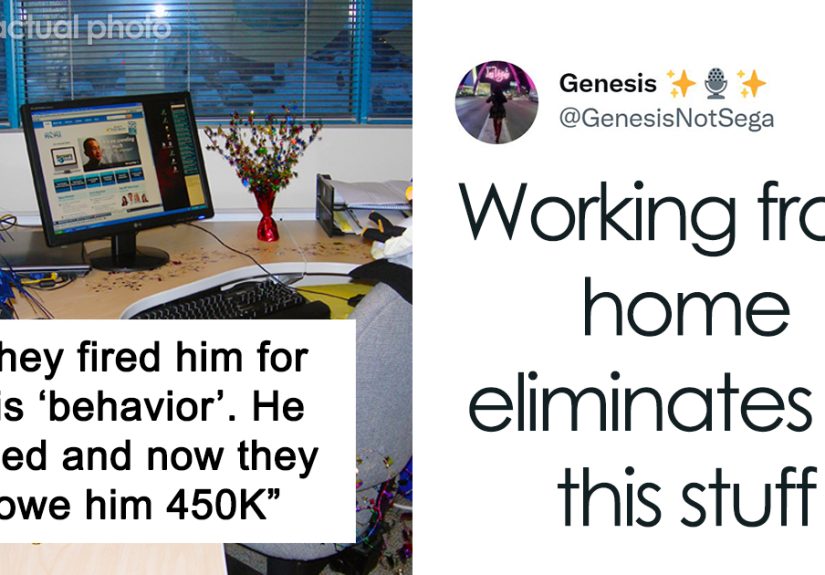
There are bad office birthdays, and then there are legendary HR cautionary tales. You know the type: a supermarket cake no one asked for, an off-key chorus of “Happy Birthday,” a room full of coworkers pretending frosting counts as company culture. Usually, the worst outcome is secondhand embarrassment and a leftover sheet cake that somehow survives until Friday. But in one headline-grabbing case, an unwanted office birthday party became the spark for panic attacks, a firing, a lawsuit, and a $450,000 verdict.
That is why this story keeps ricocheting around the internet. On its face, it sounds almost absurd. A birthday party? A lawsuit? Nearly half a million dollars? But once you get past the clicky headline and the easy jokes about balloons turning into legal exhibits, the real story is much more serious. This was not about hating cake, disliking coworkers, or being “too sensitive” for workplace fun. It was about what happens when an employee clearly communicates a mental health need, the employer ignores it, and management responds with blame instead of care.
And that is exactly why the case matters. It is not really a birthday story. It is a story about workplace accommodation, consent, stigma, and the deeply flawed corporate belief that all employees should experience “fun” the same way. Spoiler alert: they do not. For some people, public attention is energizing. For others, it is the emotional equivalent of being shoved under a spotlight while someone bangs cymbals behind their head.
The Case That Turned Cake Into Courtroom Evidence
The case centered on Kevin Berling, a Kentucky employee who had an anxiety disorder and panic attacks. According to court summaries and news reporting, he told the person involved in office birthday planning that he did not want a birthday celebration at work because it could trigger a panic attack. That request was reportedly agreed to, but then forgotten. The company held the celebration anyway.
From a distance, that might sound like a simple mix-up. Office manager forgets request. Coworkers proceed with cake. Nobody meant harm. End scene. But that tidy version falls apart once you remember one crucial detail: when an employee gives a workplace a specific heads-up about a medical or mental health trigger, that information is not a fun fact for the break room. It is important. It is actionable. And it deserves more than a shrug and a banner.
When the surprise celebration happened, Berling experienced a panic attack and removed himself from the scene. Then things went from uncomfortable to catastrophic. According to the case record, the following day he was confronted about his reaction. That meeting triggered another panic attack. Soon after, he was fired. A jury later awarded him $450,000 in damages, and the Kentucky Court of Appeals affirmed the judgment.
This is the part many people miss when they reduce the case to “man sues over birthday party.” The party mattered, yes, but the bigger issue was how management handled the aftermath. If a company makes a mistake, apologizes, learns from it, and supports the employee, the story is one thing. If the company makes a mistake, then criticizes the employee for the medical fallout of that mistake, that is a very different story. That is where the legal and ethical trouble starts wearing steel-toed boots.
Why This Was More Than An Awkward Office Moment
A request was made before the problem happened
One reason this case hit so hard is that it was not a mystery. This was not a situation where a manager had no clue anything was wrong and then accidentally stumbled into a trigger. The employee communicated his concern ahead of time. That matters. In workplace law and HR practice, advance notice changes the entire equation. Once an employer knows about a limitation, trigger, or condition, the obligation to respond carefully becomes real. Very real.
That is why the case feels less like a bizarre accident and more like a chain of preventable decisions. The unwanted party was preventable. The confrontation the next day was preventable. The firing was preventable. It reads like a story in which every off-ramp was missed on purpose.
The real damage came from misunderstanding mental health
Mental health conditions are still misunderstood in far too many workplaces. Too often, anxiety is treated like a quirky personality trait, panic attacks are mistaken for overreaction, and requests for accommodation are quietly filed under “this seems inconvenient for our vibe.” That attitude is a problem. Anxiety disorders and panic attacks are not attitude issues. They are health issues.
Medical sources consistently describe panic attacks as intense episodes that can involve racing heart, trembling, sweating, dizziness, shortness of breath, chest discomfort, nausea, and a feeling of losing control. In other words, this is not someone being dramatic because there were streamers near the copier. It can be a full-body event that is frightening, exhausting, and destabilizing.
In practical terms, that means a workplace should not judge an employee’s panic response as though it were a bad reaction to office gossip. If a worker is having a panic attack, the right response is support, space, and calm communication, not a scolding session with a side of shame.
The case exposed a bigger culture problem
There is a broader workplace issue hiding in this story: many employers confuse performative friendliness with actual inclusion. They think birthdays, mandatory fun, surprise recognition, and public celebrations prove the office is supportive. Sometimes they do. Sometimes they just prove the office has balloons. Real inclusion is not “we celebrate everybody the exact same way.” Real inclusion is “we listen when people tell us what helps them feel safe and respected.”
Cake is not culture. Consent is culture. Attention to employee needs is culture. Training managers to respond well under pressure is culture. The frosting is just frosting.
Why The $450K Verdict Mattered
The size of the award made the case impossible to ignore. Suddenly, employers everywhere were asking the same panicked question: can an office birthday party really cost that much? The honest answer is no, not by itself. A party is not automatically a lawsuit in waiting. But a company’s failure to respect a known limitation, followed by a punitive response to the employee’s symptoms, can become very expensive very quickly.
The verdict was a giant neon sign pointing to a common legal truth: workplace liability often comes less from the first mistake than from what leadership does next. A forgotten request can sometimes be fixed with an apology, empathy, and immediate corrective action. A forgotten request followed by criticism, escalation, and termination? That is how a bad day becomes a courtroom problem.
It also mattered because it underscored that mental health issues belong in the workplace accommodation conversation. Many employers have gotten more comfortable understanding physical needs because those are easier to picture. A ramp is visible. A chair modification is visible. An altered schedule is visible. But mental health accommodations often involve less obvious steps: avoiding known triggers, adjusting communication style, allowing private space, providing flexibility, or simply not forcing public attention on someone who has already said, “Please do not do this.”
That does not make those accommodations less real. If anything, it makes listening more important.
Office Culture Has A Consent Problem
Let’s say the quiet part out loud: plenty of workplace rituals are only fun for the people who plan them. Surprise parties, public praise circles, baby showers for coworkers who hate attention, retirement roasts, trust falls, forced karaoke, and team-building games that feel suspiciously like low-budget hostage situations all share one flaw. They assume enthusiasm. They treat participation as a moral virtue. They frame discomfort as antisocial behavior.
That is a mess. People have different histories, personalities, sensory thresholds, social comfort levels, and health conditions. Some employees are neurodivergent. Some live with anxiety. Some have trauma related to public humiliation or family celebrations gone wrong. Some simply do not want the break room turning into a stage at noon on a Wednesday. None of that makes them rude. It makes them human.
Workplaces that want to be inclusive should stop treating all social rituals as harmless by default. A well-meant surprise can still be a trigger. Public attention can still feel invasive. A manager’s insistence on togetherness can still land like coercion. Intent matters, but impact matters more.
Not everyone experiences “fun” the same way
The happiest extrovert in accounting may genuinely love a decorated desk, a signed card, and 20 people singing at full volume. Good for accounting. But workplaces get into trouble when they assume that one employee’s joy template should be pasted onto everybody else. Inclusion is not a cookie cutter. It is closer to a custom order, minus the bakery puns and with more legal consequences.
The better approach is surprisingly simple: ask first. Would you like to celebrate your birthday at work? Would you prefer something low-key? Would you rather skip it altogether? These are not complicated questions. In fact, they are so easy that it is almost impressive when companies fail them.
Public attention can be a trigger, not a compliment
There is an outdated belief in some offices that public attention is inherently flattering. It is not. For some people, it is emotionally exhausting. For others, it can trigger acute distress. This is especially true when the employee has already communicated that public celebration is unwelcome. At that point, pushing ahead stops being warm and fuzzy and starts being dismissive.
A workplace should never assume that because something is socially common, it is universally safe. Birthdays are common. So are office jokes. So are surprise shout-outs in all-hands meetings. Common does not mean harmless.
What Employers Should Learn Before The Next Sheet Cake Arrives
This case offers a pretty clear roadmap for companies that would rather not turn a break-room celebration into legal education. Here are the practical lessons:
- Ask before you celebrate. Never assume employees want public recognition, surprise gatherings, or office rituals done in their name.
- Document preferences. If someone asks not to be celebrated, do not rely on memory and office folklore. Note it and honor it.
- Treat mental health disclosures seriously. An anxiety-related request is not optional just because it is invisible.
- Train managers on response. When an employee is in distress, the goal is de-escalation and support, not interrogation.
- Avoid punishing symptoms. If the company’s actions triggered the crisis, blaming the employee for the response is a spectacularly bad move.
- Build flexible culture. Inclusion means making room for different social comfort levels, not forcing one model of “team spirit.”
None of this requires a moon landing budget. Most of it requires attention, humility, and the emotional maturity to understand that a “fun surprise” is still about the person being surprised, not the committee that bought the cupcakes.
What Employees Can Take From This Story
For employees, this case is a reminder that boundaries at work are not automatically unreasonable just because they are inconvenient to other people. If something in the workplace triggers panic, anxiety, or another health issue, speaking up matters. The process is not always easy, and not every employer handles it well, but clear communication can create a record and improve the chances of a meaningful response.
It also helps to be specific. “I do not do well with surprise public celebrations” is useful. “Please do not organize a birthday event for me because it can trigger a panic attack” is even clearer. The more concrete the request, the harder it is for someone to pretend they had no idea what you meant.
That said, the burden should not fall entirely on workers to become their own risk managers. Employers are supposed to meet them halfway, and then some. A decent workplace does not make people plead for basic respect like they are negotiating a hostage release over a grocery-store cake.
Related Workplace Experiences: When “Fun” At Work Stops Being Fun
What makes the unwanted birthday party story so sticky is that lots of workers can see a smaller version of it in their own lives. Maybe not a lawsuit. Maybe not a six-figure verdict. But definitely that sinking feeling when an office decides it knows what is best for your comfort better than you do.
There is the employee who asks not to be called on in big meetings and then gets “encouraged” into surprise public speaking because the manager thinks it will “build confidence.” There is the worker who quietly opts out of lunchroom celebrations and gets labeled unfriendly, difficult, or “not a culture fit.” There is the person who dreads workplace birthdays because being the center of attention feels physically overwhelming, but whose coworkers insist, with the confidence of amateur party planners everywhere, that they will “love it once it starts.”
Then there are the offices that confuse visibility with appreciation. Public praise can be wonderful for some people and deeply stressful for others. A manager announces a shout-out in front of 70 coworkers, and while one employee beams, another is counting the seconds until they can sit down, breathe, and stop feeling like their skin has turned into static. The mistake is assuming both reactions mean the same thing.
Many employees also have experiences tied to sensory overload rather than simple dislike. Loud break rooms, clapping, crowding, unexpected singing, flashing decorations, and last-minute social pressure can make a supposedly cheerful event feel like an ambush. For people with anxiety, trauma histories, autism, panic disorder, or other conditions, the body can react long before the employee has a neat little sentence ready to explain it.
Another common experience is the “we were just trying to be nice” defense. It shows up in offices everywhere. A worker says a particular kind of attention is unwelcome. The office ignores that because the intention is positive. Then, when the employee reacts badly, the emotional burden gets flipped. Suddenly the employee is the one who “made it weird,” “ruined the mood,” or “overreacted.” That reversal is brutal because it turns a request for respect into an accusation of disloyalty.
Even employees without a diagnosed condition can relate to the pressure. Some people hate being surprised at work because it makes them feel exposed. Some have painful family histories around birthdays or celebrations. Some simply want the office to stay an office and not become a stage production with grocery-store buttercream. None of those preferences should require a courtroom before they are taken seriously.
The larger point is that workplace experiences do not have to be intentionally cruel to be harmful. A forced smile can hide real distress. A “harmless” ritual can feel loaded to the person living through it. A manager can be well-meaning and still make a bad situation worse. That is why the best workplaces do not just ask, “What did we mean?” They ask, “How did this land?” That question is less glamorous than surprise confetti, but it is a whole lot safer.
Conclusion
The unwanted office birthday party case became internet-famous because it sounded ridiculous in one sentence and painfully believable in ten. But once you dig into the details, the takeaway is not that birthdays are dangerous or that every awkward office moment belongs in court. The real lesson is much simpler: when an employee tells you something is a trigger, believe them. When they are in distress, support them. And when building workplace culture, remember that kindness without consent is not kindness. Sometimes the most respectful celebration is no celebration at all.