Table of Contents >> Show >> Hide
- What This Dairy-Free Mango Custard Is (and Isn’t)
- Key Ingredients (Plus Smart Substitutions)
- Easy Dairy-Free Mango Custard Recipe (Stovetop)
- How to Know Your Custard Is Done (Without Panic)
- Flavor Variations (Because Mango Loves Options)
- Serving Ideas That Make It Look Like You Tried Harder Than You Did
- Troubleshooting (Because Custard Has Opinions)
- Make-Ahead, Storage, and Mango Prep Tips
- Why This Recipe Works for Dairy-Free Desserts
- Conclusion
- Kitchen Experiences & Real-Life Lessons (About )
Mango season has a way of making people do questionable thingslike buying a whole box of mangos “because they were on sale,” and then realizing you now live in a tropical fruit episode of a survival show. This recipe is your friendly rescue boat: a dairy-free mango custard that’s silky, bright, and ridiculously easy on the stovetop.
It tastes like sunshine wearing a cozy sweater: sweet mango, gentle vanilla, and a creamy texture that doesn’t rely on milk, cream, or any “mystery powder from the back of the pantry.” You can make it egg-based (classic custard style) or egg-free (vegan custard style), and both versions work beautifully as a dessert cup, tart filling, parfait layer, donut buddy, or “I ate it from the bowl with a spoon” moment (no judgmentcustard understands).
What This Dairy-Free Mango Custard Is (and Isn’t)
Traditional custard gets its richness from dairy plus eggs. Here, we swap the dairy for coconut milk (or a mix of coconut milk and another plant milk), and we use starch to help thicken things smoothly. If you use egg yolks, you’ll get a deeper, more classic custard flavor. If you go egg-free, you’ll still get a lush, spoon-coating pudding-like custardjust with a cleaner, brighter mango finish.
Either way, you’re making something that feels fancy without requiring a culinary degree, a thermometer collection, or a pep talk from a pastry chef. (Though if you want to pep talk your whisk, I support your journey.)
Key Ingredients (Plus Smart Substitutions)
Mango: fresh, frozen, or canned pulp
The flavor hero is mango purée. Fresh mangos give the best aroma, but frozen mango works great (thaw first). If you’re using fresh, choose mangos by feel and fragrancea ripe mango should give slightly when gently squeezed, and often smells fruity near the stem. Color can vary by variety, so don’t let a green-ish mango break your heart prematurely.
Coconut milk (full-fat) for real creaminess
Full-fat canned coconut milk gives that luxurious custard mouthfeel. If you prefer a lighter custard, use ½ coconut milk + ½ oat milk (or almond/soy). Oat milk tends to taste the most “dessert-friendly” and neutral. If your coconut milk separates in the can, that’s normalwhisk it smooth before measuring.
Starch: cornstarch (or arrowroot with a note)
Cornstarch is the easiest thickener for glossy, stable custard. Arrowroot can work, but it can get slightly looser after chilling and may turn a bit stretchy if boiled hard. If using arrowroot, cook gently and stop once thickened.
Sweetener and flavor
- Sugar: white sugar for clean flavor; coconut sugar adds caramel notes (and darkens color).
- Vanilla: extract is great; paste makes it feel like you own a tiny bakery.
- Salt: a pinch makes mango taste more like mango.
- Lime zest (optional): brightens the custard and keeps sweetness from feeling heavy.
Eggs (optional, for a classic custard)
Egg yolks add richness and that classic custard depth. If you’re avoiding eggs, skip them and lean on starch thickening. Both versions are included below.
Easy Dairy-Free Mango Custard Recipe (Stovetop)
This method is designed to be low-stress: whisk everything well, cook gently, and don’t wander off to “just check one thing” on your phone unless you enjoy living dangerously.
Yield & Timing
- Makes: about 3 cups (6 small dessert servings)
- Active time: 15 minutes
- Chill time: 2–4 hours (for best texture)
Ingredients (egg-free vegan version)
- 1 (13.5 oz) can full-fat coconut milk
- 1 cup oat milk (or soy/almond)
- 3/4 cup mango purée (fresh or thawed frozen mango blended smooth)
- 1/3 cup granulated sugar (adjust to mango sweetness)
- 3 tablespoons cornstarch
- 1 teaspoon vanilla extract
- Pinch of salt
- Optional: 1/2 teaspoon lime zest, or 1–2 teaspoons lime juice (add to taste)
Ingredients (egg-based “classic custard” version)
- 1 (13.5 oz) can full-fat coconut milk
- 1 cup oat milk (or soy/almond)
- 3/4 cup mango purée
- 1/3 cup granulated sugar
- 2 tablespoons cornstarch
- 3 large egg yolks
- 1 teaspoon vanilla extract
- Pinch of salt
- Optional: lime zest
Step-by-step instructions
1) Make mango purée (skip if already puréed)
Peel and cut mangos away from the pit. A common trick is the “hedgehog” cut: slice the cheeks, score the flesh into cubes without cutting the skin, then invert and scoop. Blend mango until smooth. For an extra-silky custard, press purée through a fine-mesh sieve to remove fibers.
2) Whisk the cold base (this prevents lumps)
In a medium saucepan (off heat), whisk sugar, cornstarch, and salt. Slowly whisk in the coconut milk and plant milk until completely smooth. If making the egg-based version, whisk yolks in thoroughly now (the “all-in-one” approach reduces tempering drama).
3) Cook gently, whisk constantly
Set the pan over medium heat and whisk constantly, scraping the bottom and corners. After a few minutes, it will go from “thin latte” to “thick smoothie” to “custard that clings to your whisk like it means it.”
4) Let it bubble briefly (important for stability)
Once thickened, let it reach a gentle bubble while whiskingabout 30–60 seconds. This helps fully activate starch thickening, and in yolk-based custards it helps prevent the custard from loosening later. Keep it controlled: you want a calm simmer-bubble, not a volcano.
5) Add mango and vanilla at the end (better flavor)
Remove from heat. Whisk in mango purée and vanilla. Taste and adjust: add a little more sugar if your mango is shy, or a pinch of lime zest if it needs more sparkle.
6) Chill properly (custard likes a nap)
Pour into a bowl and press plastic wrap directly on the surface to prevent a skin. Chill 2–4 hours. Before serving, whisk briefly to make it extra smooth.
How to Know Your Custard Is Done (Without Panic)
For egg-based custards, many classic custard sauces thicken around the mid-170s°F and should coat the back of a spoon. Practically speaking: if you drag a finger across the spoon and the line stays put, you’re in good shape. For starch-thickened custards, you’ll feel it: the whisk leaves trails, and the mixture looks glossy and thick.
Flavor Variations (Because Mango Loves Options)
- Mango Lassi vibes: add a pinch of cardamom and a tiny splash of rose water (optional but fun).
- Tropical pie filling: fold in toasted coconut; layer into a crust with fresh fruit.
- Spicy-sweet: add a pinch of chili powder and lime zest for a “mango with attitude” finish.
- Vanilla-bean deluxe: use vanilla bean paste and top with macerated berries.
- Orange-mango: swap lime for orange zest for a softer citrus note.
Serving Ideas That Make It Look Like You Tried Harder Than You Did
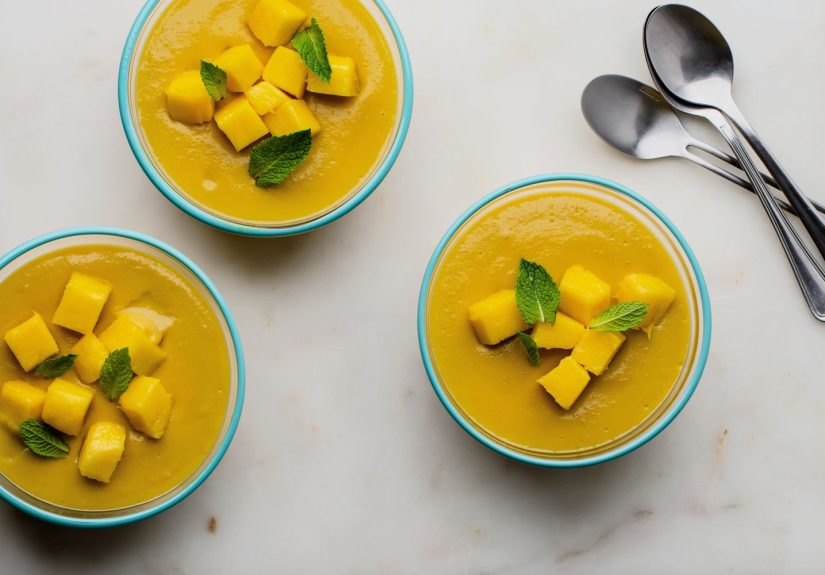
- Simple cups: spoon into glasses, top with mango cubes and toasted coconut.
- Parfaits: layer with granola and berries for brunch-dessert diplomacy.
- Tart filling: spread into a baked tart shell, chill, and arrange fruit on top.
- Cake companion: serve alongside angel food cake or sponge cake for a light finish.
- Frozen treat: freeze in popsicle molds (stir once halfway through for fewer ice crystals).
Troubleshooting (Because Custard Has Opinions)
“Mine is lumpy.”
Usually: heat was too high, or starch wasn’t fully dissolved. Fix: strain through a sieve, or blend briefly (immersion blender works great). Next time: whisk dry ingredients first, then add liquid slowly while whisking.
“It’s too thin.”
It likely didn’t cook long enough to activate the starch, or it didn’t bubble briefly. Put it back on medium heat and whisk until it thickens and gently bubbles for 30–60 seconds. Also remember: it thickens more as it chills.
“It’s too thick.”
Whisk in a splash of oat milk (or coconut milk) until loosened. Custard is flexibleunlike your group chat’s dinner plans.
“It tastes muted.”
Add a pinch more salt, a little vanilla, or a touch of citrus zest. Mango flavor blooms when you give it contrast.
“My egg-based custard looks a bit curdled.”
That’s from overheating eggs. If it’s mild, blend and strainit often becomes perfectly smooth. Next time, use medium heat and whisk constantly.
Make-Ahead, Storage, and Mango Prep Tips
This custard is ideal for making ahead. Keep it covered with plastic wrap pressed onto the surface. Refrigerate for up to 3 days. If you’re prepping mango in advance, store cut mango in an airtight container in the fridge for a few days, or freeze chunks for longer storage. For whole mangos: ripen at room temp, then refrigerate once ripe to slow down further ripening.
Why This Recipe Works for Dairy-Free Desserts
Dairy-free desserts sometimes swing wildly between “healthy snack” and “sad compromise.” This custard dodges both extremes. Full-fat coconut milk brings richness, starch builds body, and mango provides natural sweetness and aroma. You end up with a dessert that feels classic and comfortingjust without dairy.
Conclusion
This easy dairy-free mango custard recipe gives you a creamy, spoonable dessert with big mango flavor and minimal fuss. Make it vegan or egg-based, serve it fancy or eat it straight from the bowl, and use it everywhere you’d use pudding, pastry cream, or custard sauce. The hardest part is not telling everyone how easy it was.
Kitchen Experiences & Real-Life Lessons (About )
If you’ve ever tried to make a “quick dessert” and somehow ended up washing four bowls, two whisks, and your self-esteemgood news: mango custard is the kind of recipe that teaches you confidence without demanding perfection.
One of the most common experiences with dairy-free custards is realizing that whisking is not optional. It’s not a gentle suggestion. It’s the difference between “silky custard” and “surprise tapioca cosplay.” The good news is that whisking doesn’t have to feel like a workout if you set yourself up right: use a saucepan with a wider base (more even heat), keep the heat at medium, and whisk the corners like you’re searching for hidden treasurebecause that’s exactly where lumps like to hide.
Another classic moment: tasting the mango purée and thinking, “Wow, this is…mild.” That happens! Mango flavor varies wildly. The fix is usually simple and doesn’t involve doubling the sugar into candy territory. A tiny bit of salt makes mango taste louder, and a little lime zest makes it taste brighter, like someone opened a window in your dessert. If you’ve ever added lemon to fruit salad and wondered why it suddenly tastes like summer, you already understand this magic.
Then there’s the “my custard thickened and then got thinner” plot twist. This is where a brief, controlled bubble can save the day. Starch-thickened custards need enough heat to fully set; otherwise, they can look perfect in the pot and then slack off in the fridge like a teen asked to clean their room. If your custard seems loose after chilling, don’t throw it outreheat gently and whisk until it thickens again. Custard is forgiving, even when you’re not.
Mango prep has its own learning curve, too. The first time you cut a mango, it can feel like the fruit is hiding a booby-trapped, slippery stone in the middle (because it is). The “cheeks + score + scoop” method is popular for a reason: it’s fast, safe, and gets you neat cubes that look like you measured them with a ruler. And if you don’t get neat cubes? Congratulationsyou’ve invented “rustic mango pieces,” which taste exactly the same.
Finally, a note about serving: mango custard is a social chameleon. Put it in a glass with berries and toasted coconut, and it becomes dinner-party dessert. Layer it with granola, and it becomes brunch. Swirl it into chia pudding, and it becomes a wellness influencer. Eat it cold from the bowl in sweatpants, and it becomes self-care. No matter how you serve it, the core experience is the same: creamy, bright, dairy-free comfort that feels a little fancywithout being fussy.