Table of Contents >> Show >> Hide
- Why This Chair Still Matters
- A Brief History of the Eames Shell Chair
- What Makes the Dowel-Leg Version Special?
- Materials, Sustainability, and Modern Updates
- How Comfortable Is It, Really?
- Where the Chair Works Best
- How to Style It Without Making Your Home Look Like a Furniture Showroom
- Buying Tips: How to Avoid a Regret Purchase
- Care and Maintenance
- Is the Eames Molded Plastic Dowel-Leg Side Chair Worth It?
- Real-Life Experiences With the Eames Molded Plastic Dowel-Leg Side Chair
- Final Thoughts
Some chairs are just chairs. They hold your body, collect a sweater, and quietly mind their own business. The Eames Molded Plastic Dowel-Leg Side Chair is not one of those chairs. This one has opinions. It walks into a room with that unmistakable mid-century modern confidence and somehow manages to look crisp, friendly, sculptural, and practical all at once. That is not easy. Most furniture either tries too hard or gives up halfway through. This chair does neither.
Often referred to as the Eames shell chair with the dowel base, this design has lasted for decades because it solves a real problem beautifully: how do you make a chair that feels light, looks elegant, works in almost any room, and still feels modern long after trends have packed their tiny bags and left? Charles and Ray Eames answered that question with a one-piece shell and a base that adds warmth through wood while keeping the overall profile airy and architectural.
Today, the chair still earns its place in dining rooms, home offices, bedrooms, studios, cafes, waiting areas, and homes where people like their furniture to do more than just sit there looking decorative. It is iconic, yes, but it is also useful. And that combination is exactly why it remains such a big deal.
Why This Chair Still Matters
The reason the Eames Molded Plastic Dowel-Leg Side Chair still turns heads is simple: it blends comfort, versatility, and design history into one compact package. The shell has a soft, body-friendly curve that feels welcoming rather than stiff. The wood dowel legs bring warmth that many metal-framed chairs cannot match. And the overall shape is clean enough to work with a minimalist table, a cozy breakfast nook, or a room full of collected vintage pieces.
In other words, it is one of those rare furniture designs that can live in a polished architect’s apartment, a family dining room, or a creative studio without looking confused. That kind of flexibility is a superpower in furniture. A chair that only works in one kind of room is a diva. This one is more like a talented character actor: it improves the whole scene without demanding all the attention.
A Brief History of the Eames Shell Chair
To understand the dowel-leg side chair, it helps to understand the larger Eames shell-chair story. Charles and Ray Eames spent years exploring the idea of a single-shell chair that could be shaped to the body and adapted to different needs. Their work was tied to a broader postwar design goal: making good furniture available to more people, not just to those with penthouses and dramatic staircases.
The shell-chair concept gained real momentum around the Museum of Modern Art’s low-cost furniture competition in the late 1940s. The Eameses experimented widely with form and material, and one of the smartest things about their approach was that they were never married to a single material just because it sounded glamorous. They were famously practical. If a better manufacturing method appeared, they took it seriously. That design mindset is part of why the chair has survived so well: it was never frozen in a museum-case mentality.
Early shell-chair development moved through several material explorations, including metal and fiberglass, before the design evolved into the molded plastic versions people know today. The commercial production story begins in 1950, and that date matters because it marks the moment the chair moved from bold design idea to everyday object. That is when an icon becomes furniture people actually use, spill coffee near, and argue over at the dinner table.
What makes the chair especially impressive is that the shell was designed to work with different bases. That modular thinking was brilliant. Instead of redesigning the entire chair for every use, the Eameses paired a standardized shell with multiple base options. The dowel-leg base is one of the most beloved because it softens the industrial quality of the shell with wood, giving the chair a more residential, approachable look.
What Makes the Dowel-Leg Version Special?
The Shell
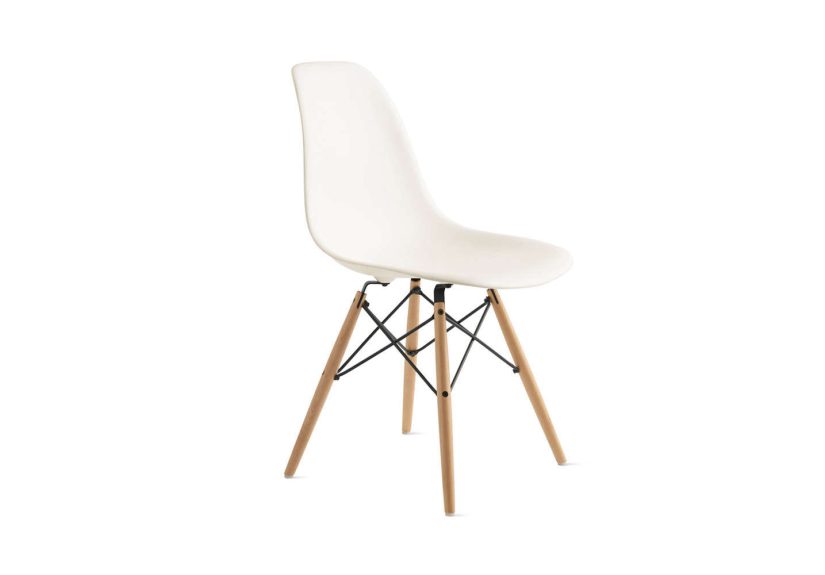
The shell is the star. It is smooth, curved, and simple without being boring. It hugs the back enough to feel supportive, yet it still looks visually light. That balance is harder to achieve than it seems. Plenty of chairs are comfortable but bulky. Others are sleek but feel like a punishment from a stylish uncle. The Eames shell lands in the sweet spot.
The Base
The dowel-leg base is where the chair gets much of its charm. Unlike the wire base, which leans more industrial, the dowel base introduces warmth, texture, and a slightly more organic presence. The crossed steel supports keep the structure strong, while the wooden legs add softness. The result feels architectural but never cold. It is almost like the chair is wearing loafers instead of dress shoes: still sharp, just easier to live with.
The Scale
One reason this chair works so well in smaller spaces is its footprint. The current dowel-base version sold through major authorized retailers is listed at about 31.5 inches high, 17.75 inches wide, and 20.875 inches deep, with a seat height around 17 inches. That is a very manageable size for apartments, breakfast corners, or rooms where every inch matters and you do not want your dining chairs to look like they are staging a coup.
Materials, Sustainability, and Modern Updates
One of the most interesting parts of the chair’s ongoing story is how the material has evolved. Current versions are available in recyclable polypropylene and, in many configurations, post-industrial recycled plastic. That matters because it keeps the chair aligned with the Eameses’ original habit of improving a design as materials and manufacturing techniques improve. This is not a design that survives by staying frozen in amber. It survives by adapting intelligently.
Modern shells also come in a range of colors, from classic neutrals to richer tones that can add personality without overwhelming a room. If you want a chair that disappears politely into a minimal dining setup, there is a version for that. If you want one that gives your space a little punch, there is usually a version for that too. The chair’s silhouette is strong enough to handle bold color without losing its identity.
That is part of the genius here: even with updates in finish and material, the essential character remains instantly recognizable. It still looks like an Eames shell chair. It still feels like a simple, smart answer to a universal seating problem. And that consistency is a big reason why the chair works for both committed collectors and people who simply want a handsome place to sit while eating spaghetti.
How Comfortable Is It, Really?
Let’s be honest: when people call a chair “iconic,” there is always a small fear that the chair is more famous than comfortable. Luckily, the Eames Molded Plastic Dowel-Leg Side Chair is not just a pretty profile. The shell has enough contour to support a relaxed seated posture, and the seat height works well with most dining tables and casual desks.
That said, context matters. This is a great chair for dining, reading, short-to-medium desk sessions, guest seating, and general everyday use. It is not trying to be a deeply padded recliner or a full ergonomic task chair with seventeen levers and a PhD in lumbar support. It is comfortable in the way a well-designed dining chair should be: supportive, balanced, and easy to sit in for a meal or a conversation without noticing every passing minute.
If you want extra softness, upholstered or seat-pad versions exist. But many people prefer the clean, original shell because it is easier to maintain and visually lighter. The choice really comes down to how you use the chair. For messy households, creative studios, or rooms that do double duty, the plain shell is often the more practical pick.
Where the Chair Works Best
Dining Rooms
This is where the chair feels most at home. Around a wood table, it creates that classic mid-century look without becoming too precious. Around a modern glass or lacquer table, it looks crisp and architectural. Around a vintage farmhouse table, it creates tension in the best possible way. Good furniture often thrives on contrast.
Home Offices
For a stylish desk setup used a few hours at a time, the chair works beautifully. It makes a home office feel less like a cubicle and more like part of the house. Just do not expect it to replace a fully adjustable ergonomic chair if your job involves marathon spreadsheet sessions and emotional negotiations with email.
Bedrooms, Entryways, and Corners That Need Help
This chair is also excellent as an accent piece. Put one in a bedroom corner with a throw and a small table, and suddenly the room looks intentional. Place one in an entryway, and it becomes a functional drop zone that still looks polished. Add a pair to a living room, and they can quietly pull a whole seating arrangement together.
How to Style It Without Making Your Home Look Like a Furniture Showroom
The easiest mistake with iconic furniture is overcommitting to one design era. If every piece in a room screams “mid-century modern,” the result can feel more staged than lived in. The smarter move is to let the Eames Molded Plastic Dowel-Leg Side Chair do what it does best: bridge styles.
Try pairing it with textured materials like linen, wool, oak, cane, leather, or plaster walls. It looks great next to simple ceramics, warm wood floors, and lighting that feels sculptural but not fussy. It can also handle modern contrast, such as black accents, stone surfaces, or minimalist shelving. The key is to give it room to breathe. This chair likes a clean silhouette around it, not a visual traffic jam.
If you are mixing dining chairs, the dowel-leg Eames is one of the safer icons to use because its shape is strong but not overbearing. It can sit at the ends of a table or mix with simpler side chairs without turning the room into a design lecture.
Buying Tips: How to Avoid a Regret Purchase
Because the chair is so famous, it is also heavily imitated. Some lookalikes are merely inspired by it. Others are trying very hard to pass as the real thing while quietly hoping nobody checks. If authenticity matters to you, buy from an authorized source and verify the manufacturer. In the United States and most markets outside Europe and the Middle East, Herman Miller is the authorized manufacturer. In Europe and the Middle East, that role belongs to Vitra.
If you are shopping secondhand, ask about labels, receipts, provenance, and overall construction quality. An authentic chair should not feel flimsy, oddly proportioned, or cheaply finished. Pay attention to the shell texture, the base quality, and the details where materials meet. Iconic furniture usually reveals itself in the engineering, not just the silhouette.
It is also worth deciding what you want from the chair before you buy. Are you choosing it for daily dining use, occasional desk work, or purely as a design object? Do you need the easy-clean plastic shell, or would a seat pad make your life better? Do you want the warmth of walnut-like tones, a lighter oak look, or a painted finish that blends into a brighter room? Asking these questions first helps you choose a version you will still love once the “new chair glow” wears off.
Care and Maintenance
The care routine is refreshingly normal. For the plastic shell, a soft cloth with mild detergent and warm water usually does the trick. Avoid solvents and abrasive cleaners. For the metal parts, gentle cleaning is again the move. For the wood dowel base, regular dusting and occasional wood-safe cleaning help preserve the finish. In plain English: do not attack it like you are cleaning a grill grate.
That ease of maintenance is one reason the chair remains practical. It is stylish, yes, but it is not fragile in the way some statement furniture can be. It was designed to be used, not admired from a respectful distance like a fussy relative’s crystal bowl.
Is the Eames Molded Plastic Dowel-Leg Side Chair Worth It?
If you value design history, flexible styling, and a chair that can move through different homes and phases of life without losing relevance, yes, it is worth serious consideration. You are not just paying for a recognizable silhouette. You are paying for a design that has proved, over many decades, that it can stay useful while the world around it changes.
It is not the cheapest seating option on the market, and it is not trying to be. But it offers something many cheaper chairs cannot: long-term visual stamina. Plenty of trend-driven chairs look exciting for one season and tired by the next. The Eames dowel-leg side chair still looks right because it was never based on a fad in the first place.
Real-Life Experiences With the Eames Molded Plastic Dowel-Leg Side Chair
Living with this chair is a little different from merely admiring it online. In photos, it reads as sleek, controlled, and distinctly “designer.” In daily life, it tends to feel friendlier than expected. The first thing many people notice is that the chair does not dominate a room. Even when you use several around a dining table, they keep the space visually open. That makes a genuine difference in apartments, compact dining areas, or homes where the dining zone shares airspace with the kitchen and living room.
The second thing people tend to notice is how easy it is to move. The dowel-leg version has enough substance to feel stable, but it is still light enough that pulling it out for guests or sliding it into another room does not feel like a minor strength-training challenge. That flexibility matters more than people think. A chair that can migrate from dining table to desk to bedroom corner becomes part of how a home actually functions.
There is also a pleasant tactile surprise to the chair. The shell does not have the heavy visual softness of an upholstered chair, so some people expect it to feel harsher than it does. In reality, the curved seat and back create a comfortable, supported posture for everyday use. For casual breakfasts, weeknight dinners, game nights, and the occasional “I’ll just answer one email here” moment, it performs very well. It feels composed rather than overstuffed, which many people end up preferring.
In family homes, the chair often earns bonus points because it is easy to clean. Crumbs, fingerprints, and the mysterious evidence left behind by children or enthusiastic snackers are far less dramatic on a molded shell than on fabric upholstery. In creative spaces, that same practicality helps. Paint flecks, pencil marks, dust, and the general chaos of making things are easier to manage when your chair is not absorbing every event like a witness in a crime documentary.
Aesthetic experience matters too, and this chair delivers there in a very specific way. It has presence, but it is not loud. When paired with wood furniture, the dowel legs echo the warmth around them. When paired with more modern pieces, the wood keeps the chair from feeling cold. This balancing act is probably why so many people keep the chair for years even as they change homes, paint colors, rugs, tables, and entire personal identities. It can roll with a lot.
Of course, real-life use also reveals its limits. If someone wants plush, sink-in comfort for long sitting sessions, this is not that chair. If someone needs highly adjustable ergonomic support for all-day office work, this is not pretending to be that either. But for people who want a beautiful, durable, versatile chair that performs well in the rhythm of normal life, the experience is often exactly what they hoped for. It feels like owning a classic that still knows how to show up for modern living.
Final Thoughts
The Eames Molded Plastic Dowel-Leg Side Chair has lasted because it gets the big things right: shape, proportion, comfort, adaptability, and character. It carries serious design history without feeling dusty, and it brings visual polish without becoming impractical. That is a rare combination.
If you want a chair that can serve as dining seating, accent furniture, casual workspace support, and an enduring design statement, this one makes a strong case for itself. It is one of those designs that reminds you good furniture does not have to shout. Sometimes it just quietly makes every room look smarter.