Table of Contents >> Show >> Hide
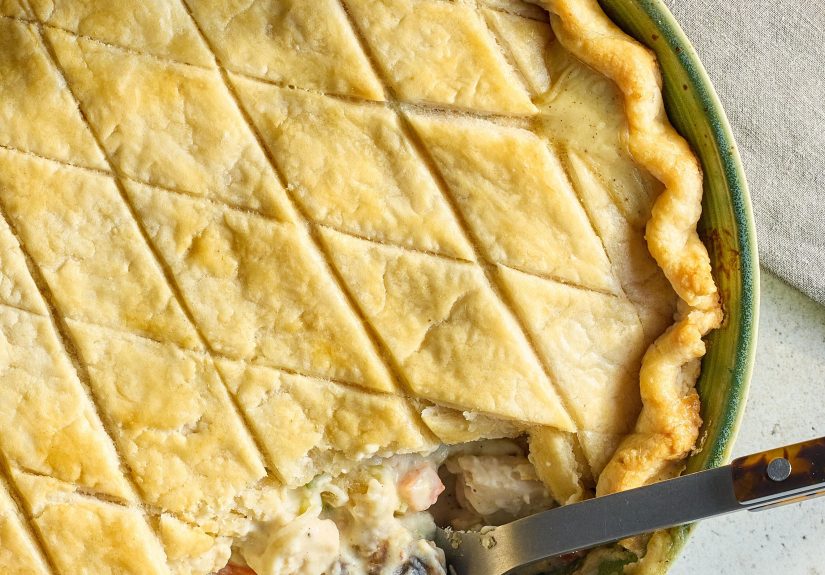
If regular chicken pot pie is a cozy sweater, a deep-dish chicken pot pie is the full-on weighted blanket:
thicker filling, taller sides, and a golden crust that shatters like it’s auditioning for a snack commercial.
This is the kind of dinner that makes people wander into the kitchen “just to check something” and accidentally leave with a fork.
Below you’ll get a foolproof, from-scratch-but-not-fussy deep-dish chicken pot pie recipe with a rich,
creamy filling (not gluey), vegetables that still taste like vegetables (not boiled memories), and a top crust that stays flaky
instead of soggy. I’ll also include smart shortcuts, make-ahead options, and troubleshootingbecause pot pie is comfort food,
not a pop quiz.
Why Deep-Dish Works So Well
A deep-dish pot pie isn’t just “more pie.” The extra depth changes the whole vibe:
more creamy filling per bite, a sturdier structure that slices cleanly, and a longer bake that lets the top crust brown
without rushing the filling. Plus, deep-dish is forgivingtiny mistakes get lost in the delicious chaos (like wearing
sunglasses indoors… but for dinner).
Deep-dish success formula
- Thick filling: The sauce should coat a spoon and slowly drip, not pour like soup.
- Hot filling + cold crust: Temperature contrast helps prevent sogginess.
- Vents + egg wash: Steam needs an exit; your crust needs a glow-up.
Equipment You’ll Need
- Deep-dish pie plate (9-inch, about 2 inches deep) or a similar deep baking dish
- Large skillet or Dutch oven for the filling
- Whisk (for a smooth sauce)
- Rolling pin (or a clean bottleno judgment)
- Sheet pan (to catch drips; your oven deserves kindness)
Ingredients
This recipe makes one generous deep-dish pie that feeds about 6 hungry people (or 4 people who “just want a small slice”).
You can use store-bought pie crust, homemade dough, or puff pastry on topoptions are good.
For the chicken
- 3 cups cooked chicken, shredded or diced (rotisserie chicken is the weeknight MVP)
- 1 1/2 cups chicken broth (low-sodium preferred)
For the filling
- 4 tablespoons unsalted butter
- 1 medium yellow onion, diced
- 2 carrots, diced (about 1 cup)
- 2 celery stalks, diced (about 3/4 cup)
- 3 cloves garlic, minced
- 1/3 cup all-purpose flour
- 1 1/4 cups whole milk (or 2% milk)
- 1/2 cup heavy cream (optional but very “deep-dish energy”)
- 1 cup frozen peas
- 1/2 cup frozen corn (optional)
- 1 teaspoon kosher salt (adjust to taste)
- 1/2 teaspoon black pepper
- 1/2 teaspoon dried thyme (or 1 teaspoon fresh thyme leaves)
- 1/4 teaspoon dried rosemary (optional, but great if you like that “Sunday roast” aroma)
- 1 tablespoon fresh parsley, chopped
- 1 teaspoon lemon juice (optional, for brightness)
For the crust
- 1 to 2 pie crusts (store-bought refrigerated or homemade)
- 1 egg + 1 tablespoon water, whisked (egg wash)
- Flaky salt (optional, but highly recommended)
Optional flavor boosters
- 1/2 cup sliced mushrooms (sauté with the onion)
- 1/4 cup white wine (deglaze after vegetables soften)
- 1 teaspoon Dijon mustard (stirs in beautifully)
- 1/4 teaspoon smoked paprika (tiny amount, big personality)
Step-by-Step Instructions
1) Preheat and prep
- Preheat oven to 400°F.
- Place a sheet pan on the middle rack to preheat (this helps the bottom cook and catches spills).
- If using refrigerated crust, let it sit at room temperature for 10–15 minutes so it rolls without cracking.
2) Sauté the vegetables
- In a large skillet or Dutch oven over medium heat, melt the butter.
- Add onion, carrots, and celery. Cook 6–8 minutes until softened and lightly glossy.
- Add garlic and cook 30 seconds, just until fragrant (garlic burns fastlike it’s late for an appointment).
3) Build a silky sauce (no lumps, no stress)
- Sprinkle flour over the vegetables. Stir constantly for 1–2 minutes to cook off the raw flour taste.
- Slowly whisk in the broth, scraping the bottom. The mixture will thicken quicklythis is normal, not a crisis.
- Whisk in milk and (if using) cream. Bring to a gentle simmer.
- Simmer 3–5 minutes until the sauce thickens enough to coat a spoon.
4) Add chicken and finish the filling
- Stir in cooked chicken, peas, and corn.
- Season with salt, pepper, thyme, and rosemary.
- Turn off heat. Stir in parsley and lemon juice (if using).
- Let the filling cool 10 minutes. Hot filling is fineboiling-hot filling can steam your crust from below.
5) Assemble the deep-dish pie
- If using a bottom crust: fit one crust into a deep-dish pie plate, letting excess hang over the edge.
- Pour in the filling. It should be thick, mound slightly, and not slosh like soup.
- Top with the second crust (or puff pastry sheet). Trim excess and crimp edges to seal.
- Cut 5–6 slits in the top for vents. (Steam needs a door. Don’t trap it in there.)
- Brush with egg wash and sprinkle with flaky salt if you’re feeling fancy (you are).
6) Bake until golden and bubbling
- Place the pie on the preheated sheet pan.
- Bake at 400°F for 20 minutes.
- Reduce heat to 375°F and bake 25–35 minutes more.
- It’s done when the crust is deeply golden and you see thick bubbles rising through the vents.
- If the crust browns too fast, tent loosely with foil for the final 10–15 minutes.
7) Rest (the hardest step)
Let the pie rest 15–20 minutes before slicing. This gives the filling time to set so you get
neat slices instead of “delicious landslide.” It will still be hotpot pie has patience, not mercy.
Variations and Swaps
Puff pastry deep-dish chicken pot pie
Want maximum flake with minimum effort? Use puff pastry as the top only. Keep the filling in a dish (no bottom crust),
lay pastry over the top, tuck edges in, vent, egg wash, bake. Puff pastry browns quickly, so watch it like it owes you money.
Biscuits on top
For a “pot pie meets cobbler” situation, drop biscuit dough on top of the filling and bake until biscuits are cooked through.
This is chaotic-good comfort food.
Turkey deep-dish pot pie
Swap chicken for leftover turkey. Add a pinch of sage if you want that holiday vibe without the holiday schedule.
Extra-veg version
Add mushrooms, green beans, or diced potatoes. If using potatoes, par-cook them first so they don’t stay crunchy in a pie.
Dairy-light option
Use all milk (skip cream) and replace a portion of milk with extra broth. The filling will be a little less lush,
but still creamy and satisfying.
Make-Ahead, Freezing, and Storage
Make-ahead (best for sanity)
- Filling: Make up to 2 days ahead. Cool, refrigerate, and re-warm slightly before assembling.
- Assemble ahead: Assemble the pie, cover, refrigerate up to 24 hours, then bake (add 5–10 minutes).
Freezing
- Freeze unbaked: Assemble fully, freeze until solid, then wrap tightly. Bake from frozen at 375°F–400°F,
tenting if needed, until deeply hot and bubbling (often 75–95 minutes, depending on your dish). - Freeze baked leftovers: Cool completely, wrap slices, and freeze up to 2 months for best texture.
Storage and reheating
- Refrigerate: 3–4 days in an airtight container.
- Reheat: Oven or toaster oven at 350°F keeps the crust crisp. Microwave works, but the crust gets softer.
Troubleshooting (Because Life Happens)
My filling is runny
- Simmer longer before baking so the sauce thickens properly.
- Measure flour accurately; too little thickener makes a looser filling.
- Let the pie rest after bakingthis is when it sets up.
My crust is soggy
- Use a thick filling (not soup).
- Preheat the sheet pan so the bottom gets a head start.
- Consider top-crust-only if you consistently fight sogginess.
The top is brown but the pie isn’t bubbling
- Tent with foil and keep baking until you see thick bubbles through the vents.
- Deep-dish pies need time for the center to fully heat.
My crust cracked
- Crust too cold can crack while rollinglet it warm a few minutes.
- Patch cracks with extra dough; egg wash hides many sins.
FAQ
Can I use raw chicken?
It’s safer and more predictable to use cooked chicken (rotisserie, poached, or roasted).
If you want to cook chicken from scratch, simmer or roast it first, then use the broth/drippings for extra flavor.
The pie bakes long, but relying on raw chicken to cook evenly inside thick filling is a gamble you don’t need.
What’s the best chicken for pot pie?
Thigh meat stays especially juicy and flavorful, but breast works too. Rotisserie chicken is a great mix of both.
Use what you likethis isn’t a cooking show elimination round.
Should I do a bottom crust?
A bottom crust gives you that classic pie vibe, but it can soften under the filling. If you love crisp crust,
consider top-only (still called pot pieno one is calling the authorities).
How do I make it taste more “restaurant-level”?
Add one small upgrade: a splash of white wine, a spoon of Dijon, fresh thyme, or a squeeze of lemon at the end.
You’re aiming for balancerich, savory, and just bright enough to keep you reaching for bite #2.
Real-Life Experiences with Deep-Dish Chicken Pot Pie
Deep-dish chicken pot pie is one of those recipes that feels simpleuntil you make it once and realize it’s secretly a
little kitchen adventure. Not a scary one, more like a sitcom episode where everything works out in the last five minutes.
Here are the “this is what actually happens” moments that many home cooks run into, plus the easy fixes that turn them into wins.
First, there’s the steam situation. People often expect the crust to be flaky no matter what, then feel betrayed
when it gets soft underneath. The truth: deep-dish pies are steamy by nature because that filling is basically a warm hug with
a high moisture content. The experience changes when you vent the crust well, bake on a hot sheet pan, and keep the filling thick.
Once you see those sturdy bubbles puffing through the vents, you’ll understand why patience is the secret ingredient nobody lists.
Another common experience: the “my filling is too thick” panic. You stir the flour into butter, add liquid,
and suddenly you’re holding a spoon upright like it’s planted in wet cement. This is usually a temporary phaseonce the milk and broth
fully incorporate and you bring it to a gentle simmer, it loosens into a silky sauce. If it stays too thick, a splash of broth fixes it.
If it swings the other way and feels thin, you just simmer longer. Pot pie is surprisingly chill about course correction.
Then there’s the vegetable debate. Some people want their carrots soft and sweet, others want them with a little bite.
The deep-dish method gives you options: sautéing the carrots and celery first keeps flavor strong and texture controlled.
It’s also the moment when the kitchen starts smelling like you know what you’re doing (even if you’re still Googling “what is a roux”
with one hand).
The crust has its own set of real-life moments. One classic: the edge browning faster than the center.
It’s not youit’s physics. The rim is exposed and cooks quickly, especially in deep-dish. The solution is simple:
if the edges look perfect early, loosely cover them with foil. This tiny move feels like a pro trick because it is.
The other crust moment is the over-rolling problem. A thinner crust can bake up crispy, but it also tears more easily
and can look a little sad. Many cooks end up happier rolling to “just thin enough” rather than “paper thin.”
Remember: this crust is a roof, not a windowpane.
Deep-dish pot pie also creates the legendary resting-time temptation. You pull it out, it smells incredible,
and your brain says, “Slice it now,” while the pie says, “Give me 20 minutes or I will punish you with a molten flood.”
If you’ve ever cut too early, you know the filling runs like it’s late for a meeting. Resting isn’t about making it cool;
it’s about letting the starches set so the sauce holds together. Once you’ve had a clean slicecrust on top, creamy filling in the middle,
vegetables tucked in like they belongyou’ll start planning your timing around that rest like it’s a VIP guest.
Finally, there’s the deeply relatable experience of leftovers being even better. On day one, the crust is crisp and dramatic.
On day two, the flavors have mingled, the filling tastes more savory, and the whole thing feels like it was made by Past You,
who was apparently very considerate. Reheating in the oven keeps the crust lively, and suddenly a simple leftover slice feels like a reward.
That’s the magic of this recipe: it’s comfort food that keeps showing up for youlike a friend who brings snacks and doesn’t ask you to
explain your entire day first.
Conclusion
A great deep-dish chicken pot pie recipe is all about smart texture: a thick, creamy filling; vegetables with real flavor;
and a crust that bakes up golden, flaky, and proud of itself. Once you nail the sauce thickness and give the pie a proper rest,
you’ll have a comfort-food classic that works for weeknights, weekends, and “I need something cozy immediately” situations.