Table of Contents >> Show >> Hide
- What Is David Mellor’s Knife Block, Exactly?
- Why This Knife Block Stands Out
- How It Performs in a Real Kitchen
- Knife Block vs. Magnetic Strip vs. Drawer Storage
- The Main Drawbacks to Know Before You Buy
- How to Care for David Mellor’s Knife Block
- Who Should Buy David Mellor’s Knife Block?
- Final Thoughts
- Experience-Focused Reflection: What Living With David Mellor’s Knife Block Feels Like
Some kitchen tools are gloriously practical. Others are shamelessly pretty. A rare few manage to be both, which is exactly why David Mellor’s knife block still gets people doing that slow nod usually reserved for great coffee and surprisingly good airport sushi. It is not just a place to park your chef’s knife. It is a small lesson in how thoughtful design can make an everyday object feel calmer, sharper, and far less annoying to live with.
That is the real appeal here. In a world full of bulky, awkward knife blocks that hog counter space like they pay rent, David Mellor’s version feels edited. Cleaner. More architectural. Less “bonus item from a 14-piece knife set” and more “someone actually thought about this.” And that matters, because knife storage is not only about looks. It affects blade protection, kitchen workflow, safety, maintenance, and whether your counter feels curated or cluttered.
This article takes a close look at what makes David Mellor’s knife block so compelling, where it fits in a modern kitchen, how it compares with other knife storage solutions, and why design-minded cooks keep coming back to objects like this. We will also talk honestly about the trade-offs, because good design deserves praise, but not blind worship. Even a beautiful knife block should still earn its spot beside the cutting board.
What Is David Mellor’s Knife Block, Exactly?
David Mellor is one of the best-known names in British tabletop and kitchen design, with a reputation built on modern cutlery, disciplined craftsmanship, and the idea that useful objects should also be elegant. The company’s creative direction later passed to Corin Mellor, who expanded the range with kitchen knives, woodware, and related accessories. Within that design language, the knife block feels perfectly on brand: restrained, practical, and visually crisp without drifting into showroom nonsense.
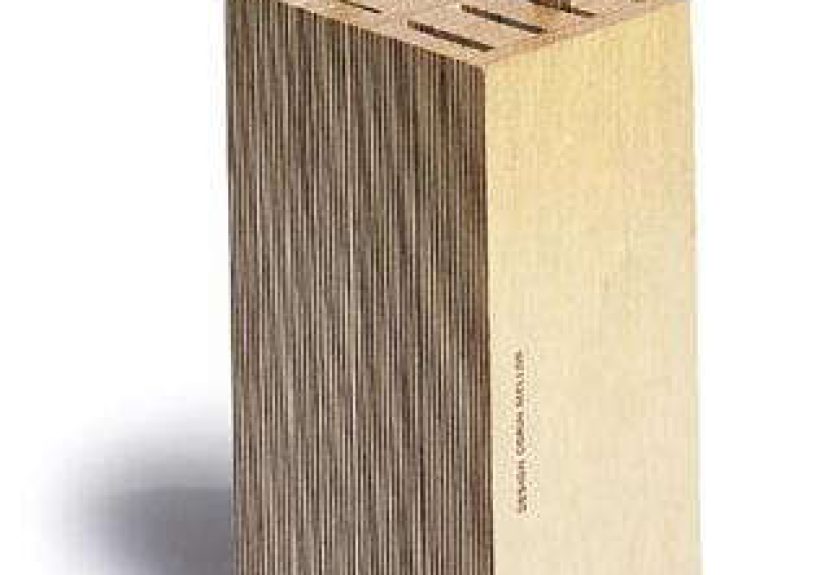
The product itself has been offered in more than one version. The smaller block is widely described as a satin-lacquered birch plywood design with space for up to 11 knives plus a sharpening steel. It has a compact footprint and a tall, narrow profile that helps it read more like a designed object than a chunky utility box. Larger versions have also been described in oak and in configurations that accommodate more of the David Mellor kitchen knife range. In plain English: this is not a random slab with slots. It is a considered storage piece designed to work with a serious knife collection.
That combination of materials and proportions is part of the charm. Birch plywood brings a modernist, slightly graphic look that feels clean rather than rustic. Oak, especially with an oiled finish, brings warmth and quiet luxury. Both materials fit the David Mellor world nicely: honest, durable, tactile, and never flashy in a look-at-me way.
Why This Knife Block Stands Out
1. It looks designed, not merely manufactured
Many knife blocks are functional in the same way a folding chair is functional. They work, technically. But nobody is writing poetry about them. David Mellor’s knife block stands out because it has shape, rhythm, and restraint. The lines are neat, the silhouette is compact, and the wood finish gives it that rare quality of feeling warm and precise at the same time.
This matters more than people admit. Kitchen counters are visual real estate. Every object left out competes for attention. A badly designed knife block can make a polished kitchen feel crowded. David Mellor’s version earns its visibility. It reads almost like sculpture, which is why it appeals not only to cooks but to design-conscious homeowners who want their working kitchen to still look grown-up.
2. It makes storage feel intentional
A good knife block should protect blades, organize tools, and make grabbing the right knife feel natural. David Mellor’s design leans into that principle. It is made for people who want knives grouped, upright, and easy to reach without turning the counter into a hardware aisle. There is a sense of order built into the object. Your knives are not hiding in a drawer. They are also not hanging on a wall like tiny culinary trophies. They are simply where they should be.
3. It fits the “buy fewer, better things” mindset
One reason this knife block resonates is that it belongs to a broader philosophy of kitchen buying: fewer objects, better materials, longer lifespan. It pairs especially well with a curated knife collection rather than an oversized gift-box set. If you own a chef’s knife you love, a serrated knife you actually use, a paring knife that earns its keep, and a few supporting blades, a design-forward block makes sense. It feels deliberate instead of excessive.
How It Performs in a Real Kitchen
On a practical level, David Mellor’s knife block works best for people who want countertop access and do not mind giving a storage object permanent visibility. That is an important distinction. Some home cooks want knives hidden away in a drawer. Others want them instantly accessible during prep. This block is clearly aimed at the second group.
Its tall, compact shape also helps it behave better on the counter than many traditional slanted knife blocks. Those angled models can sprawl across the workspace and feel oddly bossy, as if your onions now need permission to be chopped nearby. David Mellor’s block tends to look tidier and more vertical, which makes it easier to integrate into a kitchen without visually flattening the whole room.
There is also the question of compatibility. Knife blocks can be frustrating when slot shapes are too brand-specific or overly rigid. A block works best when the knives you actually own fit naturally. That is why David Mellor’s knife block is most appealing to people who already own, or plan to own, knives within the brand’s ecosystem or similarly sized blades. If your collection is a cheerful mess of oversized Japanese gyutos, one massive cleaver, three random hand-me-down steak knives, and a bread knife that could double as a canoe paddle, your mileage may vary.
Knife Block vs. Magnetic Strip vs. Drawer Storage
Here is where the conversation gets interesting. U.S. kitchen experts often favor magnetic strips or in-drawer systems because they can be easier to clean, more flexible, and sometimes gentler on blade edges when used correctly. Magnetic storage also keeps knives visible and dry, while drawer docks and edge guards are strong choices for households that want sharp tools tucked safely away.
So does that mean David Mellor’s knife block is automatically the wrong answer? Not at all. It just means the best knife storage depends on what you prioritize.
Choose David Mellor’s knife block if you value:
Design presence, countertop access, a more traditional grab-and-go experience, and a storage object that looks as refined as the knives themselves. It is especially appealing if your kitchen leans modern, minimal, or quietly luxurious.
Choose a magnetic strip if you value:
Maximum visibility, space-saving wall storage, flexibility across knife shapes, and easy drying. Magnetic systems are popular for good reason, though they require proper technique to avoid chipping or dragging the blade against the surface.
Choose drawer storage if you value:
Clean counters, hidden organization, child-conscious setups, and flexibility. A cork-lined in-drawer dock or quality edge guards can be a smart, efficient alternative, especially in smaller kitchens.
The honest take is this: David Mellor’s knife block is not the universal winner for every home. It is the elegant winner for a specific type of home cook, the one who wants tools to work well and look excellent doing it.
The Main Drawbacks to Know Before You Buy
Let us not pretend any knife block is above criticism just because it has nice cheekbones. Traditional knife blocks come with a few common issues, and David Mellor’s is not magically exempt from physics or crumbs.
It still takes counter space
Even a compact block occupies room. If your kitchen is tiny or your prep area already feels crowded, any countertop storage piece can become one object too many. Beautiful clutter is still clutter. It just wears better shoes.
It still needs cleaning
Knife blocks can trap dust, crumbs, and moisture inside their slots. That means care matters. If knives go in wet, the interior can become a less-than-charming little ecosystem. Not exactly the mood you want next to your fresh basil.
Improper use can affect the blade
As with other knife blocks, how you insert and remove the knife matters. Sliding the sharpened edge against wood can gradually contribute to dulling. This is not a reason to panic and switch to butter knives forever, but it is a reason to handle storage thoughtfully.
How to Care for David Mellor’s Knife Block
If you are going to invest in a design-driven wood knife block, treat it like a working object with standards. Fortunately, maintenance is not difficult.
Keep the knives dry before storing
This is the golden rule. Hand-wash your knives, dry them thoroughly, and only then return them to the block. Moisture is the enemy of both wood storage and blade longevity.
Use blade-friendly insertion
If the block is vertical, insert knives in a way that minimizes the edge scraping against the wood. Many cooks follow the upside-down or spine-conscious approach for this reason. The goal is simple: protect the edge, do not grind it against the slot like you are filing taxes with a chef’s knife.
Clean the block periodically
Empty it out, shake loose debris free, wipe down the exterior, and clean the slot area carefully. Let it air-dry fully before the knives go back in. With wood finishes, avoid soaking, aggressive chemicals, or anything that turns “light maintenance” into “unexpected restoration project.”
Match the block to the knives you actually use
A knife block works best when it reflects your real kitchen habits. Do not force a dozen blades into your life just because the block can hold them. A beautiful storage piece should support your cooking routine, not audition you for a role as a televised knife collector.
Who Should Buy David Mellor’s Knife Block?
This piece is a strong fit for home cooks who appreciate modern design, prefer wood over cold metal storage, and want their kitchen tools to contribute to the room aesthetically. It also makes sense for people building a refined, medium-size knife collection instead of relying on bargain-bin set logic.
It is especially right for you if you love objects that feel calm and permanent. David Mellor’s knife block does not scream trend. It whispers competence. That tends to age very well.
It may be less right for you if you are extremely tight on counter space, prefer hidden storage, own an irregular mix of large specialty knives, or simply want the most flexible blade-protective option possible at the lowest cost. In that case, a magnetic strip, drawer dock, or edge guard system may fit your life better.
Final Thoughts
David Mellor’s knife block is compelling because it solves a practical problem without looking overly practical. It protects and organizes knives, yes, but it also elevates the visual tone of the kitchen. That is not a minor thing. A kitchen is one of the most used rooms in a home, and objects you touch every day should ideally do more than just exist. They should assist. They should age well. They should make the room feel better, not busier.
That is where this design succeeds. It offers the warmth of wood, the discipline of modern form, and the quiet confidence of an object made by people who understand that usefulness and beauty should not be separated by a custody agreement. Is it the only smart knife storage option? Absolutely not. Is it one of the most appealing for cooks who care about both design and daily use? Very much yes.
If your kitchen philosophy is “keep the good things visible, use them often, and do not buy ugly junk just because it is technically functional,” David Mellor’s knife block makes a persuasive case for itself. It is storage, certainly. But it is also a small vote for living with better objects.
Experience-Focused Reflection: What Living With David Mellor’s Knife Block Feels Like
Living with a knife block like this is less about dramatic transformation and more about the slow accumulation of small satisfactions. On day one, you notice the visual calm. It does not shout from the counter. It simply belongs there, like it arrived with the kitchen rather than being tossed in as an afterthought. That matters more than most people expect. Kitchens are busy rooms. They collect utensils, bowls, mail, charging cables, grocery lists, and the occasional mysterious avocado that seems to have rolled in from another dimension. An object that quietly restores order earns its keep very quickly.
Then there is the tactile part. Reaching for a knife from a well-made block feels different from fishing through a drawer or pulling one from an overstuffed set. The motion is smoother and more deliberate. You know where the knife is. You know where it goes back. That sounds almost laughably minor until you cook several times a day and realize how many kitchen frustrations come from tiny moments of friction. Good design removes those moments one by one.
There is also a psychological effect. A refined knife block nudges you toward taking better care of your tools. You are more likely to dry the blade properly. More likely to put the knife back in the right place. More likely to keep the counter around it tidy, because somehow the block makes chaos look even more offensive than usual. It becomes an anchor point for better habits, which is not bad work for a piece of wood.
And yes, there is pleasure in the appearance. Guests notice it. Not in a loud, “tell me everything about your storage system” way, but in that subtle glance people give when something in a kitchen looks unusually considered. It suggests that the room has been edited, that the owner cares about utility but also atmosphere. The block helps create a kitchen that feels intentional rather than assembled from emergency purchases and late-night checkout carts.
Over time, the experience becomes even more tied to rhythm. Morning fruit. Midday sandwich prep. Weeknight chopping. Weekend cooking that starts as “I will just make pasta” and ends three hours later with roasted tomatoes, too many herbs, and a sink full of ambition. Through all of it, the knife block becomes one of those steady background objects that quietly improves the flow of the room. You stop thinking of it as décor and start thinking of it as infrastructure, just nicer-looking infrastructure than most people get.
Of course, living with it also teaches you responsibility. You learn that nice knife storage is not magic. Wet knives still need drying. Wood still needs care. Slots still need cleaning. But that maintenance does not feel like punishment. It feels like participation. The object gives something back, so you do not resent doing your part. In a strange way, that is the best compliment possible. David Mellor’s knife block does not merely hold your tools. It encourages a better relationship with them, and by extension, a better relationship with the act of cooking itself.