Table of Contents >> Show >> Hide
- What “The Stanford Way” Actually Means
- The Stanford Stack: Fundamentals, Systems, and Judgment
- Learn by Building: The “Do the Work” Culture
- Interdisciplinary by Default: Data Science Isn’t a Solo Sport
- Human-Centered AI: The Stanford Way Includes Ethics on Purpose
- Stanford’s Signature Moves (That You Can Copy)
- A Concrete Example: A Stanford-Style Recommendation Project
- Common Pitfalls Stanford Training Helps You Avoid
- How to Practice “Data Science The Stanford Way” Without Being on Campus
- Conclusion: The Stanford Way Is a Way of Thinking
- Real-World Experiences: What It Feels Like to Work “The Stanford Way”
Data science can feel like cooking without a recipe: you’ve got ingredients (data), heat (compute), and that one friend who insists “just add more deep learning” like it’s garlic. The Stanford way is the antidote to that chaos. It’s not a single tool or trendy model. It’s a disciplined approach to thinkingequal parts math, engineering, and human judgmentso your work holds up in the real world, not just in a demo that conveniently ignores edge cases.
If you’ve ever shipped a model that looked brilliant on a validation set and then immediately face-planted in production, congratulations: you’ve met the gap between “I ran a notebook” and “I did data science.” Stanford’s culture closes that gap by training you to reason from first principles, build end-to-end systems, and stay honest about uncertainty, bias, and impact. And yes, you’ll still use notebooksStanford just won’t let you hide behind them.
What “The Stanford Way” Actually Means
“The Stanford way” is a shorthand for how Stanford tends to teach and practice data science across departments: rigorous foundations, practical implementation, and a strong bias toward interdisciplinary, real-world problem solving. It’s a mindset that treats data science like an engineering discipline with scientific standardshypotheses, measurement, reproducibility, and careful interpretationnot as a magic trick where a model spits out truth.
In practice, that means you learn to answer questions like: What exactly are we predicting? What does success mean? What could go wrong? And the most Stanford question of all: “How do we know?”
The Stanford Stack: Fundamentals, Systems, and Judgment
1) Fundamentals: Probability and Statistics Without the Fairy Tales
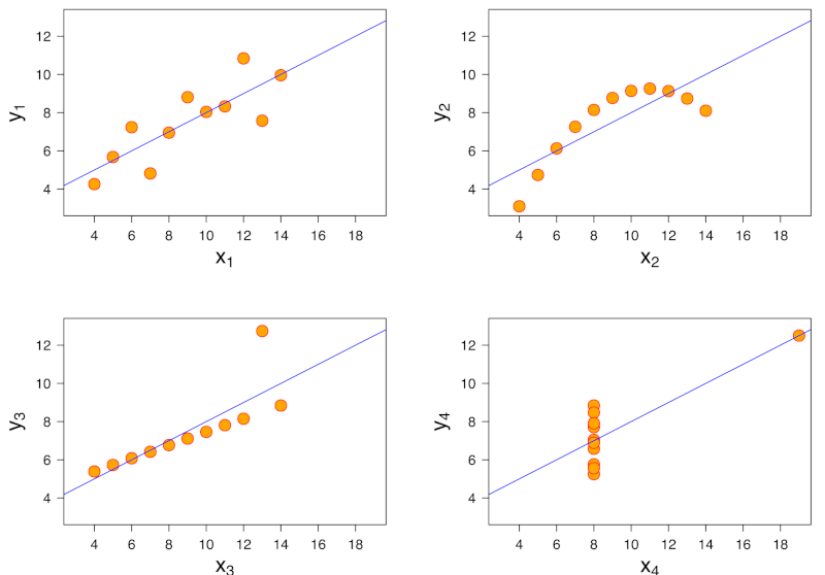
Stanford’s data science DNA starts with probability, statistics, and inference. Not “memorize a formula” statsstats that teaches you to reason about randomness, quantify uncertainty, and avoid fooling yourself with accidental patterns. You learn why the average can be a liar, why variance is a drama queen, and why correlation is the friend who shows up to every party but doesn’t actually pay rent.
This foundation matters because modern data work is full of uncertainty: noisy labels, missing values, confounded relationships, and shifting distributions. The Stanford approach trains you to treat uncertainty as a first-class citizen, not an inconvenient footnote. That’s how you move from “this model is accurate” to “this model is reliable under these assumptions, and risky under those.”
2) Systems: Data Science That Survives Contact With Reality
Stanford-style data science doesn’t end at “I trained a model.” It pushes you toward building pipelines and systems: data collection, cleaning, versioning, feature engineering, training, evaluation, monitoring, and iteration. You learn to think about data as infrastructurebecause in production, your model is often the easy part. The hard part is everything around it: the data contracts, the feedback loops, the compute constraints, and the operational “surprises” that arrive right after launch.
This systems-first mindset also shows up in computational programs that emphasize optimization, numerical methods, scalable computing, and the craft of making algorithms work on imperfect hardware with imperfect time and budgets. In other words: your code should run fast, fail loudly, and be explainable to the next person who inherits your repo.
3) Judgment: Choosing the Right Question and Owning the Consequences
The Stanford way is allergic to “model worship.” It trains you to think like a scientist and an engineer: define the question, choose metrics that match reality, and design experiments that can actually support your conclusions. It also trains you to be careful about ethicsprivacy, fairness, transparency, and downstream impactbecause data science is not morally neutral just because it uses math.
Put differently: Stanford wants you to be the person who can explain why the model works, when it will fail, and who might be harmed if you ship it anyway.
Learn by Building: The “Do the Work” Culture
Stanford’s learning culture is famously hands-on. The goal isn’t to turn you into a walking textbook; it’s to turn you into someone who can take a messy, ambiguous problem and produce something that works. That typically means lots of problem sets, real datasets, and projects where you have to make tradeoffs: accuracy vs. interpretability, speed vs. cost, complexity vs. maintainability.
- Projects that force decisions: You don’t just run algorithmsyou justify them.
- Evaluation that’s more than a single number: You learn to inspect errors, slice performance, and test robustness.
- Communication as a deliverable: Clear writing and clear visuals are treated as core technical skills.
A very Stanford move is to make you defend your approach as if you’re presenting it to a skeptical room. Because in industry and research, you will be.
Interdisciplinary by Default: Data Science Isn’t a Solo Sport
Stanford’s data science ecosystem spans everything from computer science and statistics to medicine, social science, education, and public policy. That interdisciplinary vibe isn’t just brandingit’s how problems actually work. Healthcare data doesn’t behave like ad-click data. Climate data doesn’t behave like product analytics. Social systems don’t behave like physics experiments. Different domains bring different constraints, failure modes, and ethics.
Newer academic pathways at Stanford explicitly reflect this reality, emphasizing that data science is both technical and social. You’re trained to collaborate with domain experts, understand context, and build solutions that respect real constraints: privacy laws, stakeholder incentives, data quality limits, and human behavior.
Why this matters
Many data science failures aren’t technicalthey’re contextual. A “perfect” model can still be useless if it answers the wrong question, violates trust, or can’t be deployed. Stanford-style training tries to prevent that by making context part of the job.
Human-Centered AI: The Stanford Way Includes Ethics on Purpose
Modern data science increasingly overlaps with machine learning and AI, which raises the stakes. Stanford’s human-centered AI perspective emphasizes that high performance isn’t enough. Models should be accountable, transparent where possible, and evaluated for real-world risks.
A practical way to think about this is lifecycle risk management: governance (who owns decisions), mapping (what the system is for and where it might cause harm), measurement (how you track performance and risk), and management (how you mitigate issues and improve over time). This framing pushes you to treat ethics like engineering: structured, continuous, and testablenot a last-minute slide.
Stanford’s Signature Moves (That You Can Copy)
Move #1: Start with the question, not the dataset
Stanford-style projects begin with crisp problem definitions. Instead of “Let’s predict something,” you define: the decision you’re improving, the user you’re serving, the constraints you must honor, and the metric that represents success. This prevents the classic trap where the model is technically impressive but strategically irrelevant.
Move #2: Treat baselines like sacred objects
Before you reach for anything fancy, you build baselines: simple heuristics, linear models, and interpretable methods that establish a meaningful yardstick. If your “amazing” neural network doesn’t beat a simple baseline in a fair comparison, that’s not a victory. That’s a very expensive vibe.
Move #3: Make evaluation multi-dimensional
The Stanford way doesn’t stop at overall accuracy or a single AUC score. It asks: How does performance vary across groups? How stable is it across time? What kinds of errors are most costly? How sensitive is the model to missing or shifted data? In short: you evaluate like someone who expects the world to be inconvenient (because it is).
Move #4: Communicate like your job depends on it (because it does)
Stanford culture prizes clarity. Great data scientists can translate complexity into decisions: crisp charts, honest caveats, and narratives that don’t oversell. A model you can’t explain to stakeholders is often a model you can’t deploy.
A Concrete Example: A Stanford-Style Recommendation Project
Let’s say you’re building a recommendation system for a learning platform. The goal isn’t “maximize clicks” in the abstract. Stanford-style thinking forces you to define the real objective: increase meaningful learning outcomes while avoiding harmful feedback loops (like recommending only easy content because it boosts short-term engagement).
Step 1: Define the decision and success metrics
- Primary metric: retention or course completion (with appropriate time windows)
- Secondary metrics: diversity of content, learner satisfaction, fairness across learner groups
- Guardrails: prevent repetitive or low-value recommendations
Step 2: Establish baselines
- Most popular content (simple, surprisingly strong)
- Recently viewed continuation
- Basic collaborative filtering
Step 3: Add modeling with clear assumptions
You might try matrix factorization or a sequence model, but you don’t just “train it and pray.” You document assumptions: what interactions mean, how you handle cold start users, and how you prevent leakage (like accidentally training on future behavior).
Step 4: Evaluate with slices and stress tests
- Performance by new vs. returning users
- Stability over time (does the model degrade after a month?)
- Fairness and representation (are certain topics systematically suppressed?)
Step 5: Operationalize
You set up monitoring: data drift, performance drift, and “silent failure” alerts. If the data pipeline breaks, you want your system to tell you before users do. That’s the Stanford way: assume failure, design for recovery.
Common Pitfalls Stanford Training Helps You Avoid
- P-value cosplay: doing statistics as theater instead of sound inference
- Leaderboard addiction: optimizing a metric without understanding real-world cost
- Data amnesia: forgetting where the data came from and what it represents
- Interpretability as an afterthought: realizing too late that nobody trusts your model
- Deployment denial: building a model with no plan for monitoring, retraining, or ownership
How to Practice “Data Science The Stanford Way” Without Being on Campus
You don’t need a Stanford ID card to adopt Stanford-grade habits. Here’s a practical blueprint:
Build the foundation (and actually understand it)
- Probability and statistics: uncertainty, inference, sampling, and causality basics
- Linear algebra and optimization: because models are math, not spells
- Programming and data systems: Python, SQL, version control, and reproducible workflows
Do end-to-end projects (not just model demos)
- Pick a real dataset with real messiness
- Write down assumptions and limitations up front
- Ship a minimal baseline, then improve systematically
- Include monitoring and a “what could go wrong” section
Adopt ethical and risk-aware habits
- Define stakeholders and potential harms
- Track fairness and privacy risks as part of the evaluation
- Make governance explicit: who decides, who maintains, who answers when things break
Conclusion: The Stanford Way Is a Way of Thinking
“Data Science The Stanford Way” isn’t a secret algorithmit’s a set of habits: strong fundamentals, systems thinking, careful evaluation, and human-centered responsibility. It’s what happens when you treat data science as both technical craft and applied science. The reward is work that lasts: models people can trust, systems that don’t crumble, and conclusions that stand up to scrutiny.
And if you’re wondering whether this approach is “too rigorous” for fast-moving teams, remember: nothing slows you down like shipping the wrong thing confidently. Stanford just helps you do the right thing confidently. Big difference.
Real-World Experiences: What It Feels Like to Work “The Stanford Way”
If you adopt the Stanford way in real life, the first “experience” you’ll notice is oddly emotional: you stop feeling impressed by your own model. That sounds like a bummer, but it’s actually a superpower. You start asking sharper questionsabout data quality, measurement, and impactso your confidence becomes earned instead of vibes-based.
The next experience is humility, delivered by the world’s most reliable professor: messy data. You’ll open a dataset expecting a clean table and discover it’s more like an archaeological site. Columns are mislabeled, timestamps are in three different formats, and “N/A” appears in seventeen creative spellings. The Stanford way trains you to treat this as normal, not as a personal attack. You learn to build a pipeline that validates inputs, documents transformations, and makes your work reproducible. Suddenly, “I can rerun this next month and get the same result” becomes a flex.
Then comes the experience of baseline shock. You spend an afternoon building a simple modelmaybe a regularized regression or a basic treeand it performs disturbingly well. This is the moment you realize two things: (1) a good baseline can save you weeks, and (2) complexity should be earned, not assumed. Stanford-style practice makes you oddly proud of simple solutions that are correct, explainable, and cheap to run. It also gives you permission to say, “We don’t need a neural network here,” which is the data science equivalent of refusing to bring a flamethrower to toast bread.
Another real experience: meetings become more useful. Not because meetings are inherently good (let’s not get carried away), but because you show up with structure. You bring a written problem statement, a metric definition, and a clear evaluation plan. Stakeholders can disagree with you, but now they’re disagreeing about something precise. Instead of “the model feels wrong,” you hear, “This metric doesn’t match our business goal,” or “This error type is unacceptable.” That’s progress. That’s alignment. That’s fewer late-night Slack debates fueled by screenshots.
You’ll also experience a new relationship with uncertainty. The Stanford way makes uncertainty explicit: confidence intervals, calibration curves, sensitivity analyses, and error bars that tell the truth. At first, it feels like you’re adding caveats and weakening your argument. In practice, you’re doing the opposite. Decision-makers trust you more because you’re honest about what the data can and can’t say. You become the person who can explain why performance dropped, whether it’s drift or a pipeline bug, and what the next experiment should be.
Finally, there’s the experience of responsibility. When you build systems that affect peoplerecommendations, risk scores, automated decisionsthe Stanford way nudges you to ask the questions that are easy to skip: Who is harmed when this is wrong? Who benefits when it is right? What happens when the data changes? You learn to treat governance and monitoring as part of “done,” not as an optional add-on. That experience can feel heavier, but it’s also what turns data science into a professional discipline rather than a hobby. The end result is work you can stand behindwithout needing to add “please don’t use this for anything important” in tiny font.