Table of Contents >> Show >> Hide
- Why CT Scans Matter So Much in Kidney Cancer
- So, How Accurate Is a CT Scan for Kidney Cancer?
- Detection vs. Diagnosis: They Are Not the Same Thing
- What Makes a CT Scan More Accurate?
- Where CT Scans Shine
- Where CT Scans Have Limits
- CT Scan vs. MRI vs. Ultrasound
- Can a CT Scan Miss Kidney Cancer?
- What Happens After a Suspicious CT Scan?
- What About Risks From the CT Scan Itself?
- A Simple Real-World Example
- The Bottom Line
- Patient Experience: What the CT Scan Journey Often Feels Like
- Conclusion
- SEO Tags
If you have been told you need a CT scan for a kidney mass, you are probably asking the same question almost everyone asks: How much can this scan actually tell us? Fair question. A CT scan is one of the most important tools doctors use when kidney cancer is suspected. It can often spot a tumor, estimate its size, show where it sits, and reveal whether it seems confined to the kidney or has spread nearby.
That said, a CT scan is not a crystal ball in a giant donut-shaped machine. It is excellent, but not perfect. It is very good at detecting many kidney tumors and very useful for staging cancer. It is less perfect when it comes to telling exactly what type of kidney mass is present or whether a small lesion is definitely benign or malignant without biopsy or surgery.
So the honest answer is this: CT scans are highly accurate for finding and evaluating many kidney tumors, but their accuracy depends on what question you are asking. Are you trying to detect a mass? Characterize it? Tell if it has spread? Distinguish a harmless growth from renal cell carcinoma? The answer changes slightly with each job.
Why CT Scans Matter So Much in Kidney Cancer
Kidney cancer is often found by accident. Someone has belly pain, back pain, blood in the urine, or even a completely unrelated issue like suspected kidney stones, and a scan picks up a kidney mass. This is one reason CT plays such a major role. It is fast, widely available, and extremely good at creating detailed images of the kidneys and nearby structures.
For suspected kidney cancer, CT helps doctors answer several practical questions at once:
- Is there a mass in the kidney?
- How large is it?
- Is it solid, cystic, or mixed?
- Does it appear to enhance with contrast, which can make cancer more suspicious?
- Is it invading nearby blood vessels or tissues?
- Are lymph nodes, lungs, or other areas involved?
That is why CT is often the workhorse of kidney cancer imaging. It gives doctors a map, not just a snapshot.
So, How Accurate Is a CT Scan for Kidney Cancer?
The best way to answer this is with a little nuance instead of a fake one-size-fits-all percentage. In real life, CT accuracy depends on:
- the size of the tumor
- whether the mass is solid or cystic
- whether the scan uses contrast
- whether a proper kidney mass protocol is used
- the radiologist’s experience
- whether the goal is diagnosis, staging, or surgical planning
In broad terms, CT is very strong at detecting suspicious kidney masses and very helpful for staging. Some imaging studies have reported high sensitivity and overall accuracy for renal tumor detection and characterization, especially when the tumor is not tiny and the scan is performed with the right protocol. But once you get into small renal masses, especially those under 4 centimeters, CT becomes less absolute. It can strongly suggest cancer, but it cannot always prove it.
That is the key distinction many patients miss. A CT scan may be accurate enough to guide treatment, yet still not be perfect at identifying the exact pathology before surgery. In other words, it can be very useful without being all-knowing.
Detection vs. Diagnosis: They Are Not the Same Thing
A CT scan can often detect a kidney mass and make it look suspicious for cancer. But diagnosis in the strictest sense means confirming what those cells actually are. That usually requires tissue from a biopsy or surgery.
Here is where kidney cancer gets a little medically dramatic. Unlike many other cancers, a biopsy is not always required before treatment. If imaging strongly suggests kidney cancer, doctors may feel confident enough to recommend surgery or surveillance based on the scan and the clinical picture. Final confirmation may come after the tumor is removed and examined by a pathologist.
So if someone tells you, “The CT scan shows kidney cancer,” what they often really mean is, “The imaging is highly suspicious for kidney cancer.” That is an important difference, and it explains why CT can be both highly trusted and still not be the final word.
What Makes a CT Scan More Accurate?
1. Contrast dye
Contrast-enhanced CT is often far more informative than a non-contrast scan for kidney masses. Doctors look at how the lesion behaves after contrast is given. A mass that enhances can raise suspicion for cancer. At some centers, an increase of more than 20 Hounsfield units after contrast is considered suspicious. That does not equal an automatic cancer diagnosis, but it is a meaningful clue.
2. A proper kidney mass protocol
A routine CT done for something else may accidentally find a kidney lesion. But a renal mass protocol CT is designed specifically to evaluate it. These studies often use multiple phases to better assess blood flow, enhancement, and local spread. Translation: a better protocol usually means a better answer.
3. Tumor size
Bigger tumors are generally easier to detect and characterize. Very small lesions can be trickier. Tiny masses may be hard to classify with confidence, and some can look annoyingly similar on imaging. This is one reason MRI is sometimes used as a problem-solving tool when CT leaves a few question marks on the page.
4. The type of lesion
Solid kidney masses tend to raise more concern for malignancy, but not every solid mass is cancer. Cystic lesions are their own adventure. Some are simple benign cysts that radiologists can dismiss with confidence. Others are complex cysts that need follow-up, further imaging, or treatment based on how suspicious they look.
Where CT Scans Shine
CT is especially good at showing the size, location, and anatomy of a kidney tumor. That matters because treatment planning depends heavily on those details. Surgeons want to know whether the mass is near major blood vessels, whether it sits at the edge of the kidney or deeper inside it, and whether a partial nephrectomy might be possible.
CT also does a strong job with staging. It can show enlarged lymph nodes, invasion into the renal vein or surrounding tissues, and possible spread to the lungs or other organs when chest imaging is included. This helps doctors decide whether surgery, biopsy, active surveillance, systemic therapy, or a combination makes the most sense.
In plain English, CT is not just looking for trouble. It is helping the medical team decide what kind of trouble, where it is, and what to do next.
Where CT Scans Have Limits
Now for the less glamorous but very important part: CT has blind spots.
Small kidney masses can be tricky
Small masses are common, and not all of them are aggressive cancers. Some benign tumors can mimic kidney cancer on imaging. For example, oncocytomas and certain angiomyolipomas can create diagnostic headaches. CT can strongly suggest one thing while pathology later reveals another.
Benign vs. malignant is not always obvious
This is the big reason accuracy is a nuanced topic. CT is good, but it cannot always cleanly separate a benign mass from renal cell carcinoma, especially in small enhancing lesions without classic features. That is why some patients are advised to get MRI, biopsy, repeat imaging, or surgery depending on risk and circumstances.
It cannot grade the cancer with certainty
A CT scan cannot reliably tell how aggressive a tumor is under the microscope. It may show suspicious features, but tumor grade and exact subtype are pathology questions. Imaging can point. Tissue confirms.
PET scans are not the hero here
People often assume PET scans must be better because they sound fancier. Not so fast. PET is not routinely used for many kidney cancers because it has limited sensitivity for detecting them. In this setting, CT usually remains the star player.
CT Scan vs. MRI vs. Ultrasound
CT is often the first choice, but it is not the only option.
CT vs. MRI
MRI may be used if a patient cannot receive iodinated contrast, has an allergy, has poor kidney function, or if the CT findings are inconclusive. MRI can also be especially helpful for very small lesions or complex cystic masses. In some studies, MRI has shown somewhat better diagnostic performance than CT for small renal masses, though both tests have limitations.
CT vs. Ultrasound
Ultrasound is useful, especially for spotting cysts and as an initial exam. But it is generally less detailed than CT for characterizing kidney cancer and staging it. Think of ultrasound as the scout and CT as the full investigative team with coffee, maps, and a flashlight.
Can a CT Scan Miss Kidney Cancer?
Yes, it can, although modern CT is very good. A scan may miss a very small lesion, a subtle lesion, or something that is difficult to distinguish from normal tissue or a benign abnormality. Accuracy can also be affected if the scan is not performed with a dedicated kidney protocol, if contrast cannot be used, or if motion or technical issues reduce image quality.
That is one reason doctors look at the whole picture. Symptoms, lab work, prior imaging, growth over time, and sometimes biopsy all help fill in the blanks. A single scan is powerful, but medicine rarely bets the entire farm on one image alone.
What Happens After a Suspicious CT Scan?
If a CT scan suggests kidney cancer, the next steps vary. Common possibilities include:
- more detailed imaging with a kidney mass protocol CT or MRI
- blood and urine testing
- chest imaging for staging
- biopsy in selected cases
- active surveillance for some small masses
- surgery or ablation if the mass appears clearly concerning
Not every suspicious mass leads straight to the operating room. Some small tumors grow slowly, and some patients are better served by monitoring than immediate treatment. The CT scan starts the conversation; it does not always end it.
What About Risks From the CT Scan Itself?
CT scans use radiation, and contrast dye is not risk-free. The good news is that for most adults, the benefit of an appropriate diagnostic CT scan outweighs the risk.
Still, it is smart to know the trade-offs:
- Radiation: There is a small risk associated with cumulative radiation exposure over time.
- Contrast reactions: Allergic reactions are rare, but they can happen.
- Kidney function concerns: Patients with severe kidney disease or very poor kidney function may need special consideration before receiving iodinated contrast.
If you have a history of contrast allergy, chronic kidney disease, or only one working kidney, tell your medical team before the scan. They have heard it before, and no, you will not be the “difficult patient.” You will be the prepared patient.
A Simple Real-World Example
Imagine a 58-year-old patient gets a CT scan for persistent flank pain. The radiologist sees a 3-centimeter enhancing mass in the kidney. The lesion is solid, lights up after contrast, and sits near but not inside the collecting system. There is no obvious spread, and chest imaging is clear.
In that scenario, the CT scan may be accurate enough to strongly suspect localized renal cell carcinoma and help a urologist plan surgery. But the exact subtype, grade, and final diagnosis still come from pathology after biopsy or removal. So the CT scan answers many critical questions, even though it does not answer every last one.
The Bottom Line
CT scan accuracy for kidney cancer is best described as highly useful, often very accurate, but context-dependent. It is one of the best tools for finding kidney tumors and determining how far disease may have spread. It can be accurate enough that treatment decisions are often made from imaging plus clinical judgment.
But CT is not perfect at distinguishing every benign mass from every cancer, especially when lesions are small or atypical. It also cannot replace pathology when doctors need a definitive tissue diagnosis, exact tumor subtype, or grade.
If you want the shortest honest answer possible, here it is: a CT scan is usually very good at showing whether a kidney mass looks suspicious and how extensive it appears, but it is not always the final word on exactly what that mass is.
That may not be the dramatic movie ending you were hoping for, but in medicine, accurate and honest beats dramatic every time.
Patient Experience: What the CT Scan Journey Often Feels Like
For many people, the experience begins long before they ever lie down on the scanner table. It starts with a phone call, a portal message, or a doctor saying, “We saw something on your kidney, and we want a CT scan.” That sentence can turn an ordinary Tuesday into a mental circus. Patients often describe the first reaction as a strange mix of disbelief and instant internet overconfidence. One minute they are Googling kidney cysts. Ten minutes later they are mentally rewriting their entire life plan.
Then comes the waiting. Waiting for the appointment. Waiting for contrast instructions. Waiting to hear whether they can eat, drink, take regular medications, or need lab work first. This part can feel more stressful than the scan itself. Many patients say the uncertainty is worse than the machine. The CT scanner is loud-ish and medical, sure, but the imagination is louder.
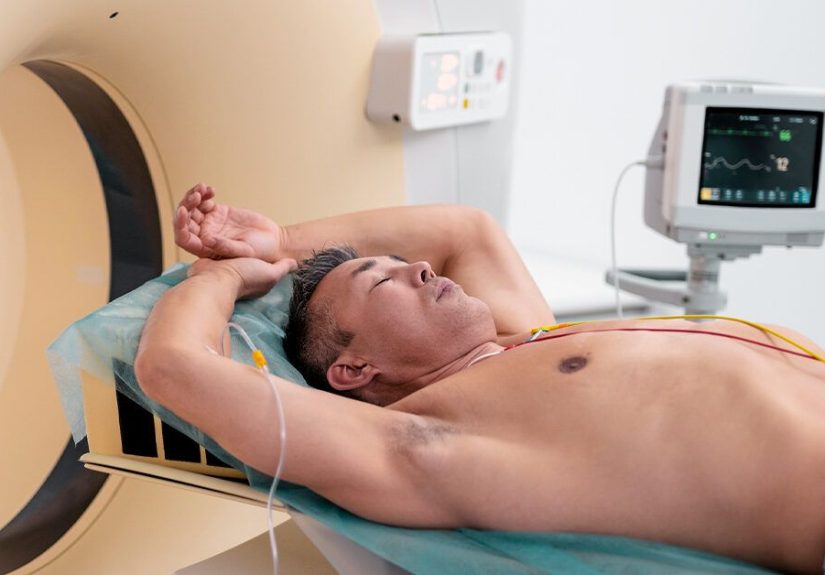
On scan day, the experience is usually more straightforward than expected. People often walk in bracing for a high-tech ordeal and instead find a fairly routine process. They change clothes, answer safety questions, and sometimes get an IV for contrast. When contrast is injected, patients frequently report a warm flushing feeling, a metallic taste, or the odd sensation that they suddenly need to sprint to the bathroom, even though they usually do not. It is weird, brief, and famously hard to explain without sounding like you are making it up.
Emotionally, the scan can feel oddly split in two. During the actual test, many patients become focused and practical. Hold your breath. Stay still. Follow instructions. Done. But once the scan is over, the emotional volume often comes back up. People start wondering what the radiologist saw, whether the doctor will call today, and whether “incidental finding” is a harmless phrase or a plot twist.
Patients also describe a surprisingly wide range of outcomes after a suspicious CT. Some hear that the lesion is likely a simple cyst and feel instant relief. Others are told the mass is indeterminate and need MRI, follow-up imaging, or biopsy. Some move quickly toward surgery. What stands out in patient stories is not just fear, but confusion. A scan can be very accurate and still leave room for next steps, and that can be hard to understand emotionally. Many people assume imaging should provide a yes-or-no answer. Instead, they get a medically sophisticated version of “this is concerning, and we need to learn more.”
Another common experience is discovering that kidney masses are often found by accident. People go in for stones, stomach pain, back pain, or something completely unrelated and come out with an unexpected kidney workup. That surprise factor can make the diagnosis process feel surreal. Patients often say the hardest part is not the scan itself, but adjusting to the fact that life has suddenly divided into “before the CT” and “after the CT.”
The reassuring part is that most patients find the process more manageable once they meet with a urologist or oncology team who can explain what the images actually mean. Clear communication tends to lower anxiety fast. When people understand whether the scan suggests a small mass, a complex cyst, a likely cancer, or a lesion that needs monitoring, the situation begins to feel less like a mystery and more like a plan.
Conclusion
CT scans remain one of the best tools for evaluating suspected kidney cancer because they do three important jobs well: they help detect many kidney tumors, help estimate how suspicious a mass looks, and help stage disease for treatment planning. Their biggest strength is not magic certainty. It is practical, high-value clarity. And in cancer care, that is often exactly what patients and doctors need most.