Table of Contents >> Show >> Hide
- Quick Answer: Yes, But It’ll Usually Cost You 3%
- How Using a Credit Card on Venmo Actually Works
- What It Really Costs: Fees, Cash Advances, and Interest
- Pros of Using a Credit Card on Venmo
- Cons and Risks of Using a Credit Card on Venmo
- Smart Ways to Use a Credit Card on Venmo (If You Really Want To)
- When a Bank Account or Debit Card Is the Better Choice
- Common Questions About Using a Credit Card on Venmo
- Real-World Experiences: What It Feels Like to Use a Credit Card on Venmo
- Conclusion
If you’ve ever tried to split dinner with friends or pay your roommate back for rent, chances are Venmo has popped up as the easiest solution. Then the next thought hits: “Can I just use my credit card on Venmo and earn some rewards while I’m at it?” It sounds clever… but is it actually a good idea?
The short answer: Yes, you can use a credit card on Venmo. The longer answer (and the one that saves you money) involves fees, possible cash advances, rewards math, and a few “gotchas” buried in the fine print of both Venmo’s policies and your credit card agreement.
Let’s walk through how it works, when it makes sense, and when you’re better off sticking with your bank account or debit card instead.
Quick Answer: Yes, But It’ll Usually Cost You 3%
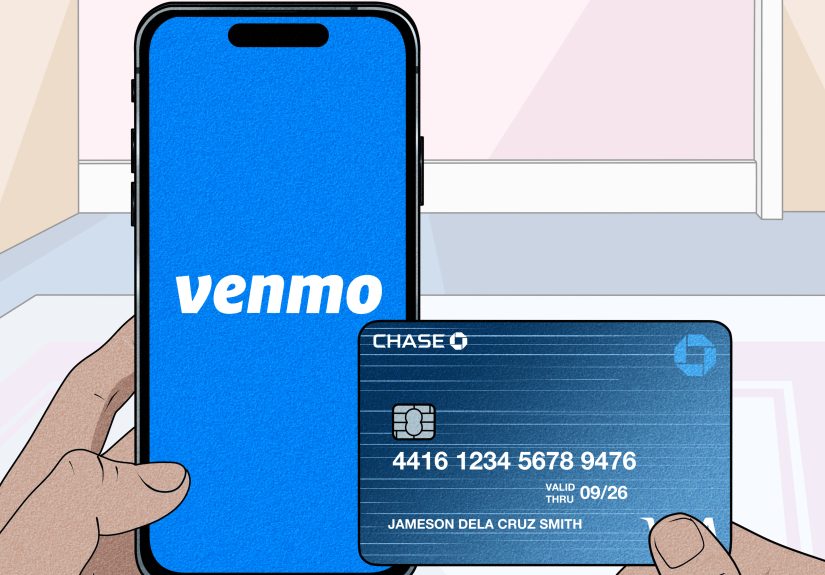
Venmo lets you add several types of funding sources to your account: a bank account, debit card, Venmo balance, and yes, credit cards. Once your card is linked, you can choose it as the payment method when you send money to friends, family, or some businesses.
Here’s the catch: Venmo typically charges a 3% fee when you send money using a linked credit card. This is clearly called out in Venmo’s fee schedulesending money to another Venmo user from a credit card is a “3.00%” type of transaction.
There are a few nuances:
- Paying friends or family with a credit card: Usually triggers that 3% fee.
- Paying a business that accepts Venmo directly at checkout: In many cases, you don’t pay a Venmo fee; the merchant pays processing costs behind the scenes.
- Using the Venmo Credit Card itself: That’s a separate product (issued by Synchrony) that earns rewards on purchases and can be used like a regular credit card in stores and online.
So yes, you can use a credit card on Venmobut in many person-to-person situations, you’re paying extra for the convenience.
How Using a Credit Card on Venmo Actually Works
Adding a Credit Card to Your Venmo Wallet
Linking a card is pretty straightforward. In the Venmo app:
- Open the app and go to the “Me” tab.
- Scroll to the Wallet section.
- Under Banks and Cards, tap to Add a bank or card.
- Select Card, then enter your credit card details or scan the card.
- Follow any verification prompts if Venmo needs to confirm the card.
Once it’s added, you can choose that credit card as the funding source each time you send money or pay a merchant.
Where You Can Use a Credit Card on Venmo
In practice, there are three main ways people use credit cards with Venmo:
- Person-to-person payments: Paying your roommate, splitting a restaurant bill, or covering group tickets.
- Paying businesses that accept Venmo: Many online retailers, apps, and even airlines like JetBlue now let you pay with Venmo at checkout, using any funding source connected to your Venmo account.
- Using the Venmo Credit Card: This is a standalone credit card with its own rewards structure (up to 3% cash back on your top spend categories). It lives inside your Venmo app, but it’s still a “normal” credit card you can tap in stores or add to Apple Pay or Google Pay.
What you can’t do is simply “load” your Venmo balance from a regular credit card like it’s an ATM. Venmo and card issuers see that as cash advancing, which can raise fraud and compliance flags.
What It Really Costs: Fees, Cash Advances, and Interest
The Standard 3% Credit Card Fee
Most consumer guides line up on this point: when you send money to another person using a credit card on Venmo, expect to pay about 3% of the transaction amount. Experian, CreditCards.com, Kiplinger, and other U.S. personal finance outlets all cite this same figure.
What does that look like in real life?
- $50 dinner reimbursement → about $1.50 in fees.
- $400 rent payment to a roommate → about $12 in fees.
- $1,000 large purchase or group trip → about $30 in fees.
If your credit card earns, say, 1.5% cash back, you’re paying 3% to get 1.5% back. That’s like paying $30 to earn $15 in rewards. Mathematically, that’s… not a flex.
The Hidden Danger: Cash Advance Treatment
Beyond Venmo’s own fee, there’s another layer: your credit card issuer might treat a Venmo transaction as a cash advance.
Some banks and issuersCiti, Chase, Barclays, Bank of America, Amex, and othershave been reported to treat certain peer-to-peer payments (including Venmo) as cash advances. When that happens, you can get hit with:
- A cash advance fee (often 3%–5% of the transaction, with a minimum dollar amount).
- A higher interest rate on that amount, often starting immediately with no grace period.
- Sometimes, no rewards on that transaction at all.
Venmo itself can’t tell you exactly how your bank will classify the transactionthat’s up to your card issuer. Venmo’s help pages specifically note that card issuers decide these fees and that you should check your card’s terms for details.
Rewards vs. Fees: Does It Ever Make Sense?
There are situations where using a credit card on Venmo might still be worth it:
- You’re working on a large sign-up bonus and absolutely need to hit a spending threshold.
- You’re using a high-rewards card that earns more than 3% in value and the transaction codes as a purchase, not a cash advance.
- You’re okay paying a small fee for short-term cash flow flexibility on a one-time basis.
But for day-to-day split-the-bill situations, that 3% fee often overwhelms whatever you’re earning. For most people, using a bank account or debit card is simply more cost-effective.
Pros of Using a Credit Card on Venmo
Let’s give credit cards their moment in the sun. There are some genuine upsides:
1. Rewards and Sign-Up Bonuses
If you’re a points-and-miles fan, Venmo can be a handy tool for hitting minimum spend requirements. Need to spend $4,000 in three months to earn that big travel bonus? Running a few large Venmo payments through a credit card might help you cross the finish lineas long as you understand the fees and cash advance risk.
2. Cash Flow Flexibility
In a pinch, using a credit card instead of draining your checking account can buy you a few weeks before your bill is due. That can be useful for big shared expenses like group trips, event tickets, or emergency repairs.
3. Purchase Protections
Depending on the card, you might get extra benefits like purchase protection, extended warranty, or dispute rights if something goes wrong when you pay a merchant through Venmo. Those protections usually don’t apply to simple “I paid my friend back” transfersbut they might help with business transactions where you used Venmo at checkout.
Cons and Risks of Using a Credit Card on Venmo
1. The 3% Fee Adds Up Fast
We’ve already talked about the math, but it’s worth repeating: 3% is a hefty cost for something that could be free with a bank account or debit card. Over a year of frequent use, you could easily burn hundreds of dollars on fees for everyday transfers.
2. Potential Cash Advance Charges
This is the big wild card. If your issuer codes Venmo transfers as cash advances, you’re looking at fees on top of fees, plus immediate interest at a higher rate. That’s a very expensive way to send moneyand one that can erase any rewards benefit entirely.
3. Easier to Overspend
Venmo already makes spending feel casualemoji, jokes in payment notes, and all that social feed energy. Add a credit card to the mix and it becomes even easier to say “sure, I’ll just put it on my card,” without thinking about your budget. That’s a recipe for surprise balances later.
4. Fraud and Scam Risk
Venmo has strong encryption and security features, but like any payment app, it’s a target for scammers. Consumer advocates and finance writers have warned that once money leaves your Venmo account, it can be very hard to get backespecially if you voluntarily sent it to a scammer.
Using a credit card doesn’t fix that problem; it just changes who you might need to fight with if something goes wrong (Venmo vs. your card issuer).
Smart Ways to Use a Credit Card on Venmo (If You Really Want To)
If you’ve read this far and still want to use a credit card with Venmo occasionally, here’s how to do it as safely and cheaply as possible:
- Use it rarely and intentionally. Save credit card payments for specific goals like hitting a sign-up bonusnot everyday transfers.
- Call or chat with your card issuer first. Ask how they code peer-to-peer app payments (like Venmo). If they consistently treat them as cash advances, don’t use that card with Venmo.
- Watch the rewards math. If the Venmo fee is 3% and your card earns 1.5%, you’re losing money. If you’re earning 5% or a big welcome bonus, it may be worth it on a limited basis.
- Pay your statement in full. Don’t let Venmo charges carry a balance with interestespecially if they’re coded as cash advances with higher APRs.
- Don’t “manufacture” cash. Avoid sending money to someone just so they can send it back and give you cash. That’s exactly the kind of behavior Venmo and issuers can flag as abuse or fraud.
When a Bank Account or Debit Card Is the Better Choice
For most people, the best way to use Venmo is still the boring way:
- Bank account: No Venmo fee for standard person-to-person payments.
- Debit card: Often no Venmo fee for sending money, plus the option for instant transfers (with a separate small fee if you need the money right away).
- Venmo balance: If someone pays you on Venmo, using that balance to pay someone else costs you nothing in Venmo fees.
Think of credit cards on Venmo as a tool in the toolboxnot the default hammer you use for every transaction.
Common Questions About Using a Credit Card on Venmo
Can I pay my credit card bill with Venmo?
Not directly. You generally can’t use Venmo to send money straight to your credit card company as a bill payment. And trying to “loop” money by paying someone with a credit card on Venmo so they can send it back to your bank is a great way to risk account reviews or bans.
Can I use a credit card on Venmo to pay rent?
Sometimes. If your landlord or property manager accepts Venmo, you could choose a credit card as the funding source. But be prepared for the 3% feeand the possibility your issuer treats it as a cash advance. For large recurring payments like rent, even a small fee adds up quickly.
Which credit cards can I use with Venmo?
Venmo generally accepts major network cards (Visa, Mastercard, American Express, Discover), subject to the usual verification and fraud checks. Some individual cards may have restrictions on peer-to-peer payments, so if a card keeps getting declined or coded as a cash advance, talk to your issuer.
Is it safe to use a credit card on Venmo?
Venmo uses encryption, multifactor authentication options, and other security measures, and credit cards add their own fraud protections. But safety also depends on behavior: only pay people you trust, verify usernames carefully, and beware of anyone asking you to send a payment “just to confirm it works.”
Real-World Experiences: What It Feels Like to Use a Credit Card on Venmo
All of this can sound abstract, so let’s look at how it plays out in real life for three different people.
Case 1: The Rewards Chaser
Alex is a points enthusiast working on a travel card that requires $4,000 in spending within three months to earn a huge bonus. He’s already put his normal expenses on the card, but he’s still $800 short with only a couple of weeks to go.
He decides to pay his roommate’s share of rent and utilities through Venmo, using his credit card as the funding source. The roommate pays Alex back via bank transfer later.
On the surface, it works: Alex hits the sign-up bonus and scores a big block of points worth several hundred dollars. But he also pays a 3% Venmo feeabout $24 on that $800and needs to pay attention to his statement to make sure the charges didn’t post as cash advances.
In this case, the math works because the bonus is large and one-time. But for everyday use, Alex knows the 3% fee would eat away at his rewards over time, so he goes back to using his bank account for typical Venmo transfers.
Case 2: The Surprise Cash Advance
Brianna uses Venmo to pay a friend back $500 for festival tickets. She thinks, “No big deal, I’ll just put it on my credit card and get some cash back.” She notices the 3% Venmo fee and shrugs it off as the cost of convenience.
When her credit card statement arrives, she gets an unpleasant surprise: the $500 Venmo payment is labeled as a cash advance, with a $20 cash advance fee and interest already charged from the day of the transaction. No rewards, no grace periodjust extra cost.
By the time she pays off the balance, that one Venmo payment has cost her far more than 3%. Brianna calls her credit card company and learns that all peer-to-peer payments are treated as cash advances on that particular card. Lesson learned: she removes the card from Venmo and switches to her bank account for future transfers.
Case 3: The Occasional “Safety Valve” User
Chris normally funds Venmo with his checking account. But one month, his car needs an unexpected repair and it throws his budget off. He needs to pay his friend $300 for a shared expense, but doesn’t want to completely drain his checking account days before payday.
He decides to use his credit card on Venmo just this once. He knows he’ll pay a 3% fee (about $9), but he’s okay with that tradeoff to keep some cushion in his bank account. He already confirmed with his issuer that Venmo payments on his card code as purchases, not cash advances.
As soon as payday hits, Chris pays his credit card in full so he doesn’t owe interest. For him, using a credit card on Venmo is an occasional “safety valve,” not a habit.
The Big Takeaway from These Stories
These three scenarios show the spectrum of experiences:
- Using a credit card on Venmo can be strategically smart when chasing a large bonus or managing short-term cash flow.
- It can be painfully expensive if your card treats Venmo as a cash advance and you don’t realize it until the bill arrives.
- For most day-to-day payments, it’s simply not worth the extra cost compared with using a bank account or debit card.
If you decide to link a credit card to Venmo, treat it like a power tool: incredibly useful in the right moments, but not something you want to swing around casually. Understand the fees, know how your card issuer behaves, and use it intentionallynot just because it feels easy in the moment.
Conclusion
So, can you use a credit card on Venmo? Absolutely. But should you? That depends on your goals, your card’s rules, and your tolerance for fees.
Most of the time, you’re better off sticking with a bank account, debit card, or Venmo balance for everyday transfers. When you do reach for a credit card, make sure it’s a deliberate move, not a reflex. Check your issuer’s policy on peer-to-peer apps, factor in the 3% Venmo fee, and always pay off your statement before interest kicks in.
Used wisely, a credit card on Venmo can be a helpful tool. Used casually, it’s just a more expensive way to send your money where it was going anyway.