Table of Contents >> Show >> Hide
- What Is a Blue Fluted Plain Plate?
- The Story Behind the Blue Fluted Plain Pattern
- Design Details That Make a Blue Fluted Plain Plate Stand Out
- Is a Blue Fluted Plain Plate Just Decorative, or Actually Practical?
- How to Style a Blue Fluted Plain Plate in a Modern Home
- What to Know Before You Buy a Blue Fluted Plain Plate
- How to Care for a Blue Fluted Plain Plate
- Why the Blue Fluted Plain Plate Still Matters
- Experiences With a Blue Fluted Plain Plate
- Final Thoughts
If you have ever looked at a plate and thought, “Well, that’s annoyingly elegant,” chances are you were staring at a Blue Fluted Plain plate. This iconic piece of porcelain has the rare talent of feeling both museum-worthy and surprisingly livable. It is refined without being stuffy, decorative without being loud, and classic without screaming, “My dining room has not changed since 1987.” In other words, it has range.
The Blue Fluted Plain plate is most closely associated with Royal Copenhagen, the Danish porcelain house whose blue-and-white tableware has been turning ordinary meals into minor occasions for centuries. At first glance, it is all delicate floral brushwork, crisp white porcelain, and softly sculpted fluting. Look a little longer, though, and you realize why this plate has stuck around while so many trendy tableware phases have come and gone. It is not just pretty. It is deeply considered design.
This guide takes a closer look at what makes a Blue Fluted Plain plate special, how it fits into modern homes, what buyers should know before investing in one, and why it continues to show up everywhere from formal dining tables to carefully styled weekday lunches that somehow make leftover pasta look distinguished.
What Is a Blue Fluted Plain Plate?
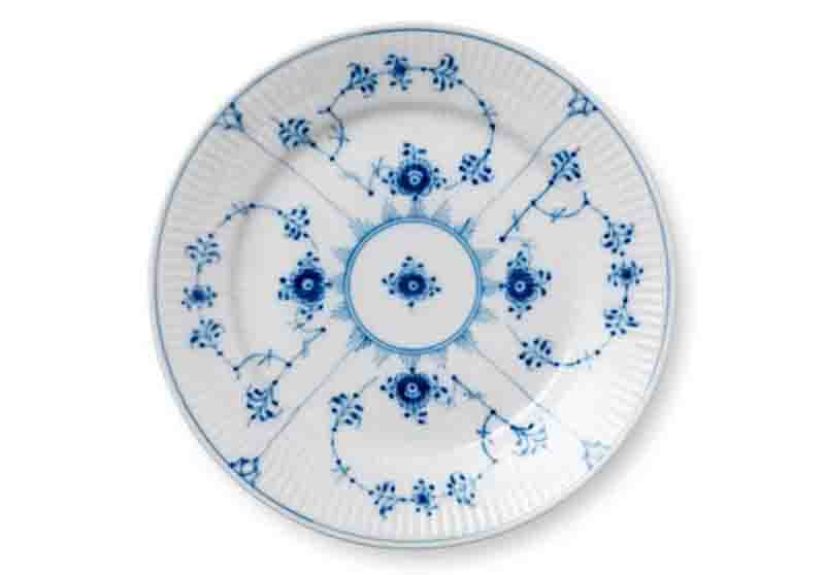
A Blue Fluted Plain plate is a porcelain plate decorated with a hand-painted blue floral motif on a bright white, fluted body. The style is best known through Royal Copenhagen’s Blue Fluted Plain collection, often referred to as Pattern No. 1. It is considered the foundation of the brand’s blue-fluted universe, the original expression that later inspired variations such as Half Lace, Full Lace, and modern reinterpretations.
In practical terms, the plate is exactly what it sounds like: a “plain” version of the famous fluted pattern, meaning it does not include the more elaborate lace-like pierced rim seen in some related designs. That simplicity is part of the appeal. The decoration remains detailed and graceful, but the overall silhouette feels cleaner and easier to use across different table styles.
That balance matters. Some dinnerware is gorgeous but behaves like it expects to live in a locked cabinet under dramatic lighting. A Blue Fluted Plain plate, by contrast, manages to be decorative and functional at the same time. It looks right at home at a holiday table, but it can also make toast and eggs feel suspiciously upscale.
The Story Behind the Blue Fluted Plain Pattern
From 18th-Century Inspiration to Everyday Icon
The story of the Blue Fluted Plain plate begins in the late 18th century, when European fascination with Asian porcelain was in full bloom. Blue-and-white wares from China were especially admired for their elegance, technical skill, and unmistakable visual drama. Royal Copenhagen drew on that aesthetic tradition when it introduced Blue Fluted Plain in 1775.
That date matters because it makes the pattern more than just an attractive dinner plate design. It makes it a cornerstone of European porcelain history. Blue Fluted Plain was the company’s first pattern, and it has remained in continuous production for generations. That kind of staying power is rare in any category, but especially in home goods, where “timeless” is often marketing code for “we hope you won’t notice this is from last season.”
The pattern was later revised by artistic director Arnold Krog in the late 19th century, helping refine the look while preserving its identity. The result is a design language that feels old-world in the best sense: rooted, crafted, and emotionally durable.
Why “Pattern No. 1” Still Feels Fresh
Blue Fluted Plain is sometimes called Pattern No. 1, and that label sounds exactly as prestigious as it should. But what keeps it relevant is not just heritage. It is the design’s flexibility. The blue floral decoration is ornate enough to feel special, yet airy enough to work in modern interiors. The fluted porcelain catches light beautifully, which gives the plate texture without clutter.
It is also hand-painted, which means no two pieces are perfectly identical. That subtle variation is part of the charm. In a world drowning in machine-perfect sameness, a plate with tiny differences in brushwork feels wonderfully human.
Design Details That Make a Blue Fluted Plain Plate Stand Out
Hand-Painted Blue Decoration
The defining feature of a Blue Fluted Plain plate is its hand-painted underglaze blue motif. The brushwork typically includes blossoms, stems, curved lines, and decorative flourishes that feel botanical without becoming fussy. On dinner plates, the composition often spreads outward with enough openness to frame food rather than compete with it.
This is where the plate earns its reputation. The decoration is intricate, but it does not become visually heavy. It has movement, precision, and softness all at once. Royal Copenhagen has even noted the remarkable number of brush strokes required for pieces in the collection, which helps explain why these plates feel more like crafted objects than mass-market tableware.
Fluted White Porcelain
The porcelain body is not flat and plain in the everyday sense of the word. It features gentle fluting that adds depth and structure. Those ridges catch shadows and highlights, giving the surface dimension before the blue decoration even enters the picture. It is subtle architecture for your mashed potatoes.
The contrast between the crisp white body and cobalt-like blue detailing is what gives the plate its visual clarity. It reads as luxurious, but not flashy. That makes it easy to pair with linen napkins, polished silver, natural wood, or even modern matte flatware if you want a less formal look.
Useful Plate Sizes
One reason the Blue Fluted Plain plate remains popular is that it comes in sizes that actually make sense for real meals. Smaller versions work for bread, butter, dessert, or appetizers. Mid-sized plates suit salads and lunch portions. Larger dinner plates can handle main courses and also double as serving pieces when the table gets crowded and someone insists on family-style dining.
This range makes the collection easy to build over time. You do not have to buy an entire formal set in one dramatic swoop. You can start with one or two plates, learn how they fit into your life, and expand from there.
Is a Blue Fluted Plain Plate Just Decorative, or Actually Practical?
Here is the pleasant surprise: a Blue Fluted Plain plate is not just for admiring. Many current pieces in the collection are designed for actual use and are described by major retailers as dishwasher-safe and microwave-safe. That does not mean you should treat them like discount diner plates and stack them with reckless abandon, but it does mean they are not purely ceremonial.
This practicality changes the buying equation. A lot of luxury tableware feels like a purchase you must protect from life. Blue Fluted Plain can be part of life. It can appear at brunch, birthdays, quiet weeknight dinners, and the occasional dinner party where you pretend not to care whether everyone notices your plates.
Of course, practical does not mean indestructible. Porcelain is still porcelain. A little respect goes a long way. Thoughtful storage, careful stacking, and avoiding sudden temperature shock are all smart habits if you want the plate to stay gorgeous for years.
How to Style a Blue Fluted Plain Plate in a Modern Home
For a Traditional Table
If you love a classic dining setup, Blue Fluted Plain plates are an easy win. Pair them with white linens, polished silver, crystal glassware, and tapered candles. The blue floral pattern adds enough visual interest that the table already feels dressed without needing five extra decorative stunts.
For a More Relaxed, Collected Look
The plate also works beautifully in a less formal setting. Try it with natural linen, woven placemats, matte black flatware, or warm wood serving boards. That contrast between fine porcelain and relaxed textures creates the kind of effortless table people like to describe as “curated,” which is a polite way of saying, “Someone here has good taste and probably labels their pantry jars.”
For Mixing and Matching
One of the smartest ways to use Blue Fluted Plain is to mix it with simpler white pieces. The patterned plate becomes the visual anchor while plain bowls, cups, or platters keep the table from feeling too ornate. You can also combine it with other fluted collections if you like layered table settings with a little personality.
What to Know Before You Buy a Blue Fluted Plain Plate
New vs. Vintage
If you are shopping for a Blue Fluted Plain plate, you will likely encounter both new and vintage pieces. New plates offer consistency, current care standards, and the convenience of building a set gradually. Vintage plates appeal to collectors who love older backstamps, discontinued forms, and the idea of owning a piece with history already built in.
Neither route is automatically better. It depends on your goal. If you want daily-use dinnerware with fewer variables, new is easier. If you enjoy collecting, treasure hunting, and tiny details that make porcelain people become very animated at parties, vintage can be deeply rewarding.
Check the Form, Not Just the Pattern
“Blue Fluted Plain plate” can refer to several shapes and sizes, so buyers should always check dimensions before clicking “add to cart.” A bread-and-butter plate, dessert plate, salad plate, and dinner plate may share the same pattern but serve very different purposes. A plate that looks big in a product photo can turn out to be ideal only for cake, not lasagna.
Expect a Premium Price Point
Blue Fluted Plain plates occupy the premium end of the market. Depending on the size and retailer, prices for current pieces often land in the low hundreds. That may sound steep if you are used to buying plates in sets of twelve for the cost of one appetizer. But the pricing reflects heritage, craftsmanship, hand-painting, and brand positioning in the luxury tabletop space.
The good news is that the plate does not have to be justified purely as a status object. Because it is both functional and durable enough for regular use, the value can come from how often it appears in your life rather than how dramatically it sits on a shelf.
How to Care for a Blue Fluted Plain Plate
Caring for a Blue Fluted Plain plate is less intimidating than many people expect. For many current pieces, routine cleaning in the dishwasher is considered acceptable, and microwave use is also commonly listed. Still, gentle handling is always wise. Use plate separators if you stack them often, avoid banging rims together, and store them where they will not shift every time you reach for a cereal bowl.
If you are buying older or vintage plates, be more cautious. Care standards may differ by production era, and decades-old porcelain deserves a little extra courtesy. When in doubt, hand-washing is the safe move. Think of it less as a chore and more as five quiet minutes with a very pretty object.
Why the Blue Fluted Plain Plate Still Matters
The reason people continue searching for the Blue Fluted Plain plate is not complicated. It solves a design puzzle that many products never crack. It feels luxurious, but not unusable. It feels historic, but not old-fashioned. It feels decorative, but not exhausting. In a home filled with things competing for attention, this plate knows exactly how to hold its own without shouting.
It is the kind of piece that rewards close looking. The brushwork, the fluting, the balance of symmetry and softness, the way it frames food without stealing the spotlight all of it adds up to something bigger than a plate. It becomes part of how a table feels, how a meal is remembered, and how everyday routines can be made just a little more beautiful.
Experiences With a Blue Fluted Plain Plate
Living with a Blue Fluted Plain plate is a funny little lesson in how objects can change behavior. Not in a spooky, haunted-china-cabinet way, thankfully, but in the sense that the plate quietly upgrades the mood of whatever lands on it. The first time you use one, you may think you are just putting lunch on porcelain. The second time, you realize you are arranging lunch. Suddenly, a slice of lemon cake needs to sit slightly off-center because the blue brushwork deserves room to breathe. A tomato tart looks more impressive. Even a humble sandwich gains what can only be described as social ambition.
That is part of the experience people respond to most. A Blue Fluted Plain plate does not bully the meal. It frames it. The white porcelain keeps food looking fresh and vibrant, while the blue pattern adds a soft, composed border that makes the whole table feel intentional. Breakfast feels calmer. Dessert feels more ceremonial. Leftovers feel less like defeat and more like a personal reward for surviving the day.
There is also a tactile pleasure to the plate that photographs do not fully capture. The fluted surface gives the piece a little architecture, and when you lift it, it feels balanced and substantial without being clunky. You notice the coolness of the porcelain, the crisp edge, and the fact that the brushwork is not printed into oblivion but retains a handmade presence. Those details register subconsciously, and they are a big reason the plate feels special even before food enters the conversation.
For entertaining, the experience shifts slightly. Guests tend to notice it. Not always in a dramatic gasp-and-clutch-your-pearls way, but often with the kind of pause that says, “Oh, these are nice.” Blue Fluted Plain has that effect because it reads as classic quality, even to people who do not know the collection by name. It suggests care without trying too hard. It is refined, but not intimidating. That makes it useful when you want a table to feel polished and welcoming at the same time.
Collectors and design lovers often talk about the pleasure of mixing these plates into everyday life rather than saving them for rare occasions. That may be the smartest experience of all. A Blue Fluted Plain plate is too beautiful to spend its life waiting for the perfect dinner party. It earns its keep best when it shows up often: with pastries on a quiet Sunday, with salad at a family lunch, with cookies and coffee during a rainy afternoon, or with takeout that suddenly looks far more respectable than it did in the container.
And then there is the emotional side. Pieces like this often become memory carriers. They show up in holiday meals, birthday slices, engagement toasts, and slow dinners with people you love. Over time, the plate becomes attached to rituals. That is when it stops being just a Blue Fluted Plain plate and becomes your Blue Fluted Plain plate the one that has seen celebrations, ordinary Tuesdays, and maybe the occasional overambitious cheese board. Good design can do that. It slips into daily life, then quietly becomes part of the story.
Final Thoughts
If you are drawn to beautiful tableware that works hard without looking busy, the Blue Fluted Plain plate deserves the attention it gets. It combines heritage, craftsmanship, versatility, and practical usability in a way few plates do. It is elegant enough for milestones, relaxed enough for regular meals, and distinctive enough to feel memorable every time it is used.
That combination is why this plate continues to attract collectors, gift buyers, home stylists, and ordinary people who simply want one lovely object in the kitchen that makes everything else look better. Frankly, that is a lot to ask from a plate. Blue Fluted Plain handles it with suspicious ease.