Table of Contents >> Show >> Hide
- How This Ranking Works (A Gamer-First Scorecard)
- Table of Contents
- The Rankings
- #1: Kirby and the Forgotten Land (Switch)
- #2: Kirby: Planet Robobot (3DS)
- #3: Kirby Super Star Ultra (DS) (and Kirby Super Star on SNES)
- #4: Kirby’s Adventure (NES)
- #5: Kirby’s Return to Dream Land Deluxe (Switch)
- #6: Kirby’s Epic Yarn (Wii)
- #7: Kirby 64: The Crystal Shards (N64)
- #8: Kirby: Canvas Curse (DS)
- #9: Kirby: Triple Deluxe (3DS)
- #10: Kirby & the Amazing Mirror (GBA)
- #11: Kirby’s Dream Land 3 (SNES)
- #12: Kirby’s Dream Land 2 (Game Boy)
- #13: Kirby Star Allies (Switch)
- #14: Kirby’s Dream Land (Game Boy)
- #15: Kirby Air Ride (GameCube) (Yes, We KnowHear Us Out)
- Quick Guide: Which Kirby Game Should You Play Next?
- Conclusion: The Best Kirby Game Is the One You’ll Actually Replay
- of Gamer Experiences: Why Ranking Kirby Is Its Own Mini-Game
Kirby has been inhaling enemies (and occasionally the laws of physics) for decades, and somehow the pink puffball’s
greatest superpower isn’t Copy Abilitiesit’s consistency. Even when a Kirby game is “just” good, it’s still the kind
of good that makes you look up three hours later and realize you’ve been smiling at a sentient marshmallow the whole time.
But if you’ve ever tried to answer the deceptively simple questionWhat’s the best Kirby game?you already know
it turns into a passionate debate about level design, co-op chaos, “that one soundtrack,” and whether a vending machine
counts as a valid life choice. So here’s a gamer-first ranking built around the titles fans return to most often, the
ones that show up again and again in “favorite Kirby game” conversations, replay marathons, and recommendation threads.
How This Ranking Works (A Gamer-First Scorecard)
“Best” is subjectivebut gamer preferences are surprisingly consistent. This list prioritizes the things players tend
to reward when they rank Kirby games: variety, replay value, memorable mechanics, satisfying collectibles, and co-op
that feels like a feature (not a footnote).
- Moment-to-moment fun: Great movement, tight stages, and Copy Abilities that feel good to use.
- Creative hooks: A signature mechanic that changes how you play (and doesn’t wear out its welcome).
- Replay value: Secrets, challenge modes, bonus missions, and reasons to 100% without pure suffering.
- Co-op quality: When multiplayer exists, it should be delightfulnot “Player 2 is a decorative hat.”
- Vibes: Art style, music, and that classic Kirby charm that makes danger look… adorable.
With that in mind, let’s rank the best Kirby games of all timegamers’ favorites, from modern must-plays to classic
comfort-food platformers.
The Rankings
#1: Kirby and the Forgotten Land (Switch)
The game that finally gave Kirby a full 3D playgroundand somehow made it feel like the series had been practicing
for this moment in secret. Kirby and the Forgotten Land nails the “easy to start, hard to put down”
formula with exploration-driven levels, optional objectives, and Copy Abilities that stay fun long after the first
boss gets politely deleted from existence.
The big headline is Mouthful Mode, which is exactly what it sounds like: Kirby temporarily becomes
a car, a vending machine, and other objects that absolutely should not be edible. It’s goofy, yesbut it’s also a
smart design tool that creates new traversal puzzles and set-piece moments without abandoning classic Kirby combat.
- Why gamers rank it #1: Fresh 3D level design, tons of secrets, and a hook that stays entertaining.
- Best for: New players, Switch owners, and anyone who wants “cute” with a side of clever.
- Pro tip: Treat each stage like a checklist buffet. The post-level objectives are where the spice lives.
#2: Kirby: Planet Robobot (3DS)
Ask longtime fans for a top pick and Planet Robobot shows up constantlybecause it’s classic Kirby
level design with a mechanical twist that actually adds depth. The Robobot Armor isn’t just a novelty; it
changes how you solve puzzles, how you approach bosses, and how you appreciate the sheer joy of punching a laser
turret with a smiling pink sphere inside a mech suit.
It’s also one of those entries that feels “complete”: strong stages, solid pacing, and extra modes that keep players
poking around after the credits. Even critics who wished it pushed the robot concept further still acknowledged how
reliably fun the core adventure isespecially for fans who love tight 2D Kirby design.
- Why gamers love it: The mech is meaningful, the stages are polished, and the whole package is replayable.
- Best for: Anyone who wants peak 2D Kirby with a big, shiny gimmick done right.
- Warning: You may develop a permanent craving for “one more level.” That’s the Robobot effect.
#3: Kirby Super Star Ultra (DS) (and Kirby Super Star on SNES)
Super Star (and its DS upgrade, Super Star Ultra) is basically a Kirby greatest-hits
album that somehow still feels cohesive. Instead of one long campaign, you get multiple sub-games with different
flavorsfast races, treasure hunts, boss fights, and compact adventuresbuilt around Copy Abilities that offer more
moves and variety than many earlier entries.
Gamers rank this one high because it’s endlessly replayable. You can pick a mode, chase treasures, mess with helpers,
or just boot it up for a short session that inevitably turns into a long session. It’s Kirby in snack formexcept
the snack is an entire buffet.
- Why it lasts: Variety, strong mechanics, and bite-sized campaigns that are easy to revisit.
- Best for: Players who love co-op helpers, collectibles, and “one more mode” energy.
- Modern vibe check: Some parts show their age, but the design still feels surprisingly bold.
#4: Kirby’s Adventure (NES)
The foundation. The classic. The moment Kirby went from “cute platformer guy” to “walking toolbox of chaos.”
Kirby’s Adventure introduced the Copy Ability concept, and that single idea became
the heartbeat of the entire series.
What keeps it high in gamer rankings is how well it holds up: readable stages, satisfying powers, and a pace that
feels designed rather than accidental. It’s also a reminder that Kirby didn’t need modern hardware to be creative
it needed a good idea and a world worth floating through.
- Why gamers still recommend it: Copy Abilities debut here, and the platforming still feels charming and solid.
- Best for: Retro fans, series history buffs, and anyone who wants to see where the magic started.
- Fun fact (energy): This is the game that made “inhaling a wizard” a legitimate problem-solving method.
#5: Kirby’s Return to Dream Land Deluxe (Switch)
If you want “classic modern Kirby,” this is one of the best answers. Return to Dream Land Deluxe
takes the Wii-era formulaclean 2D stages, bright pacing, and friendly difficultyand upgrades it with quality-of-life
polish, extra content, and new Copy Abilities like Mecha and Sand.
The real gamer draw is co-op. This game is built for “four people on one couch” energy, whether your team is focused
on teamwork or committed to the ancient tradition of accidentally bumping each other into hazards. Either way, it’s
a good time.
- Why it ranks high: Great co-op, reliable level design, and a deluxe package that adds value.
- Best for: Families, friend groups, and anyone who wants a comfort-food Kirby adventure.
- Completionist note: The extra modes are where players squeeze out the long-term replay.
#6: Kirby’s Epic Yarn (Wii)
Epic Yarn is the ultimate “cozy Kirby” pick. It swaps out traditional Copy Abilities for transformations
and textile-based mechanics, then wraps the entire game in a craft-project art style that still looks charming years later.
The big surprise: it’s not just prettyit’s genuinely fun, with varied stages and a strong sense of discovery.
Gamers keep it in the top tier because it offers something different without feeling like a gimmick. It’s also one of
the best “I want to relax but still play something well-designed” Kirby games ever made.
- Why gamers adore it: Beautiful presentation, clever stage variety, and a mellow, satisfying flow.
- Best for: Players who want low-stress platforming with high-charm payoff.
- Emotional warning: You may start calling yarn “tactical equipment.”
#7: Kirby 64: The Crystal Shards (N64)
The reason this one stays in gamer conversations is simple: ability combining. Instead of just copying
one power, Kirby can mix them into new effects, turning familiar abilities into “wait, what happens if I do that?”
experiments. It’s a creativity engineand it makes revisiting levels feel like testing recipes in a cute, pastel kitchen.
The game also has a distinct N64-era charm, with bright visuals and a tone that’s mostly cheerful… until Kirby decides
the story needs a little more “surprisingly intense.”
- Why it’s beloved: Power-combining encourages experimentation and gives the game a unique identity.
- Best for: Players who love tinkering with mechanics and discovering weirdly effective combos.
- Try this: Pick a “combo rule” for yourself (only mix with one base power) and see what you invent.
#8: Kirby: Canvas Curse (DS)
Canvas Curse is one of the most inventive Kirby games because it feels tailor-made for the DS. Instead
of controlling Kirby directly the usual way, you guide him with stylus-drawn rainbow rails. It’s a different rhythm:
more like you’re directing a pinball hero through a platforming obstacle course.
What earns it a spot in the “best Kirby games” conversation is that it doesn’t sacrifice fun for novelty. The controls
serve the level design, and the result is a Kirby game that’s still instantly recognizablejust with a unique twist
that no other entry quite replicates.
- Why gamers rank it: Truly platform-specific creativity that still feels polished and playable.
- Best for: Anyone who wants a “Kirby, but different” pick that still respects the series DNA.
- Tip: Short sessions are idealthis game loves quick bursts of brainy fun.
#9: Kirby: Triple Deluxe (3DS)
Triple Deluxe is a fan favorite because it’s a well-crafted 2.5D Kirby adventure with levels that
look great, play smoothly, and keep feeding you new ideas. Its signature hook, Hypernova, flips the
usual inhale mechanic into “vacuum cleaner on maximum power,” letting you swallow huge objects and solve puzzles in
delightfully ridiculous ways.
It’s often recommended alongside Planet Robobot because the two share a similar era of design polishtight stages,
strong pacing, and a steady stream of “oh, that’s clever” moments.
- Why gamers like it: Beautiful presentation, well-balanced stages, and a fun signature power.
- Best for: Players who want a polished 2D Kirby with modern pacing on a handheld.
- Snackable greatness: It’s a game that feels great in a weekend and even better in a replay.
#10: Kirby & the Amazing Mirror (GBA)
This is the “Kirby goes semi-Metroidvania” pick. Amazing Mirror breaks away from strictly linear stages
and leans into exploration, secrets, and navigation. It also supports a four-Kirby concept that’s genuinely interesting,
especially if you’re the type of player who hears “hidden rooms” and immediately thinks, Mine.
Gamers tend to rank it highly because it feels different while still delivering classic Kirby combat. It’s not just a
noveltyits structure gives it a distinct personality in the broader Kirby series ranking.
- Why it stands out: Exploration-first design makes it feel unique among Kirby platformers.
- Best for: Players who love maps, secrets, and the thrill of “what’s behind that door?”
- Tip: Don’t rush. This game rewards wandering like it’s a hobby.
#11: Kirby’s Dream Land 3 (SNES)
Dream Land 3 earns its place mostly on vibesand that’s not an insult. The crayon/pastel aesthetic is
instantly memorable, and many fans still cite it as one of the most visually distinct Kirby games. It’s also a gentle,
creative entry with a playful tone that feels like a storybook you can platform through.
In gamer rankings, this one tends to rise when people value atmosphere, art direction, and that uniquely “soft” SNES-era
Kirby feel. If you’ve ever wanted a platformer that looks like it was illustrated with love and a fresh box of crayons,
this is your game.
- Why gamers remember it: A standout art style and a calm, creative pace.
- Best for: Players who want classic Kirby charm with maximum cozy visuals.
- Mood: “Sunday morning cartoon,” but playable.
#12: Kirby’s Dream Land 2 (Game Boy)
Dream Land 2 is an important step in the classic era because it expands how Kirby interacts with the world,
especially through animal friends that modify abilities and traversal. It’s more limited than later gameshandheld era
constraints are realbut it’s still a fan-favorite for players who like the “simple but satisfying” Kirby style.
Gamers who rank this one high often do it for nostalgia and design clarity: straightforward stages, memorable companions,
and a pace that’s easy to pick up even today.
- Why it holds up: Animal friends add variety, and the classic Kirby flow is intact.
- Best for: Retro handheld fans and players exploring the series in order.
- Tip: Try different companions for the same sectionsmall changes can feel surprisingly big.
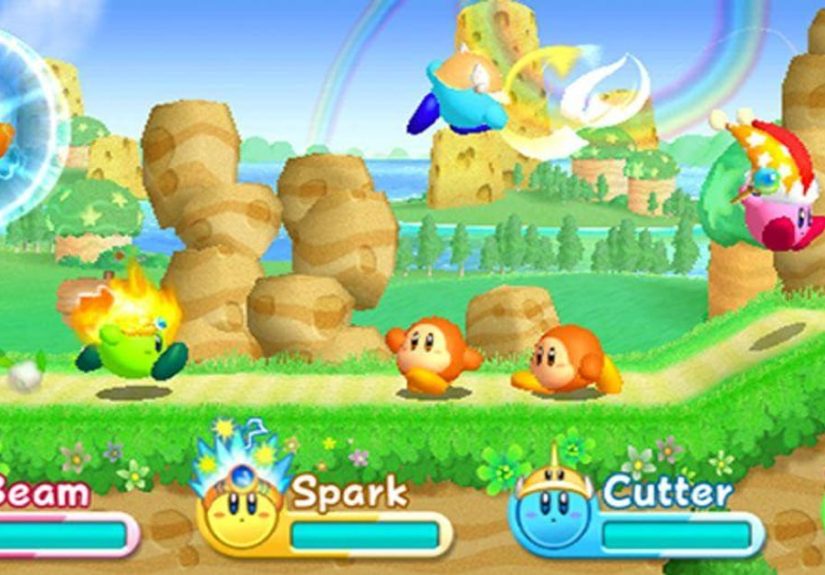
#13: Kirby Star Allies (Switch)
Star Allies is often described as “too easy”… and then immediately followed by “…but I still had a great time.”
That’s the Star Allies story in a nutshell. The hook is recruiting enemies as allies and leaning into drop-in/drop-out
co-op, with Friend Abilities that encourage goofy experimentationespecially when a group starts combining
elements and powers just to see what happens.
Gamer rankings place it a bit lower than the absolute top because the main path is extremely gentle. But it earns points
for co-op joy, bright presentation, and bonus content that gives more challenge and variety than people expect at first glance.
- Why gamers still recommend it: Co-op fun, slick visuals, and a playful “make friends out of foes” mechanic.
- Best for: Couch co-op groups and players who want a relaxed Kirby game on Switch.
- Tip: Treat it like a party platformer first, a challenge run second.
#14: Kirby’s Dream Land (Game Boy)
The origin story. Kirby’s Dream Land is a simpler gameno Copy Abilities yet, fewer mechanics, and a
very pure “run, float, inhale, repeat” structure. But it matters, and it still has that classic Kirby feel: approachable,
charming, and oddly soothing even when you’re getting bonked by something that looks like it belongs on a children’s cereal box.
In gamer rankings, it’s often included as a “respect the roots” pick. You may not call it the best mechanically, but
it’s hard not to appreciate how clean and foundational it is.
- Why it’s here: Historical importance and a genuinely cozy classic platformer vibe.
- Best for: New Kirby historians and anyone who wants to see the series’ humble beginning.
- Recommended mindset: Treat it like a charming retro snack, not a modern feast.
#15: Kirby Air Ride (GameCube) (Yes, We KnowHear Us Out)
If we ranked purely by critics, this one would be in a different neighborhood. But the prompt is “ranked by gamers,” and
gamers have kept Air Ride alive for one reason: City Trial. That mode is chaotic,
unpredictable, and ridiculously fun with friendsfive minutes of powering up, followed by a sudden mini-game that makes
everyone scream in victory or betrayal.
Is it the most refined racing game? No. Is it a fan favorite that still sparks “remember City Trial?” stories? Absolutely.
And if a game can create that kind of shared memory, it deserves at least one seat at the table.
- Why gamers defend it: City Trial multiplayer memories hit like a nostalgia freight train.
- Best for: Party nights, friend groups, and anyone who enjoys chaos with cute sound effects.
- Reality check: Not every mode shinesbut City Trial is the legend.
Quick Guide: Which Kirby Game Should You Play Next?
Not sure where to start? Here’s the gamer-friendly shortcut:
- Want the modern “best Kirby game” pick? Start with Kirby and the Forgotten Land.
- Want peak 2D Kirby design? Play Planet Robobot or Super Star Ultra.
- Want co-op couch fun? Grab Return to Dream Land Deluxe or Star Allies.
- Want maximum cozy vibes? Epic Yarn is basically comfort food in platformer form.
- Want something weird (in a good way)? Canvas Curse is still one of the series’ boldest swings.
The best part is that Kirby games are generally welcoming. You can hop into the series almost anywhere and still understand
the core fantasy: float, copy powers, collect secrets, and save Dream Land with the determined expression of a marshmallow.
Conclusion: The Best Kirby Game Is the One You’ll Actually Replay
Kirby rankings always spark debate because the series has multiple “best” answers depending on what you value: 3D exploration,
tight 2D levels, co-op mayhem, retro charm, or pure cozy aesthetics. But when you look at what gamers return to, recommend to
friends, and replay for secrets, a pattern emerges. Kirby and the Forgotten Land leads the modern era, while
Planet Robobot, Super Star Ultra, and Kirby’s Adventure represent the strongest
core of classic and handheld Kirby greatness.
And honestly? If your personal #1 is different, that’s not a problemthat’s proof the Kirby series has range. Now go pick a
Copy Ability, inhale something questionable, and make your own tier list. (Just remember: your friends will argue, and that’s
half the fun.)
of Gamer Experiences: Why Ranking Kirby Is Its Own Mini-Game
Ranking the best Kirby games isn’t just a list exerciseit’s a memory contest. Ask a group of players to rank Kirby and you’ll
get fewer “objective” arguments and more stories: the first time someone discovered a secret room behind a suspicious wall,
the co-op run where four players turned a careful platforming section into accidental slapstick, or the moment a goofy mechanic
(like becoming a car) somehow made a puzzle feel brilliant.
That’s because Kirby games are built around moments. One minute you’re floating through a cheerful stage collecting
stars; the next you’re experimenting with a Copy Ability you ignored for years and realizing it’s secretly amazing. This is a
big reason gamers keep revisiting favorites like Planet Robobot and Super Star Ultra: they reward curiosity.
Even after you “know” the levels, you still want to see what happens if you approach a boss with a different power, or if you
chase just one more collectible route you skipped last time.
Co-op is also a huge part of the lived Kirby experience for many fans. Return to Dream Land Deluxe and Star Allies
aren’t just games you playthey’re games you host. Someone always plays too aggressively, someone always floats at the wrong time,
and someone always becomes the designated “secret finder” who insists the group backtrack because “I swear there’s a hidden door.”
That dynamic changes how people rank games: a title that’s merely “good” solo can become “top tier” when it reliably creates
laughs, teamwork, and the kind of chaos that feels friendly instead of frustrating.
Then there’s the cozy factor. A lot of gamers don’t pick Kirby when they want to suffer; they pick Kirby when they want to
unwind. That’s why Epic Yarn is so beloved: it’s the gaming equivalent of a warm blanket and a good playlist, except
the blanket is also a platforming level and the playlist is telling you everything will be fine. Even the older games like
Dream Land have that “simple and comforting” rhythm that makes them feel like revisiting a childhood cartoon.
Finally, Kirby rankings tend to reflect how players define “fun.” Some gamers value innovation and put Forgotten Land
at #1 because it feels like the series evolving in a big way. Others value pure 2D polish and argue for Planet Robobot
as the cleanest, smartest version of classic Kirby design. And a special group will always show up to defend Air Ride
because City Trial memories are real, powerful, and somehow louder than logic. In the end, that’s the joy of it: Kirby games
aren’t just entries in a franchisethey’re shared experiences, comfort replays, and “remember when” stories waiting to happen.