Table of Contents >> Show >> Hide
- What Ben Stiller Actually Said About Zoolander 2
- Why Zoolander 2 Looked Like an Easy Win on Paper
- What Went Wrong With the Sequel
- Why the Failure Seemed to Stick With Him
- How the Flop May Have Redirected His Career for the Better
- What Hollywood Can Learn From the Zoolander 2 Story
- Why This Story Feels So Familiar: Experiences Related to Creative Failure
- Conclusion
Hollywood loves a comeback story, but it is even more fascinated by the wobble that happens right before the comeback. That is why Ben Stiller’s candid reflection on Zoolander 2 hit such a nerve. Here is a filmmaker and comedy star who has spent decades making audiences laugh, admitting that one sequel’s crash landing rattled him so badly he questioned whether he had lost his instincts. For fans, that confession felt surprising. For anyone who has ever launched a project with sky-high hopes only to hear the emotional equivalent of crickets, it felt painfully familiar.
The story matters because Zoolander 2 was not some tiny side quest in Stiller’s career. He wrote it, produced it, directed it, and starred in it. When the movie stumbled, the disappointment was not abstract. It was personal, public, and impossible to shrug off with a casual “Well, you win some, you lose some.” In classic Ben Stiller fashion, the whole situation had a strange comic twist: a movie about absurdly beautiful people delivering exaggerated poses ended up forcing its creator into a very real moment of self-examination.
This article looks at why the sequel seemed like such a safe bet, what likely went wrong, why Stiller says the experience lingered for so long, and how that failure may have quietly pushed him toward some of the most respected work of his later career. The lesson is not just about one movie. It is about creative risk, audience expectations, and the stubborn way a flop can stick in the brain long after the reviews stop scrolling.
What Ben Stiller Actually Said About Zoolander 2
Stiller’s comments were striking because they were so unvarnished. He said the response to Zoolander 2 was “blindsiding,” and he admitted it “affected me for a long time.” He also said he genuinely believed people wanted the sequel. That combination is what gives the story its sting: the movie did not fail after being treated like a cynical cash grab from day one. It failed after the people behind it thought they were delivering exactly the kind of follow-up fans had been waiting years to see.
Later, Stiller revisited the subject again and sounded less wounded, but still perplexed. He suggested it was hard for him to believe the movie was that badly received. That is a very human response. Creative people do not always need universal praise, but they usually want a fair hearing. Stiller’s reaction suggests he felt the sequel was rejected more harshly than he expected, and maybe more harshly than he still thinks it deserved.
That lingering tension is important. This was not a case of instant acceptance followed by a graceful career pivot. The film’s reception seems to have lived rent-free in his head for years, not because he could not handle criticism, but because it shook his confidence in his own sense of what was funny. For a comedian-director, that is not a paper cut. That is a full identity wobble.
Why Zoolander 2 Looked Like an Easy Win on Paper
To understand why the failure hit so hard, you have to remember how much goodwill the original Zoolander built over time. The 2001 film was not an immediate monster at the box office, but it developed a steady following and eventually became one of those endlessly quotable comedies people kept alive through memes, impressions, and party-trick references to Blue Steel. In other words, it became a cult favorite with unusual staying power.
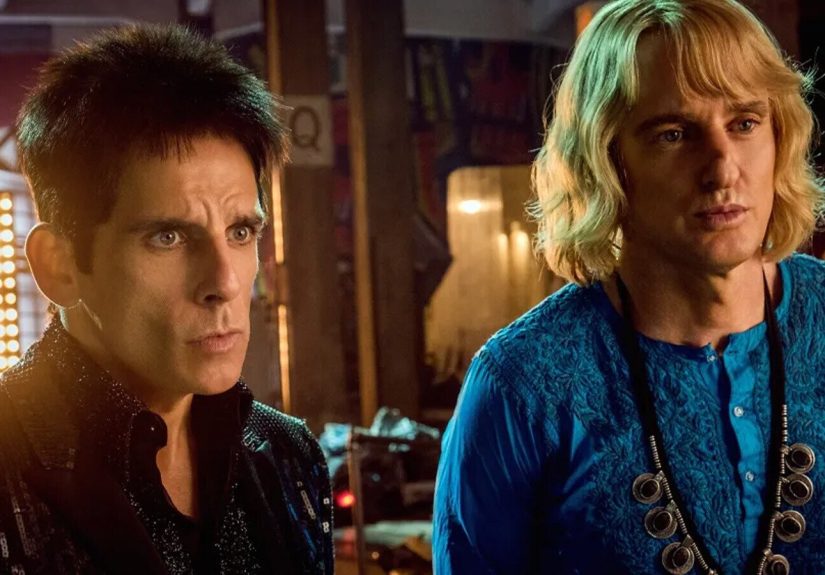
That gave the sequel an ideal Hollywood setup: recognizable characters, nostalgia, a fashion-world premise that still felt visually rich, and a long gap that made the return feel like an event rather than an obligation. In 2015, Stiller and Owen Wilson even turned the sequel announcement into a runway stunt at Paris Fashion Week, slipping back into character in a moment that felt perfectly on-brand and delightfully ridiculous. It was a clever piece of marketing because it reminded people that Derek Zoolander and Hansel were not just movie characters. They were pop-culture mascots.
Then the hype machine kicked into a higher gear. The trailer drew enormous attention, enough to spark headlines about record-breaking views for a comedy trailer. That kind of response can create a dangerous illusion. It makes a movie look like a guaranteed crowd-pleaser when it may really be benefiting from curiosity, nostalgia, and the internet’s fondness for a familiar joke delivered in a new wrapper.
In hindsight, Zoolander 2 had all the external signs of a sequel people would show up for: a beloved brand, a recognizable cast, fashion-industry spectacle, cameos, and a big promotional rollout. It looked hot. It looked buzzy. It looked, dare I say, really, really, ridiculously bankable.
What Went Wrong With the Sequel
1. The sequel arrived in a much harsher comedy landscape
Comedy ages in weird ways. A joke can feel immortal in one decade and fossilized in the next. By the time Zoolander 2 arrived in 2016, the entertainment ecosystem had changed. Audiences had become more fragmented, internet humor had become faster and stranger, and legacy studio comedies were no longer automatic winners. Even a property with cultural cachet had to prove it could be more than a nostalgic callback machine.
That was a challenge for a movie trading heavily on the original’s tone. If the first Zoolander felt loose, quotable, and oddly specific in its satire, the sequel was often accused of feeling overstuffed and overly aware of its own cult status. Critics described it as cameo-heavy and scattershot, which is a nice way of saying that it sometimes seemed to confuse reference recognition with fresh comedy. Laughing because you remember a joke is not the same as laughing because a new joke lands.
2. Timing did the film no favors
Zoolander 2 also ran into brutal competition. It opened in the same holiday frame dominated by Deadpool, which steamrolled the weekend and sucked up much of the audience oxygen. That does not explain everything, but it matters. Sequels that depend on strong opening-weekend momentum do not like walking into a cultural buzz saw.
And the numbers were rough. The sequel opened to about $13.8 million domestically and finished its North American run at roughly $28.8 million. The original, by comparison, ended up with about $45.2 million domestic. For a long-awaited follow-up with major studio backing, those figures felt less like a triumphant return and more like a slow-motion face-plant on the catwalk.
3. Reviews were ugly, and ugly reviews can become the story
The movie’s critical standing never recovered. Its Rotten Tomatoes score now sits at a low level that tells the story plainly: the critics were not just lukewarm, they were deeply unconvinced. Once a comedy gets branded as desperate, stale, or painfully unfunny, the label spreads fast. That is especially true when the movie is built on cool-factor irony. Nothing punctures a fashion-satire sequel faster than the sense that it is trying too hard to remind you how effortlessly cool it used to be.
For Stiller, this likely hurt more because the reviews were not attacking a performance he just showed up to do. They were judging his judgment. His taste. His comedic steering wheel. When he later said the response made him worry he had lost his sense of what was funny, that rang true because the sequel’s rejection was comprehensive. It was not “you had a bad scene.” It was “the whole machine is off.”
4. The movie also bumped into cultural backlash
One cannot discuss Zoolander 2 honestly without mentioning that parts of it sparked backlash, especially around Benedict Cumberbatch’s nonbinary character, All. That criticism added another layer to the reception. The movie was not only being judged as unfunny by many critics and viewers; it was also being pulled into a conversation about representation and whether some of its satire felt lazy, dated, or harmful.
That matters because it changed the conversation around the sequel. Instead of simply being a disappointing comedy, it became a movie that some audiences felt missed the moment culturally. When that happens, a film’s weaknesses stop feeling isolated and start looking symbolic. Suddenly the flop is not just about jokes that do not land. It becomes evidence, at least in the public imagination, that the creators misunderstood the room.
Why the Failure Seemed to Stick With Him
Some flops are easy to file away. This one was not. Stiller had spent years trying to make the sequel happen, and when it finally arrived, he likely expected at least a decent landing thanks to audience affection for the original. Instead, he got a public reminder that nostalgia is not a contract.
There is also the weight of responsibility. When an actor stars in a dud, the blame gets spread around. When that same person is also the director, co-writer, producer, and franchise caretaker, the blame can feel like it is wearing your name tag. Stiller’s comments suggest that what haunted him was not just the financial disappointment or the headlines. It was the fear that his internal compass had gone off course.
That fear is especially brutal in comedy. Drama can be defended as subtle, divisive, or misunderstood. Comedy is mercilessly binary in the public mind. Either the joke lands or it dies an awkward death in front of everyone. Stiller did not just make a sequel that underperformed. He made one that caused him to question whether he still understood what audiences found funny. That is the kind of doubt that follows a person home, sits on the couch, and refuses to pay rent.
How the Flop May Have Redirected His Career for the Better
Here is where the story gets genuinely interesting. Stiller has suggested that the fallout from Zoolander 2 pushed him into a period of introspection, and that period appears to have changed the shape of his directing career. Instead of racing back into another big-screen comedy, he turned toward more dramatic and psychologically layered work.
That pivot mattered. He went on to direct Escape at Dannemora, a grim, prestige limited series that earned serious awards recognition, including a DGA win for his directing and Emmy attention for the project. From there, he became one of the creative forces behind Severance, which evolved into one of the most acclaimed series in recent television and was renewed for a third season after strong performance for Apple TV+.
This does not mean Zoolander 2 was secretly a blessing in a feathered Valentino coat. Failure still hurts, and Stiller has been clear that it did. But it does suggest something more complicated and more useful: a flop can break a pattern. The sting may have forced him to step away from the kind of filmmaking people most associated with him and into territory that revealed another side of his creative range.
That may be the real reason the story resonates now. Stiller is not telling a simple tale of redemption. He is describing the unsettling in-between period, when a misfire makes you doubt yourself before it helps you reorient. That is a much truer version of how careers actually evolve.
What Hollywood Can Learn From the Zoolander 2 Story
The sequel’s failure is also a warning label for the industry. Nostalgia can start the engine, but it cannot finish the drive. Audiences may be thrilled to see an old favorite come back, yet they still want a new reason to care. A recognizable pose, a familiar catchphrase, and a parade of celebrity cameos can create attention, but attention is not the same thing as affection.
There is another lesson too: long-gestating sequels face a strange expectation trap. If they stay faithful, they risk feeling stale. If they change too much, they risk alienating the very fans they are counting on. Zoolander 2 got caught in that squeeze. It tried to scale up the original’s style, but many viewers seemed to want something sharper rather than simply louder.
And finally, Stiller’s honesty is a reminder that public success does not make private self-doubt disappear. Even experienced filmmakers can be knocked sideways by one badly received project. The difference is that most people do not have to process that crisis while the whole internet is doing Blue Steel jokes in their mentions.
Why This Story Feels So Familiar: Experiences Related to Creative Failure
The reason Stiller’s comments hit home is that his experience mirrors something that happens far beyond Hollywood. A writer spends months on a piece they are sure will connect, only to watch it sink without a ripple. A startup founder launches the product everyone in the room swore was a winner, then learns the market did not get the memo. A musician plays the new song they were absolutely certain would tear the roof off, and instead the crowd politely sips their drinks like they are waiting for the parking lot to clear. Different industries, same emotional whiplash.
There is a special kind of sting when the failed project is not experimental, not weird, not obviously risky, but the one you felt safest about. That is what seems to make the Zoolander 2 story so psychologically rich. Stiller did not talk like a guy who knew he had rolled the dice on an eccentric passion project. He talked like someone who thought he understood the audience and then discovered, in very public fashion, that the audience had other plans.
Many people also recognize the haunting part. Failure is rarely loud for as long as success is, but it echoes differently. A bad review, an ignored launch, a botched presentation, a joke that dies in the room, these things replay in the mind with cruel efficiency. People do not relive the hundred routine victories. They relive the one moment where confidence cracked. That is why Stiller questioning whether he had lost his comedic instincts feels so believable. Creative people often do not merely ask, “Why did this project fail?” They ask, “What if the failure means something is wrong with me?”
And yet, the other common experience is that the project that bruises your ego can also redirect your path. Plenty of careers improve because one disappointment forces a recalibration. You stop chasing what used to work. You get more honest about what you actually want to make. You discover a lane you might never have explored if the old formula had kept paying off. In that sense, Stiller’s post-Zoolander 2 arc feels less like a celebrity anomaly and more like a recognizable professional pattern. The flop did not make him better by magic. It made him rethink things. Then he did the hard part.
That is probably the most useful takeaway from the whole saga. Being haunted by a failure does not mean you are finished. Sometimes it just means you cared enough for the loss to leave a mark. The trick is not pretending the mark is not there. It is learning how to use it as a map.
Conclusion
Ben Stiller’s reflections on Zoolander 2 land because they pull the curtain back on a very unglamorous truth: even wildly successful entertainers can get rattled by one project that misses the mark. The sequel had the ingredients of a sure thing, from built-in nostalgia to big marketing buzz, but it ran into bad timing, harsh reviews, cultural backlash, and the impossible burden of living up to a cult favorite. What followed was not just a bruised box-office report. It was a prolonged crisis of confidence.
But the story does not end with a flop. It bends toward reinvention. The same disappointment that left Stiller questioning his instincts also appears to have pushed him toward more adventurous, more dramatic, and ultimately more acclaimed work. That is why this is more than a Hollywood postmortem. It is a reminder that failure can be humiliating, disorienting, and weirdly productive all at once. Even Derek Zoolander, patron saint of perfect angles, cannot always strike the winning pose on the first try.