Table of Contents >> Show >> Hide
- What is the new Alzheimer’s memory-risk tool?
- How does the tool work?
- Why this matters right now
- What the study found in plain English
- What the tool can’t tell you
- Should people with no symptoms get tested?
- What people can do now to support brain health
- The future: more personalized Alzheimer’s forecasting
- Experiences related to Alzheimer’s risk: what this conversation feels like in real life
- The bottom line
Alzheimer’s research has entered an era that would have sounded wildly futuristic a decade ago. Scientists are no longer asking only, “Does this person have memory loss right now?” They are increasingly asking a more ambitious question: “What are the odds this person develops memory and thinking problems years from now?” That shift matters, because Alzheimer’s disease does not begin the day someone forgets an appointment or repeats the same story at dinner. The brain changes linked to the disease can start long before symptoms wave hello.
Now, a new research tool from Mayo Clinic is pushing that idea further. It may estimate a person’s 10-year and lifetime risk of developing mild cognitive impairment (MCI) or dementia related to Alzheimer’s disease before obvious symptoms begin. No, it is not a crystal ball in a lab coat. But it is an important step toward more personalized Alzheimer’s risk prediction, especially at a time when earlier diagnosis and earlier treatment are becoming much more relevant.
For families, caregivers, and adults keeping one eye on their future brain health, this tool raises big questions. What exactly does it measure? Who is it for? Is it ready for prime time? And should people be racing to request every brain scan and genetic test under the sun? Let’s unpack what this new memory risk model actually means, and what it definitely does not.
What is the new Alzheimer’s memory-risk tool?
The new model was developed by Mayo Clinic researchers using long-term data from the Mayo Clinic Study of Aging. Its goal is straightforward but powerful: estimate the likelihood that a person who is currently cognitively unimpaired will develop MCI or dementia within the next 10 years or over the course of their remaining lifetime.
That matters because MCI is often the first meaningful clinical speed bump on the road to dementia. People with MCI may notice more memory or thinking problems than others their age, but they can usually still manage everyday life independently. In other words, this stage is not the same as dementia. It is more like the brain sending up a yellow flag rather than a full-on red alert.
What makes the model stand out is that it does not rely on age alone. It combines several pieces of biological and personal information to create a more individualized estimate. The main ingredients are:
- Age
- Sex
- APOE genetic status, especially whether someone carries the APOE ε4 variant linked to higher Alzheimer’s risk
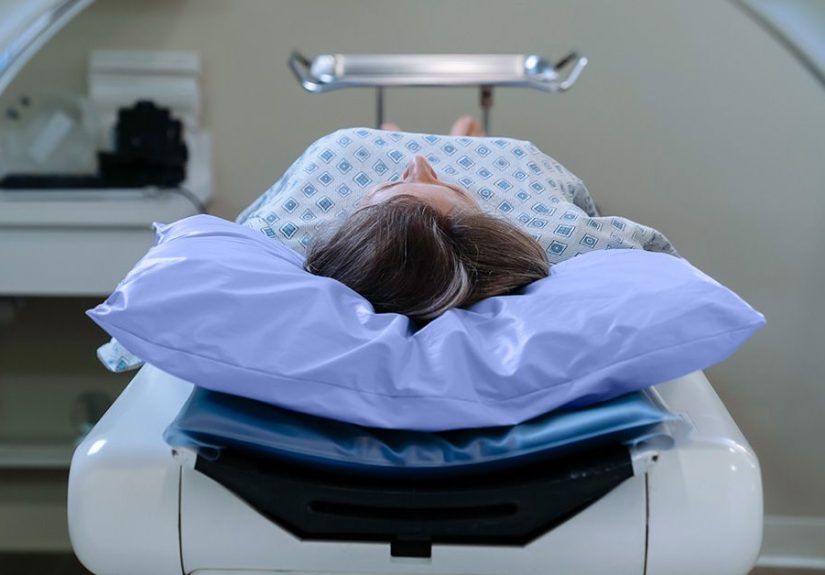
- Brain amyloid levels measured by an amyloid PET scan
That last factor, amyloid burden, is a big deal. In the study, amyloid PET levels had the strongest effect on lifetime risk. Put plainly: the more amyloid detected in the brain, the higher the estimated future risk of cognitive impairment. Age, meanwhile, had an especially strong effect on 10-year risk. So yes, the model is sophisticated, but it still respects the fact that getting older remains one of the biggest risk drivers in the room.
How does the tool work?
Amyloid PET is doing much of the heavy lifting
Alzheimer’s disease is associated with abnormal buildups of amyloid plaques and tau tangles in the brain. The Mayo model focuses on amyloid, using PET scan results to quantify how much of that plaque-related signal is present. Researchers used a continuous measure of amyloid severity rather than a simple yes-or-no result, which makes the model more nuanced.
That is important because biology is rarely all-or-nothing. A person is not always neatly “safe” or “doomed.” Risk tends to move along a gradient, and this tool tries to reflect that reality. Think of it less like a pass/fail test and more like a weather forecast with better neuroscience.
Genetics adds context, not destiny
The model also accounts for APOE genotype, especially APOE ε4, the best-known common genetic risk factor for late-onset Alzheimer’s disease. Carrying APOE ε4 raises risk, and having two copies raises it more than having one. But genetics here is not a verdict. Plenty of APOE ε4 carriers never develop Alzheimer’s, and some people who develop Alzheimer’s do not carry it at all.
That distinction matters because headlines about “the Alzheimer’s gene” can sound like a genetic jump scare. Real life is messier. APOE status influences risk, but it does not write your future in permanent marker.
Age and sex still matter
Age remains central because Alzheimer’s risk rises sharply later in life. Sex also plays a role, and women overall account for a large share of Alzheimer’s cases in the United States. The new model recognizes that risk is not one-size-fits-all, which is exactly why a personalized calculator could eventually be useful for research and clinical decision-making.
Why this matters right now
For years, one of the hardest parts of Alzheimer’s care has been timing. People often do not get evaluated until symptoms are obvious, daily life is affected, and family members have already moved from “Hmm, that’s odd” to “We need help now.” But Alzheimer’s-related changes in the brain can begin a decade or more before symptoms appear. That means there is a long window in which the biology of disease may be progressing quietly.
This new tool matters because earlier prediction is becoming more actionable. Treatments such as lecanemab and donanemab are approved for patients in the mild cognitive impairment or mild dementia stages of Alzheimer’s disease. That does not mean everyone should be screened preemptively, but it does mean the medical world is paying closer attention to who may be heading toward symptomatic disease and when.
In practical terms, a validated risk model could someday help clinicians and patients think more clearly about:
- When to monitor memory changes more closely
- Whether a person may be a candidate for future preventive or early-stage therapy
- How to weigh the benefits and risks of testing
- When lifestyle changes should become a serious, structured priority rather than a vague promise made after New Year’s
That last point deserves emphasis. A risk estimate cannot erase Alzheimer’s risk, but it may give people a more concrete reason to address brain-health factors that are still modifiable.
What the study found in plain English
The research showed that lifetime and 10-year risk of MCI and dementia rose steadily as amyloid PET levels increased. APOE ε4 carriers had higher risk than non-carriers at the same amyloid levels. The model also demonstrated that who develops problems over time is shaped by more than one variable at once, which is why combining biomarkers, genetics, age, and sex can produce a more informative estimate than any single factor alone.
One of the most interesting takeaways is that the model does not just say biomarkers matter. It tries to translate biomarker information into something people and clinicians actually understand: absolute risk over time. That is a big upgrade from telling someone, “You have elevated amyloid,” then leaving them to mentally spiral with nothing but Google and dread.
Absolute risk is more tangible. It shifts the conversation from abstract biology to real-world planning. That could be enormously useful in research settings and, eventually, in carefully selected clinical settings.
What the tool can’t tell you
Here is the important reality check: this is still a research tool. It is not yet the kind of calculator most primary care doctors are pulling up between blood pressure checks and vaccine reminders.
There are several reasons for caution:
- It depends on amyloid PET scans. These scans are expensive, not universally available, and not typically used to screen people who have no symptoms.
- It includes genetic information. APOE testing can be emotionally complicated and is not routinely recommended for most people simply trying to predict future Alzheimer’s risk.
- The model needs broader validation. It was built from a specific long-running study population, which is a strength scientifically, but tools like this still need to prove they work well across more diverse real-world groups.
- Risk is not certainty. A high predicted risk does not guarantee decline, and a lower risk does not equal immunity.
So while the tool is exciting, it is not a green light for panic-testing. Nobody should hear about this study and immediately conclude that forgetting where they put their phone charger means it is time for a PET scan and a dramatic musical montage.
Should people with no symptoms get tested?
At this point, not routinely. Current biomarker tests can help diagnose Alzheimer’s after symptoms begin, but they are not commonly used in people without symptoms. That is a crucial distinction. The science is moving faster than routine medical practice, and for good reason. Testing people too early without clear guidance can create anxiety, confusion, and follow-up decisions that are not always simple.
For someone with memory complaints, a strong family history, or unusual early symptoms, specialized evaluation may make sense. But for the general public, the better takeaway is not “run out and get scanned.” It is “pay attention, know the landscape, and talk with a qualified clinician if you have real concerns.”
What people can do now to support brain health
Even the most advanced memory-risk tool does not replace the basics. Public health guidance continues to point toward several modifiable dementia risk factors, including physical inactivity, uncontrolled diabetes, high blood pressure, hearing loss, smoking, and heavy alcohol use. None of these guarantees Alzheimer’s if present, and avoiding them does not promise a perfect brain forever. But they are meaningful places to act.
That means brain health is not only about exotic biomarkers and futuristic scans. It is also about ordinary, occasionally unglamorous habits:
- Get blood pressure under control
- Manage blood sugar and cardiovascular risk
- Stay physically active on a regular basis
- Address hearing loss rather than pretending the TV is just “mixed weird”
- Avoid smoking and limit alcohol
- Seek medical evaluation for new memory changes instead of dismissing them for years
In many families, the hardest step is not treatment. It is the first honest conversation. A tool like this may eventually help with that by replacing some uncertainty with clearer probabilities, but even before that future arrives, earlier attention still matters.
The future: more personalized Alzheimer’s forecasting
This Mayo model is part of a bigger trend in dementia research: moving from broad population averages to individualized risk prediction. Over time, future tools may combine amyloid, tau, blood biomarkers, imaging, genetics, cognitive testing, and even digital measures of speech or behavior. The goal is not to frighten healthy people. The goal is to identify who may benefit from closer follow-up, earlier intervention, or future therapies designed to work before major decline takes hold.
That is a meaningful shift. Alzheimer’s care has long been reactive. Predictive models promise something more proactive. We are not fully there yet, but this study shows the field is getting more precise about translating silent brain changes into understandable risk.
Experiences related to Alzheimer’s risk: what this conversation feels like in real life
Scientific tools are fascinating, but Alzheimer’s risk rarely arrives in a person’s life as a neat chart. It usually arrives as a feeling. A missed appointment. A repeated question. A story told twice in the same afternoon. Then comes the private debate almost every family knows: “Is this normal aging, stress, bad sleep, or something more?”
Imagine a 62-year-old man whose mother had Alzheimer’s disease. He is still working, still driving, still handling bills, still doing all the things that make daily life daily life. But he has become a little more aware of every mental slip. A misplaced wallet becomes a tiny emergency. Forgetting a neighbor’s name turns into a silent spiral. When he reads about a tool that may predict 10-year and lifetime memory risk, his reaction is not purely scientific curiosity. It is hope mixed with fear. Hope that knowledge could help. Fear that knowledge could land like a punch.
Or think about a daughter in her forties who watched one grandparent decline slowly and now worries about her own father. She notices he repeats himself more often, but he is also recovering from surgery, sleeping poorly, and juggling medication changes. For her, a predictive tool sounds useful because families often spend years in uncertainty. They are not asking for a magic answer. They are asking for something slightly better than guessing in the dark.
Caregivers often describe the early phase of memory change as the most psychologically exhausting. It is a season of maybe. Maybe this is nothing. Maybe this is the beginning. Maybe we are overreacting. Maybe we are underreacting. A tool that gives a more individualized estimate could eventually make those conversations more grounded. It would not erase grief, but it might reduce the fog.
There is also the experience of people who are still completely independent but know they carry risk factors. Some have learned they are APOE ε4 carriers. Others have a strong family history. Others simply notice the statistics and realize they are getting older. These people often live in an odd space between vigilance and dread. They do not want to obsess over every forgotten password, but they also do not want to be blindsided. A tool like this appeals to them because it offers structure. Human beings handle scary possibilities a little better when those possibilities come with context.
Still, more information is not automatically easier information. A high-risk estimate could motivate healthy changes and careful planning, but it could also produce anxiety, insomnia, and the kind of doom-scrolling that makes nobody’s cognition sharper. That is why any future use of this kind of model must be paired with counseling, good clinical interpretation, and a clear explanation that risk is not fate.
For many families, the most valuable part of early risk prediction may be practical rather than dramatic. It may prompt earlier financial planning, legal discussions, home-safety conversations, or medical follow-up. It may encourage someone to take hearing loss seriously, manage blood pressure consistently, or stop waving away memory concerns for another two years. In that sense, the tool’s power is not just in prediction. It is in timing. It may help people act while choices are still wide open.
And that may be the most human lesson in all of this. Alzheimer’s research is getting better at measuring risk, but what people really want is time: time to plan, time to adjust, time to seek treatment, time to tell the truth, time to live well before fear takes over the room. If this new model eventually helps deliver more of that time, even imperfectly, it could become far more than an interesting study. It could become a bridge between silent biology and real-life preparation.
The bottom line
The new Mayo Clinic memory-risk tool is not a public screening test, and it is not ready to settle every Alzheimer’s question at the doctor’s office. But it is a meaningful advance. By combining amyloid PET data, age, sex, and APOE genetic status, researchers showed that it may be possible to estimate a person’s 10-year and lifetime risk of future cognitive impairment with more precision than before.
That matters because Alzheimer’s is increasingly being understood as a disease that begins years before symptoms become obvious. As early-stage treatments expand and biomarker science improves, tools like this could help identify who may need closer monitoring, who might benefit from intervention sooner, and how clinicians can have more informed conversations about risk.
For now, the smartest takeaway is calm optimism. This is promising science, not a DIY diagnosis kit. If you are worried about memory changes, talk with a healthcare professional. If you are not having symptoms, focus on the things that still matter a great deal: cardiovascular health, exercise, hearing, smoking, alcohol use, and timely medical evaluation when something feels off. The future of Alzheimer’s care may become more predictive, but the present still rewards paying attention.