Table of Contents >> Show >> Hide
- What Exactly Is an Attic?
- Why Your Attic Matters More Than You Think
- Attic Anatomy: The Parts You Should Know
- Attic Ventilation: The “Breathe In, Breathe Out” Rule
- Attic Insulation: Comfort, Savings, and Fewer Regrets
- Vented vs. Unvented (Conditioned) Attics: Which One Makes Sense?
- Attic Storage and Finishing: Use the Space Without Wrecking the House
- Common Attic Problems (and What Usually Causes Them)
- A DIY Attic Checkup: 15 Minutes That Can Save You Money
- When to Call a Pro (No Shame, Only Wisdom)
- Conclusion: Make the Attic Work for You
- Real-Life Attic Experiences (500-ish Words of Lessons, Laughs, and Dust)
The attic is your house’s hat. It’s not always stylish, it’s occasionally full of weird stuff, and it
quietly takes the heat (and cold) so the rest of your home can live its best life.
Done right, an attic boosts comfort, protects your roof, lowers energy waste, and gives you storage
that isn’t “the chair in the corner with clothes on it.”
Done wrong? You get ice dams, mystery smells, moldy sheathing, insulation that looks like it lost a bar fight,
and a summer attic that could double as a DIY sauna. Let’s make yours the “done right” version.
What Exactly Is an Attic?
An attic is the space between your home’s top ceiling and the roof. Some are tall enough to walk through.
Others require you to perform a low-budget action movie crawl over joists while holding a flashlight in your teeth.
Either way, the attic sits at a critical border: the roof above and your conditioned living space below.
Common attic types (and why they behave differently)
- Vented, unconditioned attic (most common): Insulation sits on the attic floor. The attic itself is hot in summer, cold in winter.
- Finished attic / converted attic: Insulation is often at the roofline or kneewalls; the space may be part of living area.
- Kneewall attic: A half-finished space with short walls and little “side attics” behind themprime spots for drafts if not air-sealed.
- Unvented / conditioned (encapsulated) attic: The roof deck is insulated and sealed so the attic becomes part of the home’s thermal envelope.
- Truss attic vs rafter attic: Trusses create lots of webbing (less open storage). Rafters can mean more open bays but also more opportunities for insulation mistakes.
Why Your Attic Matters More Than You Think
Your attic is where building science gets personal. Heat rises, air leaks travel upward, and moisture loves to hitch a ride
on moving air. That means the attic is often the battleground for:
- Energy efficiency: A leaky, under-insulated attic can let conditioned air escape and force HVAC systems to work harder.
- Moisture control: Warm, moist indoor air that leaks into a cold attic can condense on roof sheathing (hello, mold and wood rot).
- Roof durability: Poor ventilation and moisture issues can shorten roof life and cause damage to decking and framing.
- Indoor comfort: If upstairs rooms are always too hot or too cold, your attic is often part of the story.
Attic Anatomy: The Parts You Should Know
You don’t need to become a roofer to understand your attic. But it helps to know what you’re looking at:
- Roof deck (sheathing): The wood surface under shinglesthis is what shows early signs of moisture problems.
- Rafters or trusses: Structural framing that supports the roof.
- Ceiling joists: Framing at the attic floor; often where insulation sits in vented attics.
- Insulation: The thermal blanketeffective only when installed correctly and kept dry.
- Air barrier: Not the same as insulation. Air sealing blocks movement of air (and the moisture it carries).
- Ventilation components: Soffit vents (intake), ridge vents (exhaust), gable vents, roof vents, and baffles.
- Access: Hatch, pull-down stairs, or scuttle holeoften an overlooked source of heat loss.
Attic Ventilation: The “Breathe In, Breathe Out” Rule
In a typical vented attic, ventilation helps remove excess heat and moisture. The goal isn’t to create a wind tunnel;
it’s to create steady, balanced airflow: cooler air enters low (usually at soffits) and warmer air exits high (often at the ridge).
How much ventilation is “enough”?
Codes commonly describe attic ventilation in terms of net free ventilating area (NFVA)the actual open area that air can move through.
A classic minimum is a 1:150 ratio (1 square foot of NFVA per 150 square feet of attic floor area), with allowances that can reduce it to
1:300 when certain conditions are met (balanced high/low venting and, in some climates, vapor retarder requirements).
A simple ventilation math example
Let’s say your attic floor is 1,200 square feet.
- At 1:150: 1,200 ÷ 150 = 8 square feet of NFVA total.
- At 1:300: 1,200 ÷ 300 = 4 square feet of NFVA total.
Many designs aim to split ventilation roughly half intake and half exhaust.
Translation: don’t install a giant ridge vent and forget soffits (or vice versa). Your attic needs both lungs.
Baffles: tiny plastic pieces, huge peace of mind
If you have soffit vents, baffles (rafter vents) help keep an air channel open above insulation so airflow from the soffit can reach the attic.
Without baffles, insulation can block intake ventsmaking your “ventilated attic” about as ventilated as a closed cooler.
Attic Insulation: Comfort, Savings, and Fewer Regrets
Insulation is rated by R-value, which measures resistance to heat flow. Higher R-value generally means better thermal performance.
The “right” R-value depends on your climate zone and whether you’re insulating the attic floor (vented attic) or roofline (conditioned attic).
Air seal first, then insulate
Here’s a truth that makes insulation manufacturers slightly less excited:
Air leaks can undermine insulation fast. Warm air leaking into an attic carries moisture, and in winter that moisture can condense.
Sealing common bypassesaround plumbing stacks, wiring penetrations, chimney chases, recessed lights, and attic accessusually improves performance
more than simply tossing more insulation on top.
Common insulation types in attics
- Blown-in cellulose or fiberglass: Great for covering irregular spaces and topping off existing insulation.
- Fiberglass batts: Common but easy to install poorly (gaps, compression, missing corners).
- Spray foam (open- or closed-cell): Can air-seal and insulate well, often used at rooflines for unvented atticsusually pro-installed.
- Rigid foam: Sometimes used for attic hatches or specialized assemblies.
Quick “how much insulation do I have?” trick
As a rough estimate, many common loose-fill insulations average around R-3 to R-3.5 per inch.
Measuring depth can give you a ballpark R-value (not perfect, but helpful for planning).
Don’t forget the attic hatch
An uninsulated attic hatch is like leaving a small window open all yearexcept it’s in your ceiling, so warm air naturally tries to escape through it.
Add weatherstripping and a rigid-foam “cap,” or install an insulated attic stair cover if you have pull-down stairs.
Vented vs. Unvented (Conditioned) Attics: Which One Makes Sense?
A vented attic keeps insulation at the attic floor and uses outdoor air to help manage heat and moisture in the attic space.
A conditioned, unvented attic moves insulation to the roofline, sealing the attic into the home’s envelope.
Why people choose a conditioned attic
- Ductwork and HVAC equipment in the attic can perform better when the attic isn’t 130°F in summer.
- It can reduce opportunities for wind-driven moisture to enter vents (depends on design).
- It can improve overall airtightness when built correctly.
Why a vented attic still wins for many homes
- Often simpler and less expensive to improve (air seal + add insulation).
- Ventilation can help drying potential if minor roof leaks occur.
- Less risk of “wrong foam in the wrong place” problems.
The best option depends on climate, roof design, existing equipment, and local codes.
If you’re changing the attic from vented to unvented, that’s the moment to involve a knowledgeable probecause details matter.
Attic Storage and Finishing: Use the Space Without Wrecking the House
Attics are tempting storage zones because they’re “free space.” But you can accidentally turn storage into a performance problem.
Smart attic storage rules
- Never compress insulation under plywood and boxes. Compression reduces R-value and creates cold spots.
- Build a raised platform if you need storageusing framing to lift decking above insulation depth.
- Store the right stuff: Avoid temperature-sensitive items (photos, vinyl records, electronics, candlesyes, candles melt).
- Watch the load: Ceiling joists aren’t always designed for heavy storage. When in doubt, ask a professional before you turn your attic into a gym.
Finishing an attic into living space
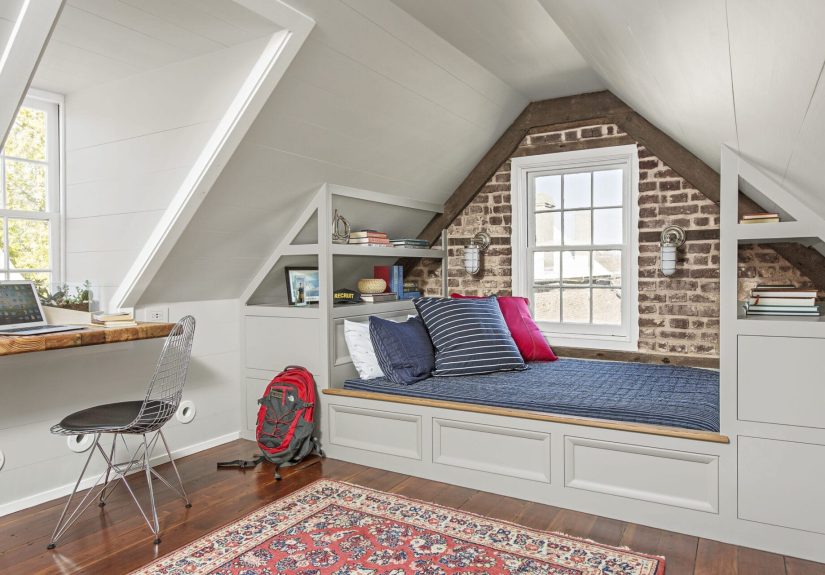
Turning an attic into a bedroom, office, or hangout spot is doablebut it’s not just “paint and vibes.”
You’ll need to consider structural capacity, insulation strategy (often roofline insulation), ventilation or conditioning,
safe egress, proper stairs, electrical upgrades, and code-compliant headroom.
If you want a finished attic, plan for a real renovation scope, not a weekend project with ambition and caffeine.
Common Attic Problems (and What Usually Causes Them)
1) Mold or frosty nails in winter
Often caused by warm, moist air leaking from the home into the attic, then condensing on cold surfaces.
Fixes typically include air sealing (especially bathroom fan ducts and ceiling penetrations),
verifying ventilation pathways, and addressing indoor humidity sources.
2) “My attic is ridiculously hot”
Attics get hotroofing absorbs solar heat. But extreme heat can be worsened by blocked soffit vents,
inadequate exhaust venting, dark roofing without proper ventilation design, and duct leaks that dump cool air into the attic.
A well-designed ventilation system and solid insulation/air sealing below are the usual first wins.
3) Ice dams and winter roof issues (cold climates)
Ice dams often happen when heat escapes into the attic, warms the roof, melts snow, and water refreezes at colder eaves.
The solution is rarely “more salt.” It’s usually better attic air sealing, proper insulation, and ventilation that keeps the roof colder and more uniform.
4) Critters: squirrels, mice, and the occasional “what even is that?”
Attics are cozy, quiet, and rarely visitedbasically a luxury hotel for pests.
Seal entry points, keep soffits and vents intact, and clean rodent evidence safely (don’t sweep or vacuum droppings dry).
5) Vermiculite insulation (possible asbestos concern)
Some older attics contain loose, pebble-like vermiculite insulation. Because certain vermiculite sources historically were contaminated with asbestos,
the safest approach is to avoid disturbing it and consult professionals for assessment and removal options.
6) Electrical hazards
Attics hide wiring, junction boxes, and sometimes DIY surprises. Loose connections, damaged wire insulation,
and buried junctions can become fire risks. If you see scorched wood, smell burning, or find “creative” wiring, stop and call an electrician.
A DIY Attic Checkup: 15 Minutes That Can Save You Money
- Bring safe lighting and step only on joists or designated decking.
- Look for roof leaks: dark staining on sheathing, wet insulation, or rusty nail tips.
- Check bathroom and dryer vents: they should discharge outdoors, not into the attic.
- Inspect soffit vents: are they blocked by insulation? If yes, baffles may be needed.
- Measure insulation depth in a few places; note thin spots and areas disturbed by storage.
- Scan for air leaks around penetrations (plumbing stacks, wiring holes, chimneys).
- Examine the attic hatch: is it insulated and weatherstripped?
- Look for pests: droppings, nesting, chewed material, entry holes at eaves or gables.
- Check ductwork: disconnected ducts, torn insulation, or air leaks waste energy fast.
When to Call a Pro (No Shame, Only Wisdom)
- Suspected asbestos/vermiculite: Don’t disturb; get professional guidance.
- Active mold growth or widespread moisture damage: identify the source and remediate correctly.
- Electrical concerns: warm spots, burned smells, questionable splices, buried junction boxes.
- Structural changes for a finished attic: you need real design and permitting, not “I watched three videos.”
- Unvented attic conversions or spray foam at the roof deck: details matter; experience matters.
Conclusion: Make the Attic Work for You
The best attics aren’t necessarily the prettiest. They’re dry, well-sealed, properly insulated, and (when designed to be)
properly ventilated. If you treat the attic like a systemair sealing + insulation + moisture control + smart ventilationyou usually get a noticeable
payoff: a more comfortable home, fewer roof problems, and lower energy waste.
Think of attic upgrades as the rare home project that’s both practical and satisfying. You’re not just “adding insulation.”
You’re making your house easier to live in, season after season. Also: you’re reducing the chance you’ll ever have to Google
“why is my ceiling sweating?” at 2 a.m.
Real-Life Attic Experiences (500-ish Words of Lessons, Laughs, and Dust)
The first time most people enter their attic, it’s not because they woke up thinking, “Today feels like a great day to crawl
around in fiberglass.” It’s usually because something needs storing, fixing, or investigating. In my unofficial research,
the attic visit begins with confidence and ends with someone whispering, “Why is it so hot up here?” while regretting shorts.
One of the most common experiences is the “attic treasure hunt,” where you go up looking for holiday decorations and come down
with a headlamp imprint on your forehead, a new appreciation for long sleeves, and a strong urge to label bins like an adult.
Attics have a way of turning time into archaeology. You’ll find a box marked “Kitchen” that contains neither kitchen items nor logic,
and a strand of lights that worked perfectly the last time you checked them (in 2017).
Then there’s the “mystery draft” storyline. Someone complains the upstairs bedroom is freezing in winter and blazing in summer.
You finally check the attic and discover a hatch that’s basically a polite suggestion of a door. After adding weatherstripping
and an insulated cover, the change can feel almost unfairlike you unlocked a secret setting called “comfort.”
It’s a small fix that often delivers a surprisingly big improvement, especially in homes where the attic access sits in a hallway ceiling.
Another classic is the “blocked soffit vent surprise.” You look down near the eaves and realize insulation has drifted right into
the soffit area, sealing off intake airflow. Installing baffles is not glamorous work. It’s repetitive, awkward, and occasionally
involves a staple gun argument. But afterward, it’s one of those satisfying improvements because you’ve made the attic behave more like it should:
air has a clear path, insulation stays where it belongs, and you’ve reduced the odds of moisture hanging around like an unwanted guest.
And yes, sometimes you discover the attic is hosting roommates: evidence of squirrels, mice, or the distant sound of tiny feet
sprinting the 100-meter dash as soon as you turn on the light. The experience tends to evolve quickly from “let’s investigate”
to “let’s seal every gap and call someone who owns the right equipment.” It’s also when you learn the value of cleaning safely:
wet methods, gloves, and masks beat the “just sweep it” approach every time.
The final experience is the best one: after air sealing and improving insulation, you notice the house feels steadier.
The HVAC runs a bit less. The upstairs rooms stop swinging between extremes. And the attic… well, it’s still an attic.
But it becomes a calmer, drier, less dramatic atticlike it finally accepted its role as the quiet protector of your home,
rather than the place where comfort goes to disappear.