Table of Contents >> Show >> Hide
- What Actually Happened at the Mexican Congress Hearing?
- So… Are the Alien Corpses Real?
- Why Scientists Were Skeptical Immediately
- The UNAM and “Official Proof” Confusion
- What Peruvian Officials and Forensic Experts Have Said
- Why the Bodies Look Convincing (and Why That Doesn’t Matter)
- How Would Scientists Prove (or Disprove) “Alien Bodies” for Real?
- The Cultural Heritage Angle: The Part That’s Not Funny
- Why the Story Keeps Coming Back
- Bottom Line: What’s the Most Evidence-Based Conclusion?
- Experiences People Have Around Viral “Alien Body” Stories (500+ Words)
- Conclusion
If you logged onto the internet and briefly thought, “Waitdid Mexico just do an alien unboxing in Congress?”
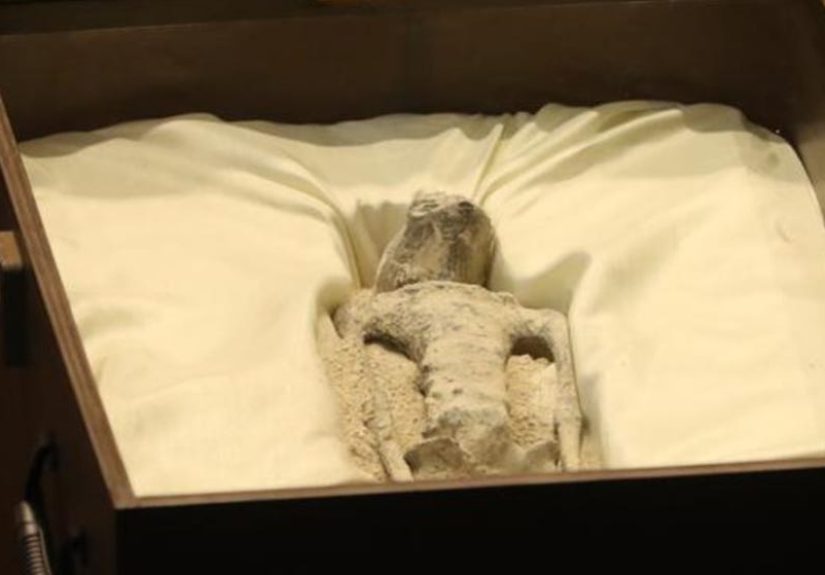
you weren’t alone. In September 2023, two tiny, mummified, humanoid-looking bodiescomplete with elongated heads and
three-fingered handswere displayed during a public hearing at Mexico’s Congress. The images went global instantly,
bouncing from group chats to late-night monologues faster than you can say, “Take me to your leader.”
The problem: extraordinary visuals are not the same thing as extraordinary evidence. And when you look past the viral
screenshots, the story becomes less “X-Files finale” and more “how misinformation, politics, and cultural heritage
concerns can collide in real life.”
What Actually Happened at the Mexican Congress Hearing?
The now-famous “alien corpses” were presented by Jaime Maussan, a Mexican journalist and long-time UFO enthusiast.
During the hearing, Maussan and collaborators claimed the bodies were roughly 1,000 years old and not related to any
known species on Earth. The specimens were shown in cases, and supporting materials like scans and test claims were
discussed.
A crucial point often missed in the online retelling: the hearing itself did not “confirm aliens.” It was a public
session featuring speakers and exhibitsmore like a forum than a scientific verdict. Mexican lawmakers did not issue
an official determination that the bodies were extraterrestrial.
The “Nazca Mummies” Connection
The bodies shown in Mexico are widely associated with the so-called “Nazca mummies,” a controversial set of specimens
linked (in various claims) to Peru and the Nazca region. That connection matters because the Nazca mummy saga has been
circulating for years, and it has repeatedly drawn sharp criticism from scientists and authorities who argue the
specimens are not what they’re claimed to be.
So… Are the Alien Corpses Real?
Based on publicly reported information from major newsrooms and scientific commentary, there is no reliable,
peer-reviewed scientific evidence proving that the bodies presented to Mexican Congress are extraterrestrial.
In fact, many experts and officials have described similar “alien” specimens as fabricated or assembled from human
and animal remainsan allegation that carries serious ethical and legal implications.
In other words: the most responsible answer right now is no, there’s no credible basis to call them
real alien bodieswhile still leaving room for science to evaluate any authentic physical evidence if it’s shared
transparently and tested properly.
Why Scientists Were Skeptical Immediately
Scientists are not paid extra to be buzzkills (sadly), but they do have a well-earned allergy to claims that skip the
basic steps of verification. Here’s why skepticism was the default setting:
1) “A congressional hearing” is not a scientific method
Political venues are designed for debate and public persuasion, not controlled lab work. A scientific claim lives or
dies by repeatable tests, independent verification, and transparent datanot applause, headlines, or a dramatic
reveal.
2) The chain of custody is murky
For any biological specimenespecially one allegedly discovered years earlierresearchers need a clear, documented
trail: where it was found, who handled it, how it was stored, and whether it could have been altered. When provenance
is unclear, contamination and manipulation become hard to rule out.
3) Big claims leaned on small (or unclear) testing
Claims about carbon dating and DNA can sound like scientific slam dunks. But the devil is in the details:
what was tested, which lab ran it, how samples were collected,
how contamination was prevented, and whether independent labs replicated the results.
Even legitimate tests can be misinterpretedespecially if they’re performed on ambiguous materials or if the results
are shared selectively (for example, a screenshot of a report without full methodology, context, and raw data).
The UNAM and “Official Proof” Confusion
A recurring claim online is that a major university “verified” the bodies. The truth is more complicated: reporting
around the hearing included references to testing and institutional names, but multiple outlets also noted that
universities and scientific authorities disputed the way their work was being represented.
This confusion is common in viral science-adjacent stories. A lab might perform a narrow service (like carbon dating a
submitted sample) without endorsing the larger narrative built on top of it. That’s not a conspiracy; it’s just how
scientific services work. A medical lab can run your cholesterol panel without declaring you “immortal.”
What Peruvian Officials and Forensic Experts Have Said
The controversy doesn’t exist in a vacuum; it intersects with real concerns about cultural heritage and the trafficking
of archaeological materials. Peruvian authorities and forensic experts have publicly pushed back on “alien mummy”
narratives, describing seized specimens as modern fabrications made from a mix of materialsincluding human and animal
bonesassembled to resemble non-human bodies.
This is the part that should snap the conversation back to reality: if bodies are being created from human remains or
looted archaeological material, that’s not just “internet weird.” That’s potentially criminal, deeply unethical, and
harmful to historical preservation.
Why the Bodies Look Convincing (and Why That Doesn’t Matter)
The “alien corpses” are visually tailored to our collective sci-fi imagination: small frame, oversized head, strange
hands, eerie stillness. That’s exactly why they travel so well online. They look like what pop culture trained us to
expect. But science doesn’t award points for aesthetic consistency with E.T.
Humans are pattern-finders. When something looks familiar, we instinctively assume it has a coherent explanation. That
tendency is useful when you’re identifying a poisonous mushroom. It’s less useful when you’re assessing a viral claim
built around a theatrical reveal.
How Would Scientists Prove (or Disprove) “Alien Bodies” for Real?
If genuine non-human biological remains existed, proving it would be difficultbut not impossible. The scientific
process would look boring compared to a congressional display, which is exactly how you’d know it’s legit.
A credibility checklist for extraordinary specimens
-
Transparent chain of custody: excavation records, permits, documented handling, secure storage,
and clear legal ownership. -
Independent access: multiple qualified labs and specialists examining the same specimensnot just
one team controlling the evidence. -
Non-destructive imaging: high-quality CT scans and X-rays interpreted by independent radiologists,
anatomists, and forensic anthropologists. -
Minimal but real sampling: tiny, well-documented samples for DNA, isotopes, and histologycollected
with rigorous contamination controls. -
Peer-reviewed publication: methods, raw data, limitations, and alternative explanations laid out
for critique in reputable journals. - Replication: other labs repeating the work and getting comparable results.
Notice what’s missing from that list: “A dramatic presentation,” “an oath,” or “a slide deck with spooky music.”
(Although, to be fair, spooky music would make academic conferences more fun.)
The Cultural Heritage Angle: The Part That’s Not Funny
Some of the strongest reporting around the broader Nazca mummy saga has emphasized something more grounded than aliens:
looting and the black-market trade of artifacts. When sensational “non-human” claims encourage tomb
raiding, the real losers are history, science, and the communities connected to those sites.
Even if you don’t care about archaeology, you should care about incentives. If viral attention and money flow toward
sensational displays, people will keep manufacturing sensational displays. If real human remains are involved, the moral
cost is enormous.
Why the Story Keeps Coming Back
One reason this saga refuses to die (unlike the alleged mummies) is that it sits at the intersection of:
curiosity about UFOs, mistrust of institutions, the entertainment value of shock, and the genuine possibility that
life could exist elsewhere in the universe.
That last piece is important. Many scientists would love to find evidence of extraterrestrial life. But “wanting it to
be true” doesn’t make a specific claim true. And when a story has a history of disputed evidence, recycled talking
points, and limited independent verification, skepticism isn’t cynicismit’s basic hygiene.
Bottom Line: What’s the Most Evidence-Based Conclusion?
The best-supported conclusion is that the “alien corpses” displayed in Mexico’s Congress are not confirmed to
be extraterrestrial and are widely regarded by experts and officials as likely fabrications or manipulated
remains. The event was a public spectacle, not a scientific validation, and the evidence presented publicly has not met
the standards required for extraordinary biological claims.
Could new, independently verified evidence change the conversation? Sure. Science is always open to better data.
But until transparent methods, lawful provenance, and independent replication exist, the responsible stance is:
treat the claim as unproven and likely false.
Experiences People Have Around Viral “Alien Body” Stories (500+ Words)
Even when the science is thin, the experience of these stories is very real. If you’ve ever watched a viral
“alien bodies” clip unfold, you’ve probably felt the same emotional roller coaster millions of others feltequal parts
fascination, disbelief, and “how is this my Tuesday?”
The Group Chat Whiplash
For many people, the first encounter wasn’t a news articleit was a friend dropping a screenshot with the caption:
“BRO.” The bodies look uncanny at a glance, and the setting (Congress!) lends instant authority. You might start with
curiosity, then quickly shift into detective mode: zooming in on hands, pausing the video on the glass case, Googling
names, and searching for the phrase “Mexican Congress alien bodies” like you’re trying to crack a cold case before
lunch.
The “I Want to Believe” Tug-of-War
Another common experience is internal conflict: part of you wants the world to be stranger and more exciting; another
part knows that the internet is basically an Olympic training center for hoaxes. That tension is powerful. You might
catch yourself thinking, “What if this is real?”then immediately countering, “Okay, but why would aliens end up in a
display case at a political hearing?”
Watching Experts Try to Be Polite on the Internet
If you follow scientists, archaeologists, or forensic specialists, you may have seen them respond with a very specific
kind of exhausted patience. They’ll explain, again, that extraordinary claims require transparent methods. They’ll point
out anatomical inconsistencies. They’ll ask for chain-of-custody documentation. And they’ll do it while thousands of
commenters reply with some variation of: “But it looks like an alien.” The experience can feel like watching someone
calmly demonstrate math while the crowd chants, “Vibes! Vibes! Vibes!”
The Heritage-Protectors’ Frustration
For people who care about archaeology and cultural preservation, these stories can be uniquely aggravating. The moment
“alien mummies” go viral, attention shifts away from real historylike the Nazca region’s legitimate archaeological
significanceand toward spectacle. It can also fuel demand for dubious artifacts, encouraging looting and damage to
sites that can’t be replaced. The experience isn’t fun; it’s worrying, because the consequences aren’t theoretical.
The Slow Realization: “This Isn’t a One-Off”
A final experience many people report is the dawning realization that this story is not a single event. It’s part of a
repeating cycle: a dramatic reveal, a wave of clicks, disputed claims, expert pushback, and then… another reveal. Once
you see that pattern, you start evaluating new “alien body” headlines differently. You look for independent labs,
published methods, and clear provenance instead of cinematic presentations.
In the end, the most grounded experience may be this: you can enjoy the curiosity without surrendering your standards.
It’s okay to be entertained, intrigued, and even hopeful about the possibility of life beyond Earthwhile still
insisting that “proof” should look like science, not theater.
Conclusion
The “alien corpses shown to Mexican Congress” story is a perfect modern myth: gripping visuals, a high-status venue,
and a claim big enough to rewrite history. But history isn’t rewritten by viral momentsit’s rewritten by evidence.
Until transparent, independent, peer-reviewed research supports the claim, the most evidence-based answer remains:
these are not confirmed aliens, and the strongest reporting points toward fabrication or manipulation rather than
extraterrestrial biology.
Stay curious. Stay skeptical. And if someone tells you “Congress proved it,” remember: Congress can pass a bill, but it
can’t pass peer review.