Table of Contents >> Show >> Hide
- What is albinism?
- What causes albinism?
- Types of albinism (and why the names get complicated)
- Symptoms of albinism
- Pictures: what albinism can look like (and how to use images responsibly)
- How albinism is diagnosed
- Treatment and management
- Common myths (busted gently, but firmly)
- Living with albinism: confidence, community, and the long game
- Experiences related to albinism (real-life moments, day-to-day realities) about
- Conclusion
Note: This article is for general education and isn’t medical advice. If you think you or your child may have albinism (or any vision/skin concerns), a clinicianoften an ophthalmologist and dermatologistcan help with diagnosis and care.
What is albinism?
Albinism is a group of inherited genetic conditions that reduce the amount of melanin your body makes or distributes. Melanin is the pigment that helps give color to hair, skin, and eyesand it also supports normal eye development. That’s why albinism isn’t “just about appearance.” It’s also about vision, sun sensitivity, and long-term skin health.
Albinism shows up in every racial and ethnic group. The visible differences can be subtle or obvious, and they can vary even among people in the same family. So if your mental picture of albinism is a single “look,” it’s time to update the software.
What causes albinism?
In most cases, albinism is caused by gene variants (mutations) that affect how melanin is produced in specialized cells called melanocytes. Different genes can be involved, which is why there are multiple types of albinism. Depending on the type, the condition may affect the skin, hair, and eyes (oculocutaneous albinism), or mainly the eyes (ocular albinism).
Inheritance patterns (aka “How did this happen in our family?”)
- Autosomal recessive (common in many oculocutaneous forms): a child inherits one non-working copy of a gene from each parent. Parents often have typical pigmentation and vision.
- X-linked (common in classic ocular albinism): the gene is on the X chromosome. It more often affects people assigned male at birth, while carriers may have mild eye findings.
- New or rare variants: sometimes a family history isn’t obvious, especially if it’s been “hiding” in carrier status for generations.
If you’re planning a family or you already have a child with albinism, genetic counseling can be usefulnot because anyone needs blame (they don’t), but because information helps with planning and support.
Types of albinism (and why the names get complicated)
“Albinism” is an umbrella term. Clinicians often group it into non-syndromic forms (mostly affecting pigmentation and vision) and syndromic forms (albinism plus other body-system issues).
Oculocutaneous albinism (OCA)
Oculocutaneous albinism affects the eyes and the skin/hair. There are several subtypes (often labeled OCA1, OCA2, etc.) based on the gene involved and typical pigment patterns. In general, OCA can range from very little pigment to partial pigment that increases over time.
- OCA1: Often involves very low melanin production. Some subtypes have extremely light hair/skin; others may develop some pigment as they grow.
- OCA2: Often less severe pigment reduction than classic OCA1, and pigment may increase with age.
- OCA3: More likely to be associated with reddish-brown pigmentation patterns in some populations.
- OCA4 and rarer types: Similar core eye findings; pigment patterns can vary widely.
Important: the subtype can help confirm diagnosis and inheritance, but day-to-day care still revolves around two big themes: vision support and sun/skin protection.
Ocular albinism (OA)
Ocular albinism mainly affects the eyes and visual pathway. Skin and hair color may look typical for the person’s family background, which can delay recognition. If someone has unexplained nystagmus (involuntary eye movements), light sensitivity, or reduced visual acuity, ocular albinism can be part of the differential diagnosis.
Syndromic forms (albinism plus other health concerns)
Some rare conditions include albinism alongside other medical issues. Two commonly discussed examples are:
- Hermansky–Pudlak syndrome (HPS): Albinism with bleeding/bruising tendencies and, in some subtypes, lung or bowel disease.
- Chediak–Higashi syndrome: Albinism with immune-system problems and other complications (rare, but important to identify early).
If a person with albinism also has unusual bruising, frequent infections, lung symptoms, or other systemic signs, clinicians may consider these syndromic conditions and order targeted testing.
Symptoms of albinism
Symptoms can be grouped into pigmentation-related and vision-related features. And yestwo people can have the same diagnosis and look/see quite differently.
Skin and hair features
- Lighter-than-expected skin tone compared with close relatives (sometimes very light, sometimes only mildly different).
- Hair color that may be white, very light blond, blond, light brown, red/ginger, or darkerdepending on the subtype and background.
- Freckling or moles: some people develop freckles/moles; the issue is less about “having them” and more about monitoring for changes.
- Sun sensitivity: easy burning, especially without rigorous sun protection.
Eye and vision features
Vision differences are extremely common in albinism because melanin plays a role in eye development. Typical findings may include:
- Reduced visual acuity (varies widely).
- Nystagmus (eyes that move involuntarily, often noticed in infancy).
- Photophobia (light sensitivity).
- Strabismus (eye misalignment) and reduced depth perception in some cases.
- Refractive errors like nearsightedness, farsightedness, and astigmatism.
Some people also adopt a natural “best angle” head posture to reduce nystagmus and sharpen vision. It can look like a quirky pose in photos, but it’s really just your visual system finding its sweet spot.
Pictures: what albinism can look like (and how to use images responsibly)
If your search includes “albinism pictures,” you’ll quickly notice two truths:
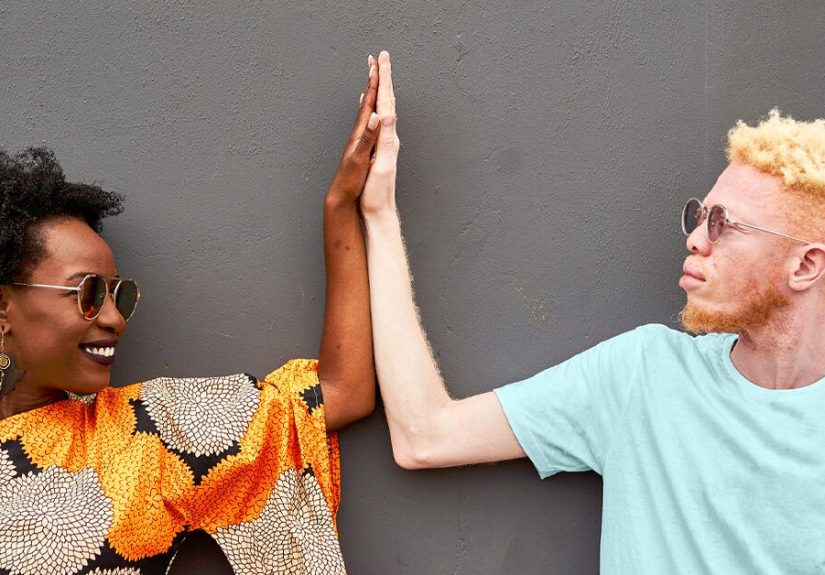
- There’s a wide range of appearancesno single “albinism face” or hair color.
- Photos online are often decontextualized, sometimes sensationalized, and not always shared with consent.
For an educational article, consider using images that teach health and support rather than turning someone’s appearance into a spectacle. Here are safe, helpful image ideas (with consent and proper licensing):
When you do use portraits, prioritize: informed consent, respectful captions, and diversity across skin tones, ages, and backgrounds. Education should never be a permission slip for gawking.
How albinism is diagnosed
Diagnosis is usually clinical and may be supported by genetic testing. A typical evaluation can include:
- Eye exam by an ophthalmologist to assess visual acuity, refractive error, nystagmus, strabismus, and other findings.
- Skin exam and history of sun reactions, freckles/moles, and sun protection habits.
- Family history and inheritance pattern clues.
- Genetic testing to confirm the subtype, clarify inheritance, and help identify syndromic forms when suspected.
In kids, early diagnosis matters because timely vision correction and school accommodations can make a big difference. In adults, diagnosis can still be valuable for eye care, skin surveillance, and family planning.
Treatment and management
There’s no cure that “adds melanin back” across the body. Management focuses on reducing risks and maximizing vision and quality of life. The good news: supportive care can be very effective.
Skin protection (non-negotiable, but you can make it easier)
- Daily broad-spectrum sunscreen (SPF 30+ is commonly recommended) applied generously and reapplied during sun exposure.
- Protective clothing: UPF shirts, long sleeves, and wide-brim hats are often more reliable than remembering to reapply sunscreen every two hours.
- Shade strategies: umbrellas, seeking shade midday, and planning outdoor time when UV is lower.
- Regular skin checks: self-checks plus routine clinician exams to catch suspicious spots early.
Practical tip: build “sun protection kits” where you actually liveby the front door, in a school bag, in the car. Sun safety is easier when it’s not a scavenger hunt.
Eye care and vision support
- Prescription glasses or contacts to correct refractive errors.
- Low-vision aids such as magnifiers, telescopic lenses, screen readers, and device accessibility features.
- Filters and sunglasses that reduce glare and improve comfort outdoors and under harsh indoor lighting.
- Strabismus or nystagmus management: sometimes treated with vision therapy strategies or surgery in select cases.
- School/work accommodations: large print, seating near the front, extra time for visual tasks, high-contrast materials, and accessible digital formats.
One underrated “treatment” is simply having teachers, coaches, and employers understand what helps: contrast, proximity, reduced glare, and predictable layouts.
When to seek medical attention quickly
Contact a clinician promptly if you notice:
- A new or changing mole/spot (shape, color, bleeding, non-healing areas).
- Sudden changes in vision, new pain/redness, or a sharp increase in light sensitivity.
- Unusual bruising, prolonged bleeding, frequent infections, or other systemic symptoms (especially if a syndromic form is possible).
Common myths (busted gently, but firmly)
- Myth: “People with albinism can’t go outside.”
Reality: They cansun protection and planning are key. - Myth: “Albinism means red eyes.”
Reality: Eye color varies. Lighting and low iris pigment can create a red/pink appearance in photos, but many people have blue, hazel, or brown eyes. - Myth: “Albinism is just cosmetic.”
Reality: Vision differences and skin-cancer risk make medical care important. - Myth: “It only occurs in certain groups.”
Reality: It occurs worldwide across all ethnicities.
Living with albinism: confidence, community, and the long game
Albinism is a medical condition, but people don’t live as diagnosesthey live as students, artists, gamers, athletes, parents, friends, and professionals. Support can include:
- Practical advocacy (accommodations, accessible materials, and anti-bullying policies).
- Mental health support if stigma, anxiety, or social stress shows up (which is a normal human response to being treated as “different”).
- Community connection through reputable organizations and support networks.
When families and schools treat albinism as “a set of needs we can meet” rather than “a problem we must fix,” outcomes tend to look much betteracademically, socially, and emotionally.
Experiences related to albinism (real-life moments, day-to-day realities) about
Ask people with albinism what it’s like, and you’ll hear something that doesn’t fit neatly into a single headline. For many, the story is a mix of practical problem-solving, occasional frustration, and a surprising amount of humorbecause sometimes laughter is the best response to a world that assumes everyone sees the same way.
School can be the first “aha” moment. A child might be labeled as distracted or slow when the real issue is that the board is basically a white blur from across the room. Families often describe a turning point when an eye specialist recommends front-row seating, larger print, or digital materials with zoom. Suddenly, the child’s grades improvenot because they “tried harder,” but because the world became readable. Many teens and young adults say learning to ask for accommodations is a major life skill: it’s not special treatment; it’s access.
Light is both friend and foe. People commonly talk about being “fine indoors” and then stepping outside into sunlight that feels like someone turned the brightness to 200%. Sunglasses, hats, and tinted lenses become everyday gear. Some folks develop a routine so automatic it’s like brushing teeth: sunscreen, hat, glasses, done. Others admit it took timebecause reapplying sunscreen at a pool party is socially awkward until you realize sunburn and skin damage are even more awkward.
Social attention can be exhausting. Strangers may stare, ask invasive questions, or treat someone with albinism like a curiosity. Teens especially describe the “public property” feelingpeople thinking it’s okay to comment on hair, skin, or eyes. Over time, many build scripts: a short, calm explanation (“It’s a genetic condition that affects pigment and vision”) or a boundary (“I’m not discussing my medical info”). Some learn to choose humor“Yes, I’m basically a human highlighter, thanks for noticing”not to minimize the issue, but to control the interaction on their terms.
Identity and appearance are personal. Some people lean into bright hair and bold fashion; others want to blend in. Both are valid. Many describe confidence as something they built through community: meeting others with albinism, seeing adults thriving, and realizing that “different” doesn’t mean “less.” Families often say the most helpful shift is focusing on what the child needs to do wellvision tools, sun protection, supportive peersrather than trying to make the condition invisible.
The most common theme is capability. People with albinism drive (depending on vision and local rules), work, travel, raise families, and do everything else humans dojust with a few extra items in the backpack and a little more planning. And if that planning includes a hat collection worthy of a fashion magazine? Honestly, that’s not a downside.
Conclusion
Albinism is a genetic condition that affects pigmentation and, very often, vision. Understanding the types of albinism helps explain why one person might have very light hair and another might notyet both may share similar eye findings like nystagmus or light sensitivity. The most important takeaways are practical: protect skin from UV exposure, get consistent eye care, use low-vision supports when needed, and build accommodations that make school and work accessible. With good support and respectful awareness, people with albinism can thrivewithout being reduced to a search-term photo gallery.