Table of Contents >> Show >> Hide
- Why the First Flight Was Such a Major Moment
- What the B-21 Raider Is Designed to Do
- From Rollout Drama to Real-World Testing
- Why the U.S. Air Force Wants the Raider Now
- Cost, Scale, and the Always-Fun Topic of Budget Reality
- What Happens After the First Flight
- Experiences Around the B-21’s First Flight: Why This Moment Felt Bigger Than a Test Event
- Conclusion
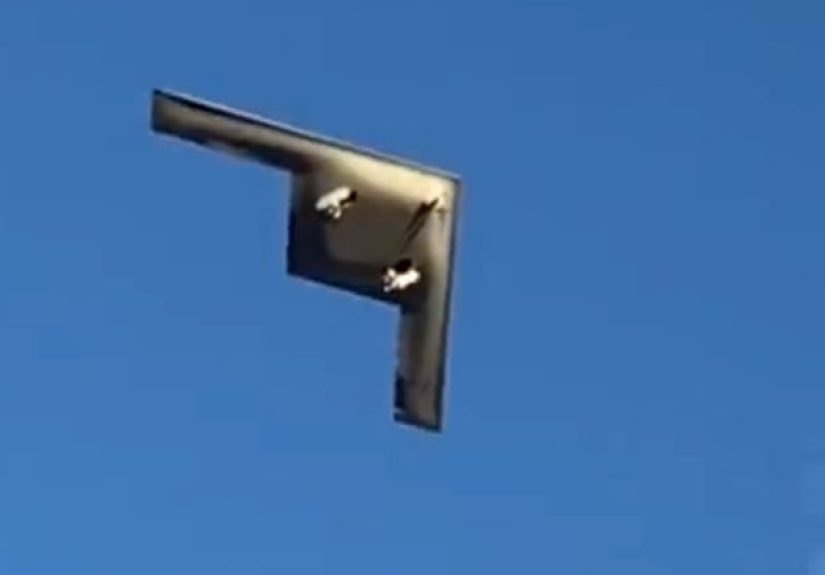
The B-21 Raider did not need fireworks to make history. It only needed runway, lift, and one very important morning in California. When the U.S. Air Force’s newest stealth bomber finally took to the sky, the moment marked far more than a successful test hop. It signaled that America’s next-generation long-range strike plan had moved from concept art and carefully lit unveilings into the much harsher world of real flight.
That is a big deal. Military programs can spend years looking impressive under showroom lights, only to meet reality once engines spool up and wheels leave the ground. The B-21’s first flight mattered because it proved the aircraft had crossed a brutal threshold: this bomber is no longer just a promise whispered through classified briefings and patriotic press releases. It is now part of the physical, measurable world of aerodynamics, testing schedules, mission planning, and future deterrence.
And yes, the B-21 looks like it arrived from the future after stealing a parking space from the B-2 Spirit. That comparison is unavoidable. But the Raider is not simply “B-2: The Sequel.” It is meant to be cheaper to sustain, more adaptable, more digitally integrated, and better suited for an era of increasingly dense air defenses and global competition. In plain English: it is designed for a world where staying invisible is harder, operating costs matter more, and the Pentagon wants a bomber that can keep evolving instead of aging into an expensive museum argument.
Why the First Flight Was Such a Major Moment
The B-21 Raider’s first flight turned years of development into visible proof. Before that milestone, the aircraft had already gone through rollout, ground tests, engine runs, and taxi trials. All of that mattered, but first flight is different. It is the moment an aircraft begins answering the questions that cannot be fully solved on paper or in static tests. How does it behave in real conditions? How smoothly do its systems interact in motion? How ready is the program to move from engineering confidence to operational confidence?
For the Air Force, the answer was encouraging. The B-21 flew from Palmdale, California, to Edwards Air Force Base, where it would continue a structured flight-test campaign. That route was symbolic and practical at the same time. Symbolic, because it showed the bomber had officially entered the next phase of its life. Practical, because Edwards is where serious American flight-test work goes to earn its reputation.
The first flight also mattered because the B-21 is the first new U.S. bomber in decades. America has modernized fighters, transports, refuelers, and drones, but a brand-new stealth bomber is a rarer event. Strategic bombers sit at the center of long-range deterrence, conventional power projection, and the airborne portion of the nuclear triad. When one of those aircraft changes generations, the ripple effects stretch far beyond aviation nerds with long lenses and desert camping chairs.
What the B-21 Raider Is Designed to Do
A stealth bomber built for tougher skies
The Air Force describes the B-21 as a dual-capable penetrating strike bomber. That phrase may sound like it was assembled by a committee in a windowless room, but it carries real meaning. “Dual-capable” means the bomber is intended to carry both conventional and nuclear weapons. “Penetrating” means it is built to get through heavily defended airspace rather than loiter at a safe distance and hope for the best.
That mission matters because modern air-defense systems have become more layered, more mobile, and more dangerous. Potential adversaries have invested heavily in radar networks, missile batteries, and integrated command systems that make traditional strike missions riskier. A bomber like the B-21 is supposed to survive in that environment, find its way in, and hold critical targets at risk without announcing itself like a marching band in a library.
Northrop Grumman and Air Force officials have repeatedly emphasized the aircraft’s next-generation stealth features, advanced networking, and open systems architecture. Translation: the Raider is supposed to avoid detection, share data effectively, and accept upgrades more easily than older aircraft. That last part may be the least glamorous but one of the most important. The Pentagon has learned, sometimes painfully, that buying a cutting-edge platform is one thing; keeping it relevant for decades is another.
Not just a bomber, but part of a larger combat network
The B-21 is also being framed as more than a traditional bomb truck. The Air Force wants future aircraft to function within highly connected combat networks, passing and receiving information across platforms in fast-moving operations. So while the Raider is undeniably a bomber, it also fits a broader military push toward distributed sensing, data fusion, and flexible mission roles.
That is one reason military leaders keep talking about adaptability. The B-21 is expected to remain in service for decades. No one serious believes the threat picture of the 2030s, 2040s, and beyond will stay frozen in place. A bomber that cannot be updated quickly is not a strategic asset. It is a very expensive nostalgia project.
From Rollout Drama to Real-World Testing
The B-21 first entered public view in December 2022 during a carefully managed unveiling in Palmdale. The event gave the world a look at the aircraft’s overall shape while keeping many details hidden. That was not accidental. The Raider’s value is tied to what opponents cannot easily understand about it. The less a rival knows about its stealth profile, materials, signatures, and mission systems, the better.
After the unveiling came the slower, less glamorous, but absolutely essential grind of testing. Ground evaluations, engine runs, calibration work, and taxi tests all built toward first flight. This is the stage where a program earns trust by doing boring things correctly, repeatedly, and without drama. In aerospace, “boring” is often another word for “successful.”
Then came the flight itself. The moment was not staged like a movie trailer. In fact, part of the fascination around the first flight came from how restrained it felt. That fits the B-21’s identity. The aircraft is designed to be quiet in every sense that matters: low-observable, tightly controlled, and strategically understated. It did not need a dramatic reveal in the air. The act of flying was the headline.
Why the U.S. Air Force Wants the Raider Now
The Raider is being developed to gradually replace the aging B-1 Lancer and B-2 Spirit fleets, while complementing a modernized B-52 force. That bomber mix tells you a lot about where the Air Force is headed. The service does not want a one-size-fits-all fleet. It wants aircraft with different strengths, different cost profiles, and different mission roles.
The B-1 brings payload and speed, but it is not a stealth aircraft. The B-2 brings stealth, but it is expensive and small in number. The B-52, somehow refusing to retire like a rock band on its fourteenth farewell tour, remains useful for standoff missions and weapons carriage but was not built to penetrate advanced defenses. The B-21 is supposed to bridge those gaps by combining survivability, range, payload flexibility, and modern digital architecture.
This is especially relevant in an era when Pentagon planners talk constantly about contested environments and long distances, particularly in the Indo-Pacific. The Air Force wants the ability to strike high-value targets across large theaters, even when defenses are sophisticated and warning times are short. In that setting, the B-21 is not simply another airplane. It is an argument about how the United States intends to preserve strategic reach.
Cost, Scale, and the Always-Fun Topic of Budget Reality
No modern defense program escapes the cost conversation, and the B-21 is no exception. The Air Force has long planned for at least 100 aircraft, and cost discipline has been central to the bomber’s public narrative. That is not just a talking point. It is a survival tactic. The Pentagon has seen enough troubled acquisition programs to know that even an excellent aircraft can lose political support if its finances start breathing fire.
One reason the B-21 attracts attention is that it attempts a difficult balancing act: be advanced enough to survive future threats, but not so exquisite that the force ends up buying too few to matter. A stealth bomber that is unbeatable on paper but unaffordable in quantity creates its own strategic weakness. Numbers matter. Presence matters. Sustainability matters.
That is why program watchers pay close attention not only to the aircraft’s technical milestones but also to production pacing, industrial capacity, and long-term operating costs. A bomber is not merely purchased; it is maintained, upgraded, based, crewed, protected, and integrated into doctrine for decades. The first flight was exciting, but it was also a reminder that the real marathon comes after the photo-worthy moment.
What Happens After the First Flight
First flight is not the finish line. It is the end of the beginning. After that comes the demanding cycle of envelope expansion, systems validation, mission testing, and production learning. Engineers will analyze performance, refine software, study signatures, and make adjustments. Test teams will move carefully because stealth bombers are not the kind of aircraft you rush just because the calendar looks impatient.
The Air Force has already made clear where the B-21 will fit in the future force structure. Ellsworth Air Force Base in South Dakota is set to host the first operational B-21 unit and the formal training unit, with Whiteman Air Force Base in Missouri and Dyess Air Force Base in Texas designated as the next bomber bases. In other words, the Raider is not just flying for science. It is flying toward an actual force beddown plan.
As testing continues, the B-21 will increasingly be judged on two things at once: whether it can perform its intended mission, and whether the program can scale without unraveling under cost, schedule, or support pressures. The first flight made the first question more hopeful. The next several years will determine the second.
Experiences Around the B-21’s First Flight: Why This Moment Felt Bigger Than a Test Event
Even if you never set foot near a runway, the B-21’s first flight has a certain emotional gravity. Some defense milestones feel abstract, like line items in a budget document or a vague promise about future capability. This one did not. A bomber rose into the California morning, and with it rose years of expectation, skepticism, strategy, and industrial effort. That is why the event felt larger than a test program checking a box.
For aviation enthusiasts, the experience of watching the Raider leave the ground was the rare thrill of seeing something both familiar and genuinely new. Familiar, because the flying-wing silhouette clearly belongs to the lineage of American stealth bombers. New, because the details are cleaner, tighter, and more modern, suggesting an aircraft shaped by decades of lessons learned since the B-2 first flew. To aviation watchers, those small differences are not cosmetic. They are clues, and clues are irresistible.
For engineers and maintainers, the feeling is likely far less cinematic and far more personal. A first flight is the public face of thousands of hidden tasks: long nights, design reviews, materials work, calibration checks, manufacturing discipline, software troubleshooting, and the endless effort required to make a complex aircraft behave as one machine instead of several thousand arguments bolted together. When an airplane flies, the public sees elegance. The workforce sees proof that years of problem-solving were not wasted.
For Air Force planners, the experience is probably closer to cautious relief than celebration. A successful maiden flight is wonderful, but no serious military organization confuses one good day with a finished capability. What they likely felt was confirmation that the road ahead is real now. Testing can accelerate. Planning can sharpen. Future crews, bases, logistics systems, and mission concepts can move from hypothetical to practical. The aircraft has entered the part of life where it begins answering back.
There is also the public experience of the moment, which is more complicated than simple pride. Stealth bombers are awe-inspiring pieces of technology, but they also embody the hard edge of state power. Watching the B-21 fly can stir admiration for engineering and discomfort about why such machines are built at all. That tension is part of the aircraft’s meaning. It exists because the United States believes deterrence still depends on credible long-range strike power. The bomber’s sleek shape is impressive, but its purpose is sobering.
And then there is the strange emotional texture of stealth itself. Most famous aircraft in history became famous by being seen: the P-51, the SR-71, the Space Shuttle, the Blue Angels slicing through a summer sky. The B-21 is famous partly because it is designed not to be seen. That gives the first-flight experience a paradoxical quality. Spectators gather to celebrate an aircraft whose entire job is to avoid attention. It is a public milestone for a machine built around secrecy. That contradiction makes the Raider memorable in a way ordinary test flights are not.
Ultimately, the B-21’s first flight felt important because it connected three worlds at once: strategy, technology, and human effort. It mattered to policymakers thinking about deterrence. It mattered to the aerospace workforce that built it. It mattered to observers who understand that certain flights divide eras into before and after. Before the flight, the B-21 was the next bomber. After the flight, it became a flying program with momentum, consequences, and a real future.
That is why this event resonated so strongly. It was not just about a bomber taking off. It was about a nation proving that one of its most ambitious and secretive airpower projects had crossed into reality. In defense aviation, that moment is rare. In strategic terms, it is even rarer. And in human terms, it is the kind of milestone people remember years later, usually beginning with some variation of: “I still remember the morning the Raider first flew.”
Conclusion
The B-21 Raider’s first flight was not merely a successful aviation event. It was a strategic signal. It showed that the Air Force’s next-generation stealth bomber is progressing from guarded reveal to operational pathway, and that America is serious about maintaining a penetrating long-range strike capability in a more contested world.
Plenty of work remains. Testing must continue, production must scale intelligently, and the program must stay credible on cost as well as performance. But the first flight changed the tone of the conversation. The B-21 is no longer just the future of the bomber force. It is a flying part of that future already.
If that sounds dramatic, well, it should. A stealth bomber designed for conventional and nuclear missions, built to survive advanced defenses, and expected to anchor U.S. airpower for decades is not the kind of thing that quietly wanders into history. It arrives on a runway, lifts off, and makes everyone pay attention.