Table of Contents >> Show >> Hide
- Why Nautical Knots Still Matter in 2026
- The Core Knot Set Every Boater Should Actually Use
- The Real Twist: Knot Choice + Rope Material
- Docking Smarter: Knots as a Workflow, Not a Party Trick
- Design, Decor, and DIY: Nautical Knots Leave the Marina
- Common Knot Mistakes and How to Avoid Them
- How to Learn Faster Without Getting Overwhelmed
- Nautical Knot Trends: Where the Culture Is Heading
- Practical Examples from Real Life
- Conclusion: Tradition, Meet Innovation
- Extended Experience Section: from the Dock, Deck, and Daily Life
If you’ve ever tried to tie a knot on a rocking dock, with one hand on a piling and the other pretending to be calm, you already know the truth: knots are less about “fancy rope art” and more about confidence under pressure. A good knot can save your gelcoat, your weekend, and your dignity in front of seasoned boaters who somehow make every line move look effortless.
But here’s the modern twist: today’s nautical knot culture is no longer just about old-school seamanship. It now blends practical boating safety, contemporary line materials, dockside efficiency, and even design-forward style for homes, gifts, and DIY projects. In other words, knot-tying is having a glow-up.
This guide explores a new twist on the nautical knot: what still matters from tradition, what has changed with modern rope technology, and how to use knots creativelyon deck and off. We’ll keep it practical, readable, and just nerdy enough to impress your smartest friend at the marina.
Why Nautical Knots Still Matter in 2026
In boating, speed and reliability matter. You often need to tie quickly, untie quickly, and trust the knot under load. That’s why classic knots remain essential: they’re tested, repeatable, and designed for real forceswind, current, shock, and chafe.
Modern boating has added new demands:
- High-tech rope fibers behave differently from traditional natural lines.
- Short-handed crews need knots that are simple and low-error.
- Dock congestion rewards clean line management.
- Safety-first culture prioritizes secure tie-offs and reduced failure points.
That “new twist” is not replacing classic knotsit’s learning which knot belongs in which scenario and avoiding the myth that one knot can do everything.
The Core Knot Set Every Boater Should Actually Use
Forget memorizing 40 knots in one weekend. Start with a compact system you’ll use repeatedly. These are the practical all-stars:
1) Bowline: The Reliable Fixed Loop
Use it when you need a secure loop at line’s endlike attaching to a ring or post. The bowline is trusted because it’s strong, stable, and easier to untie than many knots after loading.
Best use: Mooring loop, temporary loop attachment, utility tie-offs.
2) Cleat Hitch: The Docking Essential
If you dock, you use this. Period. The cleat hitch is fast, secure, and easy to release. Done correctly, it prevents “mystery slippage” and chaos when conditions change.
Best use: Securing a line to a cleat at dock or fuel stop.
3) Figure-Eight Knot: The Trusty Stopper
Simple and underrated. This stopper knot keeps line ends from slipping through blocks or fairleads and is usually easier to untie than an overhand knot after strain.
Best use: End-of-line stopper, temporary control point.
4) Clove Hitch: Fast, Temporary Hold
Quick to tie around a post or rail, but not ideal for every load condition. Think of it as a tactical knotgreat for temporary holds, not always your final answer.
Best use: Quick setup, temporary positioning, light-duty securing.
5) Sheet Bend: Joining Unequal Lines
When two ropes differ in diameter, the sheet bend is often more dependable than trying to force a one-size-fits-all join. It’s a classic for practical rope joining.
Best use: Joining lines of different thicknesses.
The Real Twist: Knot Choice + Rope Material
One of the biggest modern shifts is material science. Not all rope behaves alike. Nylon stretches and absorbs shock well, while polyester and high-performance fibers can have very different grip, stretch, and chafe behavior.
Why this matters:
- A knot that behaves beautifully in one line may slip or jam in another.
- Some materials need extra turns or different finishing methods.
- In high-load situations, poor pairing of knot and rope can reduce reliability.
Practical rule: test your knot in the exact line you’ll use on the water. Tie it. Load it. Release it. Repeat. Seamanship is built by rehearsal, not wishful thinking.
Docking Smarter: Knots as a Workflow, Not a Party Trick
Novice boaters often ask: “What’s the strongest knot?” Better question: What’s the right knot sequence for this maneuver?
Example docking workflow:
- Prepare lines in advance with clear bitter ends.
- Use a bowline where a fixed loop helps with quick placement.
- Finish on the cleat with a proper cleat hitch.
- Add chafe awareness where line contacts hard edges.
- Re-check as wind and tide shift.
This is the “new twist” mindset: knots are part of a systemline prep, boat handling, communication, and situational awareness.
Design, Decor, and DIY: Nautical Knots Leave the Marina
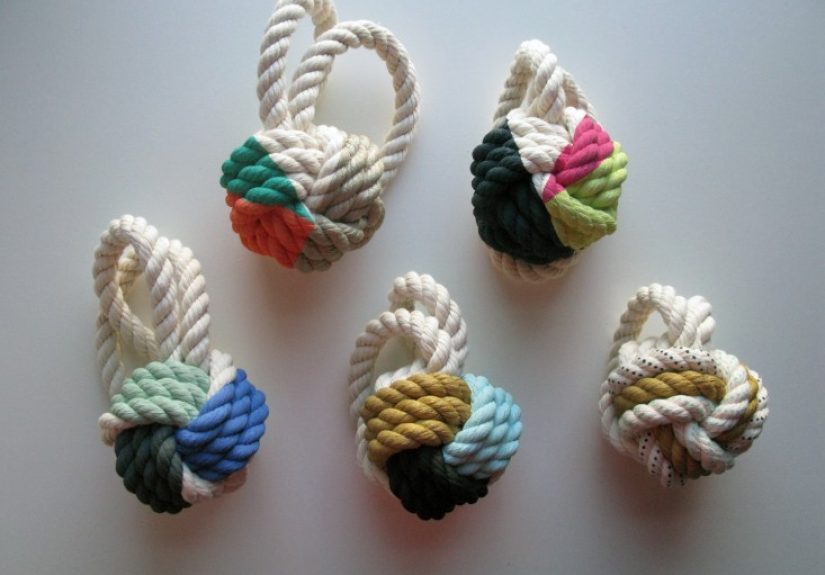
Nautical style has expanded into interiors, fashion, and craft culture. The rope knot has become both functional and aesthetic: coastal wall accents, napkin rings, curtain tie-backs, key fobs, plant hangers, and gift wrapping details.
Done well, knot-inspired decor feels intentional, not cliché. Think texture, neutral palettes, and utility-driven styling rather than “pirate-themed overload.”
DIY Projects That Work
- Knot-framed mirror: Adds coastal texture to bathrooms or entryways.
- Rope pull handles: Functional upgrade for cabinets in lake houses.
- Bowline keychain: Durable, useful, and conversation-friendly.
- Table settings: Mini rope knots as napkin holders for summer dinners.
The trick is balance: one nautical accent can elevate a space; twelve can make it look like a gift shop exploded.
Common Knot Mistakes and How to Avoid Them
Mistake 1: Using One Favorite Knot for Everything
Comfort is good. Overconfidence is expensive. Different tasks need different knot mechanics.
Mistake 2: Ignoring Line Condition
Sun, salt, abrasion, and age matter. A perfect knot in compromised rope is still a bad setup.
Mistake 3: Rushing the Final Set
Many failures happen because knots were “almost dressed.” Always cinch and inspect.
Mistake 4: No Practice Under Real Conditions
Tying in calm daylight is not the same as tying in wind, rain, and moving water. Practice accordingly.
How to Learn Faster Without Getting Overwhelmed
If knot-tying has ever made you feel like your fingers are made of uncooked spaghetti, welcome to the club. Use this training framework:
- Learn 5 core knots first. Depth beats breadth.
- Practice in short sessions. Five minutes daily is better than one marathon.
- Use one rope type initially. Reduce variables.
- Add load testing. Pull, hold, release, retie.
- Simulate scenarios. Dock line, fender line, temporary tie-off.
Muscle memory wins. Fancy mnemonic rhymes are fun, but repetition is what sticks when conditions deteriorate.
Nautical Knot Trends: Where the Culture Is Heading
Across boating and lifestyle spaces, knot culture is evolving in useful ways:
- Micro-learning: Short knot tutorials and visual step sequences are replacing long theory-only lessons.
- Function-first minimalism: Boaters prefer compact, high-value knot sets.
- Hybrid craftsmanship: Traditional techniques blended with modern fibers and hardware.
- Everyday carry utility: Knot skills crossing into camping, fishing, and emergency preparedness.
The phrase “new twist on the nautical knot” is really about relevance: old knowledge adapted to present-day tools and habits.
Practical Examples from Real Life
Example 1: Weekend Sailor, Crowded Dock
A skipper arrives with crosswind pressure and limited assistance. Pre-rigged bowline loops and clean cleat hitch finishes cut docking stress dramatically. Same boat, same conditionsbetter knot workflow, smoother outcome.
Example 2: Fishing Crew, Unequal Lines
Needing a quick extension between different rope diameters, they choose a sheet bend instead of improvising a weak join. Result: stable connection and fewer mid-task failures.
Example 3: Home DIY Refresh
A homeowner uses subtle rope knot accents (mirror trim + napkin ties) to create coastal character without theme overload. The look feels curated, not costume-like.
Conclusion: Tradition, Meet Innovation
Knots are ancient, but they are not outdated. The best seamanship today combines classic knot knowledge with modern materials, clear workflows, and practical repetition. That’s the real new twist: not reinventing rope science, but applying it intelligently in today’s world.
Whether you’re tying off at a fuel dock, setting lines for a weekend sail, or adding maritime personality to your living room, the knot remains a small skill with outsized impact. It rewards patience, precision, and humilityespecially humility, because rope has a way of exposing all of us.
Learn a few knots deeply. Use them in context. Practice until your hands stop negotiating and start knowing. And next time someone says knot-tying is old-fashioned, smile, secure the line in one clean motion, and let the result do the talking.
Extended Experience Section: from the Dock, Deck, and Daily Life
The first time I tried to dock in a stiff crosswind, I tied what I believed was a “perfect” knot. It looked textbook. It felt secure. Then the boat surged, the line shifted, and my confidence evaporated faster than coffee on a hot engine cover. That day taught me the most important lesson in knot-tying: a knot is never just a shapeit’s a decision made in context.
Over time, the learning curve got friendlier. I started practicing with intention: same knot, different ropes, different tension, different weather. Nylon gave me a forgiving stretch in some situations, while stiffer lines demanded cleaner dressing and tighter finishing. My hands slowly stopped guessing. They started recognizing.
One of the most memorable moments happened at a busy marina near sunset, when everyone seemed to arrive at once. Fenders were bouncing, engines idling, and people were shouting contradictory advice from three directions. Instead of panic-tying whatever came to mind, I followed a simple routine: fixed loop where I needed speed, proper cleat hitch where I needed control, quick visual check before stepping away. Nothing dramatic happenedand that was the win. Good knot work often looks boring, and boring is beautiful when fiberglass and pilings are involved.
Off the water, knot skills began appearing in unexpected places. I fixed a loose patio shade tie using a secure loop that could still be adjusted. I built a rope-handled storage basket for a mudroom. I even used a decorative knot wrap on a gift for a friend who lives on the coast; the bow got more compliments than the actual gift, which was mildly insulting but technically deserved.
There’s also a social side to knots. On docks, knot talk is one of the easiest bridges between strangers. A veteran boater might quietly show you a cleaner finish. A younger sailor might share a smart shortcut for line organization. Nobody agrees on everything, but everyone respects a setup that works under load and releases without drama.
My favorite part of this journey is how knot-tying sharpens attention. You begin noticing chafe points before they become problems. You read angles, tension, and movement with more clarity. You become less reactive and more prepared. In a world that rewards speed, knots reward careand care usually wins.
If you’re just starting, don’t chase complexity. Pick a few knots and make them trustworthy. Tie them while standing, kneeling, wearing gloves, and in low light. Tie them when calm so they hold when things aren’t. Celebrate small improvements: cleaner loops, faster finishes, fewer do-overs. That’s real progress.
A new twist on the nautical knot, for me, is this: it’s not only about securing rope. It’s about building composure. Every well-tied knot is a tiny promise that when conditions shiftand they always doyou’ll be ready to respond with skill instead of stress.