Table of Contents >> Show >> Hide
- Why eyes look uneven in the first place
- Safety first: when asymmetry needs urgent care
- 12 ways to fix asymmetrical eyes
- 1) Identify what’s actually uneven (lid, brow, or swelling)
- 2) De-puff one eye fast (cold + gentle massage)
- 3) Stop the “rub cycle” (dryness and allergies make asymmetry worse)
- 4) Audit your skincare and makeup for eyelid irritation
- 5) Shape and fill brows to balance the eye area
- 6) Use eyeshadow placement to “lift” the smaller-looking eye
- 7) Customize eyelinerdon’t try to copy-paste your wings
- 8) Lash tricks: curl, mascara, half-lashes, or a lash lift
- 9) Use glasses and frames strategically
- 10) Try eyelid tape or “ptosis crutch” options (when appropriate)
- 11) Ask an eye doctor about causes like ptosis, thyroid eye disease, or myasthenia
- 12) Consider medical and cosmetic treatments (from drops to procedures)
- FAQ: quick answers people actually want
- Real-life experiences: what people notice, try, and learn (the extra )
- Conclusion
- SEO Tags
Quick reality check: almost nobody has perfectly symmetrical eyes. Faces are built like handmade pottery, not factory-molded Tupperware. One brow sits higher, one lid folds differently, one eye looks a little more “awake.” That’s normal.
Stillif your eyes look noticeably uneven and it bugs you (or it’s new and worrying), you’ve got options. Some are simple styling tricks. Others involve addressing swelling, allergies, or dryness. And in certain cases, asymmetry can be a sign of an eye or nerve issue that deserves medical attention.
This guide walks you through 12 practical ways to improve eye symmetry, from quick cosmetic fixes to clinician-approved treatmentsplus a final section with real-world “what people learn the hard way” experiences.
Why eyes look uneven in the first place
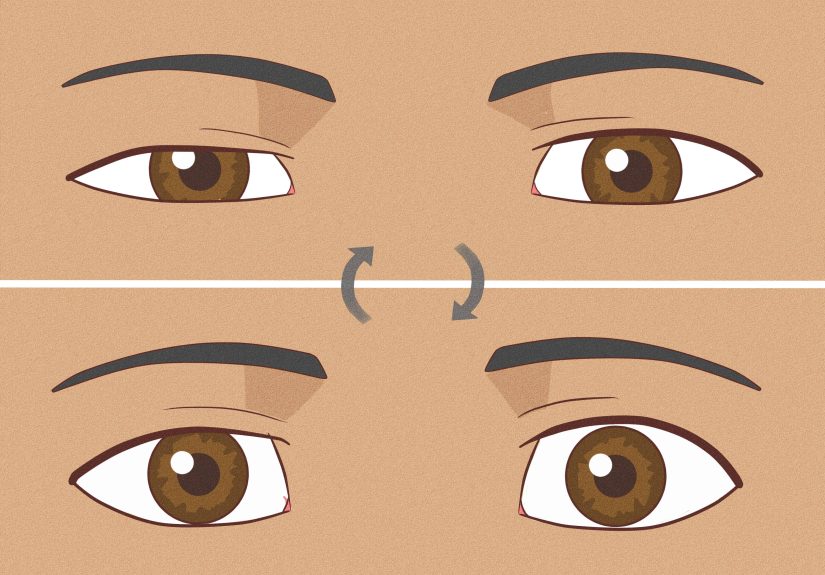
“Asymmetrical eyes” can mean different things, and the best fix depends on the cause. Common reasons include:
- Natural facial asymmetry: bones, brows, and eyelids aren’t mirror images.
- Ptosis (droopy eyelid): one upper lid sits lower because the lid-lifting mechanism isn’t working the same on both sides.
- Brow asymmetry: one brow is naturally higher, or muscles pull differently.
- Swelling/puffiness: allergies, salt, sleep, rubbing, sinus issues, or irritation can make one side look “heavier.”
- Skin irritation: contact dermatitis around the eyelids from skincare, makeup, or lash glue can create swelling and shape changes.
- Eye alignment issues: subtle misalignment can change how “open” each eye looks in photos.
Safety first: when asymmetry needs urgent care
If your eye or eyelid asymmetry is sudden (hours to days), or comes with symptoms like double vision, eye pain, severe headache, neck pain, facial drooping, trouble speaking, weakness, or a noticeably different pupil size, don’t treat it like a makeup problem. Seek urgent medical evaluation. Sudden drooping can be associated with neurological or vascular issues.
If your asymmetry is long-standing, mild, and stable, you can usually approach it as a style/comfort issue firstwhile keeping an eye on any changes.
12 ways to fix asymmetrical eyes
These are arranged from “easy and reversible” to “medical/procedural.” Mix and matchmost people get the best results from a small combination rather than one magical trick.
1) Identify what’s actually uneven (lid, brow, or swelling)
Before you fix anything, figure out what you’re fixing. Take a few photos in natural light:
- Relax your face (no eyebrow “helping”).
- Take one photo straight-on, one slightly above eye level.
- Look for: lid height, brow height, crease shape, and under-eye puffiness.
Why it matters: if the brow is higher on one side, chasing “even lids” with eyeliner alone can feel like painting a crooked wallpossible, but frustrating.
2) De-puff one eye fast (cold + gentle massage)
If one eye looks smaller because it’s puffy, treat the puff first. Try:
- Cold compress for 3–5 minutes (cool spoon, gel mask, chilled eye pads).
- Gentle drainage massage: with clean hands, lightly sweep from the inner corner toward the temple (no heavy pressure).
- Hydrate and go easy on salty foods if swelling is a pattern.
Pro tip: if you wake up puffy on one side, look at sleep positionmany people “squish” one side of the face into the pillow.
3) Stop the “rub cycle” (dryness and allergies make asymmetry worse)
Dry eyes and allergies can cause rubbing, and rubbing can lead to irritation and swellingespecially around one eye if that side is more sensitive. Practical moves:
- Use preservative-free artificial tears if your eyes feel dry.
- Manage allergies (common culprits: dust, pets, seasonal pollen).
- Avoid aggressive eye makeup removalswitch to a gentle remover and soft pads.
Goal: calm the tissue so you’re not trying to “correct” swelling with makeup every day.
4) Audit your skincare and makeup for eyelid irritation
The eyelids are drama queensthin skin, quick reactions. New products can trigger redness, peeling, and swelling that changes eye shape. If you suspect irritation:
- Pause new eye creams, retinoids near the eye, fragranced products, and lash adhesives.
- Go “boring” for a week: gentle cleanser, bland moisturizer, minimal makeup.
- Reintroduce products one at a time to spot the offender.
If irritation is severe or persistent, a clinician can help confirm dermatitis vs. other conditions and guide safe treatmentespecially because eyelid skin is easy to over-treat.
5) Shape and fill brows to balance the eye area
Brows are the picture frame. If one brow sits higher, you can often create the illusion of more even eyes by:
- Cleaning up the underside of the lower brow (tiny tweaks only).
- Extending the tail slightly on the side that looks “shorter” or more lifted.
- Filling to match shape rather than forcing identical twins.
Rule of sanity: step back from the mirror. Close-up tweezing is how good brows become a cautionary tale.
6) Use eyeshadow placement to “lift” the smaller-looking eye
Eyeshadow is basically optical engineering. For the eye that looks smaller or more hooded:
- Place your transition shade slightly higher (with eyes open) to fake a more even crease height.
- Keep the outer corner softly lifted (blend up and out, not down).
- Use a brighter shimmer or highlight more on the inner corner of the smaller-looking side to bring it forward.
This is especially helpful when the eyelid crease shape is different between eyes.
7) Customize eyelinerdon’t try to copy-paste your wings
The quickest way to lose your mind: insisting both wings must be drawn the exact same way. Instead:
- Apply liner with eyes open (especially for hooded lids).
- Use small strokes and build slowly.
- Make the “smaller” eye’s wing slightly thicker or slightly higher, if needed.
- Tightline the upper waterline to thicken lashes without making the lid space look smaller.
Translation: match the result, not the technique.
8) Lash tricks: curl, mascara, half-lashes, or a lash lift
Lashes can make one eye look noticeably more open. Try:
- Curl lashes more on the side that looks sleepier.
- Focus mascara at the outer lashes to create a lifted effect.
- Use half-lashes or outer-corner clusters to lift one side without overwhelming the eye.
- Consider a professional lash lift/tint if you want a low-maintenance boost.
9) Use glasses and frames strategically
If you wear glasses (or are open to them), frames can visually “level” the eye area. Helpful frame traits:
- Slight upswept corners can create lift.
- A strong browline frame can disguise subtle brow asymmetry.
- Anti-reflective coating helps your eyes show evenly in photos and video.
And yes: sometimes updating a prescription reduces squinting that makes one eye look smaller.
10) Try eyelid tape or “ptosis crutch” options (when appropriate)
If one lid truly droops, some people use:
- Eyelid tape/adhesive strips to create a more even fold (common in beauty routines).
- Ptosis crutch attachments on glasses in certain functional cases to help hold a drooping lid up.
Important: if you’re taping the lid every day because the droop is new or worsening, that’s a good reason to get an eye exam. Also, adhesives can irritate sensitive eyelid skinpatch-test and be gentle.
11) Ask an eye doctor about causes like ptosis, thyroid eye disease, or myasthenia
If your asymmetry is significant, worsening, or comes with fatigue-related fluctuations (looks worse later in the day), talk to a professional. They may evaluate for:
- Ptosis (blepharoptosis): drooping upper lid from muscle/aponeurosis issues.
- Thyroid eye disease: can cause lid retraction, prominence, and asymmetry.
- Myasthenia gravis: can cause drooping lids and double vision that varies with fatigue.
You’re not being “dramatic.” You’re being appropriately curious about your face doing a new thing.
12) Consider medical and cosmetic treatments (from drops to procedures)
If you want longer-lasting correction, options may include:
- Prescription eye drops for acquired ptosis: some drops can temporarily raise the upper lid in adults with certain types of droopy eyelid.
- Botulinum toxin (Botox): can sometimes improve brow asymmetry by relaxing specific muscles (results depend heavily on injector skill and anatomy).
- Fillers: in select cases, can balance hollowing or asymmetry around the orbit.
- Ptosis repair surgery: tightens/adjusts eyelid-lifting structures when droop is structural.
- Blepharoplasty: removes excess eyelid skin; sometimes combined with ptosis repair when both are present.
Best practice: get evaluated by the right specialist (ophthalmology/oculoplastics for lids; board-certified derm/plastic for aesthetics) so you’re treating the actual causenot guessing.
FAQ: quick answers people actually want
Are asymmetrical eyes normal?
Yes. Mild asymmetry is common and usually more noticeable to you than to everyone else.
Can exercise or “face yoga” fix uneven eyes?
It may help you become more aware of habitual expressions (like raising one brow), but it’s not a reliable fix for true ptosis, lid anatomy differences, or nerve-related issues.
Why do my eyes look more uneven in photos?
Phone cameras can distort faces at close range, lighting can cast shadows differently on each side, and people unconsciously tilt their head. Try stepping back, using a longer focal length/zoom, and keeping the camera slightly above eye level.
Real-life experiences: what people notice, try, and learn (the extra )
When people talk about asymmetrical eyes, the stories are surprisingly similarless “I need perfection” and more “why do I look like two different coworkers on Zoom?” Here are common experience patterns, plus what tends to help.
The “I only see it in selfies” moment
A lot of people don’t notice asymmetry until they start taking more front-facing photos. In the mirror, your brain adapts. In a photo, everything is frozen and unfamiliar, and suddenly one eye looks smaller. The fix here is often psychological and practical: change the camera distance, avoid harsh overhead lighting, and stop judging your face by one unflattering screenshot taken mid-sentence. People who experiment with angles (camera slightly above, chin a touch forward, face turned 5–10 degrees) often feel immediate reliefbecause the “problem” was half perspective.
The “it’s worse when I’m tired” pattern
Many people report that one eye looks more droopy at night or after long screen time. That doesn’t automatically mean something serious, but it’s a clue: fatigue, dryness, and rubbing can exaggerate asymmetry. Practical wins here include using artificial tears when eyes feel gritty, taking screen breaks, and being gentler with makeup removal. Some people also notice that a consistent sleep schedule and less alcohol reduce morning puffiness on the “problem side.” Boring habits, surprisingly effective.
The “new skincare betrayed me” experience
Eyelid skin is sensitive, and people often discover the hard way that a new eye cream, retinoid, fragrance, lash glue, or even a “natural” essential oil product can cause irritation. The experience usually goes like this: one eyelid gets red and slightly swollen, the crease changes, and suddenly one eye looks totally different. The most helpful response tends to be a temporary resetstrip back to gentle basics, let the skin calm down, then reintroduce products one at a time. People who do this methodically usually find the culprit faster and avoid re-triggering the flare.
The “I tried to fix it and made it worse” cautionary tale
Over-tweezing brows is the classic. Someone notices one eye looks smaller, then tries to “even it out” by removing hairusually without stepping back. The result: brows become uneven in a new and more dramatic way. The common lesson: shape brows slowly, in good light, and make tiny changes over several days instead of one frantic session. Many people also learn to prioritize symmetry when the face is relaxednot when they’re raising their brows to “help” one eye open.
The “professional help was the fastest fix” realization
For some, asymmetry is truly structural (like ptosis) and no amount of eyeliner makes it feel right. These are the folks who often say, “I wish I’d gotten evaluated sooner.” Not because they needed surgery immediately, but because having a clear explanation removes anxiety and helps them pick the right solutionwhether that’s a conservative option (like drops or styling) or a procedure with a predictable outcome. The emotional benefit is real: it’s easier to be patient with your face when you understand what it’s doing.
Conclusion
Fixing asymmetrical eyes isn’t about “correcting” your faceit’s about choosing the level of change that makes you feel confident. Start with the reversible basics: reduce puffiness, stop irritation, and use brows, shadow, liner, and lashes strategically. If the asymmetry is new, worsening, or comes with other symptoms, take the smart route and get evaluated. The best fix is the one that’s safe, realistic, and actually fits your day-to-day life.