Table of Contents >> Show >> Hide
- Why This AMA Hit a Nerve
- The First Diagnosis: Medical TV Has Absolutely Fried Our Expectations
- What the 53 Questions Really Revealed About Modern Medicine
- 1. Specialty Choice Is Not Vibes, It Is Logistics, Fit, Endurance, and a Little Controlled Chaos
- 2. The Money Question Makes Everyone Slightly Weird
- 3. Burnout Is the Plot Twist Nobody Ordered
- 4. Patients Need Better Questions, Not Fewer Questions
- 5. Second Opinions Are Not Betrayals
- 6. AI Is Coming, but It Is Not Putting on a White Coat and Stealing the Pager
- 7. Sometimes the Best Answer Is, “That Weird Symptom Is Common, but Get It Checked if It Changes”
- Why Readers Cannot Stop Scrolling
- Seven Quick Takeaways From the Best Questions and Answers
- What This Looks Like in Real Life: The Experience Behind the AMA
- Conclusion
If TV has taught us anything, it is that surgeons have flawless hair, interns sprint dramatically through hallways, and one hospital can somehow survive a ferry crash, a bomb scare, a plane wreck, and three emotional monologues before lunch. Real doctors, naturally, would like a word. Or several hundred words, preferably typed between patient calls, charting, and whatever fresh administrative goblin just crawled out of the electronic medical record.
That is exactly why this wildly candid AMA featuring seven doctors landed so well online. The setup alone sounds like the beginning of a stand-up bit: a pediatric heart-transplant cardiologist, an ophthalmologist, a radiologist, an emergency doctor, a surgeon, a neurosurgeon, and a gynecologist all gather in one room and let the internet fire away. The result is 53 questions and answers that are funny, sharp, weirdly comforting, and occasionally brutal in the best possible way.
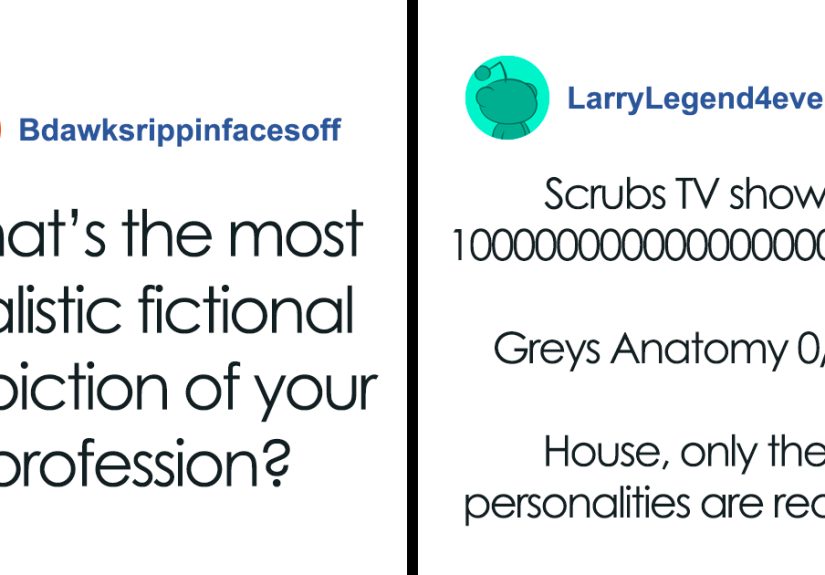
The headline joke about Grey’s Anatomy getting a “0/10” is not really about hating TV. It is about clearing the fog. People absorb a lot of medicine through pop culture, and those shows are built for suspense, not accuracy. This AMA works because it yanks medicine out of the soft-focus television universe and drops it back into the real one: the one with paperwork, long training, team-based care, specialty silos, exhausted clinicians, thoughtful patients, and bodies that refuse to read the script.
Why This AMA Hit a Nerve
The internet loves honesty, but it especially loves honesty from people who usually have to sound polished, careful, and clinically precise. Doctors spend most of their professional lives translating chaos into calm. In this AMA, they loosened the tie a little. They answered practical questions, absurd questions, and the kind of questions people secretly save for 2 a.m. panic-scroll sessions.
That combination matters. The answers were not just informative. They felt unfiltered. Readers got a glimpse of how specialists actually think, what they are tired of explaining, what they wish patients knew, and what medicine looks like when nobody is writing a network-drama cliffhanger. Suddenly, the white coat looked less like a costume and more like a work uniform worn by smart, overtrained humans trying to do a difficult job in a complicated system.
The First Diagnosis: Medical TV Has Absolutely Fried Our Expectations
Doctors Do Not Spend All Day Delivering Emotional Soliloquies
One of the funniest truths in the AMA is also the least glamorous: real medicine involves a stunning amount of paperwork, messages, logistics, and follow-up. That sounds boring until you realize it explains half the frustration patients feel. On television, doctors appear to have endless time. In real life, even caring doctors are often working inside a schedule that would make a flight attendant sweat.
That is one reason the Grey’s Anatomy joke lands. The issue is not simply that the show is dramatic. It is that it trains viewers to expect one doctor to do everything, know everything, and personally carry a case from ambulance bay to operating room to heartfelt recovery speech. Actual care is messier and much more team-based. A patient may interact with emergency physicians, nurses, radiologists, anesthesiologists, specialists, pharmacists, and technicians, all before anyone gets to the cinematic part.
Hospital Hierarchy Is Real, and No, It Does Not Work Like a Cafeteria Food Fight
The AMA also highlighted something TV gets wrong again and again: hierarchy. Medical students are not casually bossing around attendings while everyone improvises around a crisis. Specialty choice is not a spontaneous personality reveal, either. Becoming a physician requires years of medical school, residency, and often fellowship training. Picking a path is less “follow your heart” and more “survive a brutal and highly structured match process while trying not to lose your mind.”
That is what gives these answers their punch. The doctors in the room were not performing authority. They had earned it the slow way, through years of training so intense that even the funniest AMA jokes carried an undertone of hard-won realism.
CPR Is Not Magic, and Recovery Is Not a Montage
One of the bleakest but most useful reality checks is how often television treats resuscitation like a dramatic reset button. A few compressions, a shock, a gasping wake-up, fade to commercial. Real CPR is far less tidy. It can be traumatic, physically damaging, and unsuccessful even when done correctly. That truth is not fun, but it matters, because unrealistic expectations can distort how people understand emergencies, survival, and recovery.
In other words, the doctors were not being killjoys. They were correcting the record. Medicine is not less heroic because it is less theatrical. It is more heroic because it works under harder conditions than fiction usually allows.
What the 53 Questions Really Revealed About Modern Medicine
1. Specialty Choice Is Not Vibes, It Is Logistics, Fit, Endurance, and a Little Controlled Chaos
One of the most interesting threads in the AMA involved how these doctors ended up where they did. That question fascinates people because specialty choice seems like a personality test with a prescription pad. Surely the neurosurgeon was born intense. Surely the ER doctor came out of the womb triaging the delivery room.
Reality is more interesting. Physicians often choose specialties through a combination of aptitude, mentorship, exposure during rotations, lifestyle preferences, training competitiveness, and plain old lived experience. Some discover a fit quickly. Others circle around it after ruling out several paths. That makes the AMA compelling because readers are seeing medicine not as one giant career category, but as an ecosystem of very different jobs with very different demands.
And yes, that matters for patients. The way a radiologist thinks is different from the way an OB-GYN thinks, which is different from the way an emergency physician thinks. That is not a flaw. That is the point of specialization.
2. The Money Question Makes Everyone Slightly Weird
Any time doctors answer public questions, income eventually stomps into the room wearing muddy boots. The AMA did not dodge that. Good. It should not. The internet tends to flatten physician pay into one cartoonish image: every doctor is rich, set for life, and crying in luxury leather seats. That story skips a lot.
First, not all specialties are paid the same. The spread can be large. Second, the road to earning power is long. Many doctors finish training with debt that would make a mortgage blush, and the years spent in residency and fellowship are not exactly yacht season. Third, compensation exists alongside burnout, administrative burden, long hours, and delayed financial stability. The paycheck may be real, but so is the cost of getting there.
That is why one of the unspoken strengths of this AMA is how it breaks the stereotype of the universally wealthy, universally satisfied doctor. Some are comfortable. Some are thriving. Some are exhausted. Some are all three before noon.
3. Burnout Is the Plot Twist Nobody Ordered
The doctors’ humor in this AMA works because humor is often how high-stress professions vent pressure without springing a leak in public. Beneath the jokes is a familiar reality: modern medicine can be draining. Recent national data show that physician burnout has improved from pandemic peaks, but it is still stubbornly high. That means millions of patient interactions happen inside a system where clinicians are asked to be precise, empathetic, efficient, and endlessly documented all at once.
Seen through that lens, the “Grey’s Anatomy 0/10” line becomes even funnier. Real medicine is not overflowing with sexy chaos. It is overflowing with inboxes, authorizations, forms, staffing issues, and the emotional toll of being needed by people on some of the worst days of their lives. TV skipped the clipboard and kept the helicopter landing. The AMA restored the clipboard. Not glamorous, but wildly more honest.
4. Patients Need Better Questions, Not Fewer Questions
Another reason this AMA resonates is that it models something patients often hesitate to do in real appointments: ask things directly. Not everything, obviously. There is a difference between curiosity and turning a specialist into a free internet urgent-care kiosk. But clear, thoughtful questions are good medicine.
That is especially important when the topic is confusing, high-stakes, or emotionally loaded. A strong doctor-patient relationship is not built on silent nodding. It is built on mutual clarity. If a diagnosis feels fuzzy, ask. If a treatment plan sounds overwhelming, ask. If you do not understand the timeline, the risks, the alternatives, or the goal, ask again in plainer English.
That spirit runs all through the AMA. The best exchanges are not the ones where doctors sound omniscient. They are the ones where doctors answer human questions like humans.
5. Second Opinions Are Not Betrayals
This is one of the biggest takeaways hiding in plain sight. Candid doctor conversations often make readers realize that medicine is nuanced, not robotic. That realization can be scary, but it can also be empowering. A second opinion is not a declaration of war. It is often a smart step when a diagnosis is serious, treatment options are invasive, or the path forward does not feel settled.
The AMA format is perfect for this lesson because it reveals how even experts approach uncertainty with structure, not ego. Patients should do the same. Good medicine is not offended by thoughtful verification.
6. AI Is Coming, but It Is Not Putting on a White Coat and Stealing the Pager
One of the slyly modern bits in the AMA involved AI and the future of medical work. That topic gets people instantly dramatic. On one side: “AI will replace doctors tomorrow.” On the other: “AI is a glorified calculator with confidence issues.” The truth, predictably, is less cinematic.
AI will likely automate, accelerate, and support parts of care, especially repetitive tasks, documentation, pattern recognition, and workflow support. But medicine is not just pattern spotting. It is judgment, context, ethics, communication, accountability, and deciding what matters when several things are true at once. Machines can assist. They do not shoulder human responsibility the way physicians do.
So yes, the radiologist jokes write themselves. But the bigger story is that medicine is changing without becoming interchangeable with software.
7. Sometimes the Best Answer Is, “That Weird Symptom Is Common, but Get It Checked if It Changes”
One tiny AMA gem involved heart palpitations and the possibility of benign ectopic beats. That kind of answer is internet gold because it captures what people actually want from doctors online: calm without false reassurance. A lot of symptoms live in the uncomfortable zone between “common and harmless” and “worth evaluating if persistent, worsening, or paired with other red flags.”
That tension is exactly why candid physician Q&As are so magnetic. They do not promise certainty on command. They give you a better framework for how clinicians think.
Why Readers Cannot Stop Scrolling
The secret is not just that the answers are informative. It is that they are social. Readers come for the medical myths, but they stay for the personalities. The radiologist gets a fan club. The jokes land. The replies get oddly philosophical. At times the whole thing feels like a dinner party where the smartest guests have agreed, for once, not to sanitize themselves into professional wallpaper.
That vibe matters in a media environment packed with overproduced expertise. A candid AMA feels refreshingly unvarnished. It gives the public something many institutional health messages struggle to offer: trust through plain speech.
Seven Quick Takeaways From the Best Questions and Answers
- Medical dramas are entertaining, not instructional manuals.
- Doctors are specialists, not interchangeable hospital superheroes.
- Training takes years, and career paths are more complicated than people assume.
- High income does not erase debt, fatigue, or burnout.
- Patients asking smart questions improves care.
- Second opinions can be wise, not rude.
- AI may reshape medicine, but it is still a tool, not the attending physician.
What This Looks Like in Real Life: The Experience Behind the AMA
The extra value of a conversation like this is that it mirrors how medicine actually feels from the patient side. Most people do not experience health care as one dramatic event. They experience it as a chain of moments: waiting rooms, portal messages, a rushed explanation, a lab result posted at midnight, a callback that arrives while you are in the grocery store choosing between cereal brands and existential dread.
That is why the “doctors go off script” angle works so well. Patients are used to script. They know the polished brochure language. They know the vague “monitor your symptoms” line. They know what it feels like to leave an appointment and realize the most important question only popped into their head in the parking lot. When doctors speak more openly, even in a playful AMA, it closes the gap between the institution of medicine and the lived experience of being a person inside it.
Think about how many ordinary experiences from the AMA will feel instantly familiar to readers. The sense that every specialist sees the body through a slightly different lens. The realization that one symptom can sound harmless in one context and urgent in another. The frustration of learning that medicine is not a straight line from symptom to diagnosis to cure. The relief of hearing a doctor say, in essence, “Yes, that weird thing happens more often than you think.”
There is also something unexpectedly comforting about seeing doctors sound human. Not sloppy. Not unserious. Human. They joke. They disagree. They reveal annoyance, empathy, curiosity, and pragmatism in the same breath. For patients, that can be grounding. The doctor on the other side of the desk is not a television oracle descending from heaven with a dramatic soundtrack. They are a professional making hard calls in a system full of constraints, probabilities, and imperfect information.
That perspective can actually improve the patient experience. It encourages better expectations. It reminds people that a short appointment does not always mean indifference; sometimes it means the system is overloaded. It makes it easier to understand why specialists are specific, why follow-up matters, why second opinions can help, and why no responsible doctor wants to hand out certainties like party favors.
It also explains why humor survives in medicine. Patients often interpret joking doctors as detached, but many clinicians use humor the same way firefighters, teachers, and emergency workers do: to stay steady in environments where the stakes are very real. In the AMA, that humor gives the whole conversation warmth. Instead of feeling cold or intimidating, the doctors come across as intelligent people trying to explain a messy profession without pretending it is cleaner than it is.
And maybe that is the deepest reason these 53 questions and answers matter. They do not just debunk TV medicine. They reintroduce reality in a way that is readable, entertaining, and surprisingly reassuring. Real health care may be slower, less glamorous, and more bureaucratic than fiction. But it is also more collaborative, more thoughtful, and more honest. In a world full of dramatic nonsense, that kind of candor is its own small miracle.
Conclusion
So no, Grey’s Anatomy is probably not a training manual. Shocking news, I know. But this AMA is a great reminder of why people flock to real doctors when the script runs out. The seven physicians behind these 53 answers did more than entertain. They translated medicine back into human language. They showed that behind every specialty is a different worldview, behind every joke is a grain of hard truth, and behind every “weird question” is usually a patient trying to make sense of a body that refuses to be predictable.
That is what makes this candid AMA worth reading from start to finish. It is funny, yes. It is insightful, definitely. But more than anything, it is clarifying. And in modern health care, clarity might be the most underrated treatment of all.