Table of Contents >> Show >> Hide
- Why Most EVs Still Struggle to Feel Irresistible
- Scout’s Formula: Heritage, Capability, and Less Digital Nonsense
- Price, Positioning, and the Sweet Spot Scout Is Chasing
- The Big Reason Scout Feels Different
- But Scout Has Not Won Yet
- Why Scout’s Approach Could Influence the Whole EV Market
- Experience Matters: What the Scout Formula Is Designed to Feel Like
- Conclusion
- SEO Tags
Electric vehicles have spent years trying to win America with spreadsheets. Range charts. Tax credits. Charging curves. Apps that look like they were designed by a very serious robot who has never carried a cooler, a muddy dog, or a Home Depot receipt in its life. Scout Motors is trying something refreshingly different. Instead of asking buyers to fall in love with the idea of an EV, it is building vehicles people might actually want first then making them electric.
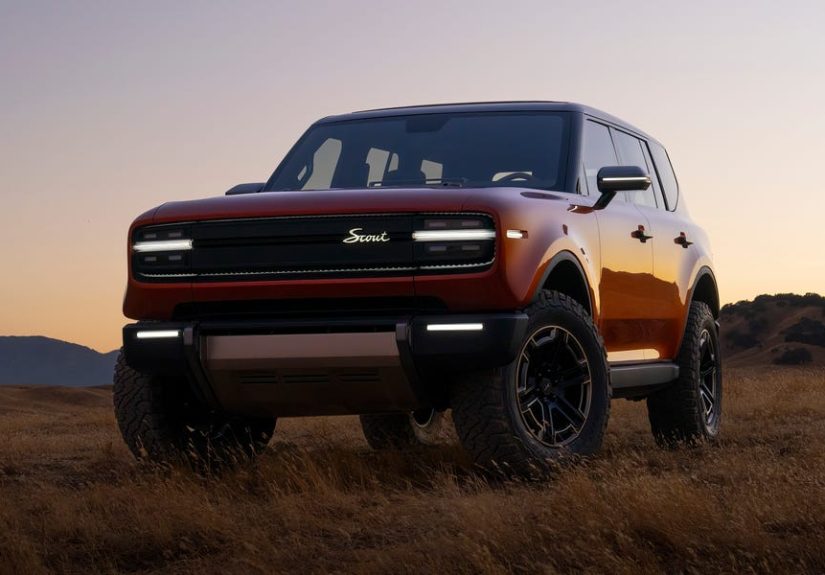
That sounds obvious, but in the truck-and-SUV universe, it is practically a rebellion. Scout’s two production-intent concept vehicles, the Traveler SUV and Terra pickup, are not positioned as fragile tech sculptures on wheels. They are body-on-frame, rugged, boxy, practical, and a little nostalgic in the best way. They promise real off-road credibility, usable cargo solutions, familiar physical controls, and a range-extender option for buyers who still hear the phrase “charging desert” and start sweating.
In other words, Scout may have figured out what many automakers missed: the path to broader EV appeal is not making vehicles feel more futuristic. It is making them feel more useful, more human, and less like an awkward first date with a touchscreen.
Why Most EVs Still Struggle to Feel Irresistible
There is no shortage of electric vehicles on the market, but there is still a shortage of electric vehicles that feel emotionally right for mainstream American buyers. Many EVs are efficient, quick, and impressive on paper. Fewer feel intuitive. Fewer still feel built around how people actually live, travel, work, tow, camp, and procrastinate about charging until the battery icon starts giving them side-eye.
That disconnect has been especially obvious in the truck and SUV segment. This is the heart of the U.S. market, where buyers tend to care less about abstract innovation and more about capability, confidence, convenience, and durability. Can it tow? Can it take abuse? Can it fit family gear, weekend gear, and emergency Costco gear? Can it go far? Can it be fixed without a spiritual journey?
Scout’s thesis appears to be that EV adoption grows faster when the vehicle solves emotional resistance, not just technical problems. That is a smarter strategy than it sounds. Buyers do not usually reject EVs because electrons are scary. They reject EVs because the overall ownership picture feels unfamiliar, inconvenient, or compromised.
Scout’s Formula: Heritage, Capability, and Less Digital Nonsense
Scout is reviving one of the most recognizable names in American utility-vehicle history, and it is using that legacy carefully. This is not nostalgia for nostalgia’s sake. It is nostalgia translated into product decisions. The company is leaning into the original Scout’s reputation for rugged utility, while modernizing the parts buyers now expect: software, charging, performance, connectivity, and cabin comfort.
1. It Designed EVs for What Americans Already Buy
The most important thing Scout got right may be the most basic: it is launching with a pickup and an SUV. Not a tiny commuter pod. Not a slippery jellybean crossover that looks like it was designed in a wind tunnel and then emotionally abandoned. The Terra and Traveler are square-shouldered, upright, and purpose-built for the exact part of the market where electric adoption still has room to grow.
Scout is also not faking capability. The company says both vehicles ride on a proprietary body-on-frame platform and target serious truck-grade numbers, including over 7,000 pounds of towing for the Traveler and over 10,000 pounds for the Terra, along with nearly 2,000 pounds of payload. It is also targeting features that off-road buyers actually care about: a solid rear axle, front and rear mechanical lockers, a sway-bar disconnect, up to 35-inch tires, more than a foot of ground clearance, and nearly three feet of water-fording capability.
Those details matter because they change the conversation. Scout is not asking buyers to trade “real truck stuff” for “cool EV stuff.” It is trying to deliver both. That is how an electric pickup truck or electric SUV becomes enticing instead of merely admirable.
2. Harvester May Be the Cleverest Part of the Whole Plan
If Scout is serious about cracking the EV code, the optional Harvester extended-range system is the cipher key. Pure battery-electric models are projected to offer up to 350 miles of range, while the extended-range versions are projected to go beyond 500 miles by using a small gas-powered generator to recharge the battery on the go.
Purists may grumble. Buyers may shrug and place a reservation anyway. That second group is the one that matters.
Scout seems to understand that range anxiety is not just a charging problem; it is a trust problem. Some buyers do not want to reorganize road trips, jobsite routines, towing habits, or backcountry travel around charger availability. Harvester is essentially Scout saying, “Fine. Electrify on your terms.” That is a much more persuasive pitch than lecturing people about lifestyle adaptation.
And the strategy appears to be resonating. Reuters reported in March 2026 that Scout had taken more than 160,000 reservations, with 87% of them choosing the extended-range version. That is a loud market signal. It suggests buyers are not rejecting EVs entirely; they are rejecting the idea of being boxed into a charging-only experience before they are ready.
Scout did not invent the range-extender concept, but it may be the first company to package it in a way that feels culturally right for American truck and SUV customers. That is a huge difference.
3. The Cabin Philosophy Is a Direct Attack on Overdesigned Cars
One of Scout’s sharpest insights is that many modern vehicles feel less friendly the more “advanced” they become. The company has made a point of embracing real knobs, real buttons, toggle switches, and tactile controls rather than burying everything inside an endless digital scavenger hunt.
That is not anti-technology. It is pro-sanity.
Scout still plans to offer a modern software stack with over-the-air updates, remote diagnostics, a zonal electrical architecture, and personalized digital experiences. Its vehicles are also expected to use software tied to the Rivian-Volkswagen technology relationship, which could help Scout avoid the clunky, laggy, “please wait while your door handle updates” trap that has haunted parts of the industry.
But Scout is pairing that modern software with a cabin that feels grounded in physical reality. That may be even more important than the screen itself. People do not want every drive to feel like they are beta-testing a consumer electronics experiment. They want technology that disappears into the background until needed.
Scout’s interiors also look like they were designed by people who have met families. The Terra can be configured with a front bench seat for up to six passengers, while both models emphasize storage, durable materials, and flexible cargo. Scout has also highlighted features such as a front trunk, a split tailgate on the Traveler, a right-sized 5.5-foot bed on the Terra, and multiple household-style power outlets. This is not innovation for a press release. This is innovation for life with gear.
4. Scout Understands That EV Buyers Want a Whole Experience, Not Just a Vehicle
Scout’s pitch extends beyond hardware. The company wants direct sales, direct service relationships, transparent pricing, and a tighter customer experience from reservation to repair. That puts it closer to the Tesla-Rivian model than the traditional dealership model, and that has already created legal and political friction.
Still, the logic is easy to see. EV buyers often want a cleaner, more predictable purchase process. Scout has argued that a one-company, one-app, one-login system can reduce friction and improve service. AP reporting also noted the brand’s ambition to create a destination-style experience around its South Carolina operations, including test-drive opportunities tied to the factory site.
That matters because enticing vehicles are not sold by specs alone. They are sold by confidence. If buyers believe the brand experience will be simpler, faster, and more transparent, the leap into EV ownership feels smaller.
Scout is also layering in features that support its “go anywhere” story. The company has discussed built-in satellite connectivity for the Traveler and Terra, which makes particular sense for a brand aimed at outdoor travel, remote trails, and places where phone bars disappear faster than snacks on a road trip.
Price, Positioning, and the Sweet Spot Scout Is Chasing
Scout’s entry models were introduced with targeted starting prices that land below many luxury EV competitors, with the Traveler positioned as low as $50,000 with incentives and the Terra at $51,500 with incentives, while retail pricing starts under $60,000. That puts the vehicles in a strategically interesting lane.
They are not trying to be bargain-bin EVs. They are trying to feel like premium-purpose vehicles with attainable ambition. That is a very different emotional pitch from many early EV launches, which either felt extravagantly expensive or clinically rational.
Scout is also wrapping its pricing strategy in a distinctly American manufacturing story. The company’s South Carolina production center represents more than a $2 billion investment and is tied to plans for over 4,000 permanent jobs. Scout has also announced an additional $300 million supplier-park investment expected to support roughly 1,000 more supplier jobs. At peak capacity, the company says the site is planned for 200,000 vehicles annually.
That U.S.-built narrative matters more than automakers sometimes admit. For a brand with retro-American roots, building the new vehicles in South Carolina while engineering them in Michigan gives Scout a story that feels much bigger than “Volkswagen startup launches two EVs.” It gives the company a chance to look like a new American truck-and-SUV brand with heavyweight backing.
The Big Reason Scout Feels Different
Most EV brands sell the future. Scout is selling permission.
Permission to keep wanting a truck that looks like a truck. Permission to want real controls. Permission to take a long road trip without planning your life around charging stops. Permission to choose all-electric if you are ready, or extended-range if you are not. Permission to admit that many people do not want their vehicle to feel like a smartphone with tires and trust issues.
That is why the brand has generated so much interest. Scout is not trying to convert America by scolding it into modernity. It is translating EV benefits into a format people already understand and like.
But Scout Has Not Won Yet
This is where the analysis has to stay honest. Scout’s vehicles are still not in customer driveways. Final EPA range figures are not available yet. Production timing has become murkier, too. While Scout originally targeted 2027 for initial production, Reuters reported in March 2026 that customer deliveries are now expected in 2028. That is not ideal in a market that moves quickly and punishes delay.
There are other risks. Direct sales remain politically and legally contentious. The EV market is still sensitive to incentives, charging confidence, and interest rates. Competitors are not standing still. Rivian, Ford, Tesla, GM, and others are all fighting for pieces of the same truck-and-SUV future.
There is also the startup problem, even with Volkswagen backing. Building a great-looking prototype is hard. Building a reliable, profitable, scalable vehicle business is much harder. The auto industry is littered with bold ideas that ran face-first into manufacturing reality.
Still, none of those challenges erase the central point: Scout seems to understand the assignment better than many rivals have.
Why Scout’s Approach Could Influence the Whole EV Market
Even if Scout never becomes the dominant name in electric trucks, it may still shape where the industry goes next. Its product strategy sends a message automakers should hear clearly: consumers do not necessarily want more abstraction, more hidden controls, or more ideological purity. They want vehicles that fit naturally into their routines.
The formula is surprisingly simple. Give buyers recognizable shapes, serious capability, easy charging access through NACS, familiar controls, flexible powertrain choices, strong software, and a buying experience that does not feel like dental paperwork. Suddenly the EV conversation gets much easier.
If Scout succeeds, other brands will not just copy its design cues. They will copy its attitude. And honestly, that may be the most valuable thing Scout has built so far.
Experience Matters: What the Scout Formula Is Designed to Feel Like
Because Scout has not started customer deliveries yet, the section below is not a firsthand ownership review. It is an experience-based analysis of the real-life situations Scout’s product strategy is clearly designed to serve.
Imagine the first kind of buyer Scout is targeting: someone who likes the idea of an EV but does not want to become a charging evangelist overnight. This person drives to work during the week, disappears to a trailhead on weekends, and occasionally tows something that is either useful or unnecessarily expensive. In a typical EV, that buyer may worry that every adventure now starts with a battery calculator. In a Scout, the pitch is different. A pure EV model works if you are fully ready. The Harvester model works if you still want the psychological backup of a gas stop. That changes the emotional temperature of the decision immediately.
Now picture a young family. They do not need a vehicle that can do one impressive thing for social media. They need one that does ten ordinary things without complaint. Easy storage. Real seats. Quick controls for climate. Space for bags, sports gear, muddy shoes, water bottles, and the tiny domestic chaos that follows children everywhere like a personal weather system. Scout’s emphasis on roomy cabins, cargo flexibility, bench seating, and physical buttons speaks directly to that life. Parents rarely say, “I wish my SUV had fewer tactile controls and more submenu layers.”
Then there is the contractor, maker, or outdoor enthusiast who sees vehicles as tools first and status symbols second. For that buyer, onboard power outlets, a usable bed, off-road hardware, and durable materials are not bonus features. They are the point. The Terra in particular seems engineered to feel less like an electric compromise and more like a practical machine that happens to be electric. That distinction is huge. It is the difference between admiration and adoption.
There is also the emotional experience of familiarity. Scout’s upright proportions, visible utility, and heritage-inspired design create a sense that these vehicles belong in American driveways, campsites, and work zones. They do not look alien. They look like they showed up to help. That matters more than analysts sometimes admit, because vehicles are emotional purchases dressed up as rational ones.
Finally, there is the ownership experience Scout is trying to choreograph around the vehicle itself: online reservations, direct communication, app-based interaction, transparent pricing, and service that is supposed to feel coordinated rather than fragmented. If Scout can actually deliver that without creating new headaches, buyers may feel that the company understood not just how they drive, but how they buy and maintain vehicles too.
That is the deeper reason Scout feels promising. It is not simply making EVs with rugged styling. It is trying to make EV ownership feel less like a lifestyle conversion and more like a natural next step. For many buyers, that may be the difference between “interesting” and “where do I sign?”
Conclusion
Scout Motors may not have fully solved the EV puzzle yet, but it has identified the missing pieces. Build vehicles people already desire. Respect how they actually live. Keep the technology strong but not overbearing. Offer a bridge for buyers who are not ready to go all-in on charging. Wrap it all in honest capability, useful design, and a buying experience that feels modern instead of maddening.
That is why Scout Motors stands out. It is not making electric vehicles feel like homework. It is making them feel like freedom, utility, and adventure with a battery underneath. And in America’s truck-and-SUV-heavy market, that might be the code worth cracking.