Table of Contents >> Show >> Hide
- Why a Simple Comic Can Feel Like a Tidal Wave
- What “Putting a Dog to Sleep” Actually Means (And What It Doesn’t)
- How to Know When It’s Time: The “Good Days vs. Bad Days” Reality Check
- What to Expect at a Dog Euthanasia Appointment
- Planning the Day: Small Choices That Can Make a Big Difference
- Aftercare and Memorial Options: The Part Nobody Wants to Talk About (But Everyone Has to)
- Grief After Pet Euthanasia: Why It Can Feel Complicated
- How to Talk About the Comic Without Turning Your Life Into a Sadness Subscription
- Frequently Asked Questions
- Conclusion: The Last Panel Is Love, Not Failure
- Shared Experiences People Describe After Reading (or Living) “That” Comic
- 1) The weirdly normal morning
- 2) The “last treat” moment (and why it’s never really about the treat)
- 3) The room feels too bright, then too quiet
- 4) The “did I do this?” guilt wave
- 5) The body does something normal and it scares you
- 6) Going home is the hardest part
- 7) Eventually, the comic becomes something else
There are a few things the internet is weirdly good at: teaching you how to fold a fitted sheet (still impossible),
convincing you you need a $39 “emotional support” water bottle, andevery so oftendropping a short comic that
punches you directly in the feelings.
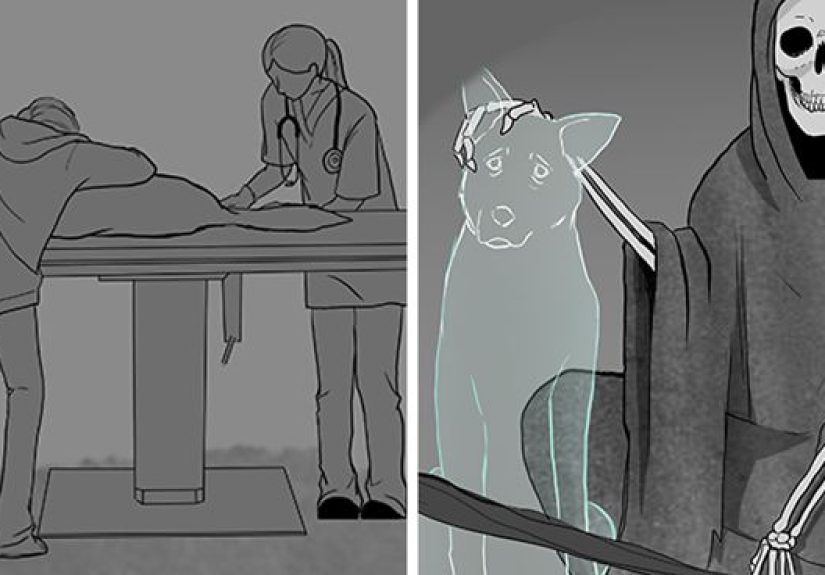
A heartbreaking comic about putting your dog to sleep usually doesn’t show much: a living-room floor, a gentle hand,
a wagging tail that’s running on love and fumes, and a final panel that looks “quiet” but somehow sounds like a stadium
full of grief. If you’ve ever shared one of those comics, saved it, or stared at it at 2:00 a.m. like it might explain
how to do the impossible (love a dog forever and also let them go), this article is for you.
We’re going to talk about why those comics hit so hard, what dog euthanasia actually looks like in real life,
how to decide when it’s time, what to expect at the appointment, and how to survive the days afterwithout pretending
any of this is “easy.” We’ll keep it honest, practical, and yes, occasionally funny… in the way people get funny
when they’re trying not to cry in public.
Why a Simple Comic Can Feel Like a Tidal Wave
Comics are sneaky. They compress an entire relationshipyears of walks, routines, inside jokes, and “who’s a good dog”
speechesinto a handful of panels. And because your brain fills in the blanks, the comic becomes your dog:
your kitchen, your couch, your particular brand of love.
Panel-by-panel grief: what the “heartbreaking comic” usually captures
- The ordinary day: Your dog doing something painfully normal (sleeping, sniffing, asking for snacks).
- The hard decision: A quiet moment that says, “We’re choosing kindness over more suffering.”
- The last comfort: A hand on a head, a familiar blanket, a “you’re safe” voice.
- The after: An empty leash hook, a silent food bowl, a home that suddenly echoes.
What makes these comics gutting is also what makes them useful: they validate that pet loss is real loss, and that
euthanasiawhen chosen to prevent ongoing sufferingis often an act of love, not a betrayal.
What “Putting a Dog to Sleep” Actually Means (And What It Doesn’t)
“Putting a dog to sleep” is a softer phrase for humane euthanasia, a veterinary procedure intended to provide
a peaceful, painless death when a pet’s suffering can’t be adequately relieved or when quality of life has declined
beyond what’s fair to ask of them.
It does not mean your dog “gives up.” Dogs aren’t sitting around thinking, “I’ve decided to stop trying.”
They’re living in the moment. Your job is to notice when the moments are mostly pain, fear, confusion, or distressand
then to choose mercy on their behalf.
The goal: calm, comfort, and as little stress as possible
Veterinary euthanasia is widely described as a process that includes more than the final injectionhow your dog is handled,
whether anxiety and pain are managed, and how the environment is set up all matter. That’s why many veterinary guidelines
emphasize appropriate pre-euthanasia medication (like sedation, when needed), gentle handling, and thoughtful planning.
How to Know When It’s Time: The “Good Days vs. Bad Days” Reality Check
The decision often feels impossible because love makes you hopeful, and hope makes you negotiate. (“He ate chicken today!
That means we’re fine, right?”) Sometimes the clearest question is not “Is there still joy?” but:
“Are the hard moments outweighing their ability to enjoy life?”
Practical signs families and veterinarians watch for
- Breathing trouble that doesn’t resolve or is worsening.
- Uncontrolled or unrelenting pain despite appropriate medications.
- Inability to eat, drink, or keep food down for more than a brief period.
- Mobility loss that prevents normal toileting or getting comfortable.
- Confusion, fear, or withdrawal that replaces their usual personality.
- More bad days than good, even with adjustments and support.
Two tools that help when your heart is louder than your brain
-
The “Three-to-Five Joys” list: Write down 3–5 things your dog truly loves (like greeting you, sunbathing,
food puzzles, short walks, sniffing the yard). When they can no longer enjoy most of them, it may be time to talk seriously
with your veterinarian. -
A Quality-of-Life scale: One commonly used framework is the “HHHHHMM” scale (Hurt, Hunger, Hydration,
Hygiene, Happiness, Mobility, and “More good days than bad”). Scoring can help you track change over time and spot
decline you’ve normalized because it happened gradually.
If you can, keep a simple calendar and mark days as “mostly good” or “mostly hard.” The trend matters. In a crisis,
your memory will cherry-pick.
What to Expect at a Dog Euthanasia Appointment
Different clinics do things a little differently, but the overall goal is the same: minimize fear and discomfort, then
allow your dog to pass peacefully.
Common steps (clinic-based euthanasia)
-
Arrival and settling: You may be taken to a quiet room with soft bedding. Many clinics try to keep this
away from busy waiting areas. -
IV catheter placement: Often, a catheter is placed so medications can be given smoothly and reliably.
If your dog is not in distress, you’re usually allowed time together before anything happens. -
First medication: relaxation/sedation: Many protocols use a sedative so your dog becomes very relaxed,
sleepy, and unaware of what’s happeningsimilar to drifting off before anesthesia. -
Second medication: the euthanasia solution: This medication stops vital functions quickly after your dog
is deeply asleep. The veterinarian confirms passing, usually by listening for a heartbeat.
Normal things that can happen (and can be scary if nobody warned you)
- Eyes may remain open.
- Muscle twitching or small movements can occur as reflexes, even after unconsciousness.
- A few deep breaths may occur near the end (often called reflex/agonal breaths).
- Urination or defecation can happen as muscles relax.
None of those signs mean your dog is suffering. They are common physical reflexes that can happen during the dying process.
If you’re worried, ask the veterinary team to narrate what’s happening in real time. That’s not “being difficult.”
That’s being human.
In-home euthanasia: the same goal, a different setting
In-home euthanasia can reduce stress for dogs who hate the clinic or struggle with mobility. Some families prefer it because
the last memories happen in a familiar space, not under fluorescent lights. Your primary vet may offer it, or you may use a
veterinarian who specializes in home visits.
Planning the Day: Small Choices That Can Make a Big Difference
You don’t need a Pinterest-perfect goodbye. You just need a plan that reduces stressfor your dog and for you.
Before the appointment
-
Ask about sedation and pacing. If your dog is anxious or reactive, mention it. Clinics can often plan
gentler handling and pre-visit medications. -
Decide on aftercare ahead of time if possible (private cremation, communal cremation, burial where legal,
keepsakes like paw prints). Making these decisions while actively sobbing is… not ideal. -
Consider your “last day” priorities. Some dogs want a cheeseburger. Some want the same old couch.
Some want both. (Honestly? Respect.)
Who should be there?
There is no moral scoreboard for attendance. Some people need to be present; some cannot. Both can be loving choices.
If you are present, consider bringing someone who can drive you home, because tears and traffic are not a
power-couple.
Should kids be present?
Kids can be included if they’re prepared with clear, age-appropriate language and have a supportive adult focused on
themnot just on the dog. Some families choose a goodbye beforehand and skip the procedure itself. There isn’t one “right”
approach; the right approach is the one that keeps everyone safe and supported.
What about other pets?
Some families find it helpful for other household pets to see or smell the body afterward, which may reduce searching
behavior and confusion. But it depends on the animals involved and the emotional intensity in the room.
Aftercare and Memorial Options: The Part Nobody Wants to Talk About (But Everyone Has to)
After your dog passes, you’ll be asked what you want done with the body. It can feel brutally “administrative” in a moment
that’s pure heartbreak. Planning ahead can protect you from decision fatigue.
Common options
- Private/individual cremation: Your dog is cremated alone, and ashes are returned.
- Communal cremation: More affordable, ashes are not returned.
- Burial: Sometimes possible on private property depending on local laws; pet cemeteries are another option.
- Keepsakes: Paw prints, a lock of fur, an urn, a memory box, jewelry, a framed collar tag.
Some people worry about being judged for wanting keepsakes. Here’s the deal: grief is already hard enough. Keep the paw print.
Keep the fur. Keep the goofy collar that jingles like happiness. Love does not require minimalism.
Grief After Pet Euthanasia: Why It Can Feel Complicated
Pet loss grief often comes with two extra weights:
- Guilt (“Did I do it too soon? Too late? Did I miss something?”)
- Disenfranchised grief (“Why do I feel this wreckedand why does the world keep moving?”)
Common grief thoughts (and gentle reality checks)
-
“I feel like I betrayed them.”
You made a medical decision to prevent suffering when they couldn’t advocate for themselves. That’s not betrayal. That’s guardianship. -
“I should have noticed sooner.”
Decline is gradual. Humans adapt. That’s how we survive, not how we fail. -
“My house feels wrong.”
Of course it does. Your routines were built around a living creature who took up space in the best way.
Support resources (because white-knuckling grief is overrated)
Many veterinary schools and animal organizations provide pet loss support resources, including hotlines and counseling referrals.
If you feel stuck or overwhelmed, reaching out is not “dramatic.” It’s healthy.
How to Talk About the Comic Without Turning Your Life Into a Sadness Subscription
A comic can be a mirror, but it shouldn’t be a trap. If you’re actively facing end-of-life decisions, set boundaries:
- Save it for later if you’re spiraling. You don’t have to pre-grieve 24/7.
- Use it as a conversation opener with your vet or family: “This is what I’m afraid of. Can we talk about what to expect?”
- Let it be a tribute, not a verdict. A comic can honor your dog without telling you exactly what to do.
Sometimes the most helpful message in those panels is the simplest: You are not alone in this.
Frequently Asked Questions
Is dog euthanasia painful?
The intention is a peaceful, painless passing. Many protocols use sedation first so the pet is relaxed and asleep before
the final medication is given.
How long does it take?
The appointment itself can vary because you may be given time to say goodbye. Once the final medication is administered,
passing is typically rapid. Ask your vet to walk you through their timing and steps.
What if I can’t stay in the room?
You can love your dog fiercely and still not be able to witness the procedure. If you want, you can say goodbye beforehand,
and ask a staff member to stay close and speak gently to your dog.
How do I handle the “What if I waited too long?” fear?
Track quality-of-life markers (good vs. bad days, breathing, pain, eating, mobility). Discuss openly with your veterinarian.
You’re not trying to pick a perfect dayyou’re trying to avoid unnecessary suffering.
Conclusion: The Last Panel Is Love, Not Failure
The reason a heartbreaking comic about putting your dog to sleep wrecks you is because it points at the most human part
of loving animals: we outlive them. Dogs give us a lifetime of loyalty in exchange for a few years of our calendar, and
at the end, they ask for one final thingcomfort.
If you’re facing euthanasia, know this: asking “Is it time?” already means you’re paying attention. You’re trying to do
right by someone who can’t speak. That’s what love looks like when it grows up and gets brave.
And if you’re reading this because you saw a comic and it reopened the ache? Same truth: that ache exists because the bond
was real. Your dog mattered. The story mattered. The panels may end, but the love doesn’t.
: experiences related to the topic
Shared Experiences People Describe After Reading (or Living) “That” Comic
I don’t have personal lived experience, but I can tell you what thousands of pet parents commonly describebecause the same
emotional “beats” show up again and again, both in viral comics and in real-life goodbyes.
1) The weirdly normal morning
Many people say the day starts almost offensively ordinary. Coffee. Socks. A dog who still asks for breakfast like they’re
not starring in today’s tragedy. That normalcy can feel like a prank the universe is pullinguntil you realize it’s also
a gift: you get one more “just us” morning.
2) The “last treat” moment (and why it’s never really about the treat)
Owners often remember the last snack in cinematic detail. A cheeseburger patty. A forbidden donut hole. A spoonful of peanut
butter that suddenly becomes sacred. It’s not that your dog was keeping a food bucket listit’s that you needed a
ritual that says, “You were loved in the language you understood.”
3) The room feels too bright, then too quiet
People describe the appointment room as strangely gentle: dim lights, soft blankets, staff who suddenly speak in a softer
register like they’re in a library of feelings. Afterward, the quiet can be shocking. Not dramatic-movie quiethouse quiet.
The kind of quiet that makes you notice the refrigerator hum because the jingle of tags is gone.
4) The “did I do this?” guilt wave
A lot of grief arrives disguised as guilt. Even when families know the choice prevented suffering, they still feel a jolt
of responsibility: “I signed the form. I nodded. I said ‘okay.’” This is one reason comics hit so hardthe final panel
looks like permanence. People often find relief in reframing it as: “I authorized peace. I ended pain.”
5) The body does something normal and it scares you
Many pet parents describe being startled by reflexes: a twitch, a deep breath, eyes staying open. When no one warns you,
your brain screams, “Waitare they okay?” When someone does warn you, it’s still hard, but it’s less terrifying.
It becomes, “Okay. This is physiology, not suffering.”
6) Going home is the hardest part
People often say the appointment is brutalbut the walk back into the house is worse. You notice the water bowl, the spot
by the couch, the paw-smudges on the window. Your body expects a routine that no longer exists. That’s why so many owners
keep the leash on the hook for a while, or leave the bed down, or talk out loud. It’s not “denial.” It’s your nervous
system learning a new map.
7) Eventually, the comic becomes something else
With time, many people say those heartbreaking comics stop feeling like an open wound and start feeling like a tribute.
Not every daygrief is a boomerang with excellent aimbut often enough that you can look at the panels and think,
“Yeah. That was us.” And sometimes you even laugh through tears at the parts that were so painfully true:
the snacks, the stubbornness, the love that took up the whole page.
If any of this sounds like you, you’re not “overreacting.” You’re reacting like someone who loved a dog the right way.