Table of Contents >> Show >> Hide
- What Is the Direction of a Vector?
- Direction of a Vector Formula in 2D
- How to Find the Direction of a Vector Step by Step
- Example 1: Find the Direction of <3, 4>
- Example 2: Find the Direction of <-5, 12>
- Example 3: Find Direction from Two Points
- What About the Magnitude?
- Finding Direction Using a Unit Vector
- How to Find the Direction of a 3D Vector
- Finding the Angle Between Two Vectors
- Common Mistakes When Finding Vector Direction
- Tips for Finding Direction of a Vector Faster
- Real-World Uses of Vector Direction
- Experience-Based Advice: What Makes Vector Direction Finally Click?
- Conclusion
Note: In this guide, vector direction is measured counterclockwise from the positive x-axis unless another convention is clearly stated.
Vectors are the multitaskers of math and physics. They do not just tell you “how much”; they also tell you “which way.” A speed of 40 miles per hour is useful, but a velocity of 40 miles per hour northeast is far more helpful if you are driving, flying a drone, programming a game character, analyzing forces, or trying not to launch a physics problem into emotional orbit.
Learning how to find the direction of a vector is really about translating components into an angle, a unit vector, or direction cosines. The good news? Once you understand the formula, the process becomes predictable. The even better news? You do not need to be a calculator wizard wearing a cape. You only need a few formulas, a basic sense of quadrants, and a healthy suspicion of the plain arctangent button.
What Is the Direction of a Vector?
The direction of a vector describes where the vector points. In two dimensions, a vector is often written as:
v = <a, b>
Here, a is the horizontal component and b is the vertical component. The direction angle is usually the angle the vector makes with the positive x-axis. If the vector points up and to the right, the angle is in Quadrant I. If it points up and to the left, it is in Quadrant II. Down and left? Quadrant III. Down and right? Quadrant IV. Yes, vectors have moods, and quadrants are how they express them.
A vector also has a magnitude, which is its length. Direction and magnitude work together: magnitude says how strong or long the vector is, while direction says where it is headed.
Direction of a Vector Formula in 2D
For a two-dimensional vector v = <a, b>, the basic direction formula is:
θ = tan⁻¹(b / a)
In this formula:
θis the direction angle.ais the x-component.bis the y-component.tan⁻¹means inverse tangent, also called arctangent.
However, there is a catch. The formula tan⁻¹(b / a) may give the correct reference angle but not always the correct final direction angle. That is because tangent repeats values in different quadrants. For example, a vector in Quadrant I and a vector in Quadrant III can have the same tangent ratio, even though they point in opposite directions.
The Better Formula: Use atan2
The most reliable way to find vector direction in two dimensions is:
θ = atan2(b, a)
The atan2 function uses both components separately, so it can identify the correct quadrant automatically. Many programming languages, calculators, spreadsheets, and math tools use this function. Just remember that in many systems, the order is atan2(y, x), which means atan2(b, a) for a vector <a, b>.
If your answer is in radians and you need degrees, use:
degrees = radians × 180 / π
How to Find the Direction of a Vector Step by Step
Step 1: Identify the Components
Start with the vector in component form. For example:
v = <3, 4>
This means the vector moves 3 units in the x-direction and 4 units in the y-direction.
Step 2: Use the Direction Formula
Apply the formula:
θ = tan⁻¹(4 / 3)
θ ≈ tan⁻¹(1.333)
θ ≈ 53.13°
Step 3: Check the Quadrant
Because both components are positive, the vector is in Quadrant I. The angle 53.13° is already correct.
Step 4: State the Direction Clearly
The vector <3, 4> has a direction of about 53.13° measured counterclockwise from the positive x-axis.
Example 1: Find the Direction of <3, 4>
Given:
v = <3, 4>
Use:
θ = tan⁻¹(4 / 3)
θ ≈ 53.13°
Since the x-component and y-component are both positive, the vector lies in Quadrant I. No adjustment is needed. The direction is:
Answer: 53.13°
Example 2: Find the Direction of <-5, 12>
Given:
v = <-5, 12>
The x-component is negative, and the y-component is positive, so the vector is in Quadrant II.
If you only use:
tan⁻¹(12 / -5)
You may get approximately -67.38°, which is not the standard counterclockwise direction angle. Since the vector is in Quadrant II, add 180°:
-67.38° + 180° = 112.62°
Using atan2(12, -5) gives the correct quadrant directly.
Answer: 112.62°
Example 3: Find Direction from Two Points
Sometimes you are not given a vector directly. Instead, you are given an initial point and a terminal point.
Suppose:
A = (2, -1)
B = (-4, 3)
First, subtract the coordinates:
v = <x₂ - x₁, y₂ - y₁>
v = <-4 - 2, 3 - (-1)>
v = <-6, 4>
Now find the direction:
θ = atan2(4, -6)
θ ≈ 146.31°
Answer: The direction from point A to point B is approximately 146.31°.
What About the Magnitude?
Although direction and magnitude are different, they are often calculated together. For a vector v = <a, b>, the magnitude is:
|v| = √(a² + b²)
For v = <3, 4>:
|v| = √(3² + 4²)
|v| = √(9 + 16)
|v| = 5
The magnitude is the length of the vector, while the direction is the angle. Together, they describe the vector completely in 2D. Think of magnitude as “how far” and direction as “which way.” One without the other is like ordering pizza and forgetting to say where you live.
Finding Direction Using a Unit Vector
A unit vector is a vector with a magnitude of 1. It keeps the direction of the original vector but removes the size. This is useful in physics, computer graphics, engineering, and navigation because it lets you focus only on direction.
For v = <a, b>, the unit vector is:
u = v / |v| = <a / |v|, b / |v|>
For v = <3, 4>, the magnitude is 5, so:
u = <3/5, 4/5>
u = <0.6, 0.8>
This unit vector points in the same direction as <3, 4>, but its length is exactly 1.
How to Find the Direction of a 3D Vector
In three dimensions, a vector is usually written as:
v = <a, b, c>
The magnitude is:
|v| = √(a² + b² + c²)
Instead of one direction angle, a 3D vector can be described by three direction angles: one with the positive x-axis, one with the positive y-axis, and one with the positive z-axis. These are often called α, β, and γ.
The direction cosines are:
cos α = a / |v|
cos β = b / |v|
cos γ = c / |v|
Then:
α = cos⁻¹(a / |v|)
β = cos⁻¹(b / |v|)
γ = cos⁻¹(c / |v|)
3D Example
Given:
v = <2, -3, 6>
Find the magnitude:
|v| = √(2² + (-3)² + 6²)
|v| = √(4 + 9 + 36)
|v| = √49 = 7
Now calculate the direction angles:
cos α = 2 / 7, so α ≈ 73.4°
cos β = -3 / 7, so β ≈ 115.4°
cos γ = 6 / 7, so γ ≈ 31.0°
Answer: The vector <2, -3, 6> makes angles of approximately 73.4°, 115.4°, and 31.0° with the positive x-, y-, and z-axes.
Finding the Angle Between Two Vectors
Sometimes “direction” means the angle between two vectors, not the direction of one vector from the x-axis. In that case, use the dot product formula:
cos θ = (u · v) / (|u||v|)
Then:
θ = cos⁻¹((u · v) / (|u||v|))
This formula works in both 2D and 3D. It is especially helpful when you want to know whether two vectors point in similar directions, opposite directions, or perpendicular directions.
Quick Example
Let:
u = <1, 2>
v = <3, 4>
First, find the dot product:
u · v = (1)(3) + (2)(4) = 11
Find the magnitudes:
|u| = √(1² + 2²) = √5
|v| = √(3² + 4²) = 5
Now substitute:
cos θ = 11 / (5√5)
θ ≈ 10.3°
The two vectors point in very similar directions.
Common Mistakes When Finding Vector Direction
Using Arctangent Without Checking the Quadrant
The most common mistake is typing tan⁻¹(b/a) into a calculator and trusting the answer without checking the signs of a and b. The calculator is not being mean; it just does not know your vector’s full quadrant story unless you use atan2.
Forgetting That the Zero Vector Has No Direction
The vector <0, 0> has no direction because it has no length. It does not point anywhere. It is the mathematical equivalent of shrugging.
Mixing Degrees and Radians
Some calculators return degrees, while programming languages often return radians. Always check the mode. If your answer looks suspiciously tiny, it may be in radians. If your answer looks wildly dramatic, it may be in degrees when you expected radians.
Swapping x and y in atan2
Many tools use atan2(y, x), not atan2(x, y). For v = <a, b>, that means atan2(b, a). Swapping the arguments can send your angle in the wrong direction faster than a GPS with trust issues.
Tips for Finding Direction of a Vector Faster
- Use
atan2whenever possible: It handles quadrants more reliably than basic arctangent. - Sketch the vector: A quick graph can reveal whether your angle makes sense.
- Check signs first: Positive and negative components tell you the quadrant.
- Label your components: Keep x and y organized to avoid flipping the formula.
- Know your angle convention: Most math classes use counterclockwise from the positive x-axis, but navigation and physics problems may define direction differently.
- Normalize when needed: Use a unit vector when you only care about direction, not length.
Real-World Uses of Vector Direction
Vector direction is not just a classroom trick that disappears after the final exam. It appears in physics when calculating force, displacement, acceleration, and velocity. It appears in engineering when analyzing loads, slopes, motion, and fields. It appears in computer graphics when controlling lighting, camera movement, collision detection, and animation. It appears in robotics when telling a machine which way to move. It appears in game development when deciding where a character should walk, jump, aim, or dramatically miss a target.
In navigation, direction helps describe movement across a map. In data science and machine learning, vectors can represent features, relationships, and similarity. Even if the “direction” is not a literal compass direction, the idea is the same: a vector points from one state, position, or value toward another.
Experience-Based Advice: What Makes Vector Direction Finally Click?
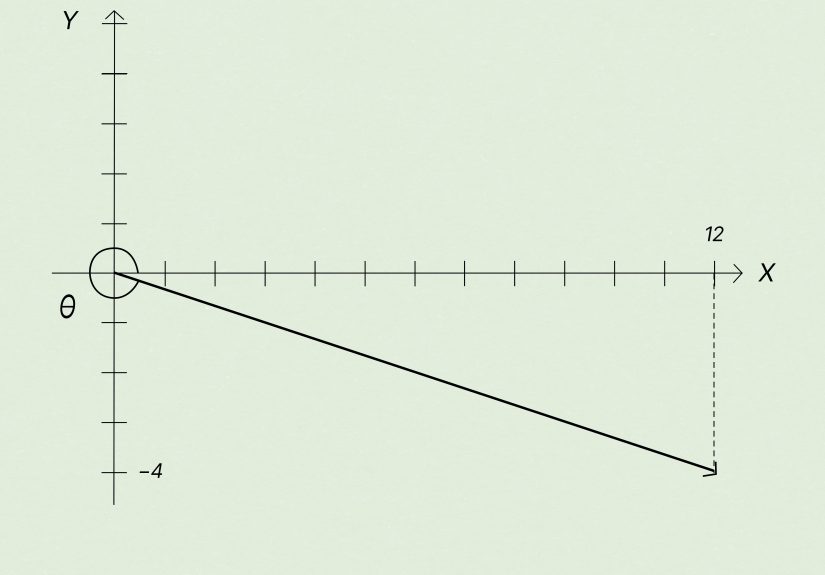
For many learners, vector direction becomes easier when they stop treating formulas like magic spells and start seeing vectors as arrows. The formula matters, of course, but the picture is what keeps the formula honest. Before calculating, imagine the vector on a coordinate plane. If the x-component is positive and the y-component is negative, the arrow must point down and to the right. That means the final direction should land in Quadrant IV. If your calculator gives a Quadrant II angle, something has gone sideways, possibly your argument order in atan2.
Another helpful habit is to estimate before solving. For <10, 1>, the vector barely rises above the x-axis, so the direction should be a small positive angle. For <1, 10>, the vector points almost straight up, so the angle should be close to 90°. For <-8, 2>, it points mostly left and slightly up, so the answer should be a little less than 180°. Estimation is not extra work; it is your built-in nonsense detector.
Students also tend to improve faster when they separate three ideas: component form, magnitude, and direction. Component form tells you the horizontal and vertical movements. Magnitude tells you the vector’s length. Direction tells you the angle or orientation. When these ideas blur together, vector problems feel messy. When they are separated, the process becomes clean: identify components, compute the angle, check the quadrant, and state the answer with units.
In practical work, especially coding, atan2 is usually the safest choice. If you are programming a moving object, calculating a heading, rotating a sprite, or working with mouse position on a screen, atan2 saves you from writing a pile of quadrant rules yourself. Just pay close attention to coordinate systems. Many screen coordinate systems have y-values that increase downward, which can flip the visual direction compared with a standard math graph. That tiny detail has caused many developers to stare at a rotating arrow and whisper, “Why are you like this?”
Finally, remember that direction depends on context. A math textbook may want an angle from the positive x-axis. A compass problem may use north as the reference direction. A physics problem may describe direction relative to another vector. A 3D problem may prefer direction cosines or a unit vector instead of one angle. The best habit is to ask, “Direction measured from what?” Once you know the reference, the formula becomes much easier to choose.
Conclusion
Finding the direction of a vector is a core skill in algebra, trigonometry, physics, engineering, and computer science. In two dimensions, the key formula is θ = atan2(b, a) for a vector <a, b>. This gives the angle from the positive x-axis while handling quadrant issues more reliably than basic arctangent. In three dimensions, direction is often represented with direction cosines or a unit vector. When comparing two vectors, the dot product formula helps you find the angle between them.
The secret is not memorizing ten different-looking formulas. The secret is understanding what the vector’s components are telling you. Look at the signs, check the quadrant, choose the right formula, and make sure your answer matches the picture. Do that, and vector direction becomes less mysterious and much less likely to ambush you on homework night.