Table of Contents >> Show >> Hide
- Why Apollo 14 Mattered So Much
- The Problem: A Ghost Finger on the Abort Switch
- The Longest Tech Support Call in History
- A Second Scare: The Landing Radar Joins the Drama
- Why This Counts as a Real Hack
- The Human Side of the Moon Debug Session
- What Modern Engineers Can Learn from Apollo 14
- Experiences Related to “The Longest Tech Support Call: Apollo 14 Computer Hack”
- Conclusion
If your worst tech support call involved a frozen laptop, a dead router, and someone insisting they already rebooted “like, six times,” Apollo 14 would like a word. In February 1971, NASA was preparing for humanity’s third Moon landing when a tiny hardware fault in the Lunar Module threatened to blow up the whole plan. Not literally, thankfully. But close enough to make everyone in Mission Control sweat through their shirts.
The problem was almost absurdly small: the Apollo 14 Lunar Module computer began receiving a false signal that looked like the crew had pressed the Abort button. That button existed for one very serious reason. If something went wrong during descent, the astronauts could command the spacecraft to stop trying to land and head back to lunar orbit. Useful in a real emergency. Slightly less useful when the computer thinks the button was pushed by a microscopic bit of metal playing pinball inside a switch.
What followed has become one of the best stories in spaceflight software: a race against the clock, a patch entered by hand, and a mission saved by engineers who understood their system deeply enough to bend it without breaking it. It has been called the longest tech support call for good reason. Houston was troubleshooting a computer problem nearly a quarter-million miles away, with no software update button, no Wi-Fi, and absolutely no room for error.
Why Apollo 14 Mattered So Much
Apollo 14 was never just another Moon shot. It was NASA’s comeback mission after Apollo 13, the near-catastrophe that turned “successful failure” into one of the most famous phrases in exploration history. The agency needed Apollo 14 to prove that lunar missions were still possible, still safe enough to attempt, and still worth the national effort.
The crew reflected that pressure and promise. Alan Shepard, America’s first astronaut in space, finally got his chance to walk on the Moon. Edgar Mitchell joined him in the Lunar Module Antares, while Stuart Roosa stayed in lunar orbit aboard the Command Module Kitty Hawk. Their destination was Fra Mauro, the scientifically valuable highlands site originally planned for Apollo 13. It was rougher terrain than earlier landing zones and a more demanding target. In other words, exactly the wrong time for a computer tantrum.
That is part of what makes the Apollo 14 computer hack so fascinating. NASA was not solving a cute coding puzzle for bragging rights. It was trying to rescue a mission that carried technical, scientific, and political weight. One more failure after Apollo 13 would have been more than embarrassing. It could have helped slam the door on the rest of Apollo.
The Problem: A Ghost Finger on the Abort Switch
What the abort command actually meant
During lunar descent, the abort system was the astronauts’ emergency exit. If the Lunar Module ran into serious trouble, the guidance computer could switch into an abort program and send the spacecraft back toward orbit. That was the right response to a real emergency. It was the wrong response to a false signal triggered by a flaky switch.
Before powered descent began, Flight Control saw an abort indication even though the crew had not pressed the switch. Shepard and Mitchell tapped the panel near the switch, and the signal went away. Then it came back. Then it went away again. Then it came back again, like the most stressful game of whack-a-mole in human history.
Post-mission analysis pointed to metallic contamination inside the hermetically sealed abort switch module. In plain English: some tiny bit of conductive debris was intermittently shorting the switch. The hardware issue was bad enough by itself, but the timing made it brutal. If the false abort showed up after the powered descent program started, the computer could interpret it as real and automatically abandon the landing.
Why NASA could not just “push a patch”
This is where modern readers have to mentally time-travel. The Apollo Guidance Computer was a marvel, but it was not a cloud-connected device waiting for a hotfix. Much of its software lived in fixed memory woven into core rope hardware. The astronauts could not casually install a brand-new program from Earth.
What they could do was change certain values and procedures in erasable memory through the DSKY, the now-legendary keyboard-and-display interface. That limitation shaped the solution. NASA did not rewrite the mission software from scratch. Instead, the team had to discover a safe workaround using what the machine already had.
That is the real genius of the Apollo 14 hack. It was not flashy. It was elegant, surgical, and born from total fluency in the system’s logic.
The Longest Tech Support Call in History
Enter Don Eyles
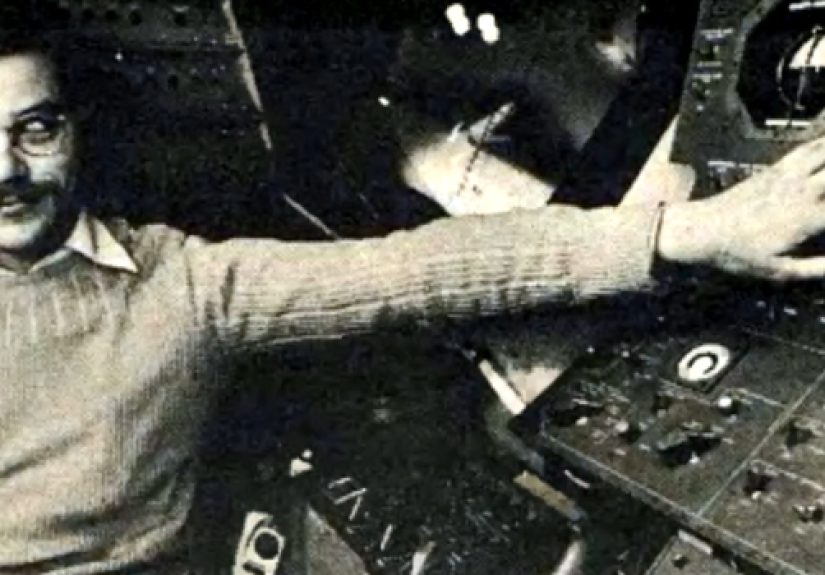
MIT Instrumentation Lab engineer Don Eyles had written much of the Lunar Module landing software, including the code that monitored the abort switch. When the problem appeared, he immediately understood the uncomfortable truth: the software was doing exactly what it had been designed to do. The bug was not in the logic. The trouble was that a hardware fault was feeding the logic garbage.
That meant the solution had to fool the software without crippling the mission. Eyles and the support team worked through the code listing and simulator runs to figure out how to keep the computer from reacting to the false abort signal while still preserving a path to safety if a real abort became necessary.
The answer was wonderfully sneaky. The team found a way to make the computer behave as though an abort condition had already been handled, which meant it would ignore the false abort input during descent. This did not magically remove all risk. It changed how an actual abort would need to be performed. But it kept the Lunar Module from being bounced back into orbit by a phantom signal.
The handwritten remote fix
The procedure developed on the ground was not a single dramatic button press. It was a carefully constructed manual entry sequence sent up to the crew and typed into the DSKY. Accounts from Apollo 14 oral histories describe it as a 61-keystroke procedure, while NASA’s mission report explains that the workaround was developed, verified, uplinked, and then entered in parts around powered descent. Translation: this was not a casual “try turning it off and on again.” This was remote surgery on a live spacecraft computer while the patient was descending toward the Moon.
Even better, the workaround was tested fast enough to matter. NASA later documented that the needed program was developed and verified within about two hours. The crew then entered the first part before powered descent initiation and the remaining parts after engine throttle-up. Imagine trying to apply a BIOS-level workaround while also flying a lunar lander. Multitasking has rarely been more unfair.
And yet it worked. The false abort indications could come and go, and the Lunar Module computer would keep its cool.
A Second Scare: The Landing Radar Joins the Drama
Because apparently one crisis was not enough for a single descent, Apollo 14 then ran into trouble with the landing radar. The radar did not behave as expected during powered descent and had to be recovered through checklist actions, including recycling a circuit breaker. That mattered because the landing radar provided critical altitude and descent-rate information.
So the mission had gone from “our abort switch might randomly ruin the landing” to “our radar is also being difficult today.” The Apollo 14 descent was basically the universe stress-testing NASA’s troubleshooting culture in real time.
But the system held. The workaround for the abort problem stayed effective, the landing radar eventually provided usable data, and Shepard guided Antares down to what NASA later described as the most precise lunar landing to that date, touching down about 87 feet from the target point. That is the part that makes the whole story extra satisfying. After all that chaos, Apollo 14 did not merely survive. It nailed the landing.
Why This Counts as a Real Hack
The word “hack” gets abused these days. Sometimes it means a clever shortcut. Sometimes it means a productivity gimmick involving ice baths and a notebook you’ll abandon in four days. Apollo 14 earns the term honestly.
This was a true systems hack: a deep understanding of hardware, software, timing, operating procedures, and failure modes used to create a safe workaround under extreme constraints. No one had the luxury of rewriting the entire guidance stack. The team had to ask a harder question: what is the smallest change that can reliably alter system behavior at exactly the right moment?
That is engineering at its finest. Not because it is glamorous, but because it is disciplined. The Apollo 14 solution respected the machine, the mission, and the humans depending on both. It did not pretend the risk disappeared. It traded one kind of risk for a smaller, manageable one and gave the crew a path to continue.
In that sense, Apollo 14 is not just a space story. It is a masterclass in incident response. Detect the problem. Isolate the fault. Verify the workaround. Communicate clearly. Preserve backup options. Then execute without drama. Every modern software team should get that tattooed on a whiteboard somewhere.
The Human Side of the Moon Debug Session
It is tempting to tell this story as a clean engineering legend: smart people, elegant patch, happy ending. But Apollo 14 feels more impressive when you remember the human beings involved. On one side, astronauts in lunar orbit had to trust that a remotely developed keyboard procedure would protect them during one of the most dangerous maneuvers in exploration. On the other side, engineers on Earth had to think clearly while knowing their work would affect a spacecraft moving through space with no margin for sloppy reasoning.
There is also something wonderfully humbling about the root cause. The mission was not nearly lost because of some giant science-fiction catastrophe. It was threatened by a tiny speck of metallic contamination inside a switch. Space exploration is like that. The hardware can be majestic, the mission can be historic, and the crisis can still begin with the cosmic equivalent of lint.
That tiny defect forced a huge demonstration of competence. It revealed how Apollo worked when the script failed: not through magic, but through preparation, documentation, simulation, teamwork, and the kind of calm problem-solving that looks effortless only after it succeeds.
What Modern Engineers Can Learn from Apollo 14
First, resilience is not just backup hardware. Apollo 14 shows that resilience also lives in people, procedures, and architecture. The crew could manually enter data. The ground team had simulator access. The software had enough flexibility in erasable memory to support a workaround. None of that happened by accident.
Second, simplicity matters. Apollo engineers were working with astonishingly limited computing resources by modern standards, yet the system was understandable enough for humans to reason about under pressure. That is not nostalgia talking. It is a reminder that complexity can be the enemy of recovery.
Third, good engineering culture does not panic when reality gets rude. Apollo 14’s support teams did not waste time pretending the hardware should not have failed. They worked the problem in front of them. That attitude remains priceless whether you are landing on the Moon or trying to keep a payment platform alive on a Friday afternoon.
And finally, space history is not only about rockets and footprints. Sometimes the hero is the person who knows which memory flag to flip, which assumption to preserve, and how to buy the mission just enough breathing room to continue.
Experiences Related to “The Longest Tech Support Call: Apollo 14 Computer Hack”
The Apollo 14 episode resonates so strongly because almost everyone who has ever fixed a technical problem can feel a distant version of its pressure. Not the Moon part, obviously. Most of us are not taking support calls from lunar orbit before breakfast. But the emotional shape of the experience is familiar: a system that worked during testing suddenly misbehaves in the real world, the clock is ticking, and every choice seems to carry consequences.
For the astronauts, the experience had to be deeply unsettling. They were not staring at a blue screen and wondering whether to force quit an app. They were preparing for powered descent to the Moon, knowing that one false signal could cancel the landing in an instant. Imagine watching a critical alert flicker on and off while knowing you cannot simply open the panel, replace the switch, and go grab coffee. Their experience was one of disciplined trust: trust in the people on the ground, trust in training, and trust that the procedure they were about to enter had been thought through from every angle.
For the engineers on Earth, the experience was a different kind of intensity. This was not leisurely debugging. It was compressed, high-stakes reasoning. They had to move fast without becoming reckless, which is harder than it sounds. Plenty of people can be fast. Plenty of people can be careful. Apollo 14 demanded both at the same time. That is why the story still feels modern. In every serious technical field, the most valuable people are often the ones who can stay calm when the system behaves in a way nobody wanted but everybody now has to understand.
There is also a deeply relatable lesson in how physical the problem was. We like to imagine computer crises as pure software drama, but the Apollo 14 incident reminds us that digital systems are haunted by physical reality. A switch, a contact, a contaminant, a signal path, a timing condition: these are the tiny details that can turn “working perfectly” into “why is the abort light on?” Anyone who has ever chased a mystery caused by a loose cable, a flaky connector, or one stubborn hardware fault knows this feeling. Apollo 14 just did it with the Moon watching.
The story also captures the strange intimacy of technical support. A good support exchange is really an act of translation. One person sees symptoms. Another person understands causes. Between them sits a language of instructions, checks, and trust. Apollo 14 turned that familiar rhythm into epic history. Mission Control observed the indications, the software team found the workaround, and the crew executed the steps. It was support, yes, but support elevated into teamwork under extreme distance and extreme consequence.
That may be the most lasting experience tied to this story: the realization that great engineering is profoundly human. It depends on memory, judgment, communication, and nerve. Apollo 14 was not saved by machinery alone. It was saved by people who knew their tools so well that, when the unexpected happened, they could still create order out of noise. That experience remains timeless. Whether the failing system is a spacecraft, a server, or your uncle’s printer, the best problem-solvers are the ones who can keep their heads, respect the facts, and find the narrow path that keeps the mission going.
Conclusion
Apollo 14 deserves to be remembered for more than golf balls on the Moon and Alan Shepard’s famous return to flight. It should also be remembered as one of history’s finest examples of real-time technical problem-solving. A faulty abort switch nearly killed the landing. A fast, verified, human-entered software workaround kept it alive. Then the crew and controllers absorbed a second systems scare and still pulled off a remarkably accurate touchdown.
That is why “The Longest Tech Support Call: Apollo 14 Computer Hack” remains such a perfect title. It captures the absurdity, the tension, and the brilliance all at once. Somewhere between lunar orbit and Mission Control, computer troubleshooting became part of exploration history. And honestly, that may be the coolest help desk story humanity will ever have.