Table of Contents >> Show >> Hide
- A Backyard, a Mower, and a Friendship That Refused to Quit
- Why Mowing the Lawn Can Mean So Much
- The Problem: A Mower That Was Close, Yet Out of Reach
- The Solution: A Homemade Transfer Dock With a Big Purpose
- Why This DIY Project Resonates With So Many People
- Adaptive Lawn Care: More Than One Way to Cut the Grass
- Safety Comes First, Even When the Project Is Inspiring
- What DIYers Can Learn From This Project
- The Emotional Side of Building for Someone You Care About
- How Homeowners Can Think About Accessibility in Their Own Yards
- What This Story Says About Modern DIY Culture
- Real-World Examples of Similar Adaptive Thinking
- Experience-Based Reflections: What This Topic Teaches About Help, Pride, and Practical Problem-Solving
- Conclusion: The Best DIY Builds Do More Than Fix Things
Note: This article is inspired by a real DIY accessibility story and supported by publicly available information about adaptive equipment, disability inclusion, mower safety, multiple sclerosis mobility challenges, and practical home modifications.
A Backyard, a Mower, and a Friendship That Refused to Quit
Some people see a riding lawn mower and think, “Saturday chore.” Others see it as a tiny tractor with cup-holder potential. But for one man who had lost the use of his legs because of multiple sclerosis, mowing the lawn was more than a routine job. It was independence. It was fresh air. It was the familiar rhythm of taking care of his own place. It was the quiet, grassy version of saying, “I’ve still got this.”
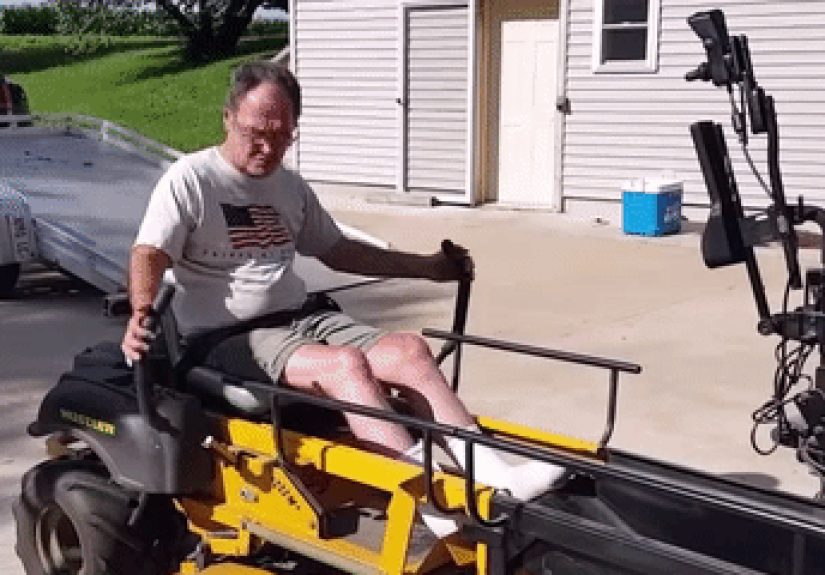
That is why the story of a DIYer dad helping his paralyzed friend get back to mowing his own lawn hit such a nerve. The friend could no longer easily transfer from his wheelchair to the seat of his riding mower. The solution was not a flashy commercial gadget, a luxury robot mower, or a complicated machine that required an engineering degree and three cups of coffee to understand. Instead, the DIY dad built a clever transfer dock that connected to the mower and allowed the seat to slide forward, giving his friend a safer way to move from wheelchair to mower seat.
At first glance, it sounds like a small backyard project. A bracket here, a platform there, maybe a few bolts that briefly disappear into the grass because that is what bolts do. But the emotional weight of the build is huge. It represents the best kind of DIY: practical, personal, thoughtful, and aimed at solving a real human problem. In a world full of “smart” gadgets that sometimes struggle to open a garage door without an app update, this simple homemade adaptation did something smarter. It gave someone part of his routine back.
Why Mowing the Lawn Can Mean So Much
To people who dislike yard work, lawn mowing may sound like a strange thing to miss. After all, mowing comes with sweat, noise, clippings in your socks, and the occasional battle with that one stubborn patch by the fence. But for many homeowners, mowing is not just maintenance. It is control, pride, movement, and a visible sign of caring for a home.
For a person living with paralysis, advanced multiple sclerosis, spinal cord injury, or another mobility-limiting condition, everyday tasks often become negotiations with the environment. A doorway is not just a doorway; it is a width measurement. A step is not just a step; it is a barrier. A mower seat is not just a seat; it is a transfer challenge. The physical world can quietly say “no” in a hundred little ways before breakfast.
That is why adaptive tools matter. Disability inclusion is not only about ramps in public buildings or wider restroom stalls. It is also about ordinary life: cooking dinner, washing the car, planting tomatoes, taking out the trash, fixing a squeaky hinge, and yes, mowing the lawn. Independence often lives in the little things. The little things are not little when they are taken away.
The Problem: A Mower That Was Close, Yet Out of Reach
The paralyzed friend already had a riding lawn mower. The machine could cut the grass. The yard still needed mowing. The missing link was access. If he could not safely transfer from his wheelchair to the mower seat, the mower might as well have been parked on the moon.
This is a common issue in adaptive design. Many tools are technically usable once a person is positioned correctly, but getting into that position is the difficult part. A person may have the strength, skill, and confidence to operate equipment, but the transfer point creates the barrier. In this case, the DIY dad focused on the real bottleneck instead of overcomplicating the project.
That is the secret sauce of good DIY accessibility work: solve the actual problem, not the problem you assume exists. A less thoughtful person might have said, “He needs someone else to mow.” A gadget lover might have said, “Buy a robot mower.” This DIYer asked a better question: “What needs to change so my friend can do this himself?”
The Solution: A Homemade Transfer Dock With a Big Purpose
The project centered on a dock that connected to the mower and allowed the mower seat to slide forward toward the wheelchair. That sliding motion helped close the transfer gap. Instead of forcing the user to make a difficult movement across open space, the adaptation brought the seat closer to where he needed it.
In accessible design, inches matter. A few inches can mean the difference between safe and risky, possible and impossible, independent and dependent. The brilliance of this mower adaptation is that it respected the user’s actual movement needs. It did not try to turn the mower into a spaceship. It simply made the transfer more realistic.
The build also highlights an important idea: assistive technology does not always have to be high-tech. Sometimes it is a sliding rail, a sturdy platform, a repositioned handle, a modified switch, or a seat that moves at the right angle. The best adaptive device is not necessarily the most expensive one. It is the one that works safely, reliably, and comfortably for the person using it.
Why This DIY Project Resonates With So Many People
Part of the appeal is obvious: it is a heartwarming friendship story with power tools. That combination is hard to beat. But there is more going on beneath the surface.
It treats independence as worth engineering for
Many people with disabilities are surrounded by offers of help, and help can be wonderful. But constant help can also feel like a quiet loss of agency. This project did not simply help the friend avoid a chore. It helped him return to a role he valued. That distinction matters.
It proves that accessibility can be creative
Accessibility is often discussed in terms of rules, measurements, and compliance. Those things are important, especially for safety and public access. But this story shows the creative side of accessibility. It is problem-solving with empathy. It is measuring twice, cutting once, and asking the user, “Does this feel right?”
It celebrates the dignity of everyday tasks
People often talk about major milestones after illness or injury: returning to work, driving again, traveling, or participating in sports. But everyday tasks carry emotional value too. Mowing a lawn may seem ordinary, but ordinary can be beautiful. Sometimes the dream is not climbing a mountain. Sometimes it is cutting the grass on your own property while the neighbors pretend not to admire your stripes.
Adaptive Lawn Care: More Than One Way to Cut the Grass
The transfer dock is one example of adaptive lawn care, but it is not the only approach. People with mobility limitations use many strategies depending on their strength, balance, equipment, budget, yard size, and safety needs.
Modified riding mowers
Some wheelchair users adapt riding mowers with improved seats, transfer boards, hand controls, extra grab handles, or custom steps and platforms. A stable transfer area is often the top priority. Seat height, turning space, and the position of controls can make a major difference.
Remote-control mowers
Other DIYers have built remote-control mowers using electric mower decks, wheelchair motors, batteries, motor controllers, and radio-control systems. These projects can let a person mow from a safer distance, especially when transferring onto a mower is not practical. However, remote-control builds require serious attention to blade control, emergency shutoff systems, battery safety, wiring, terrain, and bystander protection. A mower is not a toy just because it has a remote.
Robotic lawn mowers
Commercial robotic mowers are another option. Many can maintain lawns with limited hands-on effort once properly installed. They may be useful for people who want independence over scheduling and yard maintenance but cannot safely operate a conventional mower. The downside is cost, setup complexity, boundary requirements, and limitations on steep slopes or irregular lawns.
Adaptive yard tools
Lawn care is more than mowing. Long-handled tools, lightweight battery-powered equipment, hose nozzles that do not require constant squeezing, raised garden beds, kneeling benches, rolling seats, and easy-grip handles can all reduce physical strain. The best setup often combines several small adaptations rather than relying on one miracle gadget.
Safety Comes First, Even When the Project Is Inspiring
A homemade mower adaptation can be life-changing, but lawn mowers are powerful machines with real risks. Blades, hot engines, thrown debris, slopes, and moving parts deserve respect. Inspiration should never outrun caution.
Anyone modifying a mower or transfer system should think carefully about stability, emergency stopping, pinch points, weight limits, and how the user will get on and off the machine. The mower should remain in good working order, with guards and safety features intact. Protective gear such as sturdy shoes, eye protection, gloves, and long pants is still important. Children and pets should be kept away from the mowing area, because “but the dog likes to supervise” is not a safety plan.
For a person with paralysis or limited mobility, safety planning may also include checking fatigue levels, avoiding wet grass, staying off unsafe slopes, carrying a phone, and having a backup plan if the mower stalls. The goal is not just to mow. The goal is to mow today and still feel good tomorrow.
What DIYers Can Learn From This Project
This story is not only about one dad, one friend, and one mower. It is a practical lesson in how to approach meaningful DIY projects.
Start with the user, not the tool
The best DIY accessibility projects begin with listening. What does the person want to do? What part is difficult? What movements are safe? What feels uncomfortable? What would make the task easier without taking control away from them?
In this case, the friend wanted to mow his own lawn. The dad did not replace the task; he adapted the path back to it. That is user-centered design, even if nobody put it on a whiteboard with sticky notes.
Keep the design simple when simple works
There is a temptation in DIY culture to overbuild. Add motors! Add Bluetooth! Add a solar panel! Add a tiny dashboard that says “Lawn Commander!” But reliability matters more than flash. A simple sliding dock may be easier to inspect, repair, and trust than a complicated system with too many failure points.
Test slowly and revise honestly
Adaptive projects need careful testing. That means dry runs, supervised trials, checking bolts and welds, watching for wobble, and asking the user for feedback. The first version may not be perfect. In fact, the first version of almost anything built in a garage has a proud tradition of being “educational.” The important part is learning, improving, and not pretending a design is finished before it is safe.
The Emotional Side of Building for Someone You Care About
There is something deeply personal about making a custom device for a friend. It says, “I see what you are missing, and I believe we can get some of it back.” That is different from sympathy. Sympathy feels bad with someone. Practical love picks up a tape measure.
The DIY dad in this story gave his friend more than hardware. He gave time, attention, and belief. He treated the friend’s desire to mow as reasonable, not silly. He understood that the work of maintaining a home can be tied to identity. For many people, being able to care for their property is part of being themselves.
That is why stories like this travel so well online. People do not share them only because a mower seat moved. They share them because the act behind the movement is generous. The project reminds readers that innovation does not always come from laboratories or corporate design teams. Sometimes it comes from a dad in a garage who refuses to accept that “can’t” is the final answer.
How Homeowners Can Think About Accessibility in Their Own Yards
Even if you are not building a mower transfer dock, this story can change the way you look at outdoor spaces. A yard can be beautiful and still be difficult to use. Uneven paths, narrow gates, steep slopes, loose gravel, heavy hoses, awkward tool storage, and high thresholds can all limit access.
Start by walking through the yard from the perspective of someone using a wheelchair, walker, cane, scooter, or limited-energy routine. Is there a smooth route from the house to the patio? Can tools be reached without bending or climbing? Are hoses stored where they can be pulled easily? Is the lawn mower accessible, or is it trapped behind a mountain of holiday decorations and one mysterious box labeled “misc”?
Small changes can help. A wider gate, a firm pathway, better lighting, lower storage hooks, raised planters, lightweight tools, and stable seating areas can make outdoor work more manageable. Accessibility is not only for someone else someday. It benefits aging parents, injured athletes, tired gardeners, delivery workers, kids, guests, and anyone who has ever tried to carry mulch while questioning their life choices.
What This Story Says About Modern DIY Culture
Modern DIY is often associated with viral furniture flips, weekend renovations, and people discovering shiplap with the intensity of archaeologists uncovering a lost city. But the heart of DIY has always been resourcefulness. It is about looking at a problem and asking, “Can we make this better with what we know, what we have, and what we can learn?”
The mower adaptation story is DIY at its best because it is not about showing off. It is about usefulness. The finished project did not need to be glamorous. It needed to be strong, safe, and suited to one person’s life. That kind of project has lasting value.
It also challenges the idea that accessibility is a niche concern. In reality, accessibility is part of good design. A tool that is easier to enter, reach, control, and maintain is better for everyone. When people build with accessibility in mind, they often create products and spaces that are more comfortable, safer, and more intuitive for a wider range of users.
Real-World Examples of Similar Adaptive Thinking
Across the country, people with disabilities and their families have modified equipment in creative ways. Some wheelchair users have added power-chair seats to riding mowers. Others have built remote-control electric mowers using salvaged wheelchair motors. Gardeners with limited grip strength use trigger-free hose nozzles or ergonomic pruners. People with fatigue issues switch from gas tools to battery-powered models because they are easier to start and produce fewer fumes.
The common thread is not one specific tool. It is the mindset. Instead of asking whether a person can fit the tool, adaptive design asks whether the tool can fit the person. That flip in thinking can open the door to more independence at home.
Of course, not every adaptation should be homemade. Some situations require occupational therapists, mobility specialists, medical providers, certified welders, electricians, or equipment manufacturers. When blades, batteries, engines, and body weight are involved, expert input is not a buzzkill. It is part of responsible building.
Experience-Based Reflections: What This Topic Teaches About Help, Pride, and Practical Problem-Solving
One of the biggest lessons from a story like “DIYer Dad Helps Paralyzed Friend Get Back to Mowing His Own Lawn” is that help should not always mean taking over. When someone loses mobility, friends and family often want to jump in immediately. That instinct comes from love, but it can accidentally shrink the person’s world. Mowing the lawn for a paralyzed friend is kind. Helping him mow it himself, when safe and possible, is something even deeper.
There is a difference between assistance and replacement. Assistance preserves choice. Replacement removes effort, but it can also remove pride. Many people living with disability do not want every hard task erased from their lives. They want the right tools, the right setup, and the right amount of support so they can decide what they still want to do. That is a powerful distinction for caregivers, friends, neighbors, and DIYers to remember.
Another experience-based takeaway is that good solutions often come from watching closely. If a person struggles with a task, the visible problem may not be the real problem. In this story, the issue was not necessarily the mower’s cutting ability or the friend’s desire to operate it. The problem was the transfer. That is where careful observation matters. Before building anything, a smart DIYer watches the task from start to finish. Where does movement slow down? Where does balance become risky? Where does the user need to reach, twist, lift, or shift weight? The best fix is usually hiding in those details.
It also helps to involve the user throughout the process. Nobody understands a mobility challenge better than the person living with it. A well-meaning builder might design a platform that looks sturdy but blocks a wheelchair wheel. They might install a handle that is strong but placed too far forward. They might create a transfer height that works once but becomes exhausting after a long day. Feedback is not criticism; it is the blueprint getting smarter.
Patience is another major ingredient. Adaptive DIY projects can require several versions. The first design may wobble. The second may be too heavy. The third may finally feel right after someone adds a small brace, changes the angle, or moves a latch two inches. That trial-and-error process is not failure. It is how custom work becomes truly custom.
There is also an emotional experience for the builder. Making something for a friend can feel joyful, frustrating, and intimidating all at once. You want it to work because the project is personal. You are not just fixing a mower; you are trying to restore a piece of someone’s routine. That emotional pressure can be useful if it makes you more careful. It becomes risky only if it makes you rush. With adaptive equipment, love should show up as patience, testing, and humility.
For neighbors and family members, the story is a reminder to ask better questions. Instead of saying, “Do you need me to do that for you?” try asking, “Would you like help finding a way to do that more easily?” That wording leaves room for independence. It respects the person’s goals. It also opens the door to creative solutions that neither person may have considered yet.
Finally, this story teaches that independence does not always look dramatic. It may look like a man sitting on a mower, moving slowly across his yard, cutting neat lines into the grass. It may look ordinary to someone passing by. But to the person who thought he might never do it again, ordinary can feel extraordinary. That is the quiet beauty of this DIY project: it made a familiar Saturday possible again.
Conclusion: The Best DIY Builds Do More Than Fix Things
The story of a DIYer dad helping his paralyzed friend get back to mowing his own lawn is more than a feel-good backyard tale. It is a reminder that thoughtful design can return dignity, confidence, and choice. A sliding mower-seat dock may not look revolutionary at first, but for the person who needed it, it changed the meaning of a chore.
Great DIY is not always about building the biggest deck, the fanciest workshop, or the most over-engineered spice rack in suburban history. Sometimes it is about noticing what someone misses and building a bridge back to it. In this case, that bridge happened to connect a wheelchair to a riding mower. And somewhere between the bolts, rails, and fresh-cut grass, a friend got a piece of his independence back.