Table of Contents >> Show >> Hide
- What Are Strobe Weapons?
- Before the Gadgetry: The Ancient Dream of Weaponized Light
- World War II and the Canal Defence Light
- The Science: Why Flickering Light Can Mess With People
- From Searchlights to Dazzlers
- PHaSR: The Sci-Fi Name Was Not an Accident
- The LED Incapacitator and the “Puke Ray” Era
- Digital Strobes: When the Weapon Moved Online
- Why Strobe Weapons Keep Coming Back
- The Weird Pattern: Big Claims, Mixed Evidence
- Experience Notes: What This History Feels Like Up Close
- Conclusion
Human beings have always had a dramatic relationship with light. We use it to signal ships, guide airplanes, decorate dance floors, expose burglars, scare raccoons out of attics, and make birthday cakes look more expensive than they are. But somewhere between the lighthouse and the nightclub, military planners, inventors, police agencies, and science-fiction-minded engineers began asking a stranger question: could flickering light become a weapon?
The answer is yes, no, sometimes, maybe, and please do not point that thing at anyone’s face. The history of strobe weapons is not a clean march from primitive flashlights to futuristic “puke rays.” It is a messy parade of armored searchlight tanks, laser dazzlers, medical warnings, classified tests, dubious claims, and genuine safety concerns. It is also a reminder that “non-lethal weapon” does not mean “harmless gadget,” in the same way that “mild salsa” does not always mean your uncle will survive taco night with dignity.
At their core, strobe weapons try to exploit the human visual system. The eye and brain are marvelous, delicate, high-speed instruments, but they are not invincible. Brightness, contrast, motion, flashing patterns, and surprise can overwhelm perception. The weird part is that this idea has been rediscovered again and again, usually with great excitement, big promises, and a final chapter titled “Results Were More Complicated Than Expected.”
What Are Strobe Weapons?
A strobe weapon is any device designed to use flashing, pulsing, or dazzling light to distract, disorient, temporarily blind, confuse, halt, or otherwise impair a person. Some use ordinary bright white light. Others use colored LEDs, searchlights, or lasers. Some are handheld. Others have been mounted on vehicles or considered for drones. Some are intended to warn a driver at a checkpoint. Others have been imagined as tools for crowd control, hostage rescue, border enforcement, or battlefield disruption.
The term overlaps with directed-energy weapons, optical distractors, laser dazzlers, and less-lethal weapons. That last phrase matters. “Non-lethal” sounds tidy and reassuring, but light-based weapons can still cause panic, accidents, eye injuries, seizures in vulnerable people, and long-term harm if misused. Light is not a Nerf dart. It is energy, and the body has opinions about energy arriving uninvited.
Before the Gadgetry: The Ancient Dream of Weaponized Light
The oldest famous story about weaponized light is the legend of Archimedes using mirrors to focus sunlight on Roman ships during the siege of Syracuse in 212 B.C. Historians still debate whether it happened as described, and modern experiments have produced mixed results. Even if the tale is more myth than military manual, it shows that people have imagined light as a weapon for a very long time.
But strobe weapons are different from heat rays or burning mirrors. They do not mainly try to cook, cut, or ignite. They try to interfere with perception. That makes them oddly psychological. The target is not armor plate or a wooden hull. The target is attention, balance, vision, and decision-making.
World War II and the Canal Defence Light
The strangest early chapter belongs to the Canal Defence Light, or CDL, a World War II project that sounds as if someone combined a tank, a lighthouse, and a stage manager having a nervous breakdown.
The CDL was a powerful searchlight mounted in an armored vehicle, especially modified British and American tanks. Its name was deliberately boring, because secrecy was part of the plan. A title like “Giant Blinding Tank Lamp of Doom” might have attracted attention. “Canal Defence Light” sounded like something a civil engineer would file away after lunch.
The device used an extremely bright carbon-arc lamp shining through a narrow slit. Filters could change the color of the beam, and a shutter could make the light flicker. The idea was to illuminate enemy positions during night operations while dazzling defenders and making it harder for them to aim accurately. In theory, CDL tanks could lead an attack, hiding friendly forces behind a wall of light.
In practice, the CDL became a classic secret-weapon problem. It was so secret that many commanders did not know how to use it. Troops had limited training with it. Its psychological effect was promising but inconsistent. Some observers found it dazzling and confusing; others recovered quickly. The machines also drew enemy fire, because a giant glowing tank tends to announce itself with the subtlety of a marching band in a library.
CDL tanks did see limited use, including support roles near the Rhine and in postwar crowd-control situations, but they never became the war-changing technology some advocates imagined. Still, they established the basic pattern that would follow strobe weapons for decades: brilliant concept, dramatic claims, limited deployment, uncertain effectiveness, and a lingering question of whether the problem was the technology, the tactics, or the human nervous system refusing to follow the brochure.
The Science: Why Flickering Light Can Mess With People
To understand the appeal of strobe weapons, you have to understand a simple fact: visual processing is not passive. Your brain is not a camera calmly recording the world. It is an editor, translator, predictor, and occasional drama queen. It turns signals from the eyes into a stable experience of reality. Flashing lights can interrupt that stability.
In aviation, a phenomenon called flicker vertigo has long been recognized as a safety issue. Pilots can experience discomfort, disorientation, dizziness, or worse when sunlight flickers through helicopter rotor blades or airplane propellers. Aircraft strobe lights in certain conditions can also be distracting. The effect does not strike everyone the same way, which is one reason strobe weapons are so difficult to evaluate.
There is also photosensitive epilepsy, in which flashing lights or certain visual patterns can trigger seizures in susceptible people. This condition affects only a minority of people with epilepsy, but the consequences can be serious. Medical organizations warn that risk depends on many factors, including brightness, contrast, distance, frequency, color, and the viewer’s sensitivity.
This is where strobe weapons become ethically slippery. A light that merely annoys one person may deeply disorient another. A flash pattern that distracts a healthy adult may endanger someone with an undiagnosed neurological sensitivity. The weapon is not acting on a uniform material like steel. It is acting on human biology, which is famous for arriving with footnotes.
From Searchlights to Dazzlers
By the late twentieth and early twenty-first centuries, military interest shifted toward compact optical devices. Instead of tank-mounted searchlights, developers looked at handheld or weapon-mounted systems that could warn, deter, or temporarily impair without firing bullets.
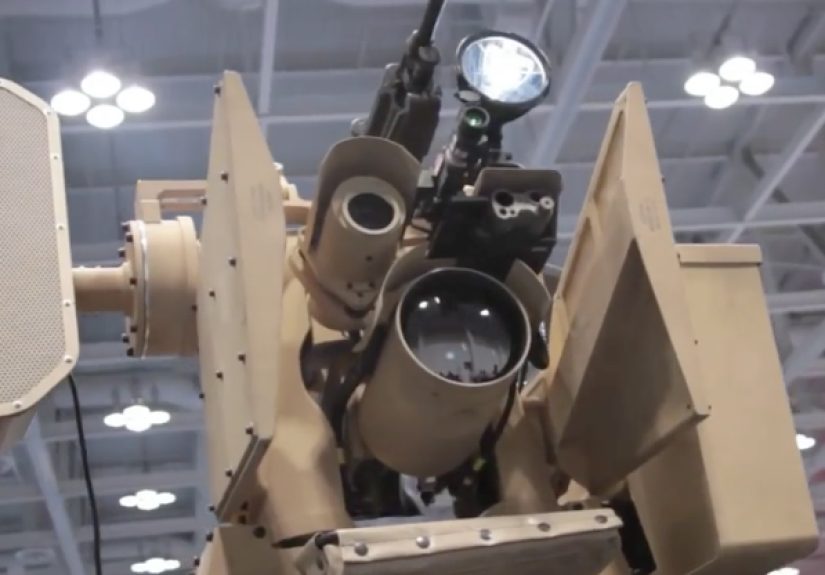
One major category is the laser dazzler. Dazzlers use intense directed light to interfere with vision. In military settings, they have been used or proposed for checkpoints, convoy protection, maritime security, and perimeter defense. The basic goal is to send a clear message: stop, turn away, or do not come closer. In a chaotic checkpoint scenario, that warning could theoretically prevent troops from firing on a civilian driver who does not understand shouted commands.
The appeal is obvious. A bright green beam can cross distance faster than a translator, louder than a hand signal, and with less immediate harm than a rifle shot. But the danger is obvious too. Lasers can injure eyes, especially when power, distance, training, and safety controls are mishandled. Reports of laser-related injuries among troops showed that “less-lethal” tools still require serious discipline. A dazzling device is not a toy, a pointer, or a party trick. It is a weapon system with medical consequences.
PHaSR: The Sci-Fi Name Was Not an Accident
One of the most memorable light weapons of the modern era is the Personnel Halting and Stimulation Response rifle, better known as PHaSR. Yes, the name sounds like it escaped from a television prop department, and yes, everyone noticed.
Developed by the Air Force Research Laboratory, PHaSR was designed as a man-portable, non-lethal illumination system. It used laser light to “dazzle” aggressors, temporarily impairing their ability to see the source and continue hostile action. The idea fit neatly into the military need for escalation-of-force options: tools between yelling and shooting.
PHaSR also reflected a legal and ethical boundary that shaped the whole field. The international Protocol on Blinding Laser Weapons prohibits laser weapons specifically designed to cause permanent blindness. That pushed developers toward systems advertised as temporary and reversible. The practical challenge was making them effective enough to stop a threat, yet controlled enough to avoid permanent eye damage. That is a narrow tightrope, and the tightrope is on fire.
The LED Incapacitator and the “Puke Ray” Era
In the 2000s, the idea of strobe weapons got a new burst of attention with the LED Incapacitator, sometimes nicknamed the “puke ray” or “sick stick.” Developed with interest from the U.S. Department of Homeland Security, the device was described as a flashlight-like tool that used intense, rapidly changing colored light patterns to disorient and nauseate a target.
The concept was clever: LEDs could change color and pulse patterns quickly, potentially overwhelming visual processing without relying on a laser. Advocates imagined a tool for law enforcement, border control, and confined spaces where firearms or Tasers might be too risky. In theory, it could temporarily confuse a suspect long enough for officers to gain control.
But the LED Incapacitator also demonstrated the recurring problem of strobe weapons: the gap between laboratory promise and field reliability. Some people may be strongly affected by flashing light. Others may not be affected much at all. Environmental conditions matter. Distance matters. Whether the person looks toward the source matters. Stress, drugs, medical history, and lighting conditions may matter. A weapon that works only sometimes is not necessarily useless, but it is difficult to trust when the stakes are high.
That uncertainty explains why many strobe weapon projects drift into a fog of tests, prototypes, and classified results. Developers hope they have found a clean way to stop people without lasting injury. Critics ask for transparent evidence. Medical experts point out the risks. Operators want something reliable. The public hears “vomit flashlight” and reasonably wonders whether civilization has taken a wrong exit.
Digital Strobes: When the Weapon Moved Online
The strangest modern twist is that strobing does not need a flashlight anymore. It can arrive as a GIF, a video, or a malicious social media post. In 2019, hackers targeted the Epilepsy Foundation’s Twitter feed with flashing images during National Epilepsy Awareness Month. The attack echoed earlier incidents in which people with epilepsy were sent strobing visuals intended to trigger seizures.
This is not a military strobe weapon in the traditional sense, but it belongs in the history because the underlying idea is the same: exploit visual sensitivity to harm or incapacitate someone. The delivery system changed from tank, to flashlight, to laser, to screen. The target remained the nervous system.
Digital strobe attacks also reveal something important about accessibility and design. Flashing content is not merely annoying. For some users, it can be dangerous. That is why responsible websites, games, videos, and apps include flash warnings, reduce risky patterns, and allow autoplay controls. The history of strobe weapons is not only about armies and police. It is also about how everyday media can become hostile when safety is ignored.
Why Strobe Weapons Keep Coming Back
Strobe weapons return again and again because they promise three seductive things: distance, reversibility, and control. A beam of light can reach farther than a baton. It can be switched off. It leaves no obvious wound when it works as intended. Compared with bullets, that sounds humane.
But the promise is never simple. Light can be imprecise. Effects vary from person to person. Safety limits can be misunderstood. A dazzled driver may crash. A panicked crowd may stampede. A person with a neurological vulnerability may suffer a severe reaction. A poorly trained operator may cause permanent injury. And because many effects are temporary or subjective, victims may struggle to prove what happened afterward.
That is why the best phrase is often less-lethal, not non-lethal. The difference is not just legal wording. It is an ethical warning label. Less-lethal weapons can reduce the need for deadly force, but they can also create new categories of harm if treated casually.
The Weird Pattern: Big Claims, Mixed Evidence
The history of strobe weapons is full of big claims. They will blind enemies without injury. They will stop riots. They will halt vehicles. They will make people nauseated. They will paralyze attackers. They will give officers a humane alternative. Some claims contain real insight. Others sound like a defense contractor pitching a disco ball to Darth Vader.
The mixed evidence does not mean the whole concept is nonsense. Bright light can absolutely disrupt vision. Flashing patterns can cause discomfort, confusion, and medical danger in certain conditions. Laser dazzlers have been used as warning devices. Aviation safety literature recognizes flicker effects. Medical organizations recognize photosensitive seizure risk.
But making a reliable weapon from those facts is another matter. Human perception is not a simple on-off switch. Strobe effects depend on context, biology, attention, distance, brightness, training, and luck. That makes strobe weapons fascinating historically, but difficult operationally.
Experience Notes: What This History Feels Like Up Close
The easiest way to understand the long, weird history of strobe weapons is to remember a moment when light briefly stole your attention. Maybe it was a police cruiser’s flashing bar reflected in a rainy windshield. Maybe it was a concert strobe that made the drummer look like a flipbook. Maybe it was sunlight chopping through roadside trees while you were a passenger in a car. For most people, the reaction is minor: blink, squint, look away, complain theatrically, continue living. But that small moment explains why inventors kept returning to the idea.
Light can interrupt thought faster than language. A bright flash does not ask permission. It arrives before interpretation. Your eyes react, your head turns, and your brain spends a beat trying to rebuild the scene. In ordinary life, that beat is nothing. In a confrontation, a cockpit, a convoy, or a crowd, that beat can matter.
Imagine standing in a museum beside an armored vehicle built to carry a secret searchlight. Without even turning it on, the machine feels absurd and serious at once. It is funny because a tank with a giant lamp sounds like something a child would design after reading too many comic books. It is serious because someone built it during a world war, trained crews for it, guarded the secret, and believed it might change night fighting. That combination of cartoon logic and genuine danger is the signature flavor of strobe-weapon history.
Now imagine a checkpoint at night. A vehicle approaches too fast. The people at the checkpoint have seconds to decide whether the driver is confused, frightened, reckless, or hostile. A dazzling light seems like a humane middle step: visible, immediate, and less final than gunfire. In that setting, the appeal of optical distractors becomes very real. The device is not a mad-scientist toy. It is an attempt to buy time.
But then imagine being the person on the receiving end. You may not understand the signal. You may panic. You may be medically vulnerable. You may be driving, which means temporary blindness is not merely discomfort; it is a hazard. That is the uncomfortable center of the topic. Strobe weapons are designed around temporary confusion, but temporary confusion can produce permanent consequences.
The same lesson applies online. A flashing image on a screen may look like a prank to one person and a threat to another. The weapon is not always the hardware. Sometimes it is the decision to ignore how different bodies experience the same stimulus.
That is why the history of strobe weapons feels less like the story of one invention and more like a recurring temptation. We keep hoping light can give us control without bloodshed. Sometimes it helps. Sometimes it fails. Sometimes it harms people it was supposed to spare. The weirdness is entertaining, but the lesson is sober: when technology aims at the senses, safety cannot be an afterthought.
Conclusion
The long, weird history of strobe weapons stretches from ancient legends of burning mirrors to World War II searchlight tanks, laser dazzlers, LED “puke ray” prototypes, and even malicious flashing images online. The common thread is the human desire to stop an opponent without destroying them. That desire is understandable, even noble in some contexts. But the history also shows that light-based weapons are not magic. They are unpredictable tools acting on complex bodies.
Strobe weapons work best as a cautionary tale. They remind us that “non-lethal” technologies still need evidence, training, transparency, medical review, and strict rules. A beam of light may look clean, but its effects can be messy. The future of optical weapons may bring safer warning systems and better controls, but the past offers one blinking red message: never confuse temporary effects with trivial ones.