Table of Contents >> Show >> Hide
- What Is Typographic Shadow Graffiti?
- The Story Behind DAKU’s “Time Changes Everything”
- Why a Boring Building Becomes Fascinating
- How Shadow Typography Works
- Why Typography Makes the Artwork More Powerful
- Street Art Without the Usual Street Art Rules
- The Role of Lodhi Art District
- Why This Artwork Is So Shareable
- What Designers Can Learn From Typographic Shadow Graffiti
- Why Cities Need More Smart Public Art Like This
- The Beauty of Art That Disappears
- Experience Notes: What It Feels Like to Encounter Shadow Graffiti
- Conclusion
Some buildings are born lucky. They get marble lobbies, dramatic staircases, rooftop gardens, and lighting so flattering it could make a parking ticket look glamorous. Others get a blank wall, a hard sun, and the architectural personality of a cardboard box. But every now and then, an artist looks at a plain facade and thinks, “Perfect. Let’s make the sun do the work.”
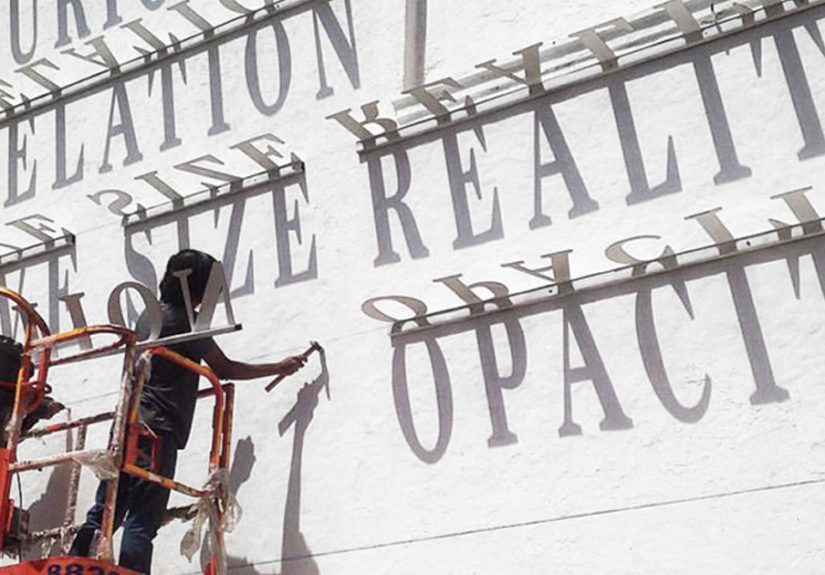
That is exactly the magic behind typographic shadow graffiti, a form of public art that uses letters, sunlight, and time to transform an ordinary building into a living, shifting masterpiece. Instead of spraying paint directly across a wall, the artist mounts physical letters or word forms so that their shadows fall onto the surface. As the sun moves across the sky, the shadows stretch, sharpen, tilt, fade, and return. The wall does not simply display art; it performs it.
The best-known example is “Time Changes Everything” by DAKU, a street artist recognized for his text-based and light-based work. Installed in Lodhi Colony, New Delhi, as part of the Lodhi Art District and St+art India initiative, the piece turns a white building facade into a solar-powered poem. Words appear only when the sun is in the right position. By afternoon, they begin to dissolve. By evening, the wall quietly returns to its blank self, as if nothing happened. Sneaky? Yes. Brilliant? Absolutely.
What Is Typographic Shadow Graffiti?
Typographic shadow graffiti is a public art technique that combines typography, installation, street art, architecture, and natural light. It usually begins with three ingredients: a wall, a set of raised letters, and a reliable light source. In DAKU’s case, the light source is the most ancient lamp in the neighborhood: the sun.
Unlike traditional graffiti, which leaves pigment directly on a surface, shadow graffiti often relies on absence. The artwork is not the object alone, and it is not the wall alone. It is the shadow between them. That makes it wonderfully unstable. A passerby at 9:30 in the morning may see one version of the artwork. Someone arriving at noon may see the words in crisp, readable form. A visitor later in the afternoon may see the same letters slanting away like they are late for a train.
This is why the phrase ever-changing masterpiece fits so well. The mural is not frozen. It behaves more like a clock, a performance, and a philosophical nudge all at once. It reminds viewers that time is not an abstract idea hiding in calendars and phone alarms. Time is right there on the wall, stretching a shadow letter by letter.
The Story Behind DAKU’s “Time Changes Everything”
DAKU’s “Time Changes Everything” is installed in Lodhi Colony, a neighborhood known for its murals and public artworks. The wider Lodhi Art District has become one of India’s most recognizable open-air art destinations, bringing local and international artists into everyday streets rather than locking creativity behind gallery doors. That matters. Public art becomes part of a daily commute, a lunch break, a neighborhood walk, or a tourist’s accidental discovery.
The piece uses mounted words that project from the building facade. When sunlight hits them, the shadows fall across the wall below. Reported words associated with the installation include ideas such as curiosity, charm, love, reality, life, age, illusion, season, aim, and memory. These are not random decorative labels. They are emotional coordinates. They make the wall feel like it is thinking out loud.
The concept is beautifully simple: all things change. Bodies change, cities change, memories change, seasons change, and even street art changes. A painted mural may fade with pollution, weather, repainting, or redevelopment. DAKU’s shadow work embraces that temporary nature from the beginning. It does not fight impermanence; it gives impermanence a microphone and lets it sing in Helvetica’s cooler cousin.
Why a Boring Building Becomes Fascinating
Blank walls are usually treated as problems. They are visual dead zones, the urban equivalent of elevator music. But public artists often see them as invitations. A plain facade can become a landmark, a storytelling surface, or a neighborhood memory. In this case, the building’s simplicity is exactly what makes the artwork work.
A busy wall would compete with the shadows. Too many textures, windows, colors, signs, or decorations would make the words harder to read. The white facade acts like a giant sheet of paper. The mounted letters become the pen. The sun becomes the hand. And time, naturally, becomes the editor who keeps changing the draft.
That transformation is the heart of the appeal. The building does not need a dramatic renovation. It does not need expensive cladding or a heroic glass atrium. It needs one smart idea that understands the site. The artwork makes viewers look twice at something they might otherwise ignore. And in the world of urban design, making people look twice is no small victory. Most of us walk past buildings like we are scrolling through concrete.
How Shadow Typography Works
The visual trick behind shadow typography is based on the relationship between angle, distance, and light. When the sun is low, shadows stretch longer and distort. When the sun rises higher, shadows shorten and sharpen. Around noon, depending on the season and location, shadows may fall more directly onto the wall, creating cleaner, more legible words.
1. Raised Letters Create the Shadow
The physical letters are mounted away from the wall or perpendicular to the facade. They may look unusual up close, especially from the wrong angle. But they are designed for the shadow they cast, not only for their own appearance. This is similar to how a movie set may look strange from behind the camera but perfect on screen.
2. The Sun Becomes the Moving Projector
As the sun travels across the sky, the shadow changes position and shape. The artwork is never fully still. It has a schedule. In DAKU’s piece, the best viewing period has been widely described as late morning through early afternoon, with noon offering the clearest reading. In other words, this mural keeps office hours, but with better drama.
3. The Wall Becomes a Timepiece
The effect resembles a sundial, one of humanity’s earliest ways of measuring time. But instead of showing numbers, DAKU’s work shows words. That shift is important. A sundial tells you what time it is. This artwork asks what time is doing to you.
Why Typography Makes the Artwork More Powerful
Typography is not just “letters looking fancy.” It is the visual voice of language. A word can whisper, shout, joke, warn, comfort, or confuse depending on its shape, spacing, scale, and context. On a building, typography becomes architectural. It is no longer just read; it is inhabited by light.
In typographic shadow graffiti, words carry two meanings at once. First, there is the literal meaning: love, memory, reality, season, and so on. Second, there is the physical behavior of the word. A shadow of “memory” that fades through the afternoon becomes more than a label. It becomes an event. The word performs its own meaning. That is design doing push-ups.
This is also why the work feels more poetic than a standard mural slogan. Many public artworks tell viewers what to think. DAKU’s installation gives viewers a system to observe. You notice the shifting shadows, then you connect that motion to your own experience of time. The artwork does not preach; it quietly taps your shoulder and points to the sun.
Street Art Without the Usual Street Art Rules
When people hear “graffiti,” they may imagine spray paint, tags, murals, and bold color. Typographic shadow graffiti expands that definition. It still belongs to the street because it exists in public space and speaks to everyday viewers. But it borrows tools from installation art, environmental graphic design, kinetic art, and architecture.
That blend is part of what makes the piece feel fresh. It is not trying to cover the wall with maximum color. It is using restraint. The shadows are dark, temporary, and dependent on weather. If clouds roll in, the artwork can become faint or disappear. At night, it essentially goes off-duty. No batteries. No neon. No dramatic fog machine. Just the planet rotating, which is admittedly a pretty good production budget.
This kind of work also raises a smart question: does public art need to be permanent to be meaningful? DAKU’s answer seems to be no. In fact, the temporary nature of the shadow is the point. The art exists because it vanishes. It becomes valuable because viewers know it will not stay exactly the same.
The Role of Lodhi Art District
Lodhi Colony’s transformation into an open-air art district shows what can happen when public art is treated as part of city life rather than decoration after the fact. Murals and installations can help people recognize a neighborhood, remember a route, gather for walks, and talk about shared spaces. They also give visitors a reason to slow down, which is practically rebellious in modern cities where everyone walks like their phone is chasing them.
Public art works best when it responds to its setting. DAKU’s shadow mural is successful because it could not simply be pasted anywhere. It depends on the orientation of the building, the quality of the wall, the angle of the sun, and the rhythm of the street. It is site-specific in the truest sense. Move it blindly to another wall, and it might lose its timing, clarity, and charm.
That is a lesson for cities everywhere. The strongest public art does not just ask, “What can we put here?” It asks, “What is already happening here, and how can art make people notice it?” In this case, what was already happening was sunlight crossing a facade every day. DAKU simply taught the wall how to speak during the process.
Why This Artwork Is So Shareable
Typographic shadow graffiti is tailor-made for modern attention spans, but not in a shallow way. It photographs well, changes over time, and rewards repeat viewing. A single image can make people curious, while a time-lapse can reveal the full concept. That makes it ideal for social media, design blogs, architecture platforms, and public art conversations.
But its popularity is not only about visual novelty. The idea is easy to understand and hard to forget. People do not need an art history degree, a museum label, or a friend named Sebastian who says “spatial intervention” too often. They can look at the wall and immediately understand: the sun is writing words with shadows. That accessibility is powerful.
At the same time, the piece has enough depth for designers, architects, urban planners, and typographers to study seriously. It touches on environmental design, legibility, public engagement, temporal experience, and the emotional power of language in built space. It is simple at first glance and surprisingly rich on the second.
What Designers Can Learn From Typographic Shadow Graffiti
Design With Time, Not Just Space
Most design projects consider how something looks from different angles. Fewer consider how it behaves at different hours. DAKU’s work proves that time can be a design material. Morning, noon, and afternoon become part of the composition.
Use the Environment Instead of Fighting It
Rather than overpowering the building with artificial lighting or heavy visual material, the artwork uses what the site already offers. Sunlight is free, renewable, and extremely dramatic when properly cast. Admittedly, it is terrible at rescheduling for rain.
Let Viewers Participate Through Observation
The artwork invites people to return, compare, wait, and notice. That turns passive looking into active watching. A viewer becomes part of the piece simply by being there at a particular moment.
Make Meaning Physical
The phrase “time changes everything” could have been painted as a sentence. Instead, the concept is built into the behavior of the work. The message is not just stated; it is demonstrated. That is the difference between telling someone the stove is hot and letting them see the steam.
Why Cities Need More Smart Public Art Like This
Cities are full of surfaces that do very little. Walls divide, hide, protect, and support, but they can also communicate. A thoughtful mural or installation can give a neighborhood identity, improve the pedestrian experience, and create a landmark without requiring a new building. Public art does not solve every urban problem, but it can change how people feel in a place.
Shadow graffiti adds another layer because it is low in visual clutter when inactive and captivating when active. It does not scream all day. It waits for light. That makes it especially interesting for dense cities where people are already surrounded by advertisements, signs, vehicles, cables, and the occasional pigeon conducting personal business.
The best public art respects the people who live around it. It should not feel like a billboard disguised as culture. It should invite curiosity, create conversation, and belong to the rhythm of the street. DAKU’s typographic shadow work succeeds because it is poetic without being precious, clever without being cold, and public without being pushy.
The Beauty of Art That Disappears
One of the most compelling parts of “Time Changes Everything” is that it refuses to remain fully available. You have to meet it halfway. You need the right hour, the right light, and a little patience. That makes the experience feel earned.
In a world where everything is saved, archived, screenshot, uploaded, backed up, and re-shared until the internet needs a nap, there is something refreshing about art that slips away. The fading shadow is not a flaw. It is the feature. It reminds us that beauty can be temporary and still matter.
That temporary quality also connects the piece to the larger spirit of street art. Murals weather. Posters peel. Tags get buffed. Neighborhoods change. The city is never finished. DAKU’s work does not pretend otherwise. It makes change visible, graceful, and oddly comforting.
Experience Notes: What It Feels Like to Encounter Shadow Graffiti
Experiencing typographic shadow graffiti is different from seeing a regular mural. A painted mural usually gives you its full personality immediately. You step back, admire the colors, maybe take a photo, and move on unless you are the type of person who says, “Let’s analyze the brushwork,” at which point your friends may suddenly remember another appointment.
Shadow graffiti asks for a slower kind of attention. At first, the wall may look almost too simple. You notice the mounted letterforms, the white surface, the sharp sunlight, and then the moment clicks: the real artwork is not only on the wall, but happening across it. The shadows are the performance. Suddenly, the building feels less like a structure and more like a stage.
The best way to experience an artwork like this is to visit during the hours when the sun is strong enough to cast clean shadows. Stand at a distance first. Let the full composition come into view. Then move closer and look at the physical letters themselves. From certain angles, they may appear awkward or even unreadable. That is part of the fun. The object and its shadow are playing different roles. One is the actor backstage; the other is the star taking a bow.
If you stay long enough, the artwork teaches you to notice small changes. A word that was crisp ten minutes ago may begin to lean. A shadow edge may soften. A phrase may become easier to read, then slowly harder. This gradual motion is quiet but strangely addictive. It is like watching a clock, except the clock has better typography and fewer reasons to remind you that lunch is over.
For photographers, the piece offers multiple personalities in a single day. Morning shots may capture elongated drama. Noon may deliver the cleanest legibility. Afternoon can produce distortion and fading. For writers, designers, and artists, the installation becomes a lesson in restraint: sometimes the most memorable effect comes from doing less, not more.
For everyday pedestrians, the experience is even simpler. The artwork makes a normal walk feel briefly cinematic. It turns sunlight into language and a building into a reminder that the city is not as fixed as it seems. The same street can offer a new view if you pass at a different time. The same wall can say something different if you are willing to look again.
That may be the real emotional power of typographic shadow graffiti. It does not merely decorate the city. It trains the eye. After seeing it, you may start noticing shadows everywhere: balcony railings writing stripes on sidewalks, tree branches sketching nervous lines on parked cars, window grills drawing temporary geometry across floors. The artwork expands beyond itself. It gives you a new habit of seeing.
And that is no small achievement for a so-called boring building. With a few mounted words and the cooperation of the sun, it becomes a daily reminder that ordinary places can hide extraordinary timing. The masterpiece is not only the shadow on the wall. It is the realization that the city has been changing in front of us all along.
Conclusion
Typographic shadow graffiti proves that a building does not need to shout to become unforgettable. DAKU’s “Time Changes Everything” transforms a plain facade into a living artwork by using sunlight, typography, and time as creative partners. The result is part mural, part sundial, part poem, and part design lesson for anyone interested in public art, urban creativity, or the strange joy of watching a wall become smarter than expected.
What makes the piece so memorable is not just its visual trick, but its emotional intelligence. The words appear, shift, and fade, reminding viewers that change is not a future event. It is happening now, in real time, across a wall in the sun. For cities searching for more meaningful public spaces, this kind of work offers a powerful example: art can be simple, site-specific, accessible, and deeply moving without needing to be loud.