Table of Contents >> Show >> Hide
- What Made World Bodypainting Festival 2018 So Spectacular?
- The Human Body As A Living Canvas
- Photographing Color, Texture, And Controlled Chaos
- Memorable Artistic Themes From The Festival
- The Competition Energy: Friendly, Focused, And Fierce
- Why The Festival Is A Dream For Photographers
- Bodypaint City: More Than A Competition Venue
- The Difference Between Looking And Seeing
- Tips For Photographing A Bodypainting Festival
- Personal Field Notes: My Experience Photographing World Bodypainting Festival 2018
- Conclusion
Some festivals announce themselves with fireworks. The World Bodypainting Festival 2018 announced itself with a human canvas walking past me in full color, wearing a painted universe across their shoulders and the calm expression of someone who had already stood still for several hours while an artist created magic with brushes, sponges, airbrushes, pigments, patience, and possibly superhuman coffee intake.
Held in Klagenfurt am Wörthersee, Austria, the 21st edition of the World Bodypainting Festival turned the city into a living art gallery. Artists from more than 50 countries gathered for a competition that was part fine art, part performance, part fashion, part theatrical illusion, and part endurance sport. If traditional painting asks a canvas to behave, bodypainting asks a real person to breathe, move, pose, perform, and somehow not sneeze at the most dramatic moment.
As a photographer, I arrived expecting bright colors and unusual portraits. I left with a deeper respect for the artists, models, assistants, makeup teams, stage crews, and organizers who made the event feel like a global summit for imagination. The World Bodypainting Festival 2018 was not just about painted bodies. It was about storytelling, discipline, cultural exchange, and the thrilling challenge of capturing artwork that could walk away before your camera settings were ready.
What Made World Bodypainting Festival 2018 So Spectacular?
The World Bodypainting Festival, often shortened to WBF, has long been considered one of the most important body art events in the world. The 2018 edition continued that reputation with a packed program of competitions, workshops, live music, photography opportunities, stage shows, and public presentations. Klagenfurt’s “Bodypaint City” became the center of it all, giving visitors the rare chance to watch artworks develop in real time.
Unlike a museum exhibition, where the finished work waits politely on a wall, the festival allowed spectators to witness the entire process. You could see a plain sketch become a shoulder pattern, then a costume illusion, then a full character with headpiece, props, movement, and attitude. By the time models stepped onto the stage, they were no longer just models. They were mythical creatures, sci-fi warriors, abstract paintings, nature spirits, mechanical illusions, dream figures, and sometimes walking punchlines with better contouring than most celebrities.
The 2018 festival featured major competition categories such as Brush and Sponge, Airbrush, Special Effects Bodypainting, Facepainting, Installation Art, Team Show, Creative Make-up, and other special awards. Each category required a different skill set. Brush and Sponge demanded painterly precision. Airbrush rewarded smooth gradients and technical control. Special Effects Bodypainting allowed artists to build dimension, texture, fantasy, and theatrical transformation. For photographers, every category had its own visual rhythm.
The Human Body As A Living Canvas
Bodypainting is one of the oldest forms of visual expression, yet at the World Bodypainting Festival it feels completely modern. The art form sits at the crossroads of painting, performance, design, fashion, photography, and stagecraft. A finished bodypainting piece is not simply decoration. It is a temporary artwork designed for light, movement, posture, and audience reaction.
That temporary quality gives the festival a special kind of electricity. A mural might last for years. A sculpture may survive for centuries. But a bodypainting masterpiece often exists at full power for only a brief window: after the final brushstroke, before the model gets tired, before the lights shift, before the crowd swallows the stage. Photographing it means working quickly while still paying attention to composition, expression, background, and the small details that separate a snapshot from an image worth remembering.
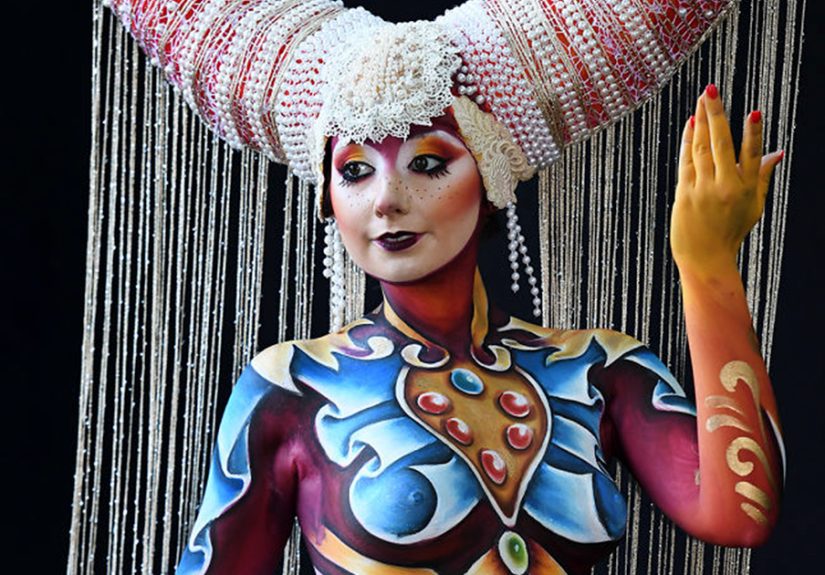
At WBF 2018, the best artworks did not merely cover the body; they used it intelligently. A shoulder became a mountain ridge. A spine became a river. A bent elbow completed the curve of an animal. A hand, when placed just right, became a mask, a claw, a flower, or a portal. The body was not hidden under paint. It became the structure that made the illusion possible.
Photographing Color, Texture, And Controlled Chaos
Photographing the World Bodypainting Festival was a joyful problem. Everywhere I looked, there was something worth shooting. One model stood beneath the light with metallic details catching the sun. Another moved through the crowd wearing a design so detailed I had to remind myself not to stare like a confused tourist at a magic show. Assistants adjusted headpieces. Artists touched up tiny sections of paint. Photographers circled politely, waiting for clean angles. Visitors lifted phones. Music drifted over the park. The whole place felt like an art studio had escaped into the street and brought a sound system.
The biggest challenge was not finding a subject. It was choosing one. The festival grounds offered close-up portraits, candid process shots, full-body compositions, backstage moments, and stage performances. I quickly learned that bodypainting photography requires patience and timing. A model’s pose could transform the entire design. A slight turn of the chin could reveal a hidden pattern. A step into better light could bring the colors alive.
Light Was The Secret Ingredient
Bright outdoor light can be both a gift and a menace. It makes colors pop, but it can also create harsh shadows or shiny highlights on painted skin. I looked for softer light whenever possible, especially near shaded areas or moments when clouds worked like a giant diffuser. During stage presentations, lighting became more dramatic, giving some artworks the power of theatrical posters.
Expression Completed The Artwork
A technically perfect bodypainting design can still feel incomplete without the model’s performance. The best models understood that their expression was part of the painting. Some gave fierce, cinematic stares. Others used playful gestures. Some moved like dancers, letting the artwork breathe through posture. I found that the strongest photos came when the model’s face, body position, and painted concept all told the same story.
Memorable Artistic Themes From The Festival
The artworks at World Bodypainting Festival 2018 covered a wide emotional range. Some designs were elegant and dreamlike, using soft transitions and delicate details. Others were bold, strange, humorous, or intentionally overwhelming. That variety is what made the event so exciting. One minute I was photographing a fantasy creature that looked ready to guard an enchanted forest. The next, I was looking at a futuristic design that seemed to have wandered out of a sci-fi film and into a summer afternoon in Austria.
Nature was a major source of inspiration. I saw designs that suggested animals, leaves, flowers, water, stone, insects, and cosmic landscapes. These concepts worked especially well because the human body already contains organic lines and movement. When an artist used those lines cleverly, the result felt less like paint on skin and more like a living ecosystem.
Other works leaned into illusion. Some artists used color blocking and shadow to reshape the body visually. Others created the appearance of armor, machinery, masks, textiles, or sculptural surfaces. From a distance, the best illusion pieces made the eye pause and ask, “Wait, where does the person end and the artwork begin?” That question is basically the unofficial anthem of the festival.
The Competition Energy: Friendly, Focused, And Fierce
Although the festival was full of color and fun, the competition itself was serious. Artists worked for hours under time pressure, balancing concept, technique, model comfort, props, and presentation. The atmosphere felt friendly, but not casual. These were highly skilled professionals and ambitious newcomers working at the edge of their abilities.
In 2018, standout names included Marzia Bedeschi of Italy, who won the World Award in Brush and Sponge, Benoit Bottola of Guadeloupe, who led the Airbrush category, and Sofia Bue of New Zealand, who triumphed in Special Effects Bodypainting. Their wins reflected the range of excellence at the festival: painterly detail, technical smoothness, and dimensional transformation.
For a photographer, winners are only part of the story. The festival’s beauty also lived in the almost-finished pieces, the quiet concentration of artists, the assistants holding palettes, the models resting between poses, and the visitors reacting with the wide-eyed look of people who had just realized bodypainting is far more complex than a party costume.
Why The Festival Is A Dream For Photographers
World Bodypainting Festival 2018 offered the kind of visual abundance photographers dream about, but it also demanded respect. These artworks were temporary, collaborative, and deeply personal. Photographing them well meant more than pointing a lens at something colorful. It meant understanding the artist’s concept, giving models space, avoiding awkward angles, and looking for images that honored the work.
I found myself moving between three types of shots. The first was the full-body image, which captured the complete design. These photos were important because bodypainting often depends on the entire figure. The second was the portrait, where facial expression, makeup detail, and headpieces became the focus. The third was the process image, which showed artists at work. Those process shots became some of my favorites because they revealed the labor behind the spectacle.
There is something powerful about seeing an artist crouched with a brush, calmly adding a tiny line that most viewers might never notice. That tiny line, multiplied by hundreds of decisions, is what creates the final wow moment. Photography can preserve the result, but process photography helps explain the effort.
Bodypaint City: More Than A Competition Venue
Bodypaint City was not just a location; it was part of the experience. The event combined visual art with music, performances, public viewing areas, and a festival atmosphere. Visitors could walk through the grounds, observe artists, attend shows, and enjoy the sense that the entire city had agreed to become more colorful for a few days.
Klagenfurt’s setting added charm. The city is close to Lake Wörthersee, surrounded by a landscape that already feels photogenic before anyone adds neon pigments and fantasy headpieces. The contrast between historic surroundings, summer greenery, and avant-garde body art made the photographs feel layered. It was not studio photography. It was a living, moving, open-air gallery.
That public environment also made the festival accessible. Bodypainting can sound niche until you see children, tourists, photographers, makeup students, artists, and curious locals all reacting together. Some came for the competition. Some came for the music. Some probably came because they heard the city center had turned into a parade of painted superheroes, forest spirits, and optical illusions. Honestly, fair reason.
The Difference Between Looking And Seeing
One of the best lessons I took from photographing the festival was the difference between looking and seeing. At first glance, the artworks were dazzling because of color. But the longer I observed, the more I noticed structure: how artists used symmetry, asymmetry, texture, negative space, props, and movement. I began noticing how a painted line followed a ribcage, how a color transition softened a shoulder, how a headpiece balanced the overall silhouette.
Good bodypainting rewards slow attention. The first impression is spectacle. The second impression is craftsmanship. The third is collaboration. Every successful piece depends on trust between artist and model. The artist needs a living canvas willing to stand, pose, perform, and help carry the concept. The model needs an artist who respects comfort, timing, and presentation. When that partnership works, the camera can feel it.
Tips For Photographing A Bodypainting Festival
If you ever photograph an event like the World Bodypainting Festival, arrive with curiosity and manners. The art may be public, but the people wearing it are still people. Ask before close-ups when appropriate, respect personal space, and avoid interrupting artists during intense work periods. A polite photographer gets better photos anyway. Nobody gives their best expression to a lens attached to a rude person.
Bring flexible gear. A standard zoom lens works well for full-body shots and environmental portraits, while a longer lens helps isolate details without crowding the model. Pay attention to backgrounds. A brilliant artwork can lose impact if photographed in front of a trash bin, a random elbow, or a sign selling sausages. Unless the sausage sign is somehow part of the theme, which, to be fair, at this festival anything felt possible.
Most importantly, shoot both the finished artwork and the making of it. The final images are dazzling, but the process tells the fuller story. Brushes, palettes, concentration, laughter, adjustments, waiting, and exhaustion all belong to the festival’s visual narrative.
Personal Field Notes: My Experience Photographing World Bodypainting Festival 2018
By the end of my time at World Bodypainting Festival 2018, my memory cards were full, my feet had filed a formal complaint, and my brain was still trying to process how much creativity could fit into one festival. The experience changed the way I think about photographing art. Usually, art stays still and the photographer moves. Here, the art moved, breathed, blinked, laughed, stretched, adjusted a headpiece, and occasionally asked where the nearest water bottle was.
The first lesson was humility. I arrived with confidence in my camera skills, but the festival reminded me that great photography begins before the shutter. It begins with observation. I had to watch how each model carried the character, how the artist intended the design to be seen, and how the crowd affected movement. Some pieces looked best straight on. Others came alive from the side. A few needed motion, because the design had been built for performance rather than stillness.
The second lesson was patience. At a festival this visually rich, it is tempting to photograph everything quickly. But the best images often came after waiting. I would find a strong subject, study the light, adjust my position, and wait for the model to settle into a pose. Sometimes the perfect frame appeared for half a second. A glance toward the lens, a lift of the hand, a turn into the light, and suddenly the artwork made sense in the camera.
The third lesson was respect for endurance. Bodypainting models do far more than stand there. They become performers, collaborators, and storytellers. Many spend hours being painted, then continue posing under lights, in crowds, and on stage. Their patience gives the artwork its final form. Watching them work made me appreciate that bodypainting is not only visual art; it is also physical discipline.
I also learned to love the imperfect moments. Yes, the polished stage photos were beautiful, but some of my favorite memories came from the edges: an artist cleaning a brush with total focus, a model laughing during a touch-up, an assistant adjusting a costume detail, photographers crouching in synchronized awkwardness to get a low angle. Those moments showed the festival as a community, not just a competition.
One scene stayed with me. A model in a highly detailed design paused between presentations, standing quietly while people admired the finished work. From a distance, the person looked almost unreal, like a sculpture that had decided to take a short break from being legendary. Up close, I could see the tiny signs of effort: careful breathing, controlled posture, the slight tiredness behind the performance. That contrast made the photograph stronger. It reminded me that the magic of WBF is human before it is visual.
Photographing World Bodypainting Festival 2018 also pushed me to think about color differently. In normal portrait photography, skin tone, wardrobe, and background usually guide the palette. Here, the entire person could be blue, gold, green, silver, patterned, shaded, or transformed into something beyond ordinary portrait rules. I had to respond to each artwork on its own terms. Some needed bold contrast. Others needed softness. Some demanded close details; others needed space around the full figure.
By the final day, I understood why the festival attracts artists, photographers, and fans from around the world. It is not just because the images are spectacular, although they absolutely are. It is because the event celebrates a rare kind of creativity: temporary, collaborative, public, technically demanding, and joyful. The artworks do not last forever, but the photographs help them travel beyond the festival grounds. That is the privilege of photographing an event like this. You are not only collecting images. You are preserving a moment when paint, performance, and people briefly became something unforgettable.
Conclusion
The World Bodypainting Festival 2018 in Klagenfurt was a spectacular reminder that art does not need a frame to be unforgettable. Sometimes it needs a human canvas, a fearless artist, a patient model, good light, and a photographer trying very hard not to trip over a camera bag while chasing the perfect angle.
From award-winning brush and sponge designs to airbrushed illusions, special effects transformations, facepainting, stage shows, and spontaneous moments around Bodypaint City, the festival delivered more than colorful images. It offered a lesson in collaboration, creativity, and the beauty of temporary art. Photographing it was both a challenge and a gift. Every image carried the energy of artists from around the world coming together to prove that the body can be more than a subject. It can be a canvas, a character, a performance, and a story in motion.