Table of Contents >> Show >> Hide
- What Shooting Pool “Like a Pro” Really Means
- Start With Your Stance: The Foundation of Great Pool
- Grip, Bridge, and Stroke: Where Accuracy Lives or Dies
- The Pre-Shot Routine: Your Secret Weapon Under Pressure
- Learn to Aim Better Without Overcomplicating It
- Cue-Ball Control: The Real Difference Between Good and Great
- Use English Carefully, Not Constantly
- How to Break Better
- Practice Like a Player Who Actually Wants to Improve
- Common Mistakes That Make Good Players Look Average
- Final Thoughts: The Fastest Way to Shoot Pool Like a Pro
- Real-Table Experiences: What Playing Better Pool Actually Feels Like
If you have ever watched a strong pool player run a table, you know the experience is both inspiring and a little rude. They do not look rushed. They do not look dramatic. They do not appear to be “trying harder” than everyone else. They just glide from shot to shot like the cue ball owes them rent. Meanwhile, the rest of us are over there inventing new ways to miss a straight-in shot from three feet away.
The good news is that learning how to shoot pool like a pro is not about becoming a trick-shot wizard or buying a cue that costs as much as a used motorcycle. Real improvement comes from fundamentals: stance, alignment, grip, bridge, stroke, cue-ball control, and decision-making. In other words, boring things. Beautiful, glorious, table-winning boring things.
This ultimate guide breaks down the exact habits that separate casual players from confident shot-makers. Whether you play 8-ball with friends, grind league matches, or just want to stop apologizing after every lucky bank, this article will help you build a more professional pool game from the ground up.
What Shooting Pool “Like a Pro” Really Means
Let’s clear something up right away: pros do not make every shot because they are magical creatures blessed by the billiard gods. They make more shots because their process is cleaner and more repeatable. They see the line earlier, set their body on that line more consistently, hit the cue ball more accurately, and plan the next shot before they bend down.
That means if you want to improve your pool shooting, your goal is not to become flashy. Your goal is to become reliable. Reliable players pocket more balls, control the cue ball better, recover from pressure faster, and make fewer dumb mistakes. That last one is huge. Pool is often won not by genius, but by refusing to donate easy opportunities.
A pro-style pool game is built on four pillars:
- Shot-making fundamentals: stance, alignment, bridge, grip, and stroke.
- Cue-ball control: stop, follow, draw, and smart speed.
- Table strategy: choosing the right shot, angle, and pattern.
- Mental discipline: the same routine, the same focus, the same calm face even after a hideous miss.
Start With Your Stance: The Foundation of Great Pool
If your stance is unstable, everything above it becomes suspect. You can have decent aim, but if your body is fighting the shot line, your cue will wander like a shopping cart with one bad wheel.
1. Get on the shot line before you get down
One of the biggest mistakes amateurs make is dropping into their stance too early and trying to “fix” the aim after they are already bent over. Better players do most of the visual work while standing. They identify the line of the shot, step into it, and then lower themselves into position while preserving that alignment.
A good rule of thumb is simple: see the shot standing up, then enter the shot with purpose. Do not shuffle around after you are down unless something clearly feels off. Endless wiggling is not precision. It is a cry for help.
2. Stay balanced, not stiff
Your feet should give you balance and clearance for the cue, not make you look like you are bracing for a category-five hurricane. Most players do well with the back foot roughly on the shot line and the front foot placed naturally for support. Your knees can bend a little. Your upper body can hinge forward. The point is to feel planted and comfortable, with room for your arm to swing freely.
When the stance is right, the stroke feels like it can travel straight through the cue ball without bumping into your torso. If your body blocks the cue path, change the stance. The table should fear your mechanics, not the other way around.
3. Keep your head position consistent
Many players unknowingly change how far their head is from the cue ball from shot to shot. That changes visual perspective, which changes confidence, which changes results. Pros work hard to keep a similar view every time. Consistency in head position supports consistency in aim. It sounds small, but small things are basically the entire sport of pool.
Grip, Bridge, and Stroke: Where Accuracy Lives or Dies
Ask ten pool players how to hold a cue and at least three will answer with the confidence of a prophet and the accuracy of a weather app from 2007. The truth is simpler: the cue needs to move straight, smoothly, and without unnecessary tension.
Relax your grip
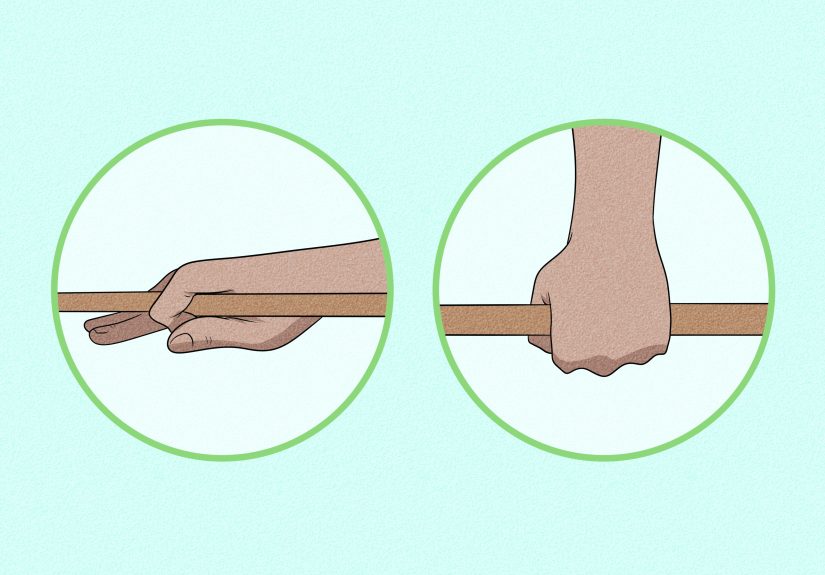
If you squeeze the cue like it insulted your family, your tip placement gets worse. A tight grip often creates steering, jerking, and poor contact on the cue ball. A relaxed grip gives the cue freedom to swing. Think of it as controlled support, not strangulation.
The grip hand should feel alive but not clenched. On routine shots, lighter is usually better. On power shots, players often assume they need to tighten up. That usually backfires. More tension rarely equals more accuracy.
Build a stable bridge
Your bridge hand is the launch pad for the cue. If it slides, shakes, or collapses, your shot becomes a guess. A solid open bridge works well for many shots, while a closed bridge can provide extra security on power strokes and spin-heavy shots. Neither bridge is magic. What matters is stability.
Try this test: before you shoot, ask yourself whether the cue feels supported all the way through the warm-up strokes. If the answer is “sort of,” rebuild the bridge. “Sort of” is not a champion’s favorite word.
Stroke through the ball, not at it
Great shooters accelerate smoothly through the cue ball. They do not jab at it. They do not stab it. They do not perform a tiny panic-punch with a stick. Their cue keeps moving after contact, which helps produce cleaner tip contact and better speed control.
If you want a more pro-level stroke, focus on three things:
- a still head
- a relaxed arm
- a smooth follow-through
Those three habits alone can rescue a shocking number of missed shots.
The Pre-Shot Routine: Your Secret Weapon Under Pressure
Here is one of the least glamorous and most powerful truths in pool: the pre-shot routine is a performance cheat code. Not because it makes you fancy, but because it makes you predictable in the best possible way.
A repeatable pre-shot routine keeps your mind from turning every shot into a dramatic existential event. Instead of thinking, “Oh no, this is for the match,” you think, “Same process. Same line. Same stroke.”
A simple pro-style pre-shot routine
- Stand back and read the table. Choose the shot, the pocket, and the cue-ball path.
- Pick the exact contact and aiming line. Do this while standing.
- Step into the line. Enter the stance without losing alignment.
- Take a few calm warm-up strokes. Feel the distance and speed.
- Pause. Settle your eyes and body.
- Deliver the cue smoothly. Then stay down long enough to watch the result.
Notice what is not in that list: panic, second-guessing, random shoulder movement, and the ancient ritual of standing up three times before shooting. The best routine is one you can trust when your heart rate climbs and your opponent suddenly starts looking competent.
Learn to Aim Better Without Overcomplicating It
Pool aiming can become a rabbit hole filled with systems, fractions, visuals, and debates intense enough to make philosophers nervous. For most players, the best aiming advice is practical: see the shot clearly while standing, get your eyes and body aligned to that line, and deliver a straight stroke.
Beginners often obsess over exotic aiming systems before they can pocket a medium cut shot with consistency. That is like installing racing stripes on a car with no tires. Start with clean fundamentals first.
Use the object ball, not hope
When aiming, think about where the object ball needs to go and what contact sends it there. Then commit. Wavering mid-shot is deadly. If you are unsure, stand back up and restart the routine. Do not stay down and improvise. Pool punishes hesitation with brutal efficiency.
Trust straight strokes on straight shots
Many misses happen not because the aim was terrible, but because the stroke changed during delivery. That is why pros look so quiet. They are not adding surprises at the last second. The shot was mostly decided before the cue moved forward.
Cue-Ball Control: The Real Difference Between Good and Great
Making the object ball is only half the job. The cue ball is the boss of the whole enterprise. If you pocket a ball and send the cue ball to a miserable location, congratulations: you have successfully created your next problem.
Players who shoot pool like pros think one ball ahead, often two or three. They are not just trying to make this shot. They are trying to make this shot in a way that makes the next shot easier.
Master the three core shots
Stop shot: The cue ball stops after contact. This is the mother sauce of position play. Learn it well and many patterns become simpler.
Follow shot: Hit above center so the cue ball rolls forward after contact. Great for moving naturally into the line of the next shot.
Draw shot: Hit below center to pull the cue ball backward. Essential for escaping trouble, changing angles, and looking much cooler than you feel.
If you want to improve fast, stop chasing circus spin and become deadly with stop, follow, and draw. Those three tools handle most of the game.
Speed matters as much as spin
Two players can hit the same line and get wildly different results because of speed. One lands perfect. The other sends the cue ball touring three rails like it is on vacation. Pro-level pool requires precise speed control, not just correct direction.
When practicing, pay attention to where the cue ball finishes, not just whether the shot drops. A made ball with terrible speed is not success. It is a lucky rehearsal for future suffering.
Move the cue ball less when possible
One smart pattern principle: choose routes that ask the cue ball to travel less distance and encounter less traffic. The more the cue ball moves, the more chances you give the table to ruin your plans. Simple position is strong position.
Use English Carefully, Not Constantly
Side spin, or English, is fun. It is also the source of approximately 78% of confident nonsense in your local pool hall. Many developing players use English too early and too often. Then they wonder why shots that looked easy somehow become geometry crimes.
English can help with cue-ball routes, throw, and rail reactions, but it also adds variables such as deflection and compensation. That means if your fundamentals are shaky, sidespin can multiply the damage.
Here is the grown-up approach: use center-ball and near-center hits whenever possible. Add English when the table actually calls for it, not when your ego gets bored. The best players are not spin-happy. They are spin-selective.
How to Break Better
A strong break is not just about violence. It is about transferring energy squarely into the rack while keeping the cue ball under control. Many players hit the break way too hard, lose the cue ball, and then act shocked when the table punishes them.
Focus first on contact. Hit the rack square. Try to keep the cue ball near the middle of the table. If accuracy drops as power rises, lower the power. A legal and controlled break beats a heroic mess every day of the week.
For 8-ball and 9-ball players, break strategy also depends on the format and rules, so learn the rules where you play. That is not glamorous advice, but neither is losing because you accidentally broke illegally and then argued with a guy named Rick for seven minutes.
Practice Like a Player Who Actually Wants to Improve
Mindlessly smacking balls around the table is not practice. It is recreational noise. Real improvement comes from structured repetition.
Try this weekly pool practice plan
- Day 1: Straight-in shots and stop-shot drill
- Day 2: Follow and draw from short, medium, and long distances
- Day 3: Cut shots to both corner pockets
- Day 4: Cue-ball target zones and speed control
- Day 5: Break practice and first-shot pattern work
- Day 6: Short race or ghost sets to test your game under pressure
Also, track results. Count makes. Track where the cue ball finishes. Identify misses by category: aim, speed, spin, deceleration, or bad decision. Once you know why you miss, you can actually fix it. Until then, every miss just gets filed under “weird stuff happened,” which is emotionally satisfying and completely useless.
Common Mistakes That Make Good Players Look Average
- Rushing easy shots: The table loves to embarrass overconfident people.
- Standing up early: Stay down and finish the stroke.
- Overusing sidespin: Extra variables are rarely your friend.
- Ignoring the cue ball: Shot-making without position play is half a skill.
- Changing routines under pressure: Trust the process you practice.
- Trying to fix aim while down: Do the visual work before you settle in.
Final Thoughts: The Fastest Way to Shoot Pool Like a Pro
If you want the shortest path to better pool, here it is: build a repeatable stance, relax your grip, create a stable bridge, use a smooth stroke, aim while standing, follow the same pre-shot routine every time, and become excellent at cue-ball control before you get fancy with English.
That may not sound sexy. But sexy is overrated. Pocketing balls, landing on the right angle, and watching your opponent quietly reconsider life choices? That is the good stuff.
Pool rewards discipline more than drama. Learn the boring fundamentals until they feel automatic, and your game will start to look a lot more professional. You do not need to become someone else at the table. You just need a better process than the version of you who shoots first and thinks later.
Real-Table Experiences: What Playing Better Pool Actually Feels Like
The first time I started shooting pool better, it did not feel heroic. It felt weirdly quiet. I was used to measuring success by whether a ball dropped, but the real change came when I started noticing why a shot worked. A stop shot that held the cue ball perfectly felt more satisfying than a wild cut that happened to fall. That was the moment the game started changing from luck to intention.
One of the biggest eye-openers came during a simple drill with straight-in shots. I assumed I was missing because my aim was bad. In reality, I was moving during the stroke and tightening my grip at the last instant. Once I relaxed my hand and stayed down after contact, the same shot suddenly looked easier. Nothing magical happened. I just stopped sabotaging myself. That is a humbling lesson, but also an encouraging one, because it means improvement is often closer than it seems.
Another experience that changed my game was learning to stand back from the table longer before getting down on the shot. At first it felt slow, almost theatrical, like I was pretending to be a serious player. But after a while, I realized I was seeing angles more clearly and stepping into the line with less doubt. My misses became cleaner, too. Even when I missed, I usually knew whether the mistake came from aim, speed, or stroke. That kind of clarity is gold, because confusion is the enemy of progress.
The draw shot was another chapter in the comedy of self-improvement. Early on, I thought draw meant “hit harder and lower and hope the cue ball performs a miracle.” What actually helped was practicing from short distances and treating the shot like a controlled action instead of a stunt. Once I felt the cue move smoothly through the cue ball, draw started becoming reliable. Suddenly I could hold angles, come back for shape, and avoid the little panic that comes from being frozen behind other balls.
League and match play taught me something else: pressure does not invent your habits, it reveals them. If your routine is shaky in practice, it will collapse under pressure. If your fundamentals are stable, pressure becomes more manageable. I have seen players with less natural talent win because they stayed calm, picked better patterns, and never rushed the easy ball. That experience convinced me that pool is not just a shot-making game. It is a decision-making game disguised as one.
Maybe the most satisfying experience in pool is when the table starts to feel slower. Not physically slower, of course, but mentally calmer. You stop seeing chaos and start seeing options. You know where the cue ball wants to go. You know when to stay simple. You know when not to force spin. And best of all, you begin to trust yourself. That trust is what makes a player look “pro.” Not swagger. Not expensive equipment. Just quiet confidence built one clean shot at a time.