Table of Contents >> Show >> Hide
- What Is a Tornado Omelette?
- Why This Omelette Works
- What You Need Before You Start
- How to Make a Tornado Omelette: 6 Steps
- Step 1: Prep Everything Before the Eggs Hit the Pan
- Step 2: Beat the Eggs Until They Are Smooth and Uniform
- Step 3: Heat the Pan and Pour the Eggs at the Right Temperature
- Step 4: Start Twisting When the Edges Set but the Center Is Still Soft
- Step 5: Control the Shape and Stop Before the Eggs Overcook
- Step 6: Slide It Onto the Plate and Serve Right Away
- Common Mistakes That Wreck a Tornado Omelette
- Best Ways to Serve a Tornado Omelette
- Quick Tips for a Better Tornado Omelet Every Time
- Final Thoughts
- Kitchen Experience: What Making a Tornado Omelette Really Feels Like
A tornado omelette is what happens when a regular omelet decides it is too glamorous for ordinary breakfast life. Instead of lying flat like it has somewhere boring to be, the egg twists into silky ribbons and lands on the plate looking like a tiny edible weather event. It is dramatic, elegant, and surprisingly doable once you understand the timing.
If you have ever watched a video of a Korean-style tornado omelette and thought, “That looks amazing, but my eggs would probably turn into yellow confusion,” you are in exactly the right place. The good news is that this dish is less about culinary wizardry and more about a few practical moves: smooth eggs, the right pan, moderate heat, and twisting at the perfect moment. In other words, you do not need restaurant superpowers. You just need a little confidence and two chopsticks.
This guide breaks down how to make a tornado omelette in 6 steps, with clear instructions, realistic tips, common mistakes to avoid, and a few serving ideas so your gorgeous omelette has somewhere fabulous to go. You can serve it over rice, pair it with toast, or eat it straight from the plate while feeling deeply impressed with yourself.
What Is a Tornado Omelette?
A tornado omelette, sometimes called a tornado omelet, is a soft egg dish shaped into spiraled folds while it cooks. It is often associated with Korean-style omelette rice, where the twisted egg sits on top of a mound of fried rice and sometimes gets finished with ketchup, demi-glace, or another savory sauce. The technique creates a fluffy center with soft, layered ribbons instead of a classic folded half-moon omelet.
The visual is the headline act, but the texture is the real reason people keep making it. When done well, the outside is lightly set while the center stays tender, creamy, and delicate. Think of it as the love child of a French omelet and a magic trick.
Why This Omelette Works
The tornado shape is not just for social media applause. Twisting the eggs while they are partially set creates soft folds that trap moisture and help the omelette stay tender. A small nonstick skillet helps the eggs gather toward the center, while smooth whisking gives the finished omelette a clean, silky look. Gentle heat keeps the eggs from toughening too fast, because eggs go from luxurious to rubbery with the emotional stability of a reality-show contestant.
What You Need Before You Start
Ingredients
- 3 large eggs
- 1/8 teaspoon kosher salt
- 1 teaspoon milk or cream, optional
- 1 teaspoon unsalted butter
- 1 teaspoon neutral oil
- Black pepper, to taste
Tools
- 8-inch nonstick skillet
- 2 chopsticks or thin wooden skewers
- Small bowl
- Fork or whisk
- Rubber spatula
- Warm plate or a neat mound of rice for serving
If you want to add cheese, herbs, or cooked vegetables, keep them light. A tornado omelette is not the moment to shove in half a farmers market. Too many add-ins make the egg harder to twist and easier to tear.
How to Make a Tornado Omelette: 6 Steps
-
Step 1: Prep Everything Before the Eggs Hit the Pan
This is the least glamorous step and also the one that saves breakfast. Tornado omelettes cook fast, so once the eggs are in the pan, there is no time to dice chives, butter toast, look for the pepper grinder, answer a text, reconsider your life, and return triumphantly. Have your plate ready. If you are serving the omelette over rice, shape the rice first. If you want sauce, warm it now. If you want garnishes, set them within arm’s reach.
Also make sure any fillings are fully cooked and chopped small. Large pieces can snag the delicate egg ribbons and turn your beautiful spiral into abstract expressionism. Small, warm, ready-to-go additions are your friends here.
-
Step 2: Beat the Eggs Until They Are Smooth and Uniform
Crack the eggs into a bowl. Add salt and, if you want a slightly softer texture, a teaspoon of milk or cream. Beat with a fork or whisk until the yolks and whites are fully blended and the mixture looks smooth, glossy, and evenly yellow. No stringy white bits. No lazy streaks. No suspicious blobs floating around like tiny egg ghosts.
This matters more than people think. Smoothly beaten eggs cook more evenly and create a cleaner tornado shape. If you want an extra-refined finish, you can strain the egg mixture through a fine-mesh sieve. Is that necessary? No. Does it make you feel like a breakfast overachiever? Absolutely.
-
Step 3: Heat the Pan and Pour the Eggs at the Right Temperature
Place your small nonstick skillet over medium to medium-low heat. Add the butter and oil together. The butter brings flavor; the oil helps keep it from browning too quickly. Swirl to coat the pan evenly.
When the butter is melted and lightly foamy, pour in the eggs. Swirl the pan once so the eggs spread into an even round. Let them sit for several seconds, then gently nudge the edges with a spatula if needed. You want the outer ring to begin setting while the center stays loose.
The key here is controlled heat. If the pan is too hot, the eggs seize up before you can twist them. If the pan is too cool, they stay too wet and refuse to gather. You are aiming for that sweet spot where the eggs look soft and glossy but are starting to hold together around the edges.
-
Step 4: Start Twisting When the Edges Set but the Center Is Still Soft
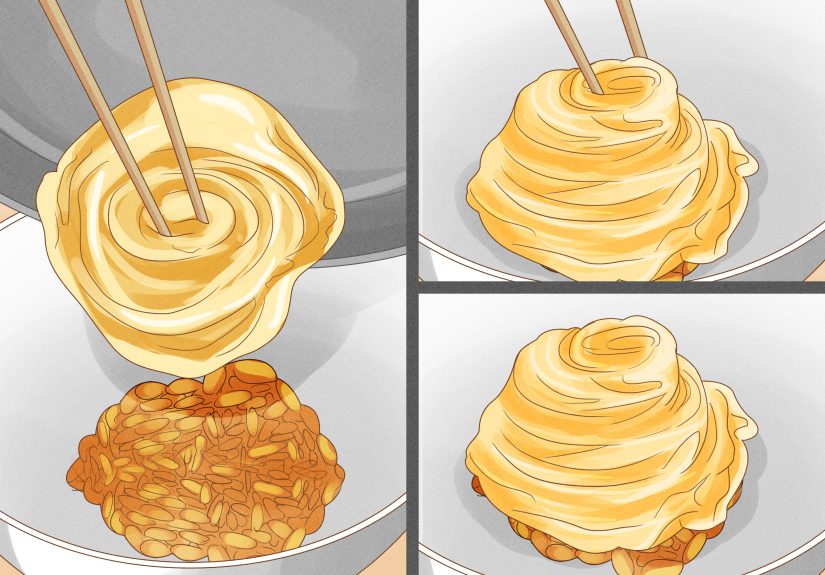
Now the fun starts. Take your two chopsticks and place them parallel in the center of the pan, about an inch apart. Gently pinch a bit of the setting egg between them. Then begin twisting the chopsticks in the same direction while slowly rotating your wrist.
As you twist, the egg should gather inward and form pleated ribbons. Keep the motion steady, not frantic. This is tornado omelette, not competitive whisking. The outer edges of the egg should continue cooking while the center wraps into that signature spiral.
If the eggs do not gather, they are probably too raw. Wait a few seconds and try again. If they crack or split, they are likely too cooked. That is not failure. That is breakfast education.
-
Step 5: Control the Shape and Stop Before the Eggs Overcook
Once the tornado shape forms, reduce the heat slightly if needed and keep twisting just until the omelette holds together and looks mostly set. Do not keep going until it is fully firm. Residual heat will finish the job, and eggs continue cooking even after they leave the pan. If you push too far, the center tightens, the ribbons lose their softness, and your tornado becomes a tired little egg rope.
You are looking for a soft, sculpted omelette that still has some tenderness in the folds. A tiny bit of gloss is fine. In fact, it is usually a sign you did not cook the life out of it. If you prefer your eggs more fully done, give it a few extra seconds, but know that the twist is easiest to keep when the omelette is not taken to total dryness.
-
Step 6: Slide It Onto the Plate and Serve Right Away
Turn off the heat. If you are serving over rice, angle the pan and gently slide the tornado omelette onto the top of the rice mound. If you are serving it solo, place it on a warm plate and let it settle naturally. A little black pepper, chopped chives, or a spoonful of sauce can finish the dish beautifully.
Serve immediately. Tornado omelettes are not built for lingering. They are at their best when the ribbons are still warm, tender, and just dramatic enough to make everyone at the table say, “Wait, you made that?”
Common Mistakes That Wreck a Tornado Omelette
Using a pan that is too large
A wide skillet spreads the eggs too thin and makes them cook too fast. A smaller nonstick pan gives you more control and helps the eggs gather into the center.
Starting the twist too early
If the eggs are still very liquid, the chopsticks will just drag through them and create a mess. Wait until the outer ring is lightly set.
Starting the twist too late
If the omelette is already firm, the center will tear instead of folding into ribbons. Tornado success lives in that narrow middle ground called timing, also known as the reason cooking makes people mutter at stoves.
Cooking on high heat
Very hot pans turn tender eggs tough and brown them too quickly. For a fluffy omelette with a silky center, moderate heat is your best bet.
Overloading the eggs
This style is not ideal for a packed diner omelet stuffed with everything except your tax documents. Keep the egg mixture simple and let the twist be the main character.
Best Ways to Serve a Tornado Omelette
If you want the classic presentation, serve your tornado omelette over rice. Fried rice, ketchup rice, garlic rice, or even plain warm rice all work. A drizzle of ketchup, demi-glace-style sauce, or soy-butter sauce gives the plate extra comfort-food energy.
For a simpler breakfast, pair it with toast, sautéed mushrooms, roasted tomatoes, or breakfast potatoes. It also works well with a crisp green salad if you are pretending to be elegant at lunch. No judgment either way.
Quick Tips for a Better Tornado Omelet Every Time
- Use 3 eggs for the easiest shape and best volume.
- Whisk thoroughly for a smooth texture and even color.
- Use a nonstick skillet and keep it lightly greased.
- Twist steadily, not aggressively.
- Stop cooking while the eggs still look tender.
- Serve fast, because eggs wait for no one.
Final Thoughts
Learning how to make a tornado omelette is one of those kitchen skills that feels much fancier than it really is. Once you understand the timing, the technique becomes less intimidating and a lot more fun. The real secret is not expensive equipment or chef-level drama. It is simply using smooth eggs, a small pan, moderate heat, and twisting at the moment when the eggs are set enough to gather but soft enough to move.
So yes, your first attempt might look more like a windy omelet than a tornado omelette. That is fine. Your second will be better. Your third may be suspiciously excellent. And by the time you are casually spiraling eggs onto rice before coffee, you will have unlocked the rare ability to make breakfast look like applause.
Kitchen Experience: What Making a Tornado Omelette Really Feels Like
The first time most people try a tornado omelette, they expect one of two outcomes: instant perfection or total disaster. The actual experience usually lands somewhere in the middle, in that hilarious zone where the eggs are technically edible but visually resemble a scarf dropped in a puddle. That is normal. In fact, it is almost part of the recipe.
On attempt number one, the biggest surprise is usually speed. The eggs cook faster than expected, especially if the pan is a little too hot. You pour them in, admire the shiny yellow pool for one majestic second, reach for the chopsticks, and suddenly the bottom has already decided to become an omelet without your permission. This teaches the first important lesson: tornado omelettes are all about readiness. When everything is set up in advance, the process feels smoother and much less chaotic.
By the second or third try, most home cooks start noticing the texture cues. The edges tell the truth. When they are lightly set and the middle still looks glossy, that is the moment. Not earlier, not later. Once you catch that visual cue, the dish stops feeling mysterious and starts feeling mechanical in the best possible way. You are not guessing anymore. You are reading the pan.
Another common experience is discovering that gentle movement beats dramatic movement. People often assume they need to spin the chopsticks like they are starting a campfire. They do not. Slow, steady twisting works better. The egg gathers more neatly, the folds look cleaner, and the whole thing feels weirdly calming. It becomes a little breakfast ritual: pour, wait, twist, slide, admire.
There is also the confidence factor. A regular omelet can feel ordinary, but a tornado omelette looks like something you ordered at a cool brunch spot with a waitlist and tiny water glasses. Making one at home creates a disproportionate amount of pride. It is eggs, yes, but it is also theater. And that little bit of theater can make a weekday breakfast feel less like survival and more like living.
Over time, people usually personalize the technique. Some like a softer center and stop cooking earlier. Others prefer a firmer omelette and let it sit a few seconds longer before sliding it out. Some serve it over ketchup rice for a classic comfort-food feel. Others put it on toast, over fried rice, or next to crispy breakfast potatoes. The experience becomes less about copying a viral visual and more about building a reliable, satisfying egg dish that happens to look fantastic.
What makes tornado omelettes memorable is that they reward practice fast. You do not need twenty failed weekends to improve. Usually, one or two tries are enough to understand the rhythm, and by the fourth or fifth attempt, the dish starts to feel natural. That is part of the joy. It is impressive without being unreachable. It is playful without being pointless. And even when the twist is not perfect, you still end up with buttery, tender eggs, which is a pretty excellent consolation prize.