Table of Contents >> Show >> Hide
- Why Posture Matters More Than Most People Think
- What a Good Posture Video Should Teach
- Simple Ways to Improve Posture
- Improve Posture While Sitting
- Improve Posture While Standing and Walking
- Common Posture Mistakes to Avoid
- A Simple Posture Video Routine You Can Follow
- When to See a Professional
- of Real-Life Experience: What Improving Posture Actually Feels Like
- Conclusion
Good posture is one of those things everyone says they want, right up there with “better sleep,” “more energy,” and “a mysteriously clean kitchen.” But unlike a spotless kitchen, better posture does not require magic. It requires awareness, movement, smart habits, and a little patience with the body you have been folding into office chairs, couches, car seats, and phone-scrolling positions for years.
A helpful video on ways to improve posture can make the process easier because posture is visual. You can read “keep your head over your shoulders” all day, but seeing someone demonstrate a chin tuck, wall angel, or seated chest stretch often makes the idea click faster. Posture is not about standing stiff like a soldier in a parade. It is about giving your spine, muscles, joints, and nervous system a better working arrangement so your body does not feel like it has been arguing with gravity since breakfast.
This guide breaks down the best posture-improving strategies you might see in a well-made posture video, explains why they work, and shows how to build them into daily life without turning your living room into a physical therapy clinic. The goal is simple: stand taller, sit smarter, move better, and stop treating your neck like a coat hanger for stress.
Why Posture Matters More Than Most People Think
Posture is the position your body holds while sitting, standing, lying down, walking, lifting, typing, cooking, exercising, and doing all the other normal human things. Good posture supports the natural curves of the spine: the neck, upper back, and lower back all have their own gentle shapes. When these curves are respected, the body distributes weight more efficiently. When they are exaggerated or collapsed, certain muscles work overtime while others quietly clock out.
Poor posture can contribute to neck tightness, shoulder aches, low back discomfort, headaches, reduced mobility, and fatigue. It can also make breathing feel more restricted because rounded shoulders and a collapsed chest limit how freely the rib cage moves. That does not mean every ache is caused by posture, or that posture is some villain wearing a cape. But your daily positions do influence how your muscles and joints feel over time.
Think of posture like tire alignment on a car. A tiny imbalance may not matter for a five-minute drive. But after months of commuting, potholes, and questionable parking-lot turns, the wear becomes obvious. Your body works the same way. Small posture habits repeated thousands of times can shape how comfortable, strong, and mobile you feel.
What a Good Posture Video Should Teach
The best posture improvement video should not shame people into sitting perfectly all day. That is unrealistic and, frankly, exhausting. A better approach is to teach simple posture checks, gentle mobility exercises, strength-building movements, ergonomic adjustments, and daily reminders that help your body return to better alignment again and again.
1. A Neutral Spine, Not a Rigid Spine
A good posture video should explain that “straighten up” does not mean flatten every curve in your back. Your spine naturally curves. Better posture means maintaining those curves without slumping, over-arching, or jutting the head forward. The head should sit over the shoulders, the shoulders over the hips, and the hips balanced over the feet when standing.
2. Movement Breaks Are Part of Posture
Even “perfect” sitting becomes uncomfortable when you hold it for too long. The body likes variety. Standing, stretching, walking, changing position, and gently moving the spine throughout the day are just as important as setting up a beautiful ergonomic chair. Your best posture is usually your next posture.
3. Strength and Flexibility Work Together
Posture is not corrected by willpower alone. Tight chest muscles, weak upper-back muscles, stiff hips, tired core muscles, and limited spinal mobility can all affect alignment. That is why a complete posture routine includes both stretching and strengthening. Stretch what is tight. Strengthen what needs support. Repeat until your body gets the memo.
Simple Ways to Improve Posture
Here are practical posture techniques commonly recommended by physical therapists, orthopedic experts, and reputable health organizations. They are beginner-friendly and easy to demonstrate in a video format.
Do the Wall Posture Check
The wall posture check is one of the simplest ways to feel better alignment. Stand with your back against a wall. Your head, shoulder blades, hips, and heels should come close to touching the wall without forcing or straining. Keep your chin level, shoulders relaxed, and ribs stacked over your pelvis.
This exercise is useful because it gives immediate feedback. Many people discover their head naturally sits forward or their shoulders round more than they realized. No judgment required. The wall is not judging you. It has seen worse.
Practice Chin Tucks
Forward head posture is common among people who use computers, phones, tablets, and laptops. A chin tuck helps bring the head back over the shoulders. Sit or stand tall, look straight ahead, and gently glide your chin backward as if making a tiny double chin. Avoid looking down. Hold for a few seconds, relax, and repeat.
This move strengthens deep neck muscles and reduces the habit of leading with the chin. It is subtle, but powerful. It also looks slightly silly, which is fine. Many effective exercises are not runway material.
Try Wall Angels
Wall angels help open the chest, activate the upper back, and improve shoulder mobility. Stand against a wall with your head, upper back, and hips touching. Bring your arms up against the wall in a goalpost shape. Slowly slide them upward and downward while keeping your ribs from flaring and your shoulders from shrugging.
If your arms do not fully touch the wall, do not force it. Work within a comfortable range. Over time, this exercise can help reduce rounded shoulders and improve awareness of upper-body alignment.
Add Shoulder Blade Squeezes
Sit or stand tall with your shoulders relaxed. Gently draw your shoulder blades back and slightly down, as if you are trying to hold a pencil between them. Hold for about five seconds, then release. Repeat several times.
This exercise wakes up the muscles between the shoulder blades, which often become overstretched and underused when people spend long hours hunched forward. The key is gentle control. Do not pinch aggressively or hike your shoulders toward your ears. Your ears have enough responsibilities.
Open the Chest With a Doorway Stretch
Rounded shoulders are often linked to tight chest muscles. A doorway stretch can help. Place your forearms on either side of a doorway, step one foot forward, and gently lean until you feel a stretch across the chest. Keep the stretch mild and breathe slowly.
This movement is especially helpful after long sessions of typing, driving, crafting, gaming, or scrolling through social media like your thumb is training for the Olympics.
Use Cat-Cow for Spinal Mobility
Cat-cow is a gentle movement often used in yoga and physical therapy settings. Start on your hands and knees. Inhale as you gently arch your back and lift your chest. Exhale as you round your spine and tuck your chin slightly. Move slowly and comfortably.
This exercise helps the spine move through flexion and extension, which can reduce stiffness and improve body awareness. It is not about pushing into big dramatic shapes. It is about reminding the spine that it has options.
Strengthen the Core With Planks
Your core is not just the “six-pack” area. It includes muscles around the abdomen, back, pelvis, and hips that help stabilize the spine. A basic plank can train these muscles to support better posture.
Start with a modified plank on your knees or against a wall if needed. Keep your body long, ribs controlled, and neck neutral. Hold for a short time with good form rather than a long time with dramatic trembling and regret. Quality beats duration.
Build Glute and Hip Support
The pelvis plays a major role in posture. Weak glutes and tight hip flexors can affect lower-back position and standing alignment. Glute bridges are a simple starting point. Lie on your back with knees bent and feet flat. Gently tighten your abdomen, press through your heels, and lift your hips until your body forms a line from shoulders to knees. Lower slowly.
This exercise strengthens the glutes and encourages better hip control. Strong hips make standing, walking, lifting, and climbing stairs feel more supported.
Improve Posture While Sitting
Sitting posture matters because many people spend hours at desks, in cars, or on couches. The goal is not to sit like a marble statue. The goal is to reduce strain and change positions often.
Set Up Your Chair
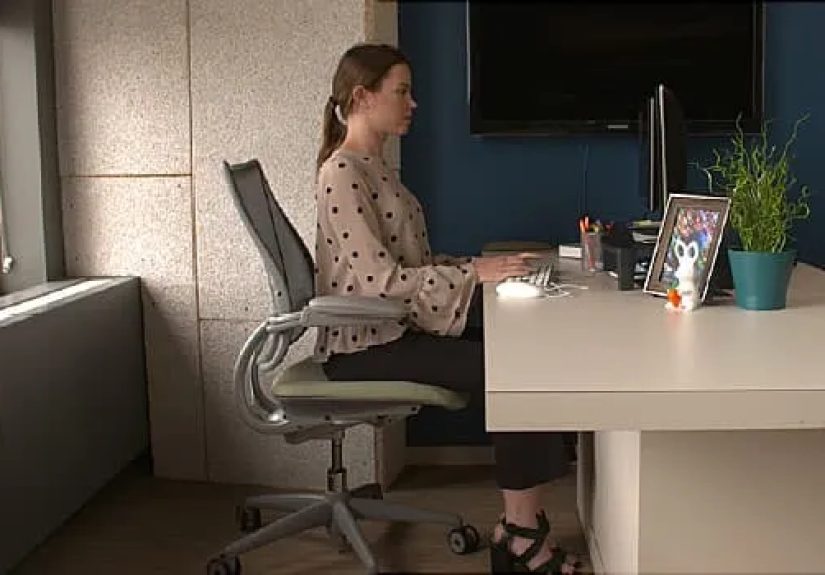
Choose a chair that supports your lower back. Sit with your feet flat on the floor or on a footrest. Keep your knees around hip level and avoid crossing your legs for long periods. Your shoulders should stay relaxed, not rounded forward or pulled up near your ears.
Position Your Screen
Your monitor should be roughly at eye level so you do not have to crane your neck down or forward. If you use a laptop, consider a laptop stand with a separate keyboard and mouse. A laptop by itself is convenient, but ergonomically it can be a tiny folding trap.
Relax Your Arms
Your elbows should rest near your sides, bent comfortably. Your wrists should stay neutral while typing. If your shoulders are tense while you work, your desk or chair height may need adjusting.
Take Microbreaks
Set a reminder to stand, stretch, or walk briefly every 30 to 60 minutes. Even one or two minutes can help reset muscle tension. A posture video can include a “desk reset” sequence: chin tuck, shoulder rolls, chest opener, seated twist, and a short walk. That is a lot more useful than simply yelling “sit up straight” at yourself.
Improve Posture While Standing and Walking
Standing posture starts with the feet. Stand with your weight balanced across both feet, knees soft, pelvis neutral, ribs stacked, shoulders relaxed, and head over shoulders. Imagine a string gently lifting the crown of your head upward. You should feel tall, not stiff.
When walking, avoid staring down at the ground for long stretches. Keep your gaze forward, arms relaxed, and steps comfortable. If you carry a bag, switch sides or use a backpack with both straps. A heavy bag on one shoulder can encourage uneven posture and muscle strain.
Common Posture Mistakes to Avoid
Forcing “Perfect” Posture All Day
Trying to hold one perfect position can create new tension. Good posture should feel supported and active, not rigid. Move often and let your body breathe.
Only Stretching, Never Strengthening
Stretching tight muscles feels good, but long-term posture improvement usually requires strength. Upper-back, core, hip, and glute muscles help hold better alignment during real life.
Ignoring Pain Signals
Mild muscle effort is normal during exercise. Sharp pain, numbness, tingling, dizziness, or symptoms that travel down the arm or leg are not signals to “push through.” Stop and consider getting professional guidance from a qualified healthcare provider or physical therapist.
Depending Completely on Posture Correctors
Posture braces and correctors may remind some people to adjust their position, but they are not a replacement for strength, mobility, and better habits. If used too much, they may encourage dependence rather than active muscle control.
A Simple Posture Video Routine You Can Follow
If you were creating or following a video on ways to improve posture, a smart beginner routine might look like this:
Minute 1: Posture Awareness
Start with the wall posture check. Notice where your head, shoulders, ribs, and hips naturally rest. Take three slow breaths and reset your alignment.
Minutes 2–3: Neck and Shoulder Reset
Perform gentle chin tucks, shoulder rolls, and shoulder blade squeezes. Keep the movement slow and controlled.
Minutes 4–5: Chest and Upper Back Mobility
Do doorway chest stretches, wall angels, or seated thoracic extensions. Focus on opening the chest without arching the lower back excessively.
Minutes 6–8: Spine and Core Activation
Move through cat-cow, modified planks, and dead bugs. Keep your breathing steady and your neck relaxed.
Minutes 9–10: Hip and Glute Support
Finish with glute bridges and a standing posture reset. Walk around for a minute and notice whether your body feels more open and balanced.
This kind of routine is short enough to do before work, during lunch, or after a long day. Consistency is more important than intensity. Ten minutes done regularly can beat one heroic hour followed by three weeks of forgetting.
When to See a Professional
Posture exercises are helpful for many people, but they are not a cure-all. See a healthcare professional if you have persistent pain, recent injury, numbness, tingling, weakness, balance problems, unexplained weight loss, fever, or pain that wakes you at night. People with osteoporosis, spinal conditions, arthritis, recent surgery, or chronic pain should ask for individualized guidance before starting a new routine.
A physical therapist can assess your posture, strength, flexibility, work setup, movement patterns, and symptoms. Instead of guessing which exercise your body needs, you get a plan designed for your actual body, not a generic internet skeleton with sneakers.
of Real-Life Experience: What Improving Posture Actually Feels Like
Improving posture sounds simple until you try to do it during a normal day. At first, it can feel strangely unnatural. You sit taller for three minutes, feel proud, answer one email, and suddenly you are folded over the keyboard like a question mark wearing headphones. That is normal. Posture is not changed by one dramatic moment of discipline. It changes through repeated small corrections.
One of the most useful experiences people report is discovering that posture is connected to mood and energy. After a few days of gentle posture exercises, many notice they breathe more easily when sitting upright. The chest feels less compressed. The neck feels less crowded. Even confidence can shift a little, not because posture magically changes personality, but because standing tall can make you feel more present in your own body.
Another common experience is realizing that the problem is not simply “bad posture.” It is usually a pattern. Maybe the laptop is too low, so the neck drops forward. Maybe the chair is too high, so the feet dangle. Maybe stress causes the shoulders to creep upward. Maybe the phone is always held near the lap, turning the neck into a drawbridge. Once these patterns become visible, solutions become easier.
For example, someone working from home might place a laptop on a stack of books, use a separate keyboard, and set a timer for movement breaks. Within a week, their neck may feel less irritated, not because they achieved perfect posture, but because they reduced repeated strain. Someone else might add five minutes of wall angels, chin tucks, and glute bridges after brushing their teeth. Pairing posture habits with existing routines makes them easier to remember.
The funny part is that posture improvement often feels boring before it feels impressive. There may be no dramatic “before and after” moment. Instead, you notice small wins. Your shoulders do not ache as quickly during work. You stand in line without shifting constantly. You catch yourself before slumping. You adjust your screen without overthinking it. Your body starts choosing better positions because you have practiced them enough.
It also helps to be kind to yourself. Nobody has perfect posture all day. Even physical therapists slump sometimes. The difference is awareness and recovery. If you catch yourself hunched over, that is not failure. That is the moment the habit begins to change. Reset your feet, soften your ribs, lengthen your neck, relax your shoulders, and move on with your day.
A good posture exercises video can support this process because it gives structure. You do not have to invent a routine or wonder what comes next. You press play, follow the demonstration, and let repetition do its quiet work. Over time, posture becomes less about “standing up straight” and more about living in a body that feels stronger, freer, and less cranky by 3 p.m.
Conclusion
A video on ways to improve posture can be a practical tool for anyone who wants to sit taller, stand better, reduce everyday tension, and move with more confidence. The most effective posture strategies combine awareness, ergonomic improvements, stretching, strengthening, and regular movement breaks. Start small. Try chin tucks, wall angels, shoulder blade squeezes, cat-cow, planks, and glute bridges. Adjust your desk, raise your screen, support your lower back, and take movement breaks before your body sends a complaint letter.
Better posture is not about looking perfect. It is about helping your body work with less unnecessary strain. With consistent practice, your posture can become stronger, more natural, and easier to maintain. And yes, your future neck may thank you. It might even write a polite note.
Note: This article is for general educational purposes and should not replace medical advice. If posture changes come with pain, numbness, weakness, injury, or ongoing discomfort, consult a qualified healthcare professional.